Best Sim Racing Shifter Features to Look for in 2026
Introduction
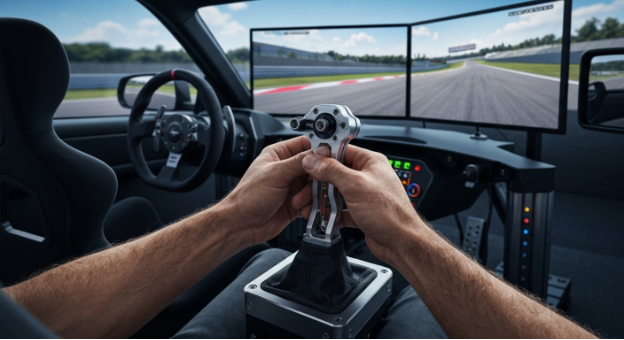
Are you ready to take your sim racing immersion to the next level? While paddle shifters on your steering wheel are great for modern race cars, nothing beats the authentic feeling of manually changing gears. A dedicated shifter adds a layer of realism that completely transforms your driving experience, making you feel more connected to your virtual car. Choosing the right shifter is a personal journey, but by 2026, the technology available will offer more options and realism than ever before.
Essential Sim Racing Shifter Features to Look for in 2026
Finding the best sim racing shifter for your setup involves looking beyond just the price tag. What should you look for when choosing a sim racing shifter? You need to consider a range of features that contribute to performance, durability, and immersion. From the materials used in its construction to the type of feedback it provides, every detail matters.
The right sim racing shifter will match your driving style and integrate seamlessly with your existing equipment. In the sections below, we will explore the ten most important features, from build quality and shift mechanisms to compatibility and precision, helping you make an informed decision for your racing setup.
1. Durable Build Quality and Premium Materials
When you’re in the heat of a race, you want equipment that can withstand aggressive gear changes. That’s why durable build quality is the first thing you should look for. Shifters made with a full metal construction, often using CNC-machined aluminium and steel, offer superior strength and longevity. This robust build ensures your racing shifter can handle years of intense use on your sim rig without failing.
A premium feel is another benefit of high-quality materials. A metal shifter not only looks more professional but also feels more substantial and realistic in your hand. Cheaper units often rely on plastic components, which can feel flimsy and may not provide the satisfying, solid engagement you want when shifting.
Investing in a shifter with excellent build quality ensures it feels less like a toy and more like a genuine piece of motorsport hardware. This commitment to quality materials is a hallmark of the best shifters on the market and is essential for serious sim racers.
2. Advanced Shift Mechanisms: Sequential and H-Pattern Options
Are there different types of sim racing shifters and what are they? Yes, the two primary types are sequential and H-pattern, and each suits a different style of racing. A sequential shifter allows for simple forward and backward motions to shift up and down. This style is found in rally cars and many modern race cars, where quick, precise gear changes are essential.
On the other hand, an H-pattern gear shifter replicates the traditional manual gearbox found in most road cars and older race cars. This requires you to use a clutch pedal and move the lever through a gated pattern to select each gear. It offers a more challenging and immersive experience, especially when mastering techniques like heel-and-toe downshifting.
For ultimate versatility, look for hybrid models that offer both sequential shifting and H-pattern modes. Some units allow you to switch between the two with a simple flick of a switch, giving you the flexibility to drive any car in your sim library authentically.
3. Realistic Force Feedback and Tactile Response
How does a sim racing shifter improve the gaming experience? A huge part of the answer lies in its tactile feedback. A great racing shifter doesn’t just select a gear; it provides a physical sensation that mimics a real car’s transmission. This force feedback gives you a satisfying “thump” or “clunk” as the gear engages, confirming your shift and adding to the realism.
This tactile response is what separates a premium shifter from a basic one. Entry-level models can feel vague or light, disconnecting you from the action. In contrast, a shifter with well-tuned feedback makes every gear change feel intentional and mechanical. This level of immersion helps you feel more connected to your vehicle and the track.
Whether it’s the smooth engagement of a high-end H-pattern or the sharp kick of a sequential, realistic feedback is a critical feature. It elevates the experience from simply playing a game to simulating the act of driving, which is the ultimate goal for any sim racer.
4. Adjustable Resistance and Customisable Throw Settings
Every driver has a unique preference for how their controls should feel. That’s why adjustable resistance and customisable throw settings are such a valuable feature. The ability to fine-tune the amount of force required to move the lever into gear allows you to tailor the shifter to your specific racing style and strength.
Some advanced shifters let you adjust the resistance from a light, quick flick to a heavy, mechanical pull, with force ratings that can be precisely set. This ensures the shifter feels just right for you, whether you prefer the feel of a road car or a purpose-built race car.
Similarly, customisable throw settings let you alter the distance the lever travels between gears. A shorter throw allows for faster shifts, which is ideal for competitive racing, while a longer throw might feel more authentic for classic cars. This level of customisation gives you greater control and precision on the track.
5. Compatibility with PC, Console, and Multiple Platforms
Is a sim racing shifter compatible with your gaming setup? This is one of the most important questions to ask before making a purchase. Compatibility can vary significantly between PC and consoles like Xbox or PlayStation. PC users generally have the most freedom, as many shifters can connect as standalone USB devices and are recognised by most racing sims.
For console racers, the situation is often more restrictive. Shifters for Xbox or PlayStation typically need to be from the same brand ecosystem as your racing wheel and pedals to ensure they work correctly. Always check the manufacturer’s specifications to confirm compatibility with your specific console and wheelbase.
Understanding how your potential shifter connects is vital for a hassle-free experience across multiple platforms. Here’s a simple breakdown of common compatibility scenarios:
| Platform | Common Connection Method | Key Considerations |
| PC | Standalone USB | Offers the widest compatibility with different brands and sims. |
| Console (Xbox/PlayStation) | Direct connection to a compatible wheelbase | Usually requires the shifter and wheel to be from the same brand. |
6. Plug-and-Play Installation and User-Friendly Setup
After unboxing your new sim racing shifter, the last thing you want is a complicated installation process. A user-friendly, plug-and-play setup is a feature that saves you time and gets you on the track faster. The best shifters are designed for easy installation, whether you’re mounting them to a desk or a dedicated sim rig.
How do you install a sim racing shifter? For many PC-based shifters, it’s as simple as plugging in a USB cable. Your computer and favourite racing sims will automatically detect it as a new input device, often without needing to install special drivers. This streamlined process is ideal for those who want a straightforward experience.
Some shifters also come with versatile mounting solutions, such as built-in clamps for desks or pre-drilled holes that align with popular aluminium profile rigs. Clear instructions and simple hardware make the physical setup quick and painless, allowing you to focus on racing instead of tinkering with your gear.
7. Modular Design for Expansion and Upgrades
A modular design is a forward-thinking feature that adds long-term value to your sim racing shifter. It allows you to customise, upgrade, and expand your setup over time without needing to buy an entirely new unit. This is perfect for racers who like to evolve their rig as their skills and preferences change.
One of the most common modular features is the ability to swap out the shifter knob. Many high-quality shifters use a standard thread size, allowing you to replace the stock knob with a wide range of aftermarket accessories. You can choose a knob that better fits your hand, matches your car’s interior, or simply offers a different aesthetic.
Beyond the knob, some modular shifters allow for other upgrades, such as changing the length of the lever or adding different faceplates for new layouts. This flexibility ensures your shifter can grow with you, making it a smart investment for your sim racing journey.
8. Integrated Handbrake Functionality
Do you need a separate handbrake for sim racing, or can shifters include this feature? For disciplines like rally and drifting, a handbrake is essential, and some innovative shifters offer an integrated solution. These 2-in-1 devices can function as both a sequential shifter and a progressive handbrake, saving you money and valuable space on your sim rig.
These hybrid sequential shifters typically feature a mode switch that allows you to quickly change their function. In one mode, the lever acts as a standard up/down shifter. In handbrake mode, it becomes an analogue axis, giving you precise control over the rear wheels for initiating slides and making tight hairpin turns.
This integrated functionality is a game-changer for racers who enjoy multiple disciplines. It provides a compact and cost-effective way to get the core equipment needed for authentic rally and drift experiences without cluttering your setup with separate peripherals.
9. Accurate Gear Position Sensors
The precision of your shifter comes down to the quality of its internal sensors. To avoid missed shifts and ensure flawless performance, look for shifters that use advanced, non-contact sensor technology. High-end models often use Hall effect or magnetic sensors to detect gear position.
Unlike traditional mechanical switches that make physical contact and can wear out over time, magnetic sensors have no moving parts that touch. This design makes them incredibly durable and ensures consistent accuracy for the life of the product. They provide a clean, reliable signal for every single gear change.
This level of precision is crucial in competitive sim racing, where a single missed shift can cost you a race. By choosing a shifter with high-quality sensors, you can have confidence that your inputs will be registered perfectly every time, allowing you to focus completely on your driving.
10. Ergonomic Grip and Comfortable Shifter Knob
During long endurance races or extended practice sessions, comfort is key. An ergonomic grip and a well-designed shifter knob can make a significant difference in reducing fatigue and improving your overall experience. The way a racing shifter feels in your hand directly impacts how enjoyable it is to use.
Shifters designed with ergonomics in mind will have a lever and knob that fit naturally in your hand, allowing for a comfortable and secure grip. Some are shaped to mimic the feel of real-world race cars, adding to the premium feel and immersion.
The material of the shifter knob also plays a role in comfort. Whether it’s a smooth, cool-to-the-touch aluminium knob or one wrapped in leather, the texture and shape should feel good to hold. As mentioned earlier, the ability to swap the knob for a custom one is a great bonus, letting you find the perfect fit for your hand.
Conclusion
When choosing a sim racing shifter for 2026, it’s essential to focus on the features that will elevate your racing experience. Look for durable build quality and advanced shift mechanisms that offer both sequential and H-pattern options. Realistic force feedback can significantly enhance immersion, while adjustable resistance allows for personalised control. A modular design ensures your setup can grow with you, accommodating future upgrades. Always consider compatibility across platforms to maximise your investment. By prioritising these features, you can create a racing environment that feels authentic and responsive, making every race an exhilarating experience. Happy racing, and may your next sim session be your best yet!
Frequently Asked Questions
How does a sim racing shifter enhance the gaming experience?
A sim racing shifter dramatically boosts immersion by adding a physical, tactile element to changing gears. The realism of using a clutch or the satisfying clunk of a sequential shift makes you feel more connected to the car, an experience that paddle shifters alone cannot replicate in sim racing.
Can I use a sim racing shifter with both PC and consoles?
Yes, but compatibility varies. Most standalone USB shifters are designed for PC. For console use on Xbox or PlayStation, you typically need a sim racing shifter from the same brand as your wheelbase, as it connects directly to it rather than to the console itself. Always check compatibility before buying.
Do I need a separate handbrake for sim racing, or can shifters include this feature?
You don’t always need a separate one. Many modern sequential shifters offer a dual-function handbrake mode, which is perfect for rally or drift sim racing. This integrated feature saves space and money, giving you two essential peripherals in one compact unit, making it an excellent choice for many setups.