When Is the Harvest Moon 2025 Worldwide?
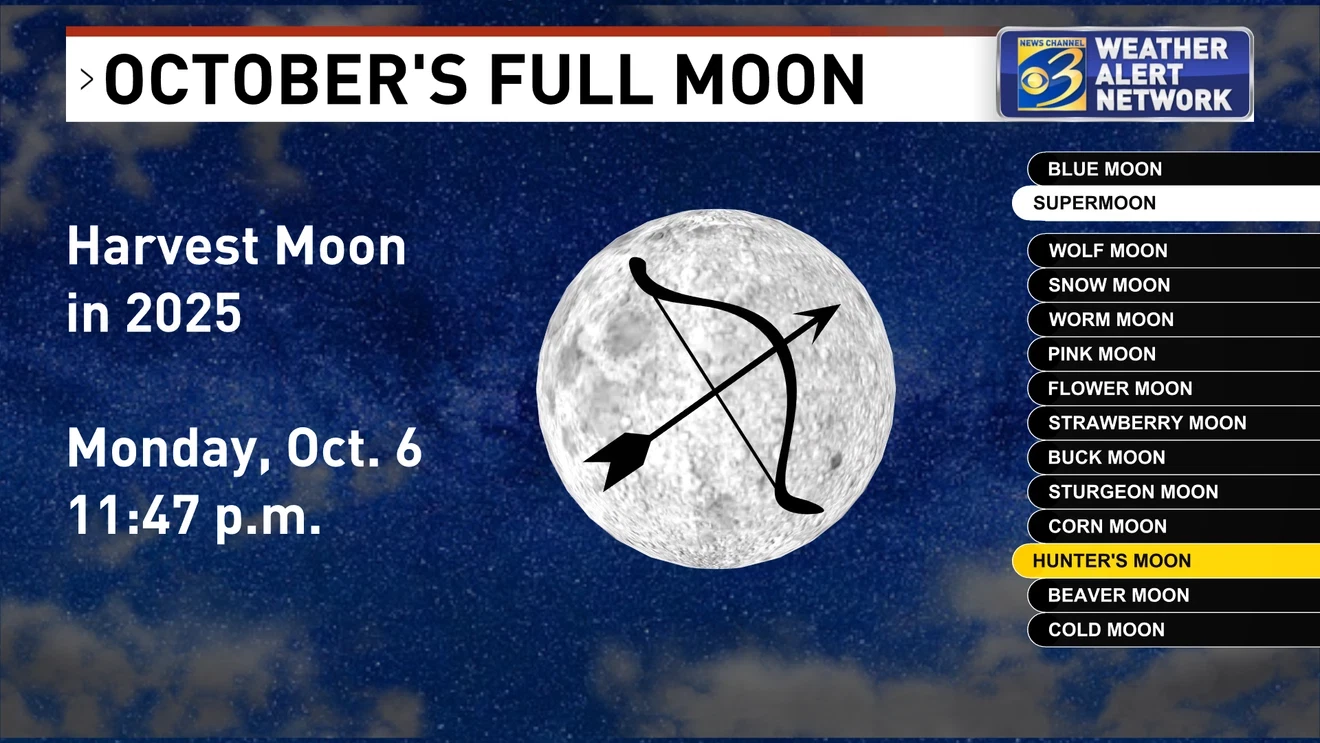
When is the harvest moon 2025? This year’s Harvest Moon occurred on October 6-7, 2025, marking a rare October appearance that only happens every three years on average.
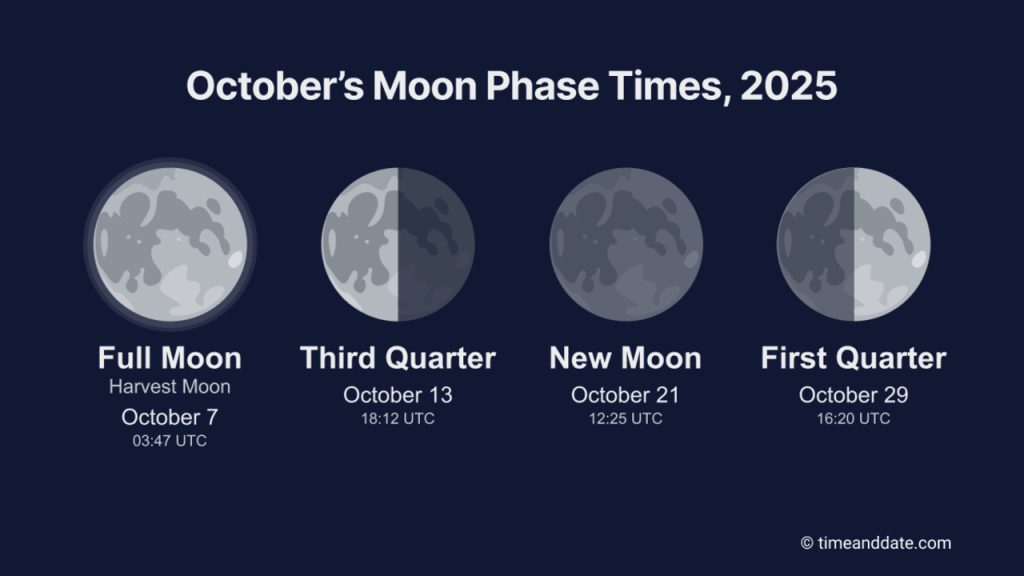
The Harvest Moon reached peak illumination at 11:47 p.m. EDT on October 6 (3:48 UTC on October 7), making it visible worldwide at different times depending on your location.
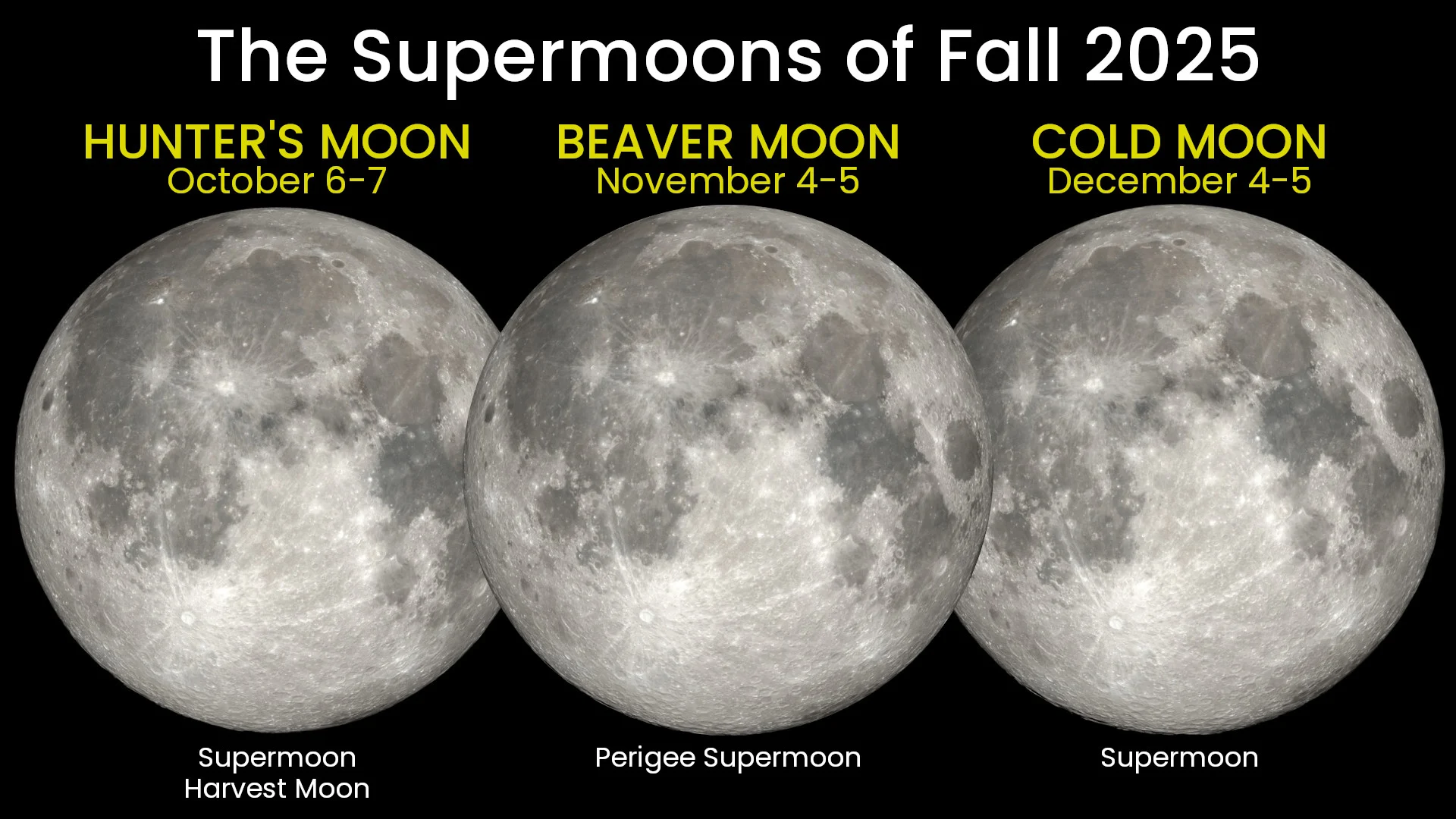
This special full moon wasn’t just any lunar event—it was also the first of three consecutive supermoons to close out 2025, appearing approximately 14% larger and 30% brighter than average.
The timing made it one of the latest Harvest Moons in nearly four decades, last occurring this late in 1987 and 2006.
Understanding the Harvest Moon Definition
The Harvest Moon is the full moon that occurs closest to the autumn equinox, not necessarily in a specific month.
The autumn equinox typically falls around September 22 or 23 each year, marking when day and night are equal in length.
This definition means the Harvest Moon can occur in either September or October, depending on the lunar calendar’s alignment with our solar calendar.
In 2025, the September equinox occurred on September 22, while the September full moon fell early on September 7.
Since October’s full moon on October 6 was closer to the equinox, it earned the Harvest Moon designation this year.
When Is the Harvest Moon 2025 Exact Time Worldwide
The Harvest Moon reached peak illumination at precisely 3:48 UTC on October 7, 2025.
For those in Eastern Daylight Time (EDT), the exact moment occurred at 11:47 p.m. on October 6, 2025.
Viewers in Pacific Daylight Time (PDT) observed the peak at 8:47 p.m. on October 6, 2025.
Central European Time (CET) witnessed the peak at 5:48 a.m. on October 7, 2025.
Australian Eastern Standard Time (AEST) saw the peak at 2:48 p.m. on October 7, 2025.
Japan Standard Time (JST) experienced the peak at 12:48 p.m. on October 7, 2025.
British Summer Time (BST) marked the peak at 4:48 a.m. on October 7, 2025.
Indian Standard Time (IST) recorded the peak at 9:18 a.m. on October 7, 2025.
Why October 2025 Harvest Moon Is Rare
The Harvest Moon falling in October only happens approximately every three years on average.
The last October Harvest Moon occurred in 2020, making 2025’s appearance right on schedule for the typical pattern.
Between 1970 and 2050, there are only 18 years when the Harvest Moon appears in October rather than September.
October 6-7 is nearly the latest possible date for a Harvest Moon, with October 7 being the absolute latest.
This year’s timing marked only the third time since 1987 that the Harvest Moon came this late in the calendar.
The next October Harvest Moon will occur in 2028, continuing the roughly three-year pattern.
The interval between October Harvest Moons can vary significantly, sometimes stretching as long as eight years.
For example, after 2028, the next October Harvest Moon won’t occur until 2036, creating an eight-year gap.
The 2025 Harvest Supermoon Phenomenon
The 2025 Harvest Moon was also classified as a supermoon, creating a spectacular double phenomenon.
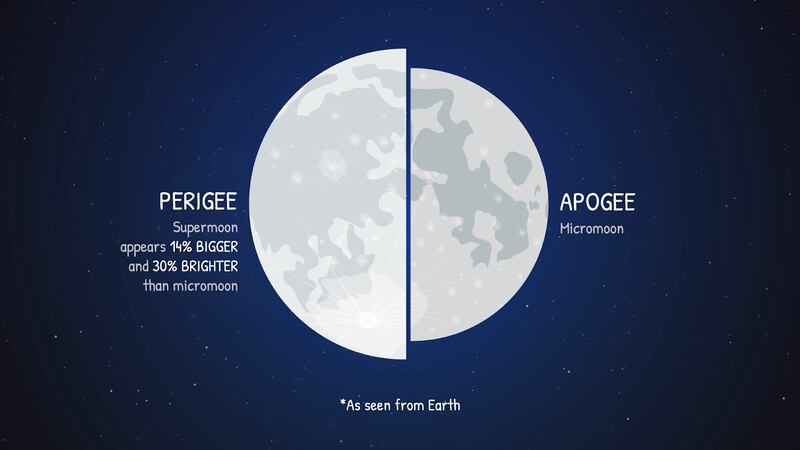
A supermoon occurs when the full moon coincides with perigee, the moon’s closest approach to Earth in its elliptical orbit.
The moon reached perigee at approximately 1:00 p.m. EDT on October 8, about 34 hours after peak fullness.
At perigee, the moon was only 224,599 miles (361,457 kilometers) from Earth, compared to the average distance of 238,855 miles.
This closer distance made the moon appear approximately 14% larger and up to 30% brighter than an average full moon.
The Harvest Moon was the first of three consecutive supermoons concluding 2025, followed by November and December supermoons.
To qualify as a supermoon, the full moon must occur when the moon is within 90% of its perigee distance.
The combination of Harvest Moon and supermoon status created ideal viewing conditions with exceptional brightness and size.
Best Viewing Times for Harvest Moon 2025
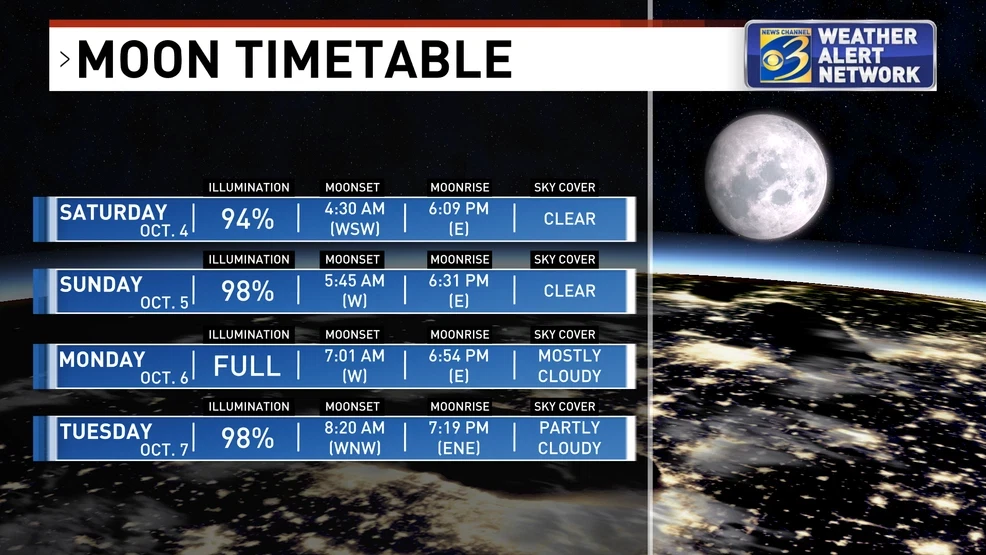
The moon appeared full to the naked eye for approximately three nights: October 5-7, 2025.
The absolute best viewing time was during moonrise on the evening of October 6 in your local area.
Moonrise occurred around sunset, providing the most dramatic visual effect when the moon was near the horizon.
In the UK, the moon rose at 6:20 p.m. BST on October 7, with similar rise times on surrounding nights.
For US viewers on the East Coast, moonrise occurred around 6:38 p.m. EDT on October 6.
The moon’s golden-orange glow was most striking during the 15-20 minutes immediately after local moonrise.
Unlike typical full moons that rise 50 minutes later each night, the Harvest Moon rose at nearly the same time for several consecutive evenings.
This unique timing meant viewers had multiple opportunities to witness spectacular moonrise over three consecutive nights.
Harvest Moon Rise Times Unique Pattern
The Harvest Moon exhibits a unique astronomical characteristic regarding its rise times over consecutive nights.
Typically, the moon rises approximately 50 minutes later each successive night throughout the year.
During the Harvest Moon period, this delay shrinks to only 20-30 minutes in mid-temperate latitudes.
In the UK at 51 degrees north latitude, the rise time difference was only about 10-12 minutes between consecutive nights.
In New York at 40 degrees north latitude, the difference was approximately 25 minutes per night.
At higher northern latitudes, the effect becomes even more pronounced and dramatic.
In Anchorage, Alaska at 61 degrees north latitude, the moon rose at nearly the same time for an entire week.
This phenomenon occurs because the moon’s orbital path makes a shallow angle with the horizon during autumn equinox.
The minimal rise time variation creates the illusion of multiple full moons appearing on successive nights.
Historical Significance and Origin of Name
The name “Harvest Moon” has agricultural origins dating back centuries across multiple cultures.
In Europe, the name was recorded as early as the 700s in Anglo-Saxon and Old High German languages.
The term “Harvest Month” appeared in historical records, reflecting the importance of this lunar period.
Native American tribes also used variations of harvest-related names for the full moon nearest the autumn equinox.
The abundant bright moonlight during consecutive evenings traditionally helped farmers extend their working hours.
Before artificial lighting, farmers relied on this extended moonlight to harvest crops late into the evening.
The extra illumination was crucial for gathering produce before cold weather and frost damaged crops.
This practical agricultural benefit gave the Harvest Moon its enduring name and cultural significance.
Native American Names for October Moon
Native American tribes had diverse names for the October full moon based on regional observations.
The most common traditional name was the Hunter’s Moon, commemorating the hunting season before winter.
The Dakota peoples called it the Drying Rice Moon, marking the time to dry rice for storage.
The Cree tribes named it the Migrating Moon, observing southward bird migrations during this period.
The Anishinaabe called it the Falling Leaves Moon, noting the autumn transition.
The Ojibwe referred to it as the Freezing Moon, acknowledging the onset of colder temperatures.
The Haida people used the name Ice Moon, also reflecting dropping temperatures.
These names remained consistent regardless of whether the October moon was the Harvest Moon or Hunter’s Moon.
September 2025 Corn Moon Explained
When the Harvest Moon falls in October, September’s full moon receives a different designation.
September 2025’s full moon occurred on September 7 at 2:09 p.m. EDT (18:08 UTC).
This September full moon was called the Corn Moon or Green Corn Moon instead of the Harvest Moon.
The Corn Moon name reflects the corn harvesting season occurring throughout much of North America.
Western Abenaki tribes called it the Corn Maker Moon, emphasizing the corn harvest.
Dakota tribes used the name Corn Harvest Moon for their September full moon.
Pueblo and Zuni peoples of the Southwest called it “Moon When the Corn is Taken In.”
These agricultural names highlight the importance of corn cultivation to indigenous American cultures.
The Science Behind Harvest Moon Brightness
The perceived brightness of the Harvest Moon involves both actual and optical factors.
As a supermoon, the 2025 Harvest Moon was genuinely about 30% brighter than average due to proximity.
The moon’s closer distance to Earth meant more reflected sunlight reached our planet.
However, the moon doesn’t actually appear larger or brighter throughout the entire night.
The most dramatic size and brightness occur when the moon is near the horizon at moonrise or moonset.
This effect is due to the “moon illusion,” an optical phenomenon that makes the moon appear enormous near the horizon.
The illusion occurs because our brains compare the moon to foreground objects like buildings and trees.
When the moon is high in the sky with no reference points, it appears smaller despite being the same actual size.
Harvest Moon Color and Orange Glow
The Harvest Moon often displays a distinctive orange or golden color when rising.
This coloration occurs because moonlight must travel through more of Earth’s atmosphere when the moon is near the horizon.
Earth’s atmosphere scatters shorter blue wavelengths of light, allowing longer red and orange wavelengths to pass through.
This is the same phenomenon that creates colorful sunrises and sunsets.
The effect is most pronounced during the 15-20 minutes immediately after moonrise.
As the moon rises higher in the sky, it appears whiter and less colorful.
Air pollution and particles in the atmosphere can intensify the orange coloring.
Clear, clean air produces less dramatic coloring, while hazy conditions enhance the orange tint.
Harvest Moon Visibility Across Different Hemispheres
The Harvest Moon is primarily a Northern Hemisphere phenomenon tied to the September equinox.
In the Southern Hemisphere, the seasons are reversed, with September marking the spring equinox.
Southern Hemisphere residents experience their “Harvest Moon effect” around the March equinox instead.
During the Southern Hemisphere’s autumn (March), the moon exhibits the same minimal rise-time delay pattern.
For Southern Hemisphere viewers, the March full moon near the equinox provides extended evening moonlight.
The October 2025 Harvest Moon was visible from the Southern Hemisphere but without the same cultural significance.
The astronomical phenomenon of perigee and the supermoon effect were global, visible from both hemispheres.
However, the agricultural and cultural associations with harvest time apply specifically to Northern Hemisphere autumn.
November 2025 Beaver Supermoon Follow-Up
Following the Harvest Moon, November’s full moon was called the Beaver Moon.
The Beaver Moon occurred on November 5, 2025, at 8:19 a.m. EST (13:19 UTC).
This was the second of three consecutive supermoons closing out 2025.
Remarkably, the November supermoon was the largest and closest supermoon since 2019.
The Beaver Moon name reflects the time when beavers actively build their winter dams.
Historically, it also marked the time to set beaver traps before waters froze.
The Hunter’s Moon, traditionally October’s moon, became November’s designation in 2025 due to the calendar shift.
By definition, the Hunter’s Moon is always the full moon immediately following the Harvest Moon.
December 2025 Cold Supermoon Conclusion
December’s full moon, called the Cold Moon, occurred on December 4, 2025, at 6:14 p.m. EST.
This was the third and final consecutive supermoon of 2025.
The Cold Moon name reflects the arrival of deep winter cold and long, dark nights.
Ancient Druids called December’s moon the Oak Moon, related to harvesting mistletoe from oak trees.
This concluded 2025’s remarkable run of three consecutive supermoons in October, November, and December.
After three months of larger-than-average full moons, 2026 would return to normal lunar distances.
The Cold Moon provided a spectacular finale to 2025’s astronomical events.
Observers worldwide enjoyed enhanced moonlit nights throughout the final quarter of 2025.
Photographing the Harvest Moon Tips
The best time to photograph the Harvest Moon is during the 15-20 minutes after moonrise.
Choose a location with an unobstructed eastern horizon for the clearest view of moonrise.
Elevated positions provide better vantage points and reduce atmospheric interference.
Including foreground elements like buildings, trees, or landmarks creates more interesting compositions.
Use a telephoto lens (200mm or longer) to capture the moon’s size more dramatically.
Lower ISO settings (100-400) reduce noise and produce cleaner images.
Faster shutter speeds (1/125 to 1/250 second) prevent blur from the moon’s movement.
Bracket your exposures to ensure you capture the best-exposed image.
The moon moves quickly, so be prepared and set up well before moonrise.
Cultural Celebrations and Festivals
The Harvest Moon coincides with numerous cultural festivals worldwide, particularly in East Asian cultures.
The Mid-Autumn Festival, also called the Moon Festival, is celebrated in Chinese and Vietnamese communities worldwide.
This festival traditionally occurs on the day of the Harvest Moon, making it a major cultural event.
Families reunite, share mooncakes (special pastries), and appreciate the full moon together.
In Korea, Chuseok is a major harvest festival celebrated during the Harvest Moon period.
This three-day festival includes ancestral rituals, traditional foods, and family gatherings.
In Japan, Tsukimi (moon viewing) is a traditional custom dating back over a thousand years.
Japanese celebrations include offering rice dumplings and decorating with pampas grass.
In the United States, numerous Harvest Moon festivals feature farmers’ markets, craft fairs, and concerts.
Harvest Moon in Popular Culture
The Harvest Moon has inspired countless cultural references in music, games, and literature.
Canadian musician Neil Young’s 1992 song “Harvest Moon” became a Billboard hit and remains iconic.
The song’s romantic imagery of dancing under the Harvest Moon resonated with audiences globally.
The Harvest Moon video game series by Nintendo has been popular since 1996.
These farming simulation games allow players to experience agricultural life through the seasons.
The Harvest Moon appears in numerous poems, novels, and artistic works throughout history.
Many romance novels and films use the Harvest Moon as a symbolic romantic backdrop.
The term “Harvest Moon” evokes nostalgia, romance, and connection to nature and agricultural traditions.
Its cultural impact extends far beyond astronomy into music, gaming, literature, and art.
Moon Illusion Scientific Explanation
The moon illusion is one of the oldest unsolved mysteries in psychology and astronomy.
When the moon is near the horizon, our brains perceive it as significantly larger than when it’s overhead.
However, photographs prove the moon’s actual size remains identical regardless of position in the sky.
Scientists believe the illusion relates to how our brains process size in relation to context.
When near the horizon, our brains compare the moon to familiar objects like buildings and trees.
This comparison tricks our perception into seeing the moon as abnormally large.
When overhead with no reference points, our brains lack context and perceive the moon as smaller.
The Ponzo illusion, a well-known optical effect, may explain part of the moon illusion.
Despite centuries of study, no single explanation fully accounts for why we experience this powerful illusion.
Astronomical Mechanics of Supermoons
Supermoons occur due to the moon’s elliptical, not circular, orbit around Earth.
This elliptical orbit means the moon’s distance from Earth varies throughout each monthly cycle.
Perigee is the closest point in the moon’s orbit, averaging about 226,000 miles from Earth.
Apogee is the farthest point in the moon’s orbit, averaging about 251,000 miles from Earth.
The difference between perigee and apogee distance is approximately 25,000 miles.
When a full moon coincides with perigee, astronomers call it a “perigean full moon.”
The term “supermoon” is informal and requires the full moon to occur within 90% of perigee distance.
Not every full moon qualifies as a supermoon—they occur only a few times per year.
The moon’s elliptical orbit naturally creates three to four supermoons annually in clusters.
Harvest Moon Effect on Tides
The Harvest Moon, especially as a supermoon, creates higher-than-normal tides called “perigean spring tides.”
All full moons cause spring tides due to the alignment of the sun, Earth, and moon.
Spring tides occur twice monthly during new and full moons when gravitational forces combine.
The closer proximity during a supermoon intensifies these gravitational effects significantly.
Coastal areas experience noticeably higher high tides and lower low tides during supermoons.
The October 2025 Harvest Supermoon produced tidal ranges approximately 5-10% greater than average full moons.
Coastal flooding risks increase slightly during supermoons, especially when combined with storms.
Mariners and coastal communities pay attention to supermoon dates for navigational and safety planning.
The gravitational effects are measurable but generally not dramatic enough to cause major disruptions.
Wildlife Behavior During Harvest Moon
Many animal species exhibit behavioral changes during the bright nights of the Harvest Moon.
Nocturnal animals may reduce activity when moonlight makes them more visible to predators.
Conversely, predators that rely on vision may increase hunting activity during bright moonlit nights.
Marine animals, particularly those in coastal areas, respond to the stronger tides created by supermoons.
Fish and crustaceans often move with the tides, affecting fishing patterns during supermoons.
Some bird species time their migrations to coincide with bright moonlit nights for better navigation.
Deer and other game animals were historically more visible during Harvest Moon nights, hence “Hunter’s Moon.”
Insects attracted to light may show altered behavior during exceptionally bright full moons.
Scientific research continues to explore the complex relationships between lunar cycles and animal behavior.
Meteor Showers and Harvest Moon 2025
The Harvest Moon’s brightness can interfere with meteor shower observations during early October.
The Draconid meteor shower peak occurred on October 8, just two days after the Harvest Moon.
This shower typically produces about 10 meteors per hour from the constellation Draco.
The Harvest Supermoon’s exceptional brightness made fainter meteors difficult or impossible to see.
Serious meteor observers generally prefer dark, moonless skies for optimal viewing conditions.
However, brighter meteors were still visible despite the moonlight interference.
The Orionid meteor shower later in October (October 21-22) occurred during a more favorable new moon phase.
Astronomy enthusiasts must balance moon phase with meteor shower timing when planning observations.
The October 2025 Harvest Moon demonstrated how bright full moons can impact astronomical observations.
Saturn Conjunction with Harvest Moon
The October 2025 Harvest Moon appeared close to the planet Saturn in the night sky.
Saturn shone about 15 degrees to the upper right of the full moon during moonrise on October 6.
This proximity occurred because both the full moon and Saturn were opposite the sun in the sky.
Saturn had reached opposition on September 21, meaning it was directly opposite the sun from Earth’s perspective.
During opposition, planets are at their brightest and most favorable for observation.
The ringed planet appeared as a bright, yellowish-golden “star” near the moon.
The Square of Pegasus asterism formed a diamond pattern directly above the moon and Saturn.
This celestial alignment provided an excellent opportunity for backyard astronomers to observe both objects.
Saturn’s rings and largest moons were visible through small telescopes during this close approach.
Future Harvest Moons Through 2030
The Harvest Moon will return to September for 2026, occurring on September 26.
In 2027, September 16 will host the Harvest Moon as the lunar calendar shifts.
The year 2028 brings another October Harvest Moon on October 5.
September 22, 2029, will feature an extremely rare “pure” Harvest Moon nearly coinciding with the equinox.
By 2030, the Harvest Moon returns to October 12.
These dates demonstrate the variable nature of Harvest Moon timing across different years.
The pattern reflects the complex interaction between lunar cycles and solar calendar dates.
Astronomy enthusiasts can plan years ahead for optimal Harvest Moon viewing opportunities.
Each Harvest Moon offers unique characteristics depending on its exact timing and distance from Earth.
Impact of Light Pollution on Viewing
Light pollution significantly affects the quality of Harvest Moon observations, especially in urban areas.
City lights wash out the moon’s subtle color variations and reduce contrast against the sky.
Rural locations with minimal artificial lighting provide the best viewing experiences.
Dark sky preserves and remote areas offer ideal conditions for Harvest Moon appreciation.
Even moderately lit suburban areas can diminish the moon’s visual impact.
Light pollution has increased dramatically over recent decades, affecting astronomical observations globally.
International Dark Sky Association works to reduce light pollution and preserve natural night skies.
Finding darker viewing locations, even just 30-60 minutes outside cities, dramatically improves the experience.
The Harvest Moon is bright enough to be visible from anywhere, but darkness enhances appreciation.
Technology and Harvest Moon Tracking
Modern technology has revolutionized how we track and predict lunar events like the Harvest Moon.
Smartphone apps like SkySafari, Star Walk, and Stellarium provide real-time moon position information.
These apps can alert users to optimal moonrise times based on their specific location.
Online calculators from TimeAndDate.com and other sites provide precise local moonrise and moonset times.
NASA and other space agencies publish detailed lunar phase calendars years in advance.
Photographers use apps like PhotoPills to plan moon photography with augmented reality features.
Live streams and webcams worldwide allow virtual observation of moonrise from different locations.
Social media platforms enable global sharing of Harvest Moon photographs and experiences in real-time.
This technology makes astronomical events more accessible to the general public than ever before.
Educational Opportunities with Harvest Moon
The Harvest Moon provides excellent educational opportunities for teaching astronomy and cultural history.
Teachers can use the event to explain lunar phases, orbital mechanics, and Earth’s seasons.
The cultural history of moon naming connects astronomy to anthropology and social studies.
Photography lessons can incorporate lunar photography techniques and exposure principles.
Mathematics teachers can use moon distance calculations to teach geometry and trigonometry.
The agricultural connection allows discussion of traditional farming practices and seasonal cycles.
Environmental science classes can explore how lunar cycles affect tides, wildlife, and ecosystems.
Art classes might create Harvest Moon-inspired paintings, drawings, or poetry.
These cross-curricular connections make the Harvest Moon a valuable educational tool.
Climate and Weather Effects on Visibility
Weather conditions dramatically impact Harvest Moon visibility despite the moon’s inherent brightness.
Cloud cover can completely obscure the moon, making viewing impossible in affected areas.
Partly cloudy conditions create dramatic scenes with the moon appearing and disappearing behind clouds.
Humidity and atmospheric moisture affect the intensity of the orange color at moonrise.
Clean, dry air produces whiter, brighter moonlight with less color distortion.
Hazy or humid conditions enhance the orange and red tones through additional light scattering.
Temperature inversions can create unusual atmospheric effects that distort the moon’s shape.
Autumn weather patterns in many regions provide relatively clear skies favorable for moon viewing.
Checking local weather forecasts helps determine the best nights for Harvest Moon observation.
Historical Records and Observations
Ancient cultures worldwide kept meticulous records of lunar cycles and special moons.
Chinese astronomical records dating back over 3,000 years document moon observations and eclipses.
Babylonian astronomers created lunar tables that predicted moon phases with remarkable accuracy.
Native American oral traditions preserved moon names and their agricultural associations across generations.
Medieval European manuscripts contain illustrations and descriptions of harvest-time full moons.
The agricultural connection between bright moons and extended working hours appears across numerous cultures.
Modern records allow us to trace Harvest Moon dates back centuries and project forward.
These historical observations demonstrate humanity’s enduring fascination with lunar cycles.
Contemporary digital records ensure future generations can study lunar patterns indefinitely.
Spiritual and Astrological Significance
Many spiritual traditions ascribe special significance to the Harvest Moon beyond its agricultural importance.
In astrology, the Harvest Moon represents completion, gratitude, and preparation for dormant periods.
Some believe the Harvest Moon’s energy is ideal for releasing what no longer serves you.
Meditation and reflection practices often incorporate full moon energy, especially during significant moons.
Various traditions perform ceremonies and rituals during the Harvest Moon to honor abundance.
The moon’s association with feminine energy makes it significant in goddess-centered spiritual practices.
Modern paganism and Wiccan traditions celebrate the Harvest Moon as a sabbat or special observance.
Crystal healing practitioners believe the Harvest Supermoon amplifies the energy of charging crystals.
While these beliefs lack scientific validation, they represent meaningful cultural and personal practices for many.
Economic Impact of Harvest Moon Tourism
The Harvest Moon generates significant tourism revenue through festivals and events worldwide.
Harvest Moon festivals attract thousands of visitors to rural communities annually.
Accommodations in prime viewing locations often book months in advance for Harvest Moon weekends.
Restaurants and local businesses benefit from increased foot traffic during festival weekends.
Photography tours and workshops capitalize on the Harvest Moon’s visual appeal.
Planetariums and observatories offer special programs and viewing events during the Harvest Moon.
Agricultural tourism sites combine Harvest Moon viewing with farm experiences and local produce sales.
The economic impact extends to equipment sales as amateur astronomers purchase telescopes and cameras.
This “astrotourism” represents a growing sector of eco-tourism and experiential travel.
Common Harvest Moon Misconceptions
Many people believe the Harvest Moon is always bigger and brighter than other full moons—this is false.
The Harvest Moon is only larger when it coincides with perigee, creating a supermoon.
Some think the Harvest Moon always occurs in September, but it appears in October every few years.
The moon doesn’t actually change size or distance dramatically throughout the night despite appearing larger near the horizon.
The orange color isn’t unique to the Harvest Moon—any full moon near the horizon can appear orange.
There’s no scientific evidence that full moons, including the Harvest Moon, cause increased emergency room visits or unusual behavior.
The term “Harvest Moon” doesn’t indicate any special astronomical event beyond timing relative to the equinox.
The moon’s brightness doesn’t affect plant growth or harvests—the name simply reflects historical farming practices.
Understanding these facts helps appreciate the Harvest Moon for what it truly is astronomically.
Connection to Modern Agriculture
Modern agriculture no longer relies on moonlight for extended working hours due to artificial lighting.
However, many farmers still acknowledge and appreciate the cultural tradition of the Harvest Moon.
Organic and traditional farmers may still time certain activities by lunar phases.
The Harvest Moon marks a seasonal transition point that remains relevant for crop planning.
Fall harvest schedules still generally align with the late September to early October timeframe.
Agricultural fairs and celebrations often coincide with Harvest Moon timing, maintaining the cultural connection.
The moon’s gravitational effects on soil moisture and plant physiology remain subjects of study.
Some biodynamic farming practices specifically incorporate lunar cycles into planting and harvesting schedules.
Whether scientifically validated or not, the Harvest Moon maintains symbolic importance in agricultural communities.
Frequently Asked Questions
When is the harvest moon 2025 exactly?
The Harvest Moon 2025 occurred on October 6-7, reaching peak illumination at 11:47 p.m. EDT on October 6 (3:48 UTC on October 7). It appeared full for three nights from October 5-7.
Why is the 2025 Harvest Moon in October instead of September?
The Harvest Moon is the full moon closest to the autumn equinox (September 22, 2025). Since September’s full moon fell on September 7, and October’s fell on October 6, the October moon was closer to the equinox and thus became the Harvest Moon.
What time does the Harvest Moon rise in different time zones?
Moonrise times vary by location. In EDT: 6:38 p.m., PDT: 6:00 p.m., GMT/UTC: 11:00 p.m., CET: 1:00 a.m., AEST: 7:00 a.m. Check local astronomy apps for precise times in your specific location.
Is the 2025 Harvest Moon also a supermoon?
Yes, the 2025 Harvest Moon was also a supermoon, the first of three consecutive supermoons in October, November, and December. It appeared 14% larger and 30% brighter than an average full moon due to its proximity to Earth.
How often does the Harvest Moon occur in October?
The Harvest Moon falls in October approximately every three years on average. Between 1970 and 2050, there are only 18 October Harvest Moons. The last was in 2020, and the next will be in 2028.
Why does the Harvest Moon appear orange?
The orange color occurs when the moon is near the horizon because its light travels through more atmosphere. Earth’s atmosphere scatters blue wavelengths while allowing red and orange wavelengths to pass through, creating the golden-orange glow.
What is special about Harvest Moon rise times?
Unlike typical full moons that rise 50 minutes later each night, the Harvest Moon rises only 20-30 minutes later on consecutive nights. At higher latitudes like Alaska, it rises at nearly the same time for an entire week.
Can the Harvest Moon be seen from the Southern Hemisphere?
Yes, the Harvest Moon is visible from the Southern Hemisphere, but it doesn’t hold the same cultural significance there. Southern Hemisphere residents experience their version of the “Harvest Moon effect” during their autumn around the March equinox.
What is the difference between Harvest Moon and Hunter’s Moon?
The Harvest Moon is the full moon closest to the autumn equinox, while the Hunter’s Moon is the full moon immediately following the Harvest Moon. In 2025, October had the Harvest Moon and November had the Hunter’s Moon.
How does the Harvest Moon affect tides?
As a supermoon, the 2025 Harvest Moon created higher-than-normal tides called “perigean spring tides.” Coastal areas experienced tidal ranges approximately 5-10% greater than average full moons due to the moon’s closer proximity to Earth.
Conclusion
When is the harvest moon 2025? This question has been answered with precision: October 6-7, 2025, marked one of the most spectacular Harvest Moons in recent decades.
The rare October timing, combined with supermoon status, created a celestial event that captivated sky watchers worldwide. From its peak illumination at 11:47 p.m. EDT on October 6 to its golden-orange glow at moonrise across different time zones, the 2025 Harvest Moon lived up to its legendary reputation.
The unique astronomical characteristics—rising at nearly the same time for three consecutive nights and appearing 14% larger than average—demonstrated why this full moon has held such cultural significance throughout human history.
The 2025 Harvest Moon reminded us of our deep connection to celestial cycles and seasonal transitions. Whether you observed it from North America, Europe, Asia, or elsewhere globally, this supermoon provided a shared experience transcending geographical boundaries.