What Day Is Mardi Gras 2025? Date & Facts 2026

What day is Mardi Gras 2025 is one of the most searched questions every year as the festive season approaches. Mardi Gras 2025 falls on Tuesday, March 4, 2025, also known as Fat Tuesday.
It is the last day of the Carnival season before Lent begins on Ash Wednesday. Millions of people celebrate this vibrant holiday with parades, costumes, king cake, and beads — most famously in New Orleans, Louisiana.
Whether you are planning a trip or just want to know the date, this complete guide covers everything you need to know about Mardi Gras 2025 and upcoming dates for 2026.
What Day Is Mardi Gras 2025? The Exact Date

Mardi Gras 2025 is on Tuesday, March 4, 2025.
This date is also called Fat Tuesday or Shrove Tuesday. It falls exactly one day before Ash Wednesday, which marks the beginning of Lent on March 5, 2025.
The date of Mardi Gras changes every year because it is tied to the date of Easter. Since Easter moves annually based on the lunar calendar, Mardi Gras can fall on any Tuesday between February 3 and March 9.
Why Does Mardi Gras Fall on Different Dates Each Year?
Mardi Gras is always 47 days before Easter Sunday. Easter itself is set as the first Sunday after the first full moon that follows the spring equinox.
Because the full moon shifts each year, Easter — and therefore Mardi Gras — lands on a different date every single year. In 2025, Easter Sunday falls on April 20, making Mardi Gras land on March 4.
This means you cannot simply mark the same date on your calendar each year. You always need to check the specific year to know when Fat Tuesday falls.
Mardi Gras Dates: 2025, 2026, and Beyond
Here is a handy reference table so you can plan ahead for future Mardi Gras celebrations:
| Year | Mardi Gras Date | Day of Week | Ash Wednesday |
|---|---|---|---|
| 2025 | March 4, 2025 | Tuesday | March 5, 2025 |
| 2026 | February 17, 2026 | Tuesday | February 18, 2026 |
| 2027 | February 9, 2027 | Tuesday | February 10, 2027 |
| 2028 | February 29, 2028 | Tuesday | March 1, 2028 |
| 2029 | February 13, 2029 | Tuesday | February 14, 2029 |
| 2030 | March 5, 2030 | Tuesday | March 6, 2030 |
Mardi Gras 2026 falls on February 17, 2026. If you missed 2025, start planning for 2026 now. The Carnival season for 2026 will begin on January 6, 2026 (Twelfth Night) and end on February 17, 2026.
What Is Mardi Gras? A Simple Explanation
Mardi Gras is French for “Fat Tuesday.” The name refers to the tradition of eating rich, fatty foods before the fasting season of Lent begins.
It is the final day of the Carnival season, which officially starts on January 6 each year — a holy day known as Twelfth Night or the Feast of Epiphany. The entire period from January 6 to Fat Tuesday is considered Carnival season.
Christians have observed this pre-Lent celebration for centuries. Today, Mardi Gras is celebrated around the world with parades, costumes, music, and food — and most famously in New Orleans, Louisiana.
Mardi Gras 2025 — Carnival Season Calendar
The 2025 Mardi Gras season did not start on March 4. It began much earlier.
The official start of Carnival 2025 was January 6, 2025 (Twelfth Night). From that day forward, parades, balls, and events began rolling out across New Orleans and other Mardi Gras cities.
The final and most celebrated weekend ran from February 28 to March 4, 2025, featuring the biggest parades of the season. Here is how the 2025 season broke down:
| Period | Dates | Events |
|---|---|---|
| Carnival Kickoff | January 6, 2025 | Twelfth Night / Phunny Phorty Phellows streetcar ride |
| First Major Weekend | February 14–16, 2025 | 11 parades including Krewe du Vieux |
| Second Major Weekend | February 21–23, 2025 | 23 parades including Krewe of Cleopatra & Barkus |
| Final Weekend (Peak) | February 28 – March 2, 2025 | Endymion, Bacchus, Orpheus parades |
| Lundi Gras | March 3, 2025 | Day before Fat Tuesday; Zulu King arrives |
| Mardi Gras Day (Fat Tuesday) | March 4, 2025 | Zulu and Rex parades; culmination of season |
| Ash Wednesday | March 5, 2025 | Lent begins; Carnival season ends |
What Is Fat Tuesday?
Fat Tuesday is another name for Mardi Gras Day — March 4, 2025.
The name comes from the tradition of eating rich, indulgent food before the fasting period of Lent begins. People historically used up all their butter, eggs, meat, and other rich foods on this final day before the 40-day period of Christian fasting.
Today, Fat Tuesday is a day of celebration, parades, street parties, and feasting. In New Orleans, it is a public holiday where most businesses close and the entire city joins the festivities.
The History of Mardi Gras
Mardi Gras has ancient roots stretching back thousands of years.
Historians trace its origins to pagan spring and fertility celebrations in ancient Rome. When Christianity spread through Europe during the medieval period, religious leaders incorporated these existing festivals into the pre-Lenten tradition, turning them into the Carnival we know today.
The celebration came to North America in 1699 when French-Canadian explorer Pierre Le Moyne d’Iberville arrived near present-day New Orleans on March 3 — which happened to be Mardi Gras Day. He named his campsite “Pointe du Mardi Gras” in honor of the holiday.
America’s very first organized Mardi Gras celebration took place in Mobile, Alabama in 1703, making Mobile — not New Orleans — the true birthplace of Mardi Gras in the United States.
New Orleans took over as the spiritual home of Mardi Gras in the 1800s. The first recorded New Orleans street parade took place in 1833. By 1857, the Mistick Krewe of Comus had organized the city’s first torch-lit parade with floats and marching bands — setting the template for all future Mardi Gras celebrations.
Mardi Gras in New Orleans — Why Is It So Famous?
New Orleans hosts the most famous Mardi Gras celebration in the world.
The city’s deep French Catholic heritage, vibrant music culture, and love of festivity made it the perfect home for Carnival. New Orleans Mardi Gras draws an estimated 1 to 1.4 million visitors each year, injecting over a billion dollars into the local economy.
The celebration features dozens of parades organized by social clubs known as krewes. Each krewe has its own history, traditions, float designs, and signature throws.
The French Quarter, Bourbon Street, and St. Charles Avenue are the heart of the action. But parades actually originate in the Uptown and Mid-City districts before rolling through the city to Canal Street.
Mardi Gras Krewes — The Parade Organizers
Krewes are the secret social clubs that organize and fund the Mardi Gras parades.
The oldest krewe in New Orleans is the Mistick Krewe of Comus, founded in 1856. Other legendary krewes include Rex, Zulu, Bacchus, Endymion, Orpheus, Muses, and Proteus.
Each krewe pays for its own floats, costumes, and throws entirely from membership dues. This is why New Orleanians proudly call Mardi Gras the “Greatest Free Show on Earth” — the parades are fully funded privately and free to watch.
Here are the most famous krewes and what makes them special:
| Krewe | Known For | Notable Feature |
|---|---|---|
| Rex | “King of Carnival” | Most traditional; established Mardi Gras colors |
| Zulu | African American tradition | Famous hand-decorated coconut throws |
| Bacchus | Celebrity kings | One of the largest super krewes |
| Endymion | Extravagance | Rolls on the Saturday before Mardi Gras |
| Orpheus | Celebrity royalty | Founded by Harry Connick Jr. |
| Muses | All-female krewe | Famous for decorated high-heel shoe throws |
| Krewe du Vieux | Adult humor & satire | Walking parade in the French Quarter |
| Barkus | Dogs only | Costumed pets parade through the Quarter |
Mardi Gras Colors — Purple, Gold, and Green
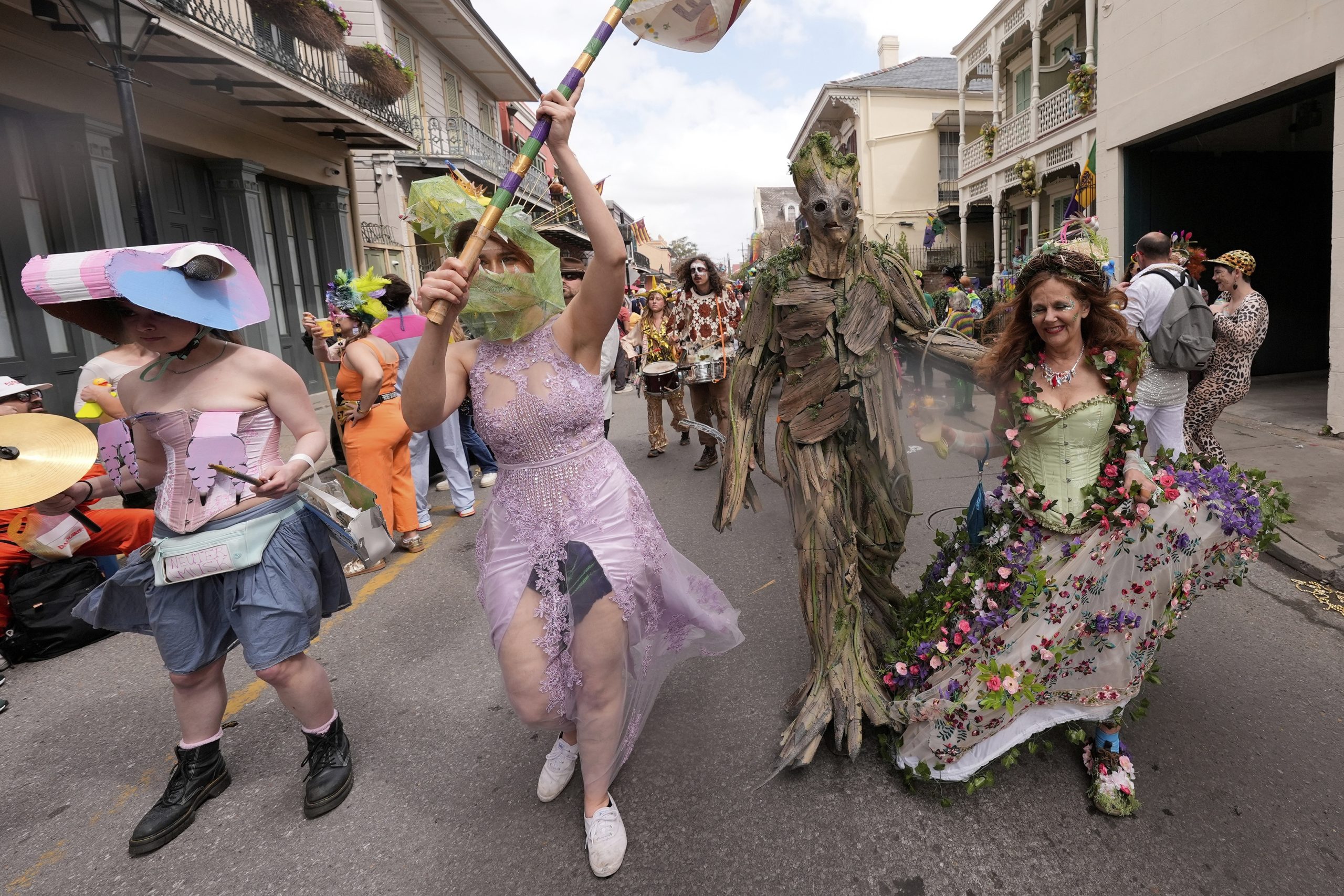
Every Mardi Gras celebration uses three iconic colors: purple, gold, and green.
These colors were established by the Rex krewe in 1872. Purple represents justice, gold represents power, and green represents faith.
You will see these colors on beads, floats, costumes, decorations, and king cakes everywhere during Mardi Gras season. They are instantly recognizable and deeply tied to the spirit of the celebration.
Mardi Gras Throws — What Gets Tossed from Floats?
One of the most beloved traditions of Mardi Gras is catching throws from parade floats.
Float riders toss items into the crowd as the parade rolls past. Spectators shout “Throw me something, mister!” — a phrase that has become a Mardi Gras institution.
Here are the most popular Mardi Gras throws:
| Throw Item | Description |
|---|---|
| Plastic Beads | The most iconic Mardi Gras souvenir |
| Doubloons | Aluminum coins stamped with the krewe’s logo |
| Throw Cups | Decorated plastic cups — very collectible |
| Zulu Coconuts | Hand-painted coconuts from the Zulu krewe |
| Muses Shoes | Decorated high-heel shoes from the Muses krewe |
| Stuffed Animals | Plush toys thrown from floats |
| Moon Pies | Classic Southern treat; especially popular in Mobile |
| Beaded Necklaces | Specialty beads with medallions or shapes |
King Cake — The Mardi Gras Dessert
No Mardi Gras celebration is complete without a king cake.
King cake is a sweet, ring-shaped pastry decorated in purple, gold, and green icing. It is eaten throughout the Carnival season, from Twelfth Night through Fat Tuesday.
Hidden inside every king cake is a tiny plastic baby. Whoever finds the baby in their slice is said to have good luck — but they are also traditionally responsible for buying the next king cake.
King cakes are found in bakeries, grocery stores, and restaurants all across New Orleans and the Gulf Coast during Mardi Gras season. In 2025, bakeries shipped king cakes to all 50 states and internationally.
Mardi Gras 2025 vs Mardi Gras 2026 — Key Differences
| Feature | Mardi Gras 2025 | Mardi Gras 2026 |
|---|---|---|
| Fat Tuesday Date | March 4, 2025 | February 17, 2026 |
| Ash Wednesday | March 5, 2025 | February 18, 2026 |
| Easter Sunday | April 20, 2025 | April 5, 2026 |
| Season Start | January 6, 2025 | January 6, 2026 |
| Season Length | ~57 days | ~42 days |
| Expected Crowds | Very large (post-2024 rebound) | Expected to be large |
Mardi Gras 2026 falls earlier in the year — February 17 — making it a shorter Carnival season overall. If you are planning a trip for 2026, book early as February dates fill up fast.
Where Else Is Mardi Gras Celebrated in the USA?
While New Orleans is the most famous, Mardi Gras is celebrated in many cities across the United States.
Mobile, Alabama is actually the birthplace of Mardi Gras in America. The city celebrates with its own proud traditions and attracts around 850,000 visitors annually. Mobile’s Mardi Gras events actually begin as early as November with society balls.
Galveston, Texas hosts the third-largest Mardi Gras in the USA. The celebration has been running for over 115 years and features parades, live music, balcony parties, and events on The Strand historic district.
St. Louis, Missouri claims to host the second-largest Mardi Gras in the US, centered in the historic French neighborhood of Soulard. The celebration draws hundreds of thousands of visitors each year.
Biloxi and Gulf Coast, Mississippi celebrate with parades and events tied closely to the New Orleans tradition.
Mardi Gras Around the World
Mardi Gras is not just an American tradition. Pre-Lenten Carnival celebrations happen all over the world.
Brazil hosts the world’s most famous Carnival in Rio de Janeiro — a week-long extravaganza featuring spectacular samba performances, elaborate floats, and millions of participants.
Venice, Italy holds its famous Carnevale, which dates back to the 13th century. It is world-renowned for its masquerade balls and ornate costumes.
Germany celebrates under various names including Karneval, Fastnacht, and Fasching, with parades, costume balls, and the tradition of women cutting off men’s ties on Shrove Tuesday.
Belgium holds the Carnival of Binche, recognized by UNESCO as a Masterpiece of Intangible Cultural Heritage.
Canada marks the season with Quebec Winter Carnival — one of the world’s largest winter festivals.
Mardi Gras Food Traditions
Food is central to the Mardi Gras experience. Here are the most iconic dishes and drinks associated with the season:
| Food/Drink | Description |
|---|---|
| King Cake | Sweet pastry with a hidden baby inside |
| Beignets | Deep-fried French pastries dusted with powdered sugar |
| Jambalaya | Spicy rice dish with meat and vegetables |
| Gumbo | Rich Creole stew served with rice |
| Crawfish Étouffée | Crawfish in buttery Creole sauce over rice |
| Po’boys | New Orleans submarine sandwiches |
| Bourbon Street Hurricane | Classic New Orleans cocktail |
| Café Du Monde Coffee | Chicory-blend coffee with beignets |
These foods are deeply tied to New Orleans Creole and Cajun culture. Eating traditional Mardi Gras food is one of the best ways to experience the spirit of the season wherever you are.
Safety Tips for Attending Mardi Gras 2026
If you are planning to attend Mardi Gras 2026 in New Orleans, here are some important tips to keep in mind:
Plan ahead: Hotel rooms near the French Quarter sell out months in advance. Book as early as possible for the final weekend of Carnival.
Stay hydrated: Mardi Gras is a multi-day event. Drinking water consistently throughout the day is essential, especially if you are also drinking alcohol.
Wear comfortable shoes: You will walk miles during Mardi Gras. Wear broken-in, comfortable footwear that you do not mind getting dirty.
Bring a bag: You will want somewhere to store the beads, cups, and other throws you catch from parade floats. A large tote bag or backpack works perfectly.
Stay aware of your surroundings: Mardi Gras attracts massive crowds. Keep your valuables secure and stay with your group, especially at night.
Use public transit: Driving and parking near parade routes is extremely difficult. The New Orleans streetcar and bus system is the best way to get around during the festival.
The Spiritual Side of Mardi Gras
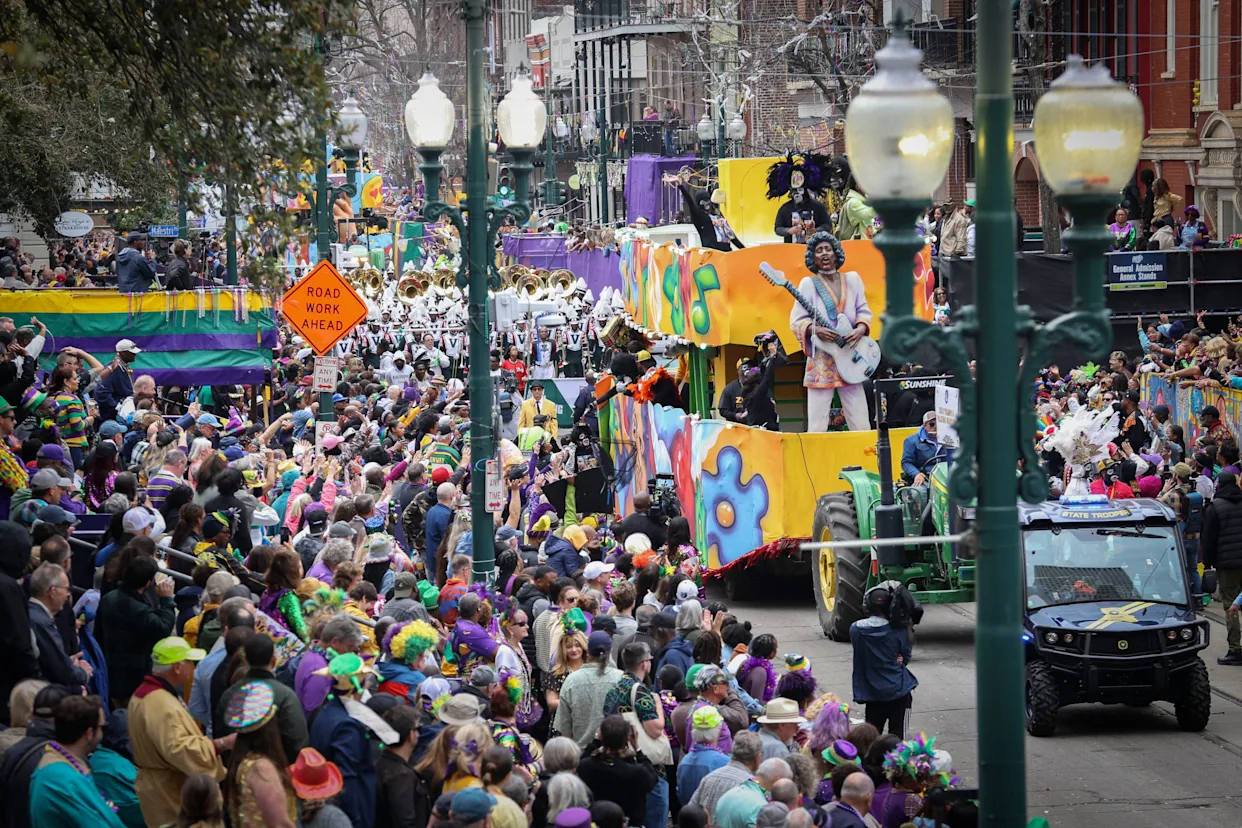
While Mardi Gras is known for its wild celebrations, it has deep spiritual roots that many people overlook.
Mardi Gras is fundamentally a Christian observance. It represents the final day of feasting and celebration before Lent — the 40-day period of fasting, prayer, and penitence that leads to Easter Sunday.
Ash Wednesday, the day after Fat Tuesday, is one of the most attended days in the Christian calendar. On Ash Wednesday, Christians receive ashes on their foreheads as a reminder of mortality and the need for repentance.
For many Catholic families, particularly in Louisiana, Mardi Gras is as much a religious observance as it is a party. The celebration is a communal farewell to worldly pleasures before the solemnity of Lent begins.
Fun Facts About Mardi Gras
Here are some surprising facts about Mardi Gras that most people do not know:
1. Mardi Gras has been celebrated in Louisiana since 1699 — that is over 325 years of continuous celebration.
2. New Orleans is not the oldest Mardi Gras city in America — Mobile, Alabama held the first organized celebration in 1703.
3. Float riders are required by law to wear masks in New Orleans. This tradition dates back to the custom of masking to blur social class distinctions.
4. Over 3 million pounds of beads are thrown during a single New Orleans Mardi Gras season.
5. The Zulu coconut is the most prized throw in all of Mardi Gras. Each one is hand-painted and hand-decorated by krewe members.
6. Mardi Gras is a legal public holiday in Louisiana — schools and government offices close for Fat Tuesday.
7. The colors purple, gold, and green were first introduced by the Rex krewe in 1872.
8. The largest Mardi Gras parade is typically the Krewe of Endymion, which rolls with over 3,200 riders and dozens of massive floats.
Mardi Gras 2025 — How New Orleans Showed Resilience
Mardi Gras 2025 carried extra meaning for the city of New Orleans.
The city had faced challenges in early 2025, including a New Year’s Day incident on Bourbon Street. Despite this, New Orleans came together to deliver one of the most powerful and spirited Mardi Gras celebrations in recent memory.
Enhanced safety measures were put in place across parade routes and entertainment districts. The city’s resilience and community spirit made 2025 a Mardi Gras that locals and visitors will not soon forget.
The message from New Orleans was clear: the good times will always roll, no matter what challenges the city faces.
How to Celebrate Mardi Gras at Home
You do not have to be in New Orleans to celebrate Mardi Gras 2025 or Mardi Gras 2026.
Host a king cake party. Order or bake a king cake, invite friends, and see who finds the plastic baby inside. Many bakeries ship king cakes nationwide.
Cook Creole food. Make jambalaya, gumbo, or crawfish étouffée for a festive Mardi Gras dinner that brings New Orleans flavors to your kitchen.
Decorate in purple, gold, and green. String up Mardi Gras beads, hang streamers in the Carnival colors, and set the table with festive decorations.
Watch the New Orleans parade live online. Local news stations and streaming platforms often broadcast major Mardi Gras parades live, letting you enjoy the experience from anywhere in the world.
Make Hurricanes or Sazeracs. Mix up some classic New Orleans cocktails to toast Fat Tuesday in style.
Frequently Asked Questions (FAQs)
What day is Mardi Gras 2025?
Mardi Gras 2025 falls on Tuesday, March 4, 2025, also known as Fat Tuesday. It is the last day of Carnival season and the day before Ash Wednesday.
What day is Mardi Gras 2026?
Mardi Gras 2026 is on Tuesday, February 17, 2026. The Carnival season for 2026 will run from January 6 to February 17, 2026.
Why is Mardi Gras on a different day every year?
Mardi Gras is always 47 days before Easter Sunday. Since Easter is based on the lunar calendar and changes each year, Mardi Gras falls on a different Tuesday between February 3 and March 9 each year.
What does Mardi Gras mean in English?
Mardi Gras is French for “Fat Tuesday.” It refers to the tradition of eating rich, fatty foods on the last day before the Christian fasting season of Lent begins.
When does the Mardi Gras season officially start?
The Mardi Gras season officially begins on January 6 each year, known as Twelfth Night or the Feast of Epiphany. The season ends at midnight on Fat Tuesday.
What city celebrates the most famous Mardi Gras?
New Orleans, Louisiana hosts the most famous Mardi Gras celebration in the world, drawing over one million visitors each year to its parades, balls, and street festivals.
What is the day after Mardi Gras called?
The day after Mardi Gras is called Ash Wednesday. It marks the beginning of Lent — the 40-day period of fasting and prayer in the Christian calendar leading up to Easter Sunday.
What are Mardi Gras beads and why are they thrown?
Mardi Gras beads are colorful plastic necklaces thrown from parade floats to spectators. The tradition of throwing items into crowds dates back to the early krewe parades of the 1800s and is now one of the most iconic Mardi Gras customs.
Is Mardi Gras a federal holiday?
No, Mardi Gras is not a federal holiday in the United States. However, it is a legal state holiday in Louisiana, where schools and government offices officially close on Fat Tuesday.
Where was Mardi Gras first celebrated in America?
Mardi Gras was first celebrated in America in Mobile, Alabama in 1703, making Mobile — not New Orleans — the birthplace of Mardi Gras in the United States.
Conclusion
What day is Mardi Gras 2025 has a clear and exciting answer: Tuesday, March 4, 2025. This date marked the spectacular conclusion of a Carnival season that ran from January 6 all the way through Fat Tuesday.
From the first streetcar rides of Twelfth Night to the thundering Zulu and Rex parades on Mardi Gras Day itself, 2025 was a celebration that reminded the world why New Orleans is truly like no other city on earth.
Looking ahead, Mardi Gras 2026 falls on February 17, 2026 — giving you plenty of time to plan your trip, book your hotel, order your king cake, and get your beads ready.
Whether you celebrate in New Orleans, Mobile, Galveston, or at home, Mardi Gras is a tradition that brings people together in joy, community, and a whole lot of color. Laissez les bons temps rouler — let the good times roll!