How Technology and AI Are Transforming Modern Lab Operations
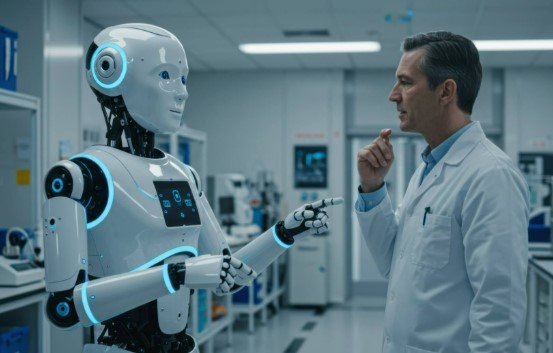
The modern diagnostic laboratory is under pressure from nearly every direction. Case volumes are climbing. Regulatory requirements are growing more complex. The workforce of trained pathologists and laboratory technicians is not expanding fast enough to meet rising demand. And the expectations placed on labs, faster turnaround times, fewer errors, more detailed reporting, deeper integration with clinical teams, are higher than at any previous point in the history of laboratory medicine.
What is making it possible for labs to meet these demands without simply hiring more people and hoping for the best is a convergence of technologies that are reshaping how laboratory operations are designed, managed, and scaled. Automation, cloud computing, digital pathology, artificial intelligence, and integrated data platforms are no longer future-state aspirations for leading labs. They are operational realities, and the gap between labs that have embraced them and those that have not is widening.
From Manual Processes to Intelligent Automation
For most of the laboratory’s history, the movement of a specimen through the lab required human hands and human judgment at nearly every step. Specimens were logged manually, labels were written or typed, slides were pulled from storage and physically transported, and results were transcribed from instruments into reporting systems by laboratory staff. Each handoff was an opportunity for error, and each manual step added time to a workflow where time directly affects patient outcomes.
The first wave of laboratory automation addressed the most repetitive and error-prone of these tasks. Barcode-driven specimen tracking replaced handwritten labels and manual logging. Instrument interfaces allowed analyzers to transmit results directly into laboratory information systems without manual transcription. Automated staining equipment and tissue processors reduced the technician time required for routine slide preparation.
These improvements were meaningful, but they addressed individual steps in isolation rather than the workflow as a whole. The next wave of transformation is more integrative. Modern lab automation systems connect the entire specimen journey, from accessioning through processing, analysis, and reporting, into a coordinated flow managed by software rather than by individual human intervention at each stage.
Automated case assignment routes incoming cases to the appropriate personnel based on workload, specialty, and priority. Reflex testing rules trigger additional orders automatically when initial results meet predefined criteria, without waiting for a clinician or technician to manually review and initiate the follow-up test. Quality assurance flags are raised and routed by the system rather than identified through periodic manual audits. The result is a workflow that is faster, more consistent, and more auditable than anything a manually managed lab can produce at scale.
The Cloud as a Foundation for Modern Lab Infrastructure
The shift from on-premise server infrastructure to cloud-based platforms has had a quieter but equally significant impact on how labs operate. For much of the industry’s history, laboratory software ran on hardware managed within the lab itself or within a health system’s data center. This created real constraints. Scaling required capital investment in new hardware. System updates required planned downtime. Disaster recovery depended on backup systems that were often tested less rigorously than the risks warranted.
Cloud-based laboratory information systems eliminate most of these constraints. Storage scales dynamically as case volume grows. Updates are deployed without interrupting laboratory operations. Uptime guarantees backed by major cloud providers like Microsoft offer a level of reliability that most labs could not achieve with on-premise infrastructure at any reasonable cost.
The operational benefits extend further. Cloud infrastructure enables the kind of real-time data sharing and remote access that modern laboratory workflows increasingly require. Pathologists working from home or from a satellite office can access the same case data, digital slides, and reporting tools as they would in the main laboratory. Multiple facilities within a laboratory network can share a single platform instance, allowing centralized oversight of operations that span geographies.
For laboratory administrators, cloud-based platforms also reduce the internal IT burden required to maintain laboratory software, freeing technical resources for higher-value work rather than server maintenance and patch management.
Digital Pathology: Digitizing the Core of the Diagnostic Workflow
Few technological shifts have had as broad an operational impact on anatomic pathology labs as the transition to digital pathology. The conversion of physical glass slides into high-resolution whole slide images represents more than a change in how slides are stored and viewed. It changes the fundamental architecture of how diagnostic work flows through the lab.
When slides are digital, the constraints imposed by physical media dissolve. A pathologist no longer needs to be in the same room, the same building, or even the same city as a slide to review it. Cases can be distributed across a network of pathologists based on availability, specialty expertise, and workload balance rather than physical proximity. Tumor boards and specialist consultations that once required shipping glass slides across the country can happen in real time.
The operational efficiencies compound quickly. Digital slides do not break, degrade, or get lost. Retrieval of archived cases for comparison or quality review takes seconds rather than the hours or days required to locate and transport physical slides from storage. Secondary consultations that previously added days to a turnaround time can be completed the same day the case is accessioned.
Labs that are building their digital pathology infrastructure today are also laying the groundwork for AI integration tomorrow. AI diagnostic tools require digitized slides to function. A lab that has fully digitized its workflow is positioned to incorporate AI-powered image analysis as those tools receive regulatory clearance and reach operational maturity. A lab still dependent on glass slides has no path to AI-enabled diagnostics until the physical-to-digital transition is complete.
Artificial Intelligence as an Operational Layer
The entry of AI into laboratory operations is sometimes framed primarily as a clinical story, about detection accuracy, diagnostic precision, and the performance of algorithms relative to pathologists. That framing, while not wrong, understates what AI is doing to the operational character of laboratory work.
AI is functioning as an operational layer across the lab, not just a diagnostic tool within a single workflow step. Its impact can be seen in how cases are prioritized, how quality is monitored, how capacity is allocated, and how data is surfaced to the people who need it.
Case Triage and Prioritization
One of the most immediately valuable applications of AI in lab operations is intelligent triage. A lab receiving hundreds of cases daily faces a real prioritization challenge. Some cases carry greater clinical urgency than others, but without a systematic way to identify which those are, urgency is often determined by factors like order of receipt rather than clinical need.
AI systems trained to recognize features associated with high-grade malignancies, abnormal cellular patterns, or other clinically significant findings can pre-screen incoming cases and flag those that warrant immediate attention. This allows pathologists to direct their focus to the highest-priority work first, reducing the time between receipt and diagnosis for the cases where speed matters most, without requiring human review of every slide before triage decisions are made.
Quality Assurance and Error Detection
Manual quality assurance in a high-volume lab is inherently incomplete. There are simply too many cases, slides, and data points for a human team to review comprehensively, so quality monitoring has traditionally relied on sampling and periodic audit rather than continuous oversight.
AI changes this by enabling continuous quality monitoring at scale. Algorithms that detect technical slide preparation issues such as poor staining, tissue folding, blurring, or inadequate tissue representation can flag problematic slides before they reach the pathologist’s queue, preventing wasted review time and reducing the risk that a technically inadequate slide contributes to a diagnostic error. AI can also monitor for diagnostic discrepancies across cases, surfacing patterns that merit quality review without waiting for the next scheduled audit cycle.
Workload Balancing and Capacity Planning
Modern laboratory information systems with AI-powered analytics are giving lab directors a more accurate and real-time view of how work is distributed across their team, where capacity constraints are developing, and how case volume is likely to trend. This kind of operational intelligence enables more deliberate workload balancing, reducing the bottlenecks that accumulate when case distribution is managed manually or based on intuition rather than data.
For labs managing multi-site operations or a distributed network of pathologists, AI-powered workload analytics also support more effective staffing decisions. When the data shows where capacity is being consumed and where it remains available, leaders can make resourcing decisions based on evidence rather than estimates.
Integration and Interoperability
A laboratory does not operate in isolation. It sits within a broader ecosystem that includes electronic health records, revenue cycle management systems, referring physician portals, insurance payers, and an expanding range of clinical decision support tools. The degree to which the laboratory’s technology infrastructure connects to that ecosystem determines how effectively information flows in both directions.
Modern laboratory technology platforms are built with interoperability as a design priority rather than an afterthought. Integration with more than 150 electronic medical record systems, compliance with DICOM, HL7, and FHIR data standards, and open API architecture that allows connection with third-party tools are becoming baseline expectations rather than premium features.
This interoperability has practical consequences for laboratory operations. When the LIS communicates seamlessly with the EMR, clinicians receive results in their primary workflow without logging into a separate system. When the LIS connects to the revenue cycle management platform, billing codes are transmitted accurately and automatically, reducing claim errors and the administrative rework they generate. When the LIS integrates with digital pathology viewers and AI diagnostic tools, findings are surfaced in context rather than requiring manual transfer between systems.
The lab that is well-integrated into its broader technology ecosystem operates more efficiently, serves its clinical partners more effectively, and is better positioned to adopt new tools as the technology landscape continues to evolve.
Data as an Operational Asset
One of the less visible but increasingly important ways that technology is transforming laboratory operations is in the nature and utility of the data that labs generate. Every specimen that passes through the lab produces data, and modern platforms are designed to capture, structure, and make that data available for purposes far beyond the immediate case report.
Real-time operational dashboards give lab directors visibility into turnaround times, workload distribution, error rates, and instrument performance across the entire lab workflow. Trend analysis surfaces patterns that would not be apparent from reviewing individual cases, identifying systemic issues before they become significant problems and highlighting opportunities for process improvement that manual review would miss.
For research and pharmaceutical partnerships, the structured digital pathology data that modern labs generate has commercial value beyond its clinical application. Labs that have built the infrastructure to manage and share de-identified slide and outcome data are positioned to participate in AI model development partnerships, clinical trial collaborations, and research initiatives in ways that create new revenue streams alongside their core diagnostic operations.
The Workforce Dimension of Technological Transformation
It would be incomplete to discuss the transformation of laboratory operations by technology without addressing its implications for the people who work in labs. Automation and AI do not reduce the importance of human expertise in the laboratory. They change what that expertise is directed toward.
When routine, repetitive tasks are handled by automated systems, pathologists and laboratory technicians can direct more of their time and cognitive energy to complex cases, unusual findings, quality oversight, and the clinical consultation that adds the most value. The pathologist who is no longer spending hours on routine screening is available to engage more deeply with the difficult diagnoses, the multidisciplinary team discussions, and the resident training that requires genuine human judgment and experience.
For laboratory staff more broadly, modern technology platforms reduce the cognitive burden associated with navigating fragmented systems and managing manual handoffs. When the software handles coordination, routing, and documentation, the humans in the workflow can focus on the work that genuinely requires them.
This shift does not make laboratory professionals obsolete. It makes the laboratory profession more sustainable by removing the sources of tedium and burnout that have made recruitment and retention increasingly challenging in a field where the talent pipeline is already under pressure.
The Laboratory of the Future Is Being Built Now
The transformation of modern laboratory operations by technology and AI is not a distant event on the horizon. It is underway in real labs managing real cases for real patients today. The labs that are moving deliberately and thoughtfully through this transformation, digitizing their workflows, adopting cloud infrastructure, integrating AI where it adds proven value, and investing in platforms that are built for the demands of modern pathology, are establishing operational advantages that will compound over time.
The laboratories that continue to operate on legacy infrastructure, manage workflows through disconnected systems, and rely on manual processes where automation is available are not standing still. They are falling behind relative to peers who are building the capacity to handle more cases, deliver faster results, and support clinical partners more effectively.
The question facing every laboratory operation today is not whether technology and AI will transform how labs work. That transformation is already in motion. The question is whether each lab will lead it or be led by it.