Ripley’s Believe It or Not: Amazing Facts & Oddities 2026
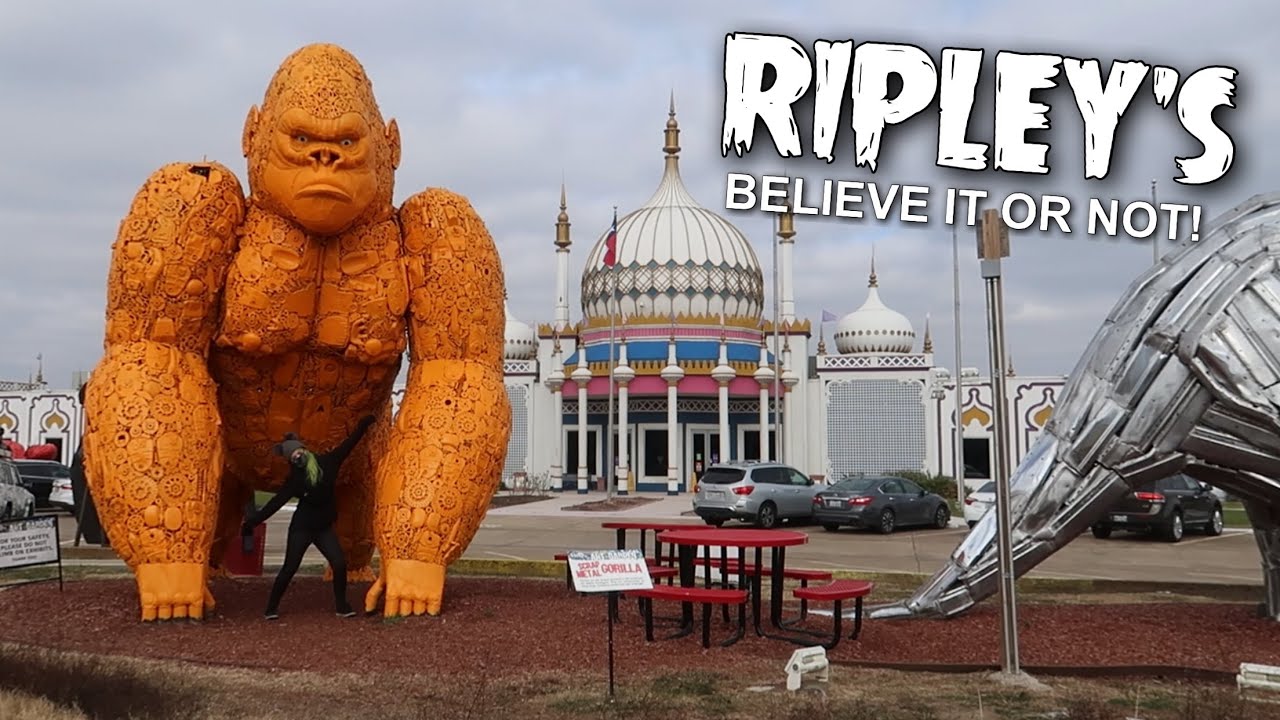
Ripley’s Believe It or Not has fascinated millions of curious minds for over a century with its jaw-dropping facts, bizarre true stories, and stunning oddities from every corner of the globe.
In 2026, the legendary franchise continues to push the limits of the unbelievable — from a paddle-steamer built entirely out of ice to a gold-spewing volcano.
Who Was Robert Ripley? The Man Behind the Legend
Robert Leroy Ripley was born in Santa Rosa, California, in 1890. He started his career drawing sports cartoons for the New York Globe.
One slow news day in 1918, he compiled a list of the most unbelievable sports feats he had ever encountered and published it as a cartoon strip. That single illustration launched one of the most iconic brands in media history.
His catchphrase — Believe It or Not! — became a global phenomenon almost overnight. Within a few years, the syndicated strip was read daily by roughly 80 million people across 360 newspapers worldwide.
How Robert Ripley Traveled the World for Oddities
Ripley was not content with simply collecting stories from books. He traveled to over 200 countries, earning him the nickname the “Modern-Day Marco Polo.”
He journeyed to remote islands, then-unknown cities, and tribal communities that most people had never heard of. He brought back shrunken heads, dinosaur eggs, iron maidens, and thousands of other peculiar artifacts.
In 1922, he published a travel journal of his around-the-world expedition. His curiosity had no limits, and his travels fed the appetite of millions of readers hungry for the extraordinary.
The Secret Research Powerhouse Behind the Facts
Not all of Ripley’s remarkable facts came from his personal travels. In 1923, he hired Norbert Pearlroth — a man fluent in 14 languages — as his sole researcher.
Pearlroth spent up to seven days a week at the New York Public Library, digging through foreign-language journals and obscure books. Library officials sometimes had to ask him to leave at closing time.
Pearlroth worked for the Ripley’s brand for an astonishing 52 years, retiring in 1975. He is one of the unsung heroes behind the franchise’s towering reputation for incredible, verified facts.
The Birth of the Odditorium: Ripley’s First Museum
In 1933, Ripley opened the very first Odditorium at the World’s Fair in Chicago. It was a place where visitors could marvel at the physical artifacts he had collected and watch performers with extraordinary talents.
The response was overwhelming. Ripley was voted the most popular man in America that year — more popular than President Franklin D. Roosevelt and aviator Charles Lindbergh.
One year after Ripley’s death in 1949, the first permanent Odditorium opened. The concept of a curiosity museum built around verified real-world oddities was completely new, and it changed entertainment forever.
Ripley’s Believe It or Not: The 2026 Annual Book
Every year, Ripley’s storms the bestseller list with its annual collection of weird but true stories. The Ripley’s Believe It or Not 2026 edition is no different, packed with 256 pages of eye-opening content.
This year’s edition includes stunning highlights from around the world:
| Highlight | Detail |
|---|---|
| Ice Paddle-Steamer | A fully functional paddle-steamer built entirely out of ice |
| Gold Volcano | A volcano somewhere in the world that literally blasts out gold |
| Fedy the Cat | A cross-eyed Instagram cat with over 400,000 followers |
| Chefchaouen, Morocco | A city where every single building is painted blue |
| Australian Mosquito | A species that feeds on blood from frogs’ nostrils |
| Bullet-Proof Vest Inventor | The surprising true story of who invented body armor |
The 2026 annual is published by Cornerstone/Penguin Books. It measures 29.9 x 23.6 cm and weighs over 1.4 kg — a genuinely hefty collection of the world’s most unbelievable stories.
Why Ripley’s Facts Are Authenticated and Verified
One thing that separates Ripley’s from internet clickbait is its rigorous fact-checking process. To be included in Ripley’s books, museums, or TV shows, every item must pass scrutiny from a dedicated research staff and be 100% authenticated.
Alien or witchcraft-type stories are rarely considered because they are difficult to prove. Edward Meyer, Vice President of Exhibits and Archives at Ripley Entertainment, has described the standard as extremely high.
Ripley himself famously said he was “flattered” to be called a liar — because he could prove every single one of his facts was true. That spirit of rigorous curiosity lives on in every edition today.
Ripley’s Believe It or Not Museums Around the World
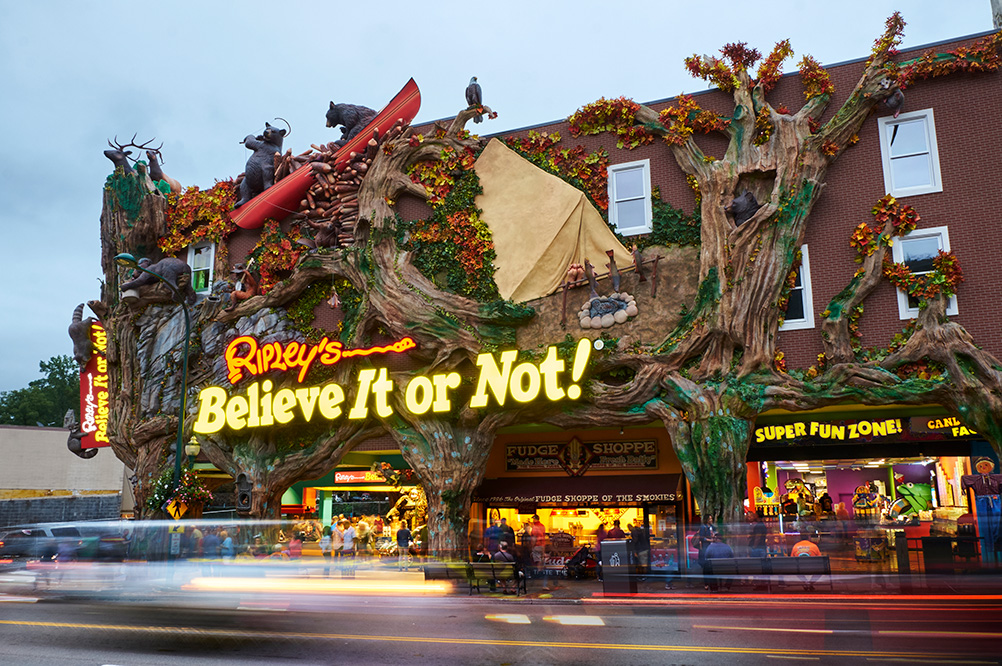
Today, Ripley’s operates a global network of Odditoriums in dozens of major cities. Each location features a unique architectural theme designed to grab attention from the moment you arrive.
| Museum Location | Unique Feature |
|---|---|
| Orlando, Florida | Building designed to look like it is sinking into a sinkhole |
| Gatlinburg, Tennessee | Survived a real fire in 1992; artifacts display “I Survived the Fire” decals |
| Wisconsin Dells | Exterior styled as a temple with a plane crashed into its side |
| Gold Coast, Australia | Band of human oddities plays music at the entrance |
| Williamsburg, Virginia | 11 galleries and over 350 exhibits |
| St. Augustine, Florida | One of the earliest permanent Odditorium locations in the USA |
Each museum features a rotating mix of artistic oddities, human marvels, historical artifacts, interactive optical illusions, and cultural curiosities from every corner of the earth.
What You Will Find Inside a Ripley’s Odditorium
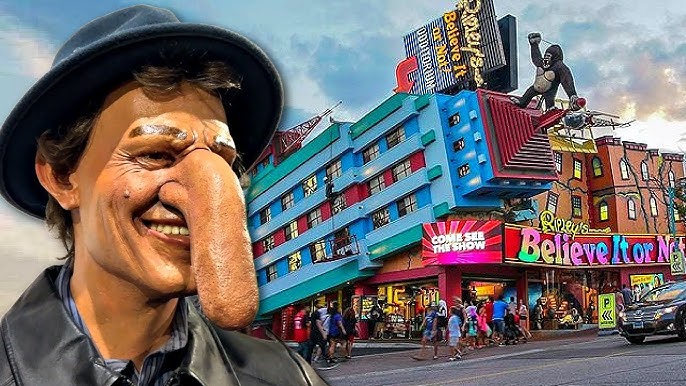
Walking into a Ripley’s museum is an assault on the senses in the best possible way. The exhibits are carefully curated to be both entertaining and genuinely educational.
Artistic Oddities include sculptures made from candy, lint, toast, and other unconventional materials. Miniature carvings and reverse-perspective art challenge how your eyes and brain work together.
Human Marvels showcase individuals with extraordinary physical abilities, unusual talents, or record-breaking achievements. Historical performers like “Human Owl” Martin Joe Laurello — who could rotate his head 270 degrees — are featured alongside modern record holders.
Historical and Cultural Artifacts include authentic items like Tsantsa shrunken heads from Peru, genuine meteorite fragments, ancient tribal tools, and rare ceremonial objects from cultures around the world.
Interactive Challenges make Ripley’s a fully hands-on experience. Slanted rooms, balance tests, optical illusions, and fact-filled displays keep visitors of all ages fully engaged for hours.
The Most Jaw-Dropping Ripley’s Facts of All Time
Over the course of a century, Ripley’s has uncovered thousands of unbelievable but verified facts. Here are some of the most enduring:
The Star-Spangled Banner Wasn’t Official. In 1929, Ripley discovered that “The Star-Spangled Banner” had never been formally adopted as the United States national anthem — a fact that generated more reader mail than almost any other.
The Human Owl. Performer Martin Joe Laurello spent three years training his body to rotate his head a full 270 degrees. He performed at Ripley’s 1933 Chicago World’s Fair Odditorium to astonished crowds.
Hananuma Masakichi’s Self-Portrait. Japanese sculptor Masakichi used adjustable mirrors to create an incredibly lifelike statue of himself after learning he was dying of tuberculosis. Ripley purchased it and displayed it in his New York Odditorium in 1939.
The First Shrunken Head. Ripley acquired his first genuine shrunken head in Lima, Peru, in 1923. It became one of the most famous and recognizable items in his entire collection.
80 Million Daily Readers. At the height of its popularity in the early 1930s, the Ripley’s cartoon strip was read every single day by roughly 80 million people — one of the largest media audiences in history at that time.
Ripley’s on Radio, TV, and Digital Media
Ripley’s has never been limited to books and museums. Robert Ripley was a media pioneer who embraced every platform available to him.
He was the first person to broadcast nationwide on a radio network from mid-ocean and also participated in the first broadcast from Buenos Aires to New York City. He was the first to broadcast simultaneously to every nation in the world.
On television, Jack Palance hosted a popular Believe It or Not! TV show in 1980. Dean Cain hosted a revival in 2000. In 2019, Bruce Campbell hosted a new series on the Travel Channel, proving the franchise’s enduring relevance.
Today, Ripleys.com publishes regular stories covering science and technology, true crime, food, art, fashion, pop culture, animals, and history. The brand reaches millions of followers across social media every month.
The Jim Pattison Group: Who Owns Ripley’s Today
The Ripley’s brand is owned by Ripley Entertainment Inc., which is in turn owned by The Jim Pattison Group of Vancouver, Canada. The group acquired the Believe It or Not! franchise in 1985.
Today, Ripley Entertainment manages a global portfolio of attractions including Odditoriums, aquariums, haunted adventures, mirror mazes, miniature golf courses, arcades, and 4D theaters — all under the Ripley’s name.
The franchise continues to expand its digital presence, publishing new stories daily at Ripleys.com and growing its audience through YouTube, Instagram, Facebook, and other platforms.
Ripley’s Believe It or Not vs. Guinness World Records
Many people compare Ripley’s with Guinness World Records. Both celebrate the extraordinary, but they operate quite differently.
| Feature | Ripley’s Believe It or Not | Guinness World Records |
|---|---|---|
| Focus | Weird, bizarre, and unusual facts | Record-breaking achievements |
| Authentication | 100% staff-verified before inclusion | Strict official judging process |
| Format | Books, museums, TV, digital | Books, TV, live events, website |
| First Published | 1918 (newspaper strip) | 1955 |
| Annual Book | Yes, bestselling global annual | Yes, bestselling global annual |
| Museums | 30+ Odditoriums worldwide | No dedicated museums |
| Tone | Playful, curious, entertaining | Formal, competitive, authoritative |
Both brands celebrate human potential and the extraordinary, but Ripley’s leans into the weird and wonderful while Guinness focuses on breaking structured records.
Ripley’s 2026: New Stories Pushing the Limits
The 2026 Ripley’s annual is particularly rich in stories that challenge what readers think they know about the world. Beyond the headline features, several themes run through this year’s edition.
Natural World Wonders. From volcanic gold to insects with impossible feeding habits, nature proves once again that it is far stranger than any fiction writer could invent.
Human Ingenuity. The ice paddle-steamer and other engineering curiosities show what happens when human creativity is pushed to its absolute limit.
Animal Oddities. Fedy the cross-eyed cat is just one example of the animal world’s endless capacity to surprise. Ripley’s has always celebrated the wonderful weirdness of the natural world.
Cultural Discoveries. The entirely blue city of Chefchaouen in Morocco reminds readers that extraordinary places exist all around us — we just have to look for them.
How to Read Ripley’s Believe It or Not 2026
The annual is designed to be read in any order. Every double-page spread is self-contained, packed with short facts, large photographs, and vivid captions.
It works perfectly as a coffee table book, a long car journey companion, a bathroom read, or a Christmas morning gift. Readers young and old consistently report spending hours absorbed in its pages.
For those who finish the annual and want more, Ripleys.com offers hundreds of new stories every month. The site is organized by category including People, Animals, Science and Technology, Food, Places, Art and Fashion, Pop Culture, Sports, and True Crime.
Ripley’s Believe It or Not for Kids and Families
Ripley’s has always been a family-friendly brand. The annual is specifically designed to delight readers from around age eight all the way through to adults of any age.
The short, bite-sized facts work particularly well for reluctant readers. Children who struggle to engage with longer texts often find Ripley’s irresistible because every page delivers a new surprise.
Parents report that visiting Ripley’s Odditoriums sparks genuine curiosity in children. Kids race from exhibit to exhibit, asking questions, testing interactive displays, and absorbing information without even realizing they are learning.
Ripley’s Believe It or Not: Cultural Impact and Legacy
Ripley’s has had a deeper cultural impact than many people realize. The franchise helped normalize curiosity about cultures, peoples, and places far outside mainstream Western experience.
In a time when most Americans rarely encountered foreign cultures, Ripley’s brought stories from Africa, Asia, South America, and the Pacific Islands into everyday homes. It sparked a sense of wonder about the wider world.
The brand also influenced countless other media formats. Documentary television, fact-based YouTube channels, viral social media pages, and trivia podcasts all owe a debt to the curiosity-driven format that Robert Ripley pioneered in 1918.
Ripley’s Believe It or Not and the Art of Storytelling
What makes Ripley’s different from a dry encyclopedia is its voice. Every story is told with wit, wonder, and a genuine sense of delight at the strangeness of the world.
Robert Ripley understood instinctively that facts alone are not enough. Facts need context, drama, and personality to become memorable. His cartoons gave every oddity a human face and a compelling story.
That storytelling tradition continues in the 2026 annual. Every fact is framed not just as information but as an invitation to marvel at a world that is stranger, more surprising, and more wonderful than we usually remember.
Frequently Asked Questions (FAQs)
What is Ripley’s Believe It or Not?
Ripley’s Believe It or Not is a global media and entertainment franchise built on verified weird, bizarre, and extraordinary facts. It started as a newspaper cartoon strip in 1918 and grew into books, museums, TV shows, and a major digital media brand.
Who founded Ripley’s Believe It or Not?
Robert Leroy Ripley, an American cartoonist from Santa Rosa, California, founded the franchise. He published the first “Believe It or Not!” cartoon on December 19, 1918, after compiling unbelievable sports facts during a slow news day.
How many Ripley’s museums are there worldwide?
Ripley’s operates over 30 Odditorium museums globally, with locations across the United States, Canada, Europe, Asia, and Australia. Each location features unique architectural design and themed exhibits.
Is the Ripley’s 2026 annual book good for kids?
Yes, it is designed for readers aged roughly 8 and up, but adults enjoy it equally. The short fact-packed format, vivid photographs, and bite-sized stories make it one of the most engaging trivia books available for all ages.
Are Ripley’s facts real and verified?
Every item in Ripley’s books, museums, and TV shows must be 100% authenticated by a dedicated research team before inclusion. Ripley himself prided his brand on the verifiability of every single claim.
When was the first Ripley’s Odditorium museum opened?
The first Odditorium opened at the Chicago World’s Fair in 1933. The first permanent museum location opened in 1950, one year after Robert Ripley’s death in 1949.
How much does the Ripley’s Believe It or Not 2026 book cost?
Pricing varies by retailer, but it is available from major booksellers including Amazon, Waterstones, and Bookshop.org. It is a popular Christmas gift choice and is typically priced as a premium hardback annual.
What are the best Ripley’s museum locations to visit?
Top-rated locations include Orlando (Florida), Gatlinburg (Tennessee), Niagara Falls, London, Amsterdam, and Hollywood. The Orlando museum is particularly famous for its sinking-building exterior design.
What topics does Ripleys.com cover?
The website publishes new stories daily across categories including People, Animals, Science and Technology, Food, Places, Art and Fashion, Pop Culture, Sports, True Crime, and Vintage and Historical content.
What makes Ripley’s different from Guinness World Records?
Ripley’s focuses on the bizarre, weird, and culturally unusual, while Guinness tracks formally judged record-breaking achievements. Ripley’s has museums worldwide; Guinness does not. Both publish annual bestselling books and have significant TV and digital presences.
Conclusion
Ripley’s Believe It or Not is far more than a book or a museum brand — it is a century-long celebration of human curiosity and the extraordinary strangeness of the world we live in.
From Robert Ripley’s first hand-drawn cartoon in 1918 to the jaw-dropping 2026 annual packed with gold volcanoes, ice steamers, and Instagram cats, the franchise has never stopped surprising us.
It has proven, decade after decade, that the real world is weirder, wilder, and more wonderful than any fiction.
Whether you visit one of the 30-plus Odditoriums, read the latest annual, or browse Ripleys.com for your daily dose of the unbelievable, you are participating in a tradition that has delighted over 80 million readers at its peak.
Ripley’s Believe It or Not continues to remind us in 2026 that truth is always stranger than fiction — and that is something truly worth believing.