Why Is My Check Engine Light Flashing? Easy Guide 2026
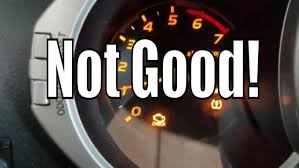
Why is my check engine light flashing is one of the most alarming things a driver can experience, and for good reason.
A flashing check engine light is not the same as a steady one.
It is your car’s most urgent warning signal, telling you that something is actively going wrong inside the engine right now.
Every second you keep driving with that light blinking, you risk turning a few-hundred-dollar repair into a multi-thousand-dollar engine or catalytic converter replacement.
Why Is My Check Engine Light Flashing
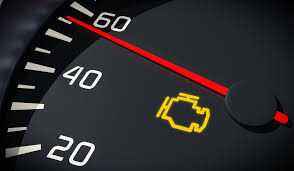
Most drivers treat every check engine light the same. That is a costly mistake. The difference between a flashing and a steady light is the difference between a warning and an emergency.
A steady check engine light means the OBD-II system has logged a fault that needs attention. It could be an oxygen sensor, a loose gas cap, or an emissions issue. The car is still drivable in most cases, but the problem needs to be addressed soon.
A flashing check engine light means active engine damage is happening right now. The engine control module has detected a misfire severe enough to send raw, unburned fuel into the exhaust. That unburned fuel can overheat and destroy the catalytic converter within minutes of continued driving.
| Light Behavior | What It Means | Safe to Drive? | Action Required |
|---|---|---|---|
| Steady (solid on) | Stored fault code, persistent issue | Usually yes, short distances | Schedule repair soon |
| Flashing / Blinking | Active severe misfire, damage occurring | No | Pull over immediately, do not drive |
| Flashing then turns solid | Misfire has stabilized but damage may exist | Limited, low-speed only | Get inspected the same day |
| On, then off, then on | Intermittent fault, recurring issue | Proceed with caution | Diagnose promptly |
Why Is My Check Engine Light Flashing
The root cause behind almost every flashing check engine light is an engine misfire. Understanding what triggers a misfire helps you narrow down the specific repair your vehicle needs.
A misfire happens when one or more cylinders fail to ignite the air-fuel mixture properly during the combustion cycle. Instead of a clean, controlled explosion that drives the piston down, the fuel passes through unburned and exits through the exhaust valve. This raw fuel hits the hot catalytic converter, where temperatures can exceed 1,600°F, and causes the converter’s internal honeycomb structure to melt and collapse.
Here are the most common causes of that misfire and the flashing light it triggers.
Worn or Fouled Spark Plugs
Spark plugs are the most common starting point for a flashing check engine light diagnosis. They fire thousands of times per minute, and over time the electrodes wear down, the gap widens, and the spark becomes weak or inconsistent.
A worn spark plug cannot reliably ignite the air-fuel mixture in its cylinder. The result is a misfire, often most noticeable during acceleration, cold starts, or when the engine is under load.
Most manufacturers recommend spark plug replacement every 30,000 to 60,000 miles for copper plugs and every 60,000 to 100,000 miles for iridium or platinum plugs. Many drivers push well past these intervals, especially since modern engines rarely show obvious symptoms until a plug fails completely.
In 2026, spark plug replacement costs between $80 and $300 for most four-cylinder engines. V6 and V8 engines with difficult rear-bank access can push the bill higher, from $300 to $500 or more with labor.
Failed Ignition Coil
Ignition coils convert the low 12-volt battery voltage into the 20,000 to 45,000 volts needed to fire the spark plug. Each cylinder typically has its own coil-on-plug unit in modern vehicles. When a coil fails, that cylinder misfires every single revolution of the engine.
A single failed coil causes an immediate severe misfire, exactly the kind that makes the check engine light flash. You will often feel the car shaking, rough idling, or a noticeable loss of power on one side of the engine.
Ignition coils typically last 80,000 to 100,000 miles, but heat, oil contamination from a leaking valve cover gasket, and high mileage can shorten their lifespan significantly.
Replacing a single ignition coil costs $100 to $300 in parts and labor. If multiple coils are failing, a full set replacement on a four-cylinder engine runs $250 to $500. On V6 and V8 engines, it can reach $700 or more.
Clogged or Failing Fuel Injector
Fuel injectors are precision-engineered solenoids that spray a fine mist of fuel into each cylinder at exactly the right moment and in the right amount. When an injector becomes clogged with deposits, its spray pattern breaks down. Too little fuel means the mixture is too lean, and combustion fails.
A failing injector causes an intermittent or persistent misfire depending on how severely it is clogged. You may also notice rough idle, hesitation under acceleration, poor fuel economy, and occasionally a fuel smell from the exhaust.
Fuel injector cleaning through a professional service or additives can fix minor deposits. A full injector replacement costs $250 to $500 per injector including labor.
Bad Oxygen Sensor
The oxygen sensor, or O2 sensor, monitors the amount of unburned oxygen in the exhaust and sends that data back to the engine control module. The ECM uses this data to adjust the air-fuel mixture in real time.
A failed oxygen sensor gives the ECM incorrect readings, causing it to either add too much fuel or too little. Both conditions can cause a misfire or rough running that triggers the check engine light to flash.
According to CarMD data, oxygen sensor replacement is the second most common check engine light repair. The average replacement cost is around $243 per sensor. Ignoring a bad O2 sensor can reduce fuel economy by up to 40% and accelerates catalytic converter failure.
Catalytic Converter Failure
The catalytic converter reduces harmful exhaust emissions by converting carbon monoxide, hydrocarbons, and nitrogen oxides into less harmful gases. It contains precious metals like platinum, palladium, and rhodium, which is why replacement is expensive.
A failing catalytic converter can itself trigger a flashing check engine light, especially when the internal structure begins to break apart and restrict exhaust flow. However, it is important to understand that in most cases the catalytic converter is the victim, not the original cause. It fails because of extended misfires that overheat it.
Replacing a catalytic converter is one of the most expensive check engine repairs. The average cost in recent data runs from $1,300 to $1,800 or more depending on the vehicle. This is exactly why addressing a flashing light immediately matters so much.
Mass Airflow Sensor Failure
The mass airflow (MAF) sensor measures the volume and density of air entering the engine. This data is critical for the ECM to calculate the correct fuel delivery. A dirty or failed MAF sensor throws off the entire fuel calculation.
A faulty MAF sensor typically causes a lean or rich condition that can produce a misfire, rough idle, hesitation on acceleration, and increased fuel consumption. It can trigger a flashing check engine light if the resulting misfire is severe enough.
MAF sensors can often be restored by careful cleaning with a dedicated MAF sensor cleaner spray. A full replacement costs $150 to $400 depending on the vehicle.
Low Compression in One or More Cylinders
If the mechanical integrity of the engine itself is compromised, no amount of spark plug or sensor replacement will fix the misfire. Worn piston rings, a damaged valve, or a blown head gasket all reduce compression in the affected cylinder.
Without proper compression, even a perfect spark and the right fuel mixture cannot produce complete combustion. The cylinder misfires every time.
Low compression misfires are diagnosed with a compression test or a leakdown test. They often represent the most serious and expensive repairs, potentially including engine rebuilding or replacement.
Timing Belt or Chain Problems
The timing belt or chain synchronizes the rotation of the crankshaft and camshaft. If it slips, stretches, or breaks, the valve timing goes out of sync with the piston movement. Combustion cannot happen correctly when the valves open and close at the wrong time.
A slipping timing chain can cause a sudden severe misfire with a flashing check engine light. It may also be accompanied by a rattling noise from the engine on startup, especially when cold.
Timing belt and chain replacement is a major service. Costs typically range from $500 to $1,500 or more depending on the vehicle. On interference engines, a broken timing belt can cause catastrophic engine damage in seconds.
Loose or Damaged Gas Cap
This is one of the simplest causes of a check engine light, and occasionally it can cause the light to flash rather than glow steadily. A loose gas cap allows fuel vapors to escape the evaporative emissions system, triggering a fault code.
If your check engine light comes on shortly after filling up at the gas station, check the gas cap first. Tighten it until it clicks. The light may take one to three drive cycles to turn off on its own.
A replacement gas cap costs $10 to $30. This is the least expensive and most easily overlooked check engine light fix.
OBD-II Trouble Codes for a Flashing Check Engine Light
When your check engine light flashes, the OBD-II system stores one or more diagnostic trouble codes (DTCs) that identify the problem area. Reading these codes with a scanner is the essential first step in diagnosis.
| OBD-II Code | What It Means | Common Cause |
|---|---|---|
| P0300 | Random / multiple cylinder misfire | Spark plugs, ignition coils, fuel delivery |
| P0301 | Cylinder 1 misfire detected | Coil, plug, injector on cylinder 1 |
| P0302 | Cylinder 2 misfire detected | Coil, plug, injector on cylinder 2 |
| P0303 | Cylinder 3 misfire detected | Coil, plug, injector on cylinder 3 |
| P0304 | Cylinder 4 misfire detected | Coil, plug, injector on cylinder 4 |
| P0420 | Catalyst system efficiency below threshold | Catalytic converter, O2 sensor |
| P0171 | System too lean (bank 1) | MAF sensor, vacuum leak, O2 sensor |
| P0174 | System too lean (bank 2) | MAF sensor, vacuum leak, O2 sensor |
| P0131 | O2 sensor low voltage (bank 1, sensor 1) | Faulty upstream O2 sensor |
| P0340 | Camshaft position sensor circuit malfunction | Crankshaft / camshaft sensor, timing |
A misfire code like P0301 tells you which cylinder is affected. From there, swapping the coil from the affected cylinder to another cylinder and rescanning will tell you whether the coil moved with the code, confirming coil failure.
What to Do Immediately When the Check Engine Light Flashes
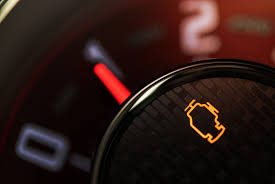
The moment you see that check engine light blinking, the steps you take in the next few minutes can save you thousands of dollars in repair costs.
Step 1: Reduce throttle immediately. Back off the accelerator as soon as you see the light flash. High engine load makes a misfire worse and accelerates catalytic converter damage.
Step 2: Pull over safely when possible. Find a safe place to pull off the road. Turn off the engine. Give it a moment to cool.
Step 3: Look and listen for obvious symptoms. Once stopped, notice if the car was shaking heavily, making unusual noises, smelling of fuel or burning, or showing other warning lights like oil pressure or temperature.
Step 4: Check the simple things first. Is the gas cap tight? Did the light come on immediately after a fill-up? Tighten the cap and note whether symptoms return.
Step 5: Do not restart and drive long distances. If the engine felt rough and the light was flashing, do not try to drive home if it is more than a mile or two away. Call for a tow or roadside assistance.
Step 6: Read the fault codes. If you have an OBD-II scanner or can stop at an auto parts store for a free scan, read the codes before any repair is attempted. The code tells you where to start.
How to Read Your Own OBD-II Codes
You do not need to be a mechanic to read check engine light codes. An OBD-II scanner plugs into the diagnostic port located under the driver’s side dashboard, usually near the steering column.
Basic code readers cost $20 to $50 and display the trouble codes. Mid-range scanners in the $100 to $200 range show live data streams, which are far more useful for diagnosing intermittent misfires. Bluetooth OBD-II adapters paired with a smartphone app like Torque Pro or OBD Fusion offer similar live data capability for $30 to $80.
Here is how to use one:
Locate the OBD-II port under the driver’s side dash. Plug in the scanner with the ignition off. Turn the key to the ON position without starting the engine. Navigate to “Read Codes” on the scanner. Note every code stored, including pending codes. Write them down before clearing anything.
Do not clear codes until you have noted them all and understood what they mean. Clearing codes erases the stored data the mechanic needs to diagnose the problem efficiently.
Repair Costs for a Flashing Check Engine Light in 2026
According to CarMD’s 2026 Vehicle Health Index, the average cost to address a check engine light climbed to a record $554 in 2025, a 33% increase from the prior year. For a flashing light, which almost always indicates a more serious underlying cause, costs are typically higher.
| Repair | Estimated Cost Range | Notes |
|---|---|---|
| Gas cap replacement | $10 – $30 | Cheapest possible fix |
| Spark plug replacement (4-cyl) | $80 – $300 | Replace all at once |
| Spark plug replacement (V6/V8) | $200 – $500+ | Labor increases with access difficulty |
| Ignition coil (single) | $100 – $300 | Parts + labor |
| Ignition coil full set (4-cyl) | $250 – $500 | Recommended at high mileage |
| Oxygen sensor | $150 – $300 per sensor | Common misdiagnosis area |
| MAF sensor | $150 – $400 | Cleaning may work first |
| Fuel injector | $250 – $500 per injector | Cleaning service is cheaper first |
| Catalytic converter | $1,300 – $1,800+ | Most expensive; avoid by acting fast |
| Timing belt / chain service | $500 – $1,500+ | Major service interval |
| Head gasket repair | $1,500 – $3,000+ | Serious internal engine failure |
The most important takeaway from these numbers: acting on a flashing check engine light when it costs $150 in spark plugs prevents it from becoming a $1,500 catalytic converter repair.
Can You Drive With a Flashing Check Engine Light?
The short answer is no. You should not drive with a flashing check engine light except to slowly and briefly move the vehicle off a busy road to a safe parking spot.
Driving even a few miles with an active severe misfire can destroy the catalytic converter. Once the converter’s internal ceramic structure melts and collapses, it cannot be repaired. It must be replaced entirely, at a cost of $1,300 to $1,800 or more.
If the light flashes briefly and then becomes solid, and the engine smooths out, you may carefully drive a short distance at low speed and low RPM to get the vehicle inspected. Avoid highway speeds, steep hills, and any heavy acceleration.
If the light is flashing continuously and the engine feels rough or shaky, call a tow truck. The cost of a tow is far less than the cost of a destroyed catalytic converter.
Flashing Check Engine Light When Accelerating
If your check engine light specifically flashes during acceleration and returns to solid or off at idle, this is an important diagnostic clue.
A misfire that only appears under load typically points to a spark plug that is weak enough to fire at low RPM but cannot sustain ignition when cylinder pressure increases during acceleration. It can also indicate a lean fuel condition where the injector cannot deliver enough fuel under demand.
Common causes of load-dependent misfires include worn spark plugs at the end of their service life, a partially clogged fuel injector, low fuel pressure from a weakening fuel pump, or an ignition coil that is cracking under thermal stress.
Note the conditions precisely: which RPM range, which gear, only on hard acceleration or gradual acceleration too. This information speeds up the diagnosis considerably.
Flashing Check Engine Light With No Codes
Occasionally, the check engine light flashes but an OBD-II scanner shows no stored codes. This happens with intermittent misfires that are not consistent enough for the ECM to confirm and store a code.
In this case, the misfire is still real and still damaging. The engine is still sending unburned fuel into the exhaust periodically.
The best approach is to scan with a live data capable scanner while the misfire is actively occurring. Look at the misfire counters for each cylinder in real time. Most decent scanners and apps show misfire counts per cylinder, which will reveal which cylinder is skipping even when no DTC has been formally set.
Flashing Check Engine Light After an Oil Change
If your check engine light starts flashing immediately after an oil change, the most likely causes are an overfill of engine oil or an underfill, a damaged or improperly seated oil filler cap causing a vacuum leak, or the oil change technician accidentally disconnecting a sensor or vacuum hose.
Check the oil level on the dipstick. Overfilled oil foams under engine pressure, losing its lubricating properties and causing rough running. The correct level should be between the MIN and MAX marks, closest to MAX but not above it.
Check that the oil filler cap is tight and all visible vacuum lines and sensor connectors near the oil fill area are properly connected.
How to Prevent a Flashing Check Engine Light
Most of the causes behind a flashing check engine light are directly preventable with routine maintenance. The best prevention strategy is simply following your manufacturer’s scheduled service intervals consistently.
Follow spark plug replacement intervals. Do not wait for symptoms. Replace spark plugs at or before the manufacturer-recommended interval. Worn plugs stress ignition coils and cause misfires that can chain-react into catalytic converter failure.
Use quality fuel. Top-tier detergent gasoline from reputable stations helps prevent fuel injector deposits. Cheap fuel with minimal detergents allows carbon buildup faster, leading to injector clogs and lean misfires.
Change engine oil on schedule. Dirty oil breaks down and loses its viscosity. Old oil can also cause oil to leak into plug wells through a degraded valve cover gasket, contaminating and destroying ignition coils prematurely.
Keep an OBD-II scanner in the glove box. A basic Bluetooth OBD-II adapter costs under $30. Having one means you can read a code the moment a light comes on instead of driving to an auto parts store or waiting for an appointment.
Address a steady check engine light quickly. A steady light often precedes a flashing one. Fixing a failing oxygen sensor or a lean condition early prevents the escalating chain of damage that ends with a flashing light and a ruined catalytic converter.
Know your service intervals by mileage.
| Maintenance Item | Typical Interval | Why It Matters |
|---|---|---|
| Copper spark plugs | Every 30,000 miles | Core ignition component |
| Iridium / platinum spark plugs | Every 60,000–100,000 miles | Longer life but still wears |
| Ignition coils | Replace on failure or ~100,000 miles | Powers spark plug ignition |
| Fuel injector cleaning | Every 30,000–60,000 miles | Prevents lean misfires |
| Oxygen sensors | Every 60,000–100,000 miles | Fuel mixture control |
| MAF sensor cleaning | Every 30,000 miles or as needed | Air measurement accuracy |
| Timing belt | Per manufacturer spec, typically 60,000–105,000 miles | Critical engine synchronization |
Flashing Check Engine Light on Common Vehicle Brands
Certain engine families are known to develop specific misfire patterns. Here is what to check first on common platforms.
Toyota and Lexus (2AZ-FE, 2GR-FE): Oil consumption from worn piston rings causes oil-fouled spark plugs, leading to misfires and a flashing CEL. Check the plug condition and look for oily deposits before assuming a coil failure.
Honda and Acura (K-series, J-series): Single dead ignition coils are common on these engines and fail without much warning. Coil-on-plug units are relatively affordable and easy to swap. Check plug wells for oil from valve cover gasket leaks.
Ford (4.6L, 5.4L 3-valve): The spark plug blowout issue is well-documented on these engines. Plugs can strip out of the aluminum head threads, causing an immediate severe misfire. If misfire appeared suddenly with no prior symptoms, inspect all plugs for damaged threads.
BMW (N52, N54, N55): Valve cover gasket failure allows oil to flood the plug wells. Multiple coils fail simultaneously, causing a random severe misfire with P0300 plus multiple cylinder-specific codes. Replace the valve cover gasket and all coils at the same time.
Subaru (EJ25): Head gasket failure causing coolant intrusion into a cylinder is a known issue on 2000 to 2011 models. A flashing CEL with white exhaust smoke and coolant loss points here. Block-test the coolant for combustion gases before replacing any ignition parts.
Frequently Asked Questions (FAQs)
Can I drive with my check engine light flashing?
No. A flashing check engine light means active engine damage is occurring. Driving even a short distance can destroy the catalytic converter and turn a small repair into a $1,500 or greater replacement.
What is the most common reason a check engine light flashes?
An engine misfire is the number one cause. Misfires are most often triggered by worn spark plugs, a failed ignition coil, or a clogged fuel injector, all of which prevent proper combustion in one or more cylinders.
Will a flashing check engine light go away on its own?
Occasionally a misfire clears if it was caused by a temporary condition like bad fuel or a momentary stumble. However, if the underlying component is worn or failed, the light will return and the damage will continue each time it flashes.
How much does it cost to fix a flashing check engine light?
It depends entirely on the cause. Spark plugs cost $80 to $300. A single ignition coil runs $100 to $300. If the catalytic converter has already been damaged, that repair alone averages $1,300 to $1,800 or more.
What does P0300 mean on an OBD-II scanner?
P0300 means a random or multiple cylinder misfire has been detected. It tells you misfires are happening but does not specify a single cylinder. Cylinder-specific codes like P0301, P0302, etc. narrow it down to an individual cylinder.
Can a loose gas cap make the check engine light flash?
A loose gas cap typically causes a steady light from an EVAP leak code, not a flashing one. A flashing light almost always means an active engine misfire, which is a more serious condition than an evaporative emissions fault.
How do I reset a flashing check engine light?
You can clear codes with an OBD-II scanner, but the light will return immediately if the underlying problem is not fixed first. Clearing codes without repairing the fault does not solve anything and can delay proper diagnosis.
Why does my check engine light flash only when accelerating?
A misfire that appears under load usually means a spark plug that is too worn to ignite reliably under cylinder pressure, a partially clogged injector that cannot deliver enough fuel on demand, or an ignition coil that fails under thermal stress at high RPM.
Can a bad battery cause a check engine light to flash?
A weak battery or charging system fault can cause erratic sensor readings and ECU glitches, sometimes triggering a check engine light. Low voltage below 12.4V should be ruled out before diagnosing misfire-related codes on higher-mileage vehicles.
How long can I drive before catalytic converter damage occurs?
Damage can begin within minutes of driving with a severe active misfire. The catalytic converter overheats rapidly from unburned fuel. The safest answer is zero miles. Pull over and do not drive until the vehicle is repaired.
Conclusion
Why is my check engine light flashing is a question that demands immediate action, not a wait-and-see approach. A flashing check engine light is your car’s red alert.
It means an active misfire is pumping raw fuel into your exhaust right now, and every mile you drive risks destroying your catalytic converter and turning a $150 spark plug job into a $1,500 converter replacement.
The fix starts with pulling over safely, reading your OBD-II codes, and identifying the cause before driving any further.
In most cases the culprit is something straightforward: worn spark plugs, a failed ignition coil, a dirty fuel injector, or a bad oxygen sensor.
Act fast, spend a little now, and protect yourself from the far bigger bill that comes from ignoring that blinking light on your dashboard.