Why Do Kids Hate School? Signs and Solutions 2026
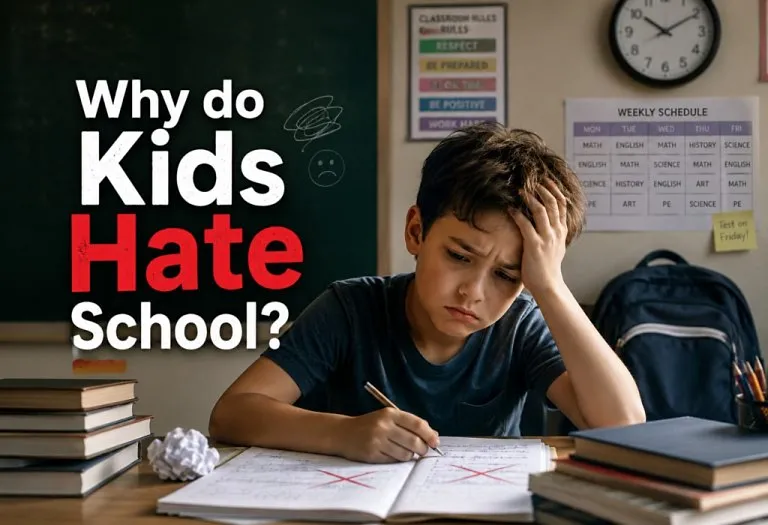
Why do kids hate school? It is one of the most common and urgent questions parents ask — often while watching their child cry at the front door, fake a stomachache for the third morning in a row, or sit slumped in the back seat refusing to get out of the car.
School aversion is not laziness or a bad attitude.
It is a real emotional response rooted in academic pressure, social fear, mental health struggles, and learning environments that do not work for every child.
Research from the National Institutes of Health shows that up to 28% of children experience school avoidance.
School Avoidance vs. Truancy: Understanding the Difference
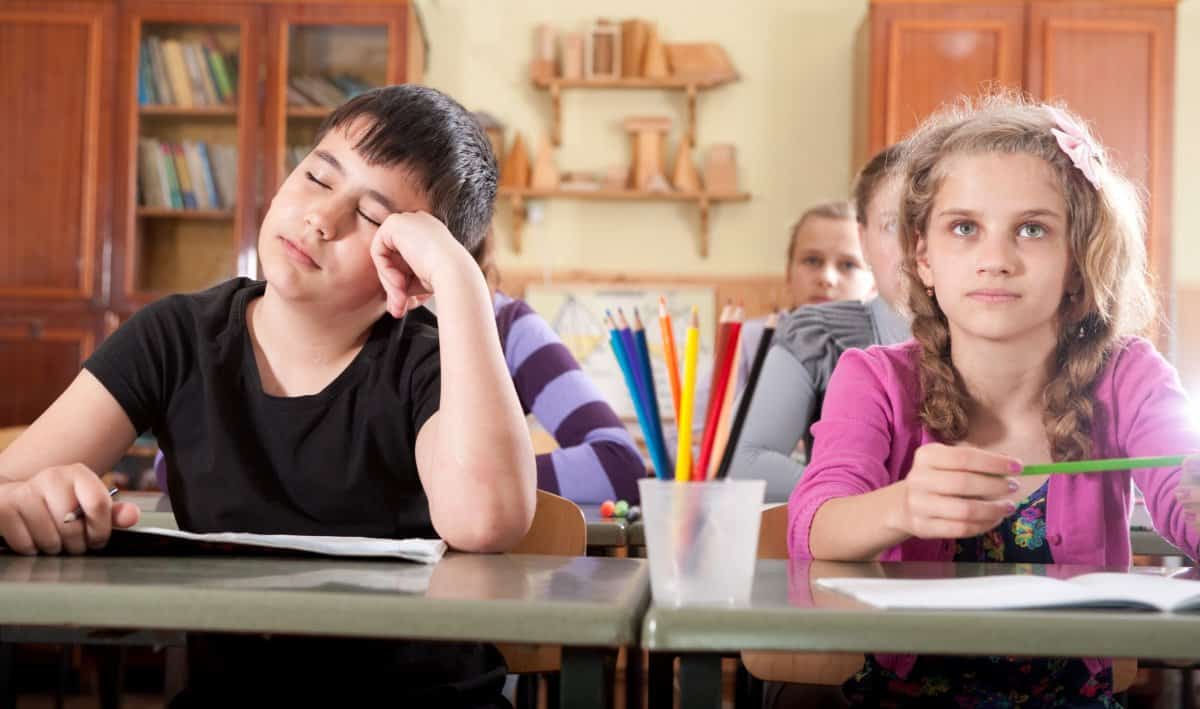
These two problems are often confused, but they are fundamentally different with different causes and solutions. Getting this distinction right is the first step toward helping your child.
School refusal is driven by fear, anxiety, or emotional distress about school itself. A child experiencing school refusal often shows physical symptoms — stomachaches, headaches, nausea — that are real, not manufactured.
Truancy is driven by a preference for other activities and typically involves deception. A truant child skips school without their parents knowing. A school-refusing child is usually transparent about not wanting to go and genuinely suffers in the process.
| Factor | School Refusal | Truancy |
|---|---|---|
| Cause | Fear, anxiety, distress | Preference for other activities |
| Transparency | Child tells parents openly | Often kept secret |
| Physical symptoms | Common — stomachaches, headaches | Rare |
| Emotion involved | Genuine distress | Generally not distressed |
| Best response | Address root cause with support | Clear boundaries and consequences |
| Treatment | Counseling, gradual exposure | Behavioral intervention |
Treating school refusal with punishment or forced attendance — without addressing the underlying cause — makes the problem significantly worse over time.
When Normal Complaints Become a Real Warning Sign
Every child complains about school occasionally. That is completely normal and not a red flag on its own.
The real concern begins when complaints become a daily pattern. When a child cries every morning, develops recurring physical symptoms before school days, refuses to leave the car at drop-off, or expresses genuine fear and distress — that signals something specific.
A 2023 study found that school avoidance is most common between the ages of 10 and 13, often coinciding with the transition to middle school. This is a critical window for early intervention.
Top Signs Your Child Hates School
Before addressing the cause, you need to recognize the signs. Children do not always say outright that they are struggling — they show it in behavior.
| Sign | What It May Indicate |
|---|---|
| Daily stomachaches or headaches on school days | Anxiety or stress response |
| Crying or meltdowns every morning | Emotional overwhelm |
| Faking illness frequently | Avoidance of a specific trigger |
| Refusing to do homework | Academic frustration or overwhelm |
| Coming home angry or shut down | Social stress or bullying |
| Declining grades suddenly | Academic struggle or disengagement |
| Withdrawing from friends | Social isolation or depression |
| Begging to stay home | Fear-based school avoidance |
| Loss of appetite on school days | Anxiety-related physical response |
| Talking negatively about school constantly | Chronic unhappiness with the environment |
If you are seeing three or more of these signs consistently over two or more weeks, it is time to take action.
Reason 1: Academic Pressure and Fear of Failure
Academic pressure is one of the top reasons why kids hate school. The pressure to perform well — from parents, teachers, and peers — can transform school from a place of learning into a place of dread.
High expectations create a fear of failure that some children find paralyzing. When kids believe that getting a bad grade means they are stupid or disappointing, the emotional cost of school becomes unbearable.
This is especially intense for older children preparing for college entrance exams, grade-level testing, and competitive academic environments. The weight of the future is very real for them — even at 14 or 15 years old.
Reason 2: Boredom and Lack of Engagement
Some kids do not hate learning — they hate the conditions of learning. A rigid, one-size-fits-all curriculum delivered through lectures and worksheets leaves many children deeply bored.
Children are naturally curious. When school fails to channel that curiosity — when lessons feel irrelevant, repetitive, or disconnected from real life — engagement drops fast. Boredom breeds resentment.
Gifted and advanced learners are especially vulnerable to this. When the material is too easy and moves too slowly, they disengage, become disruptive, and eventually develop a strong dislike for the school environment.
Reason 3: Bullying and Social Struggles
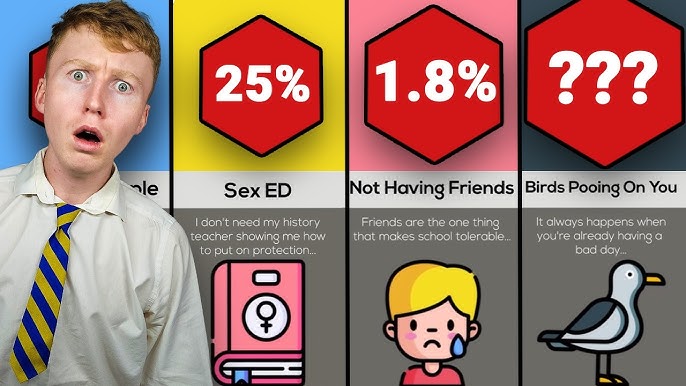
Bullying remains one of the most powerful and damaging reasons why kids hate school. For a child being bullied, school is not just unpleasant — it is genuinely threatening.
Physical bullying, verbal mockery, exclusion from social groups, and cyberbullying that follows children home all create a pervasive sense of dread. No child should have to dread going to school out of fear for their safety or dignity.
Social struggles that fall short of bullying also matter. Feeling left out, not knowing where to sit at lunch, or struggling to make friends can make every single school day feel exhausting and lonely.
Reason 4: Anxiety and Mental Health Challenges
School-related anxiety is a clinical reality for millions of children. It can stem from fear of failing, being called on in class, being judged by peers, speaking in front of others, or managing the unpredictability of social interactions.
Without early support, small worries grow into overwhelming anxiety. Children begin to associate school with the physical feeling of panic — racing heart, nausea, inability to concentrate — and their brain starts treating school as a genuine threat.
According to the American Academy of Pediatrics, anxiety disorders are among the most common mental health conditions in school-age children. Many go undiagnosed because the symptoms look like defiance, laziness, or physical illness.
Reason 5: Undiagnosed Learning Disabilities
If a child has an undiagnosed learning disability — such as dyslexia, ADHD, dyscalculia, or a processing disorder — school can feel like an endless exercise in public failure.
These children often work twice as hard as their peers to produce half the result. They sit in class feeling confused while everyone around them seems to understand. Over time, this builds a belief that they are simply not smart enough — which is both false and devastating.
Many parents and even teachers mistake these struggles for laziness or a lack of effort. Early screening and diagnosis is critical. Once the right support is in place, many of these children thrive.
Reason 6: Lack of Autonomy and Control
Children naturally crave autonomy as they develop. They want to make choices, direct their own attention, and feel some sense of control over their day.
Traditional school environments offer very little of this. The schedule is fixed. The subjects are chosen for them. The pace is set by the curriculum. Even bathroom breaks require permission.
When children feel their autonomy is completely overridden all day long, frustration builds. Younger children especially struggle to articulate this feeling — they just know they do not want to go. Giving them small choices within their school routine can help significantly.
Reason 7: Poor Teacher-Student Relationships
The relationship between a student and their teacher is one of the most powerful variables in a child’s experience of school. A warm, supportive teacher can make even a struggling student want to come in. A cold or dismissive one can make even an academically strong child miserable.
Children who feel unseen, unfairly treated, criticized in front of peers, or simply ignored by their teacher very quickly develop a negative association with that classroom and school overall.
This is especially true for sensitive children, children with anxiety, and children from marginalized backgrounds who may already feel like they do not belong.
Reason 8: Sleep Deprivation and Physical Exhaustion
School start times — especially in middle and high school — often conflict directly with adolescent biology. Teenagers naturally shift toward later sleep-wake cycles, meaning early school starts force them to wake up during what is biologically their deepest sleep phase.
A chronically sleep-deprived child cannot focus, regulate emotions, or retain information. School becomes an exercise in misery when your brain is not functioning properly. And then the bad experience reinforces the dread of going back.
The American Academy of Pediatrics recommends that middle and high schools start no earlier than 8:30 AM. Many still start before 7:30 AM — a significant mismatch with child developmental science.
Reason 9: Rigid Structure and Inflexible Schedules
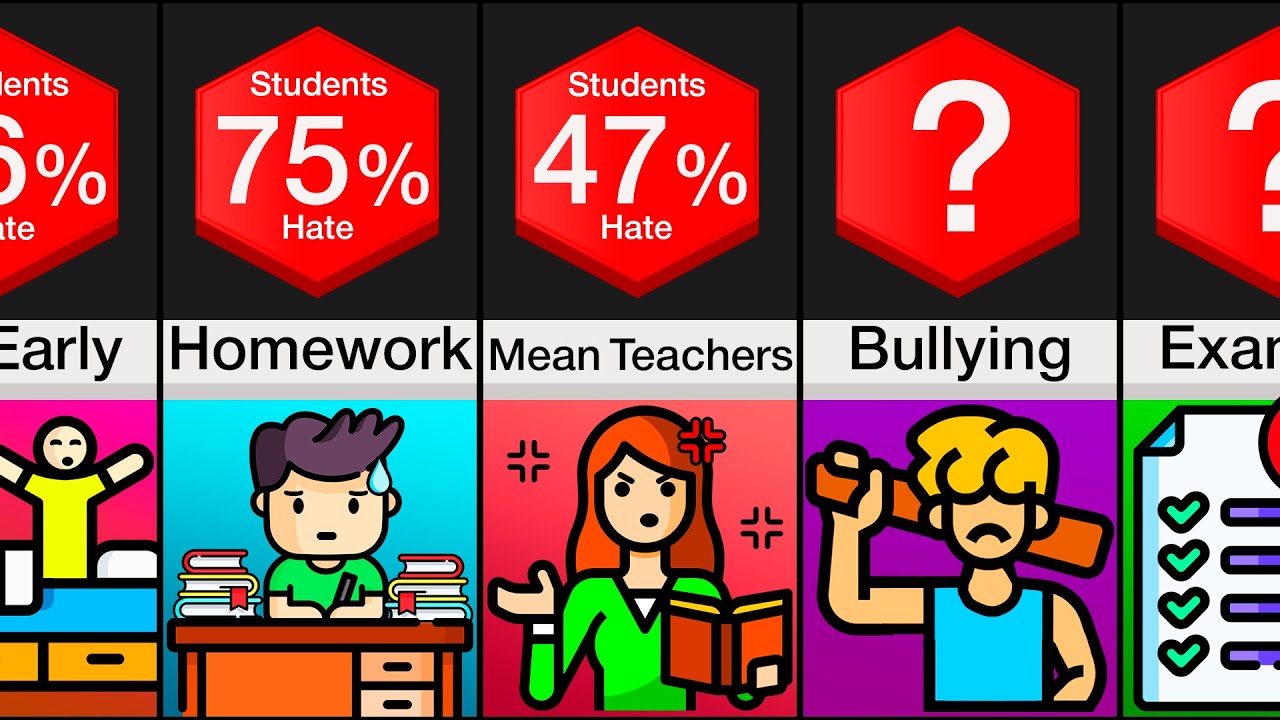
A highly structured environment that allows no flexibility, creativity, or downtime wears children down. The school day — especially in traditional settings — can feel like an assembly line of tasks, transitions, and demands.
Children who are naturally more creative, kinesthetic, or divergent thinkers often feel especially constrained. They need movement, exploration, and open-ended thinking that rigid schedules rarely accommodate.
When every moment is scheduled and every deviation is corrected, many children experience school as a place that simply does not have room for who they actually are.
Reason 10: Social Anxiety and Fear of Judgment
Social anxiety in children is distinct from shyness. It is a genuine fear of being watched, evaluated, embarrassed, or rejected by peers — and it makes the social environment of school feel threatening on a daily basis.
Raising your hand in class, eating in a crowded cafeteria, getting changed for gym, being chosen last for teams, or being asked to present in front of classmates — all of these ordinary events can feel catastrophic to a child with social anxiety.
The school environment is almost uniquely designed to trigger social evaluation. Without support, these children gradually stop participating, withdraw emotionally, and begin to actively avoid school.
Reason 11: Mismatch Between Learning Style and Teaching Method
Not every child learns through sitting still, listening, reading, and writing. Some children are highly visual learners. Others need hands-on, kinesthetic engagement. Others process information better through discussion and collaboration.
When teaching methods consistently favor one style — typically auditory and text-based — children who learn differently fall behind and feel inadequate. They are not struggling because the material is beyond them. They are struggling because the method does not match how their brain works.
Identifying a child’s learning style and advocating for varied instructional approaches within the classroom can make a dramatic difference in their engagement and success.
Reason 12: Bullying by Teachers or Unfair Treatment
Adult bullying in schools is rarely discussed openly, but it is a real experience for some children. A teacher who singles out a student, mocks them in front of others, gives consistently unfair feedback, or shows visible favoritism creates a toxic learning environment.
Children who experience this often do not report it because they fear not being believed or making the situation worse. They internalize the unfair treatment as evidence of their own inadequacy.
Parents should create an environment at home where children feel completely safe telling them if a teacher treats them poorly — and take those reports seriously.
Age-by-Age Breakdown: Why Kids Hate School at Different Stages
The reasons why kids hate school shift significantly as children grow. Understanding what drives school avoidance at each stage helps parents respond with the right support.
| Age Group | Common Reasons for Hating School |
|---|---|
| Ages 4–6 (Preschool/Kindergarten) | Separation anxiety, overwhelming new environment, missing home |
| Ages 6–9 (Early Elementary) | Confusion with material, social exclusion, teacher relationship problems |
| Ages 9–12 (Upper Elementary) | Academic pressure, bullying, learning disabilities becoming visible |
| Ages 12–14 (Middle School) | Social anxiety, peer pressure, identity struggles, hormonal changes |
| Ages 14–18 (High School) | Future pressure, college stress, mental health, rigid schedules, disengagement |
Middle school consistently emerges as the most difficult transition. Social hierarchies sharpen, academic demands increase, and many students experience the first serious signs of anxiety or depression.
What Parents Can Do: Practical Solutions That Work
Identifying why your child hates school is the first step. Taking action is the second. Here are the most effective evidence-backed strategies.
Start With a Calm, Non-Pressured Conversation
Do not interrogate your child the moment they get home. Let them decompress first. Then approach with genuine curiosity and zero judgment.
Ask open-ended questions: “What part of school feels hardest right now?” or “Is there anything that makes you feel worried or nervous at school?” Let them guide the conversation at their pace.
Talk to the Teacher Early
Teachers observe your child for hours every day. They often have insight that parents miss. Schedule a meeting — not to assign blame, but to share observations and ask for their perspective.
When parents and teachers work together with the same goal, children feel supported from both sides. This alignment alone can shift a child’s attitude toward school significantly.
Address Bullying Immediately and Directly
If your child reports bullying, take it seriously and act immediately. Contact the school, document every incident, and follow up consistently until the situation is resolved.
Do not advise your child to simply ignore it or toughen up. Unaddressed bullying escalates and causes lasting psychological harm. Your child needs to see that you will advocate for them.
Get a Learning Evaluation if Academic Struggles Are Present
If your child is consistently falling behind, struggling with reading, writing, math, or attention, request a formal evaluation through the school or a private specialist.
Early identification of learning differences — dyslexia, ADHD, auditory processing disorder — opens the door to accommodations, tailored support, and teaching methods that actually work for your child’s brain.
Build Positive Associations With School
Find something — anything — your child genuinely enjoys at school. An after-school club, a sport, a subject, a particular teacher, a friend. Help them connect that positive thing to the broader idea of school.
Motivation builds from small wins. When a child has even one positive anchor in their school experience, it becomes much harder to completely reject the environment.
Consider Mental Health Support
If anxiety, depression, or severe school avoidance is present, a child psychologist or therapist is not a last resort — it is a first-line response.
Cognitive behavioral therapy (CBT) in particular has strong evidence for treating school-related anxiety. It helps children identify distorted thinking, build coping skills, and gradually re-engage with feared situations.
What Schools Can Do Better
The conversation about why kids hate school cannot stop at the parent level. Schools and educators play a crucial role in creating environments where children genuinely want to be.
Personalized and Flexible Learning
One-size-fits-all education fails a significant portion of every classroom. Schools that incorporate project-based learning, differentiated instruction, student choice, and hands-on activities see measurably higher engagement and lower avoidance rates.
Strong Anti-Bullying Culture
Effective anti-bullying programs are not just posters on a wall. They involve active training for teachers, consistent enforcement, peer mentorship programs, and clear reporting systems that students actually trust and use.
Social-Emotional Learning (SEL) Programs
SEL programs teach children how to identify emotions, manage stress, resolve conflict, and build healthy relationships. Schools with strong SEL integration report lower anxiety, better academic outcomes, and significantly better school climate overall.
Later School Start Times
The American Academy of Pediatrics has called for middle and high schools to start no earlier than 8:30 AM. Schools that have made this shift report improved attendance, better grades, and fewer mental health referrals.
The Role of Home Environment in School Attitude
What happens at home directly shapes how a child feels about school. Chaotic mornings, lack of sleep, high-pressure parenting, or a dismissive response to school concerns all worsen school avoidance.
A calm, predictable morning routine reduces one of the biggest daily stress points for school-resistant children. Consistent bedtimes, a simple breakfast, and a low-pressure send-off make a measurable difference.
Modeling a positive attitude toward learning — talking about things you are curious about, reading, asking questions — also quietly shapes your child’s relationship with education over time.
Alternative Education Options Worth Considering
For some children, the traditional school model genuinely does not work — and forcing them into it year after year causes more harm than good.
| Alternative | Best For | Key Benefit |
|---|---|---|
| Homeschooling | Severe anxiety, unique learning needs | Full flexibility and personalization |
| Online school | Social anxiety, schedule sensitivity | Learn from home at own pace |
| Microschools | Children needing smaller community | Small class sizes, personalized attention |
| Charter schools | Students needing different approach | Specialized curriculum models |
| Waldorf or Montessori | Kinesthetic, creative learners | Hands-on, child-led learning philosophy |
| Hybrid schooling | Moderate anxiety with some social need | Mix of home and school-based learning |
Exploring alternatives is not giving up. It is finding the environment where your child can actually learn, grow, and thrive.
Frequently Asked Questions (FAQs)
Is it normal for kids to hate school?
Yes, many children go through phases of disliking school. The concern begins when it becomes a daily pattern paired with physical symptoms, emotional distress, or declining grades.
At what age do kids most commonly start hating school?
School avoidance peaks between ages 10 and 13, particularly during the transition to middle school when social pressures and academic demands sharpen simultaneously.
What is the difference between school refusal and truancy?
School refusal is driven by genuine fear and anxiety, with the child being transparent about not wanting to go. Truancy involves deceptive skipping to pursue other activities.
How do I talk to my child about hating school without making it worse?
Approach calmly, ask open-ended questions, and listen without judgment or pressure. Let your child lead the conversation and validate their feelings before jumping to solutions.
Should I force my child to go to school if they hate it?
Forcing attendance without addressing the root cause can deepen anxiety and resentment. Identify the cause first, then work with teachers and professionals to create a supported return.
Can anxiety cause a child to hate school?
Yes — school anxiety is one of the most common drivers of school avoidance. It can manifest as stomachaches, headaches, crying, or outright refusal, especially on school mornings.
How does bullying affect a child’s attitude toward school?
Bullying makes school feel unsafe and threatening, causing children to dread going. Even mild social exclusion can make school deeply unpleasant and drive consistent avoidance.
What are signs my child has an undiagnosed learning disability?
Signs include consistent academic struggle despite effort, frustration with reading or math, avoiding homework, losing confidence, and teachers reporting the child is “not trying” when they clearly are.
How long does it take to fix school-related anxiety or avoidance?
With the right support — open communication, teacher collaboration, and professional help if needed — most children show meaningful improvement within weeks to a few months.
When should I seek professional help for a child who hates school?
Seek help when school avoidance is paired with persistent physical symptoms, emotional withdrawal, declining mental health, or has lasted more than two to three weeks without improvement.
Conclusion
Why do kids hate school? The honest answer is that there is rarely one single cause. Academic pressure, social fear, bullying, undiagnosed learning differences, anxiety, rigid schedules, and poor teacher relationships all play a role — often in combination.
The most important thing a parent can do is listen first, investigate second, and act with empathy and purpose. School does not have to be a place of dread.
With the right support at home, the right response from educators, and professional help when needed, most children can find their way to a more positive experience.
Every child deserves to feel safe, seen, and capable of learning. Recognizing why your child is struggling is not the end of the road — it is the beginning of finding the right path forward for them.