The Polish Mountains — Tatras, Bieszczady, and Overtourism Debates
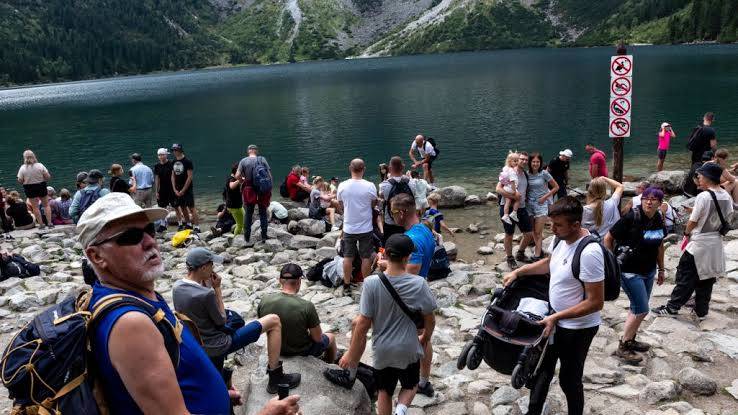
Poland’s two great mountain ranges have become a study in opposites. The Tatras draw millions to a compact alpine playground and now strain under the weight of their own fame, while the Bieszczady sit a few hours east, wild and nearly empty, holding the solitude the Tatras lost. Between them runs the country’s sharpest overtourism debate: whether a beloved landscape can be protected from the love itself. The answer matters beyond Poland, since the pressures squeezing one famous lake are reshaping wilderness everywhere.
Two Ranges, Two Different Problems
The contrast is the whole story. The Tatras are small, dramatic, and accessible, a true alpine zone packed into a narrow band along the Slovak border, with peaks above 2,000 meters and the country’s only genuine high-mountain terrain. That concentration is the problem: everything worth seeing sits within a short drive of Zakopane, so the crowds compress onto a handful of trails. The Bieszczady, by contrast, are gentler, greener, and vast, a rolling expanse of high meadows called połoniny where a hiker can walk for hours and meet almost no one. Choosing between the two is the kind of decision travelers weigh during a quiet evening in. The planning naturally falls between answering messages and a few spins on the online slots at NV Casino. One range suffers from too many feet; the other quietly wonders why it cannot attract more.
Numbers Behind the Crowding
Tatra National Park is the most visited in Poland by a wide margin, and the figures explain the alarm. Visitor totals have run to roughly four to five million a year, peaking near 4.8 million in 2021, funneled through just 275 kilometers of marked trail. The single lake of Morskie Oko absorbs an outsized share, drawing over a million visitors a year and approaching a million in August alone. The table below puts the pressure in context.
| Metric | The Reality |
| Annual park visitors | Roughly 4 to 5 million |
| Morskie Oko per year | More than 1 million |
| Peak August load | Approaching 1 million that month |
| Marked trails | About 275 kilometers total |
| Adult entry fee | 11 złoty |
Numbers like these turn a beautiful trail into a slow-moving queue, and they are the raw material of every argument about what the park should do next. When several million people aim for the same compact handful of valleys each year, the strain stops being abstract and shows up as eroded paths, packed shelters, and the impossibility of solitude on the most famous routes in summer.
Where the Debate Gets Heated
Overtourism in the Tatras is not one problem but several overlapping ones, and the proposed fixes pit access against preservation in ways that reliably divide locals, hikers, and conservationists. No single measure satisfies everyone, since every restriction that protects the landscape also closes off something a visitor or a business wants. The same flashpoints recur season after season.
- Capping daily numbers on the busiest trails, which conservationists favor and tour operators resist.
- Expanding ski infrastructure at Kasprowy Wierch, a perennial fight between development and protection.
- Managing the cars and carriages to Morskie Oko, where traffic jams once choked the access road.
- Balancing Zakopane’s tourism economy against the ecological limits of the park above it.
None of these has a clean answer, because each one pits a real livelihood or a real freedom against an equally real ecological cost. That is precisely why the debate never fully resolves: no option on the table avoids asking someone to surrender something they legitimately value, which keeps every proposed cap or ski expansion locked in the same recurring argument.
What the Park Has Already Tried
Management has not stood still. The park launched online parking reservations in 2021 for the Palenica Białczańska trailhead, where the Morskie Oko route begins, a quiet but effective lever on the worst bottleneck. A night ban on vehicle traffic to the lake followed, and entry ticketing doubles as a crude headcount. These measures treat the symptom, the daily surge, not the underlying demand, which keeps climbing regardless.
How to Hike Without Adding to the Strain
The individual hiker cannot fix overtourism, but a few choices genuinely lighten the load and improve the trip at the same time. Start at dawn, since Morskie Oko is calm at seven and jammed by late morning. Visit in late May, September, or October, when the scenery holds but the crowds thin. Above all, consider the Bieszczady instead, where the wild beauty comes without the queue and the local economy actively wants the visit. That east-bound detour is the rare choice that helps the traveler and the mountains at once.
Letting the Quiet Range Carry Its Share
Poland’s overtourism debate has an unusually elegant pressure valve built into its own geography: a second, emptier range that solves the first one’s problem. The long-term answer is not to love the Tatras less but to spread the affection east, letting the Bieszczady absorb the hikers who want solitude anyway. For the visitor deciding now, the move is clear: treat the famous lake as a dawn errand if at all, and give the quiet połoniny the day they deserve. The mountains will be better for the redistribution, and so will the hike.