Top software development trends shaping the future
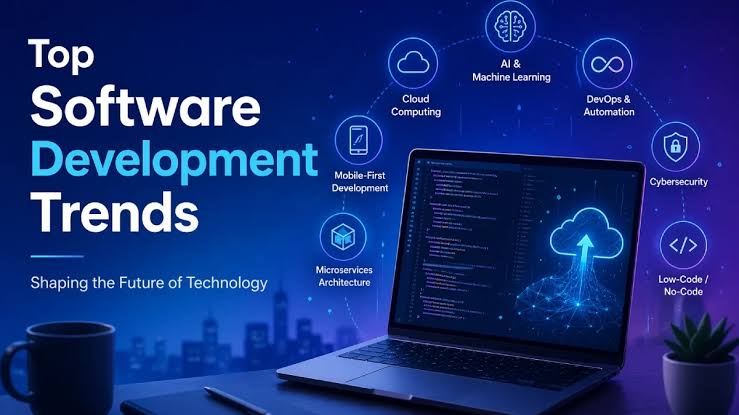
Software development is changing fast. AI, cloud platforms, edge computing, and stronger security practices are reshaping how digital products are built and maintained.
These trends affect speed, cost, security, scalability, and user experience. Companies that understand them can make better decisions and respond faster to change.
1. AI-powered development
AI coding tools can generate tests, explain code, detect bugs, improve documentation, and support code reviews.
AI agents can also analyze tasks, edit several files, run tests, and prepare updates. However, developers still control architecture, security, and final decisions.
AI will not replace engineers. It will reduce repetitive work and help them focus on complex problems and product quality.
2. Low-code and no-code platforms
Low-code and no-code tools help companies automate workflows, build internal systems, connect data, and create AI-powered applications.
They are also used in industry platforms, including online casino software. Ready-made modules can support payments, user accounts, game integrations and other core functions.
These tools reduce development time and allow non-technical employees to contribute. However, companies still need strong access control, data protection, and system governance.
3. DevSecOps
Security is becoming part of every development stage.
Teams use automated vulnerability scans, secret detection, dependency checks, and infrastructure validation. They also review third-party libraries and AI-generated code.
DevSecOps helps companies find risks earlier, lower repair costs, and release software more safely.
4. Cloud-native development
Containers, Kubernetes, microservices, serverless platforms, and event-driven systems remain central to modern development.
They help applications scale and allow teams to update separate services without redeploying the whole product.
Cloud cost control is also important. FinOps brings engineering, finance, and product teams together to improve efficiency and manage spending.
5. Platform engineering
Many companies are building internal developer platforms.
These platforms provide approved tools, reusable templates, automated environments, monitoring, and deployment pipelines.
They reduce technical complexity, improve developer experience, and help teams follow the same security and infrastructure standards.
6. Edge computing
Edge computing processes data closer to users and connected devices.
This reduces delays and helps applications work with limited or unstable internet access.
It is useful in healthcare, manufacturing, retail, transport, gaming, and smart infrastructure. Developers must also manage limited hardware, remote updates, and device security.
7. Smarter testing and delivery
AI is improving software testing and deployment.
Modern tools can analyze failures, detect unusual behavior, and identify risky changes.
Feature flags, canary releases, and automated rollbacks allow teams to release updates gradually and reverse them quickly when problems appear.
8. Sustainable software engineering
Efficient software can reduce both costs and environmental impact.
Sustainable development includes efficient code, optimized cloud resources, responsible data storage, and lower data transfer.
These practices help companies build faster, cheaper, and more responsible digital products.
Future outlook
The future of software development will combine human expertise, AI, automation, and flexible infrastructure.
Successful companies will not adopt every new technology. They will choose tools that solve real problems and support secure, scalable, efficient, and maintainable products.