What Alcohol Advertising Is Actually Selling
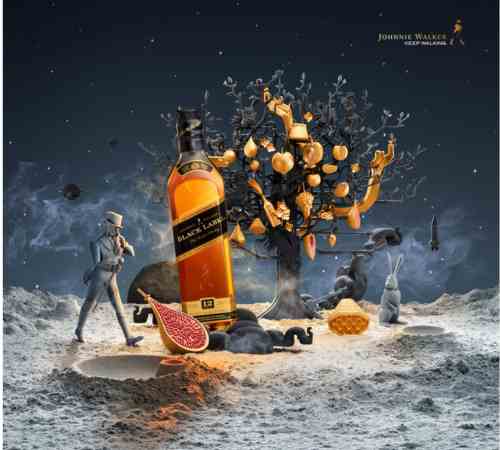
Look closely at any alcohol campaign and notice how little of it concerns the product. There is rarely much about flavor, ingredients, or process. What you get instead is a moment. Friends around a table, a group at a beach as the light goes, a single figure in a well appointed room at the end of a long day. The liquid is almost incidental. What is being sold is an occasion and the feeling attached to it, and as marketing goes, it is some of the most effective work in the business.
Selling the Occasion, Not the Object
Most product advertising attaches a brand to a benefit. Alcohol marketing does something more ambitious. It attaches a product to a moment in your day, and once that association is established, the moment does the selling on its own.
This is why the imagery is so consistent across decades. The end of the workday. The reunion with old friends. The celebration of something achieved. The category has essentially claimed ownership of transitions, and transitions happen to everybody, every day, without any prompting from a media buy.
Segmented With Precision
The segmentation deserves study. Different audiences receive entirely different scripts for the same underlying proposition.
To overstretched parents, particularly mothers, the message has been reward and solidarity, wrapped in humor and merchandise, positioning a glass of wine as a small, deserved rebellion at the end of a demanding day. To men, the register shifts toward control and craft, with aged spirits standing in for discernment and hard won taste. To younger drinkers, it becomes about belonging and the fear of missing the night everyone else will be talking about. To the affluent, it becomes provenance, scarcity, and quiet signaling.
One product, several identities, each one meeting an existing emotional need rather than manufacturing a new one. That is textbook work, and it is worth admiring on a technical level even while noticing what it accomplishes.
Distribution Beyond the Ad Break
The other reason the category performs so well is that its presence extends far past paid media. It is embedded in sports sponsorship, festival naming rights, product placement, influencer content, and the ambient humor of social feeds. A person who has not consciously watched an advertisement in years has still absorbed thousands of impressions.
For media professionals, this is the case study in cultural saturation. The category did not just buy attention. It became part of the furniture of ordinary life, which is a far more durable position than any campaign can purchase.
The Mechanism Underneath
What makes this so powerful is that it operates on the same machinery as habit formation. Behavior runs on loops. A cue triggers a routine that delivers a reward, and most of that sequence happens below conscious thought.
Marketing that repeatedly pairs a specific moment with a specific product is, functionally, cue installation at scale. By the time someone reaches for a glass at six in the evening, they are not responding to an advertisement. They are running a routine whose cue was reinforced for years by people who understood exactly what they were doing. Most drinking habits are built this way, quietly, and without a single conscious decision anywhere in the process.
The Hedge Worth Watching
The most interesting current development is that the same companies are now investing heavily in alcohol free versions of their flagship products. That is an unusual move for businesses whose economics depend on the original, and it tells you something about where they believe consumer behavior is heading.
They are reading the same signals everyone else is. Younger consumers are drinking less, wearable data has made the cost of a couple of drinks visible to millions of people every morning, and declining a drink no longer requires an explanation. The category is repositioning around occasions rather than alcohol itself, which is arguably what it was always selling anyway.
Reading Your Own Cues
There is a practical use for this analysis beyond professional interest. If you understand that the six o’clock cue was constructed rather than discovered, you gain some leverage over it.
The useful exercise is to pause at the moment the impulse arrives and ask what you are actually reaching for. Frequently the answer is the thing the advertising promised rather than the product itself, a clear line between the working day and your own time, or a sense of reward for having got through it. Those needs are legitimate and can be met directly, which is the entire premise behind approaching alcohol moderation through awareness rather than willpower. Willpower is weakest in the evening, precisely when the cue fires.
Several tools now work along these lines. A simple log of when and why you reach for a drink makes the pattern visible within days. Others incorporate gentler techniques such as alcohol hypnotherapy, which uses calm, guided sessions to loosen the automatic quality of an established routine. Unconscious Moderation takes this approach, combining neuroscience, self reflection, and drinking hypnotherapy to help people understand their own patterns rather than follow a set of rules.
Good Work, Worth Seeing Clearly
None of this is an argument that the marketing was dishonest. It was, by any professional standard, extremely good. It identified real emotional needs and attached a product to them so thoroughly that the association now feels like common sense rather than commerce.
Anyone who works in media should find that instructive. Anyone who has ever poured a drink at exactly six o’clock might find it clarifying. Practicing drinking moderation, whether tracked in a notebook or with an alcohol moderation app, starts with noticing which of your cues you chose and which ones were chosen for you.