Alternative Fashion at Work: Dressing Goth Without HR Noticing
The job offer arrives, and with it a dress code PDF that uses the phrase “business casual” four times without defining it. You’ve got a closet full of black, band tees, chains, and boots, and a first day in two weeks. The question isn’t whether to give up the aesthetic. It’s how much of it survives the transition.
More than you’d think. Alternative fashion at work is mostly a translation problem, not a subtraction problem. The elements that make an outfit read as goth or alt, the palette, the silhouette, the small details, can nearly all be kept if the fabric and the fit shift toward what the office expects. Here’s how the translation works.
Start with what the dress code is actually policing
Dress codes almost never ban colors. They ban categories: graphic tees, ripped denim, visible midriffs, athletic wear, “excessive” accessories. Read yours carefully and notice what isn’t there. Black is never on the list. Neither are boots, dark lipstick, or silver jewelry in most workplaces.
That’s your opening. The palette stays. What changes is the garment type.
Swap the graphic tee for a patterned knit
This is the single biggest move. A band tee with a screaming skull is a “graphic tee” and it’s out. A knit cardigan with an all-over pattern of bats, moths, or skeletons is a “sweater” and it’s in, even though it’s communicating something very similar.
The difference is format. Knitwear reads as professional by default. A patterned cardigan over a plain black button-up and dark trousers is an outfit a lawyer could wear, and if the pattern happens to be an occult star chart, most colleagues will register it as “interesting sweater” and move on. The people who recognize it will nod. That’s the ideal outcome.
Independent brands have made this much easier. The nerdy cardigan sweaters that have emerged in the last couple of years, with cryptid, horror, and astrology motifs worked into the knit, look like normal patterned knitwear from across a conference room and like exactly what they are up close. That dual reading is the entire strategy.
Silhouette: keep the shape, upgrade the fabric
Alt fashion leans on a few silhouettes: long and flowing, tight and layered, or oversized and slouchy. All three exist in office-appropriate fabrics.
- Long black maxi skirt → same skirt in a wool blend or heavier ponte
- Tight band tee → fitted black turtleneck
- Oversized hoodie → oversized black blazer or chunky cardigan
- Ripped skinny jeans → slim black trousers or dark straight denim, if denim’s allowed
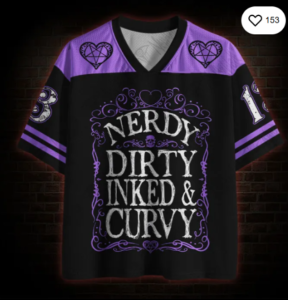
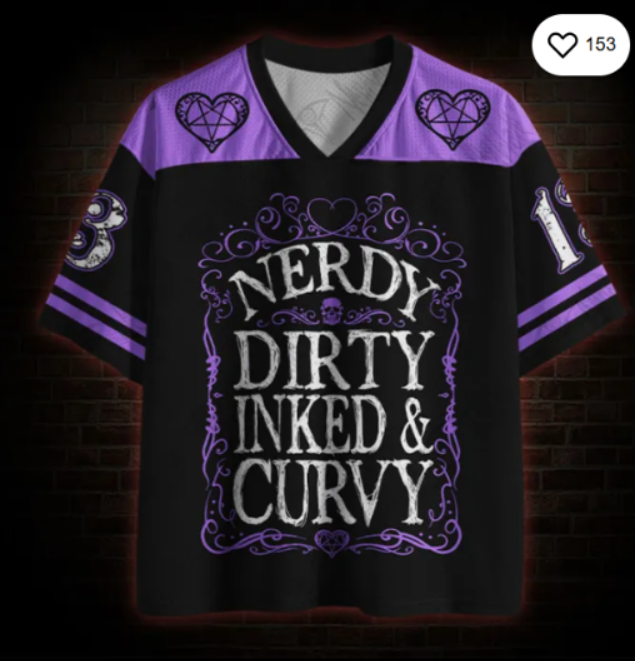
The proportions you like don’t change. The material does. Summer offices are the hard case, since knits get stifling; a dark, subtle nerdy mesh jersey worn under an open overshirt keeps you covered and cool without abandoning the palette.
Can you wear boots to an office?
Almost always. Combat boots are fine in creative and tech workplaces and most business-casual ones. In more conservative offices, switch to a black leather Chelsea boot or a chunky-soled loafer, both of which keep the weight and attitude without the eyelets. Platform anything is a judgment call; two inches usually passes, four doesn’t.
Jewelry and the one-piece rule
Silver rings, a single chain, small hoops, a subtle pendant: all fine. The rule that keeps it professional is one statement piece at a time. A large occult pendant with plain rings works. The pendant plus three chains plus stacked rings plus ear cuffs reads as costume in a work context, even if it’s your normal weekend look.
Pick the one thing that matters most that day and let the rest be minimal.
What about hair and makeup?
Depends enormously on the workplace, and this is where you calibrate over the first two weeks. Dark lipstick in a deep berry or wine rather than true black passes almost everywhere. Winged liner is standard. Colored hair is accepted in most industries now, though some client-facing roles are stricter.
Watch what your colleagues do and sit one notch inside that.
A five-day week, translated
Monday: black turtleneck, patterned knit cardigan, slim charcoal trousers, Chelsea boots.
Tuesday: white button-up, black wool skirt, black tights, loafers, single silver pendant.
Wednesday: fitted black cardigan buttoned up as a top, wide-leg black trousers, ankle boots.
Thursday: dark green blouse, black blazer, straight dark denim, boots.
Friday: black crew-neck knit, tiered midi skirt, combat boots if the office allows, rings.
Every one of those is unmistakably in the aesthetic. None of them would get flagged.
The details that quietly do the work
- A coffin- or bat-shaped brooch on a plain blazer lapel
- Black nail polish, kept tidy
- A structured black leather bag instead of a canvas tote
- Sheer black socks with a small pattern
- A dark tortoiseshell or black frame for your glasses
None of these are “goth” individually. Together, on the right palette, they add up.
When the office is genuinely strict
Some workplaces, finance and law especially, expect suits. Even there: a black suit, a black or blood-red shirt, silver cufflinks with a subtle design, and polished black boots is a look with more edge than anything else on the floor. The aesthetic compresses; it doesn’t disappear.
The mindset shift
Stop thinking about what you have to remove. Start thinking about what you can translate. Nearly every element of alternative fashion has an office-legal equivalent, and the exercise of finding those equivalents usually makes your weekend wardrobe sharper too.
Begin with one patterned knit over a plain shirt. See how it lands. Then push one notch further the following week. Most people discover the ceiling is much higher than the dress code PDF implied.