Designing Medical Device Enclosures: Key Considerations
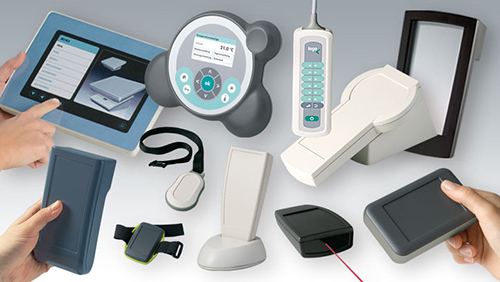
Designing an enclosure for a medical device isn’t just about protection – it’s about compliance, performance and user experience. Every detail, from material choice to assembly method, affects how your device functions, how it’s sterilized and ultimately how it’s received by regulators and end-users alike.
If your product roadmap includes handheld diagnostics, implantable monitors or patient-worn wearables, your enclosure is doing far more than housing electronics. It’s part of the device itself. Learn more about medical device manufacturing strategies that support regulatory compliance and scalability.
First, What Is the Enclosure’s Role?
Your enclosure does more than protect the internal electronics. It’s also responsible for:
- Enabling human interaction (via buttons, screens, ports)
- Supporting branding and ergonomics
- Ensuring safety in sterile environments
- Passing regulatory scrutiny under FDA or CE guidelines
In some cases, the enclosure is a functional part of the system – contributing to signal shielding, insulation or heat management. That’s why enclosure design shouldn’t be an afterthought. It’s a system design decision.
The Biocompatibility Question
Is your device going to contact skin, blood or internal tissue? If so, biocompatibility isn’t optional – it’s required.
Materials must comply with ISO 10993 or USP Class VI standards. But beyond certification, you need to think about how the material behaves under use:
- Will it leach additives after repeated sterilizations?
- Does it cause irritation when worn for extended periods?
- Can surface treatments (like painting or pad-printing) compromise the compliance of the base material?
For Class II and III devices, biocompatibility testing can get expensive. It’s smart to select materials with a proven compliance history. This de-risks the approval process and shortens your path to market.
And remember – biocompatibility is more than a test result. It’s a design mindset that starts from day one.
Assembly: Snap Fit, Weld or Screw?
How you assemble your enclosure affects not only how the product feels but how it performs in high-stakes environments.
Consider the following:
- Snap fits are fast and tool-free but may introduce gaps that compromise IP ratings or sterilization.
- Ultrasonic welding creates a permanent, clean seal ideal for sealed enclosures – but it requires design features like energy directors and tooling allowances.
- Screws or threaded fasteners offer serviceability but can increase part count and add potential failure points.
Also think about post-assembly handling: Will the unit need to be resealed after calibration? Will adhesives interfere with sterilization methods? These considerations should guide both your enclosure geometry and your production workflow.
One underutilized tip: Test multiple assembly methods on early 3D printed prototypes. What works on CAD may not translate in real-world handling.
Sterilization Compatibility: Don’t Assume
Sterilization method directly impacts material choice. Not all plastics can survive repeated autoclaving. Some adhesives break down under ethylene oxide (EtO) or gamma radiation.
Common methods include:
- Autoclave (steam sterilization): Ideal for metal and high-heat plastics like PPSU or PEEK.
- EtO gas: Works at low temps but requires materials that don’t absorb and retain the gas.
- Gamma radiation: Simple and scalable but may cause embrittlement in some polymers over time.
What’s your device’s expected use environment? If it’s hospital-based, autoclave resistance may be essential. If it’s single-use, EtO compatibility and cost-efficiency might win out.
Use sterilization requirements as a filter during material selection, not as a post-hoc test.
Also – don’t forget to factor in labeling. Ink adhesion, barcode durability and warning labels all need to survive the chosen sterilization method.
Material Choices: Think Function, Not Just Form
Material selection isn’t just about biocompatibility and sterilization. It’s also about:
- Impact resistance: Devices used in field hospitals or emergency settings may face drops and shocks.
- UV stability: Sunlight exposure can discolor some polymers or break down their surface.
- Electromagnetic shielding: Sensitive electronics may require embedded shielding, metallic coatings or special blends.
Medical-grade options like PC, ABS, TPE, PEEK and liquid silicone rubber each offer different strengths. Your choice should reflect your device’s end-use, not just its form factor.
And don’t overlook overmolding. Adding a soft-touch layer or vibration damping grip isn’t just for user comfort – it can also improve safety and extend device lifespan.
Surface Finish and Aesthetic Details
Think surface finish doesn’t matter? Think again.
A high-gloss finish may look great but could show scratches or be harder to sterilize. Matte textures may reduce glare and hide wear – but can trap contaminants if not designed properly.
If the device is patient-facing (e.g., home diagnostics), user perception becomes a performance factor. Finishes, colors and tactile details should reinforce trust, not raise concerns about sterility or durability.
Also, different finishes can behave differently under sterilization. Gamma radiation, for example, may cause discoloration or embrittlement depending on surface additives.
Design for Maintenance and Field Servicing
Some enclosures need to be opened in the field – for battery replacement, calibration or data extraction. Others must remain sealed for life.
Ask yourself:
- How often will the device be accessed?
- Who is performing the maintenance – technicians or users?
- Is a reseal required? If so, how will integrity be verified?
Clear design documentation, tamper-evident seals and robust fastening solutions help balance usability with security.
Serviceability features should never be retrofitted – they should be designed from the start.
Prototyping Enclosures with Intent
Prototyping isn’t just about shape. It’s about testing:
- Assembly strength and integrity
- Real-world ergonomics
- Compatibility with sterilization
- Label and interface placement
Use low-volume techniques like CNC machining or silicone molding to test enclosure designs before committing to tooling. Don’t assume SLA or FDM parts behave like production-grade plastics – differences in wall thickness and isotropy can skew your results.
Also, plan for pilot builds that replicate sterilization cycles. If a clip fails after five autoclaves, you want to know before you’re 10,000 units in.
Regulatory Considerations Beyond the Obvious
Everyone knows about IEC 60601 and ISO 13485. But have you considered:
- IEC 62366 for usability engineering?
- ISO 11607 for packaging system validation?
- ISO 11135/11137 for sterilization validation (EtO and gamma, respectively)?
Your enclosure directly affects many of these. Poorly documented design controls or material traceability can lead to delays – or worse, a failed audit.
Collaborate with your regulatory team early to ensure your enclosure decisions don’t create last-minute roadblocks.
Get Comfortable with Trade-Offs
There’s no such thing as a perfect enclosure. There are only informed trade-offs:
- Thinner walls may reduce weight – but compromise rigidity.
- Simpler geometry may speed up assembly – but limit aesthetics.
- Lower-cost materials may meet sterilization needs – but fail long-term under UV or mechanical stress.
Your job isn’t to avoid compromise. It’s to manage it intentionally.
Successful medical enclosure design happens when industrial design, mechanical engineering, manufacturing and regulatory teams all work in sync. It’s a balancing act – but one that pays off when your product ships faster, performs better and stays compliant.