Hitter vs Pitcher Stats: Top Plays & Player Rankings 2026

Hitter vs pitcher stats are the most powerful matchup tool in all of baseball analytics, giving fans, fantasy managers, and bettors a detailed head-to-head view of how any batter performs against any specific pitcher.
Known widely as BvP data, these statistics reveal career plate appearance history, batting average in specific matchups, OPS, wOBA, strikeout rates, and much more.
Whether you are setting your fantasy baseball lineup, making a DFS pick on DraftKings or FanDuel, or simply trying to predict how tonight’s game will unfold, understanding hitter vs pitcher stats in 2026 is essential.
This complete guide covers every key metric, top player rankings, how to read BvP data, and where to find the best matchup tools.
Quick Facts Table
| Detail | Info |
|---|---|
| Common Term | BvP (Batter vs Pitcher) |
| Key Hitter Stats | AVG, OBP, SLG, OPS, wOBA, wRC+, BABIP, Exit Velocity |
| Key Pitcher Stats | ERA, FIP, xFIP, K/9, BB/9, WHIP, BABIP, K/BB |
| Minimum PA for Reliable BvP | 5+ Plate Appearances |
| League Average OPS | .725 (approximately) |
| League Average BABIP | .300 |
| Best BvP Tools (2026) | Baseball Reference, RotoWire, FanGraphs, FantasyInfoCentral, BallparkPal, RotoBaller |
| MLB Season Start 2026 | March 25, 2026 |
| Top Ranked Hitter (ESPN 2026) | Shohei Ohtani |
| Top Ranked Pitcher (ESPN 2026) | Tarik Skubal |
| Handedness Splits | RHB vs RHP, RHB vs LHP, LHB vs RHP, LHB vs LHP |
| Fantasy Platforms Using BvP | DraftKings, FanDuel, Yahoo Fantasy, ESPN Fantasy |
What Are Hitter vs Pitcher Stats
Hitter vs pitcher stats, commonly called BvP, are historical matchup statistics that show exactly how a specific batter has performed in plate appearances against a specific pitcher throughout their careers.
These stats pull from play-by-play data going back to 1950 in some databases and as far back as 1901 in others like Baseball Reference. Each time a batter and pitcher have faced each other, every result is logged and compiled.
The data covers everything from basic batting average and home runs in the matchup to advanced metrics like OPS, wOBA, launch angle, and exit velocity in head-to-head situations.
Why Hitter vs Pitcher Stats Matter in 2026
Hitter vs pitcher stats matter more in 2026 than ever before because the combination of Statcast tracking technology and advanced analytics databases has made this data faster, deeper, and more accessible.
Fantasy baseball managers, sports bettors, and DFS players use BvP data to identify favourable and unfavourable matchups before locking in lineups each day. The right matchup can be the difference between winning and losing in daily fantasy.
Even television broadcasts now regularly feature on-screen BvP overlays, showing viewers how the batter has fared historically against the pitcher currently on the mound. The mainstream adoption of this data reflects just how central it has become to understanding the game.
Core Hitter Stats You Must Understand
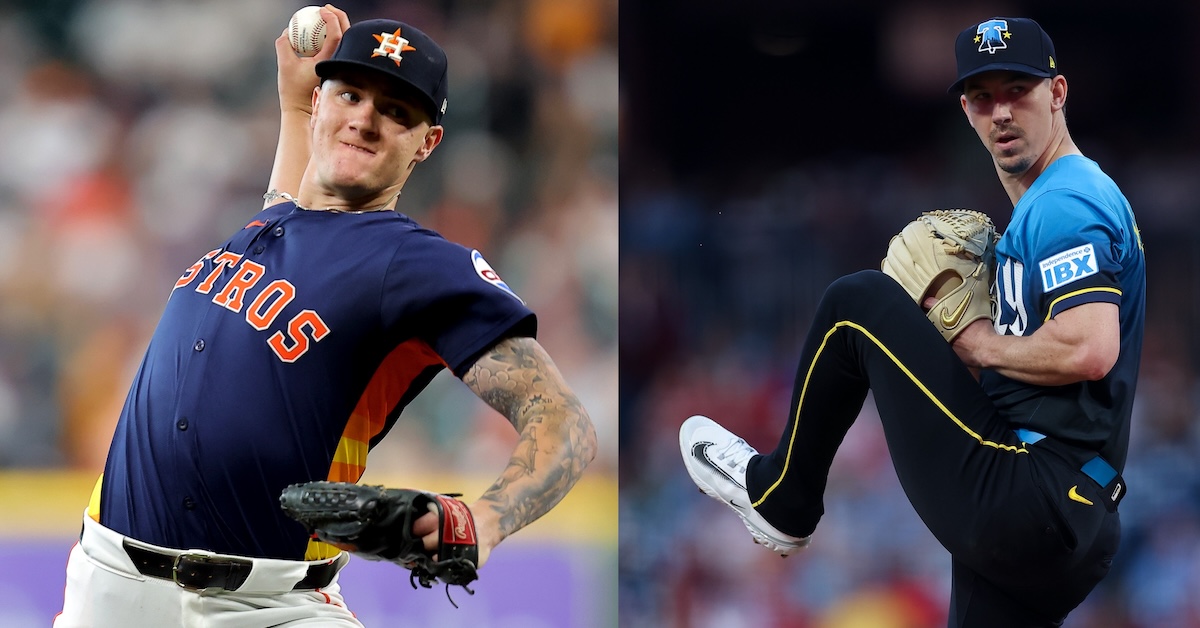
To properly analyse hitter vs pitcher stats, you need to understand the key offensive metrics that appear in BvP tables and matchup tools.
Batting Average (AVG)
Batting average is the most traditional hitting stat. It divides the number of hits by total at-bats. A .300 average is considered excellent while the league average hovers around .245 to .255 in the modern era.
In BvP data, batting average in specific matchups can swing wildly because sample sizes are small. A batter might hit .500 in 10 at-bats against one pitcher but that does not automatically mean he will continue to dominate that pitcher going forward.
On-Base Percentage (OBP)
OBP measures how often a hitter reaches base by any means, including hits, walks, and hit-by-pitches. It divides times on base by total plate appearances.
OBP is considered more valuable than batting average in modern baseball analysis because it accounts for walks, which batting average ignores entirely. A hitter with a .380 OBP is getting on base far more often than one with a .300 OBP even if their batting averages are similar.
Slugging Percentage (SLG)
Slugging percentage calculates total bases divided by at-bats. Unlike batting average which treats all hits equally, slugging gives extra weight to doubles, triples, and home runs.
A slugging percentage above .500 is considered excellent. Elite power hitters like Aaron Judge and Shohei Ohtani regularly post slugging numbers above .550 across a full season.
On-Base Plus Slugging (OPS)
OPS combines OBP and slugging percentage into a single number that captures a hitter’s overall offensive contribution. The league average OPS sits around .725 in the current era.
An OPS above .850 is very good, above .900 is excellent, and above 1.000 puts a hitter in the elite category. In BvP contexts, OPS is one of the most useful quick indicators because it balances getting on base with power production.
Weighted On-Base Average (wOBA)
wOBA goes beyond OPS by assigning specific run-weighted values to each offensive outcome. A single, a double, a triple, a home run, and a walk are each worth different amounts based on their actual run-scoring value.
The league average wOBA sits around .320. Fantasy baseball analysts and DFS players rely heavily on wOBA splits because it more accurately reflects a hitter’s true value in a given matchup than batting average alone.
Weighted Runs Created Plus (wRC+)
wRC+ is a park and league-adjusted version of runs created. The league average is always set to 100, meaning a player with a 130 wRC+ has created 30 percent more runs than the average MLB hitter.
Using wRC+ in BvP analysis is particularly useful because it accounts for ballpark factors. A hitter going to Coors Field in Colorado gets a natural boost in raw stats that wRC+ normalises out.
BABIP (Batting Average on Balls in Play)
BABIP measures how often a batter reaches base when putting the ball in play, excluding strikeouts, walks, and home runs. The league average BABIP is approximately .300.
A hitter with a BABIP significantly above .300 may be experiencing some luck. A hitter below .300 may be due for a positive correction. In BvP matchup analysis, extreme BABIP figures in small samples should be treated cautiously.
Exit Velocity
Exit velocity measures how hard in miles per hour a batter hits the ball. The harder the contact, the less time the defence has to react and the further the ball travels.
The MLB average exit velocity is approximately 88 mph. Elite hitters like Shohei Ohtani and Aaron Judge consistently average above 93 to 95 mph. When checking hitter vs pitcher stats, exit velocity data from Statcast tells you whether the quality of contact in a matchup is truly dangerous regardless of the final result.
Core Pitcher Stats You Must Understand
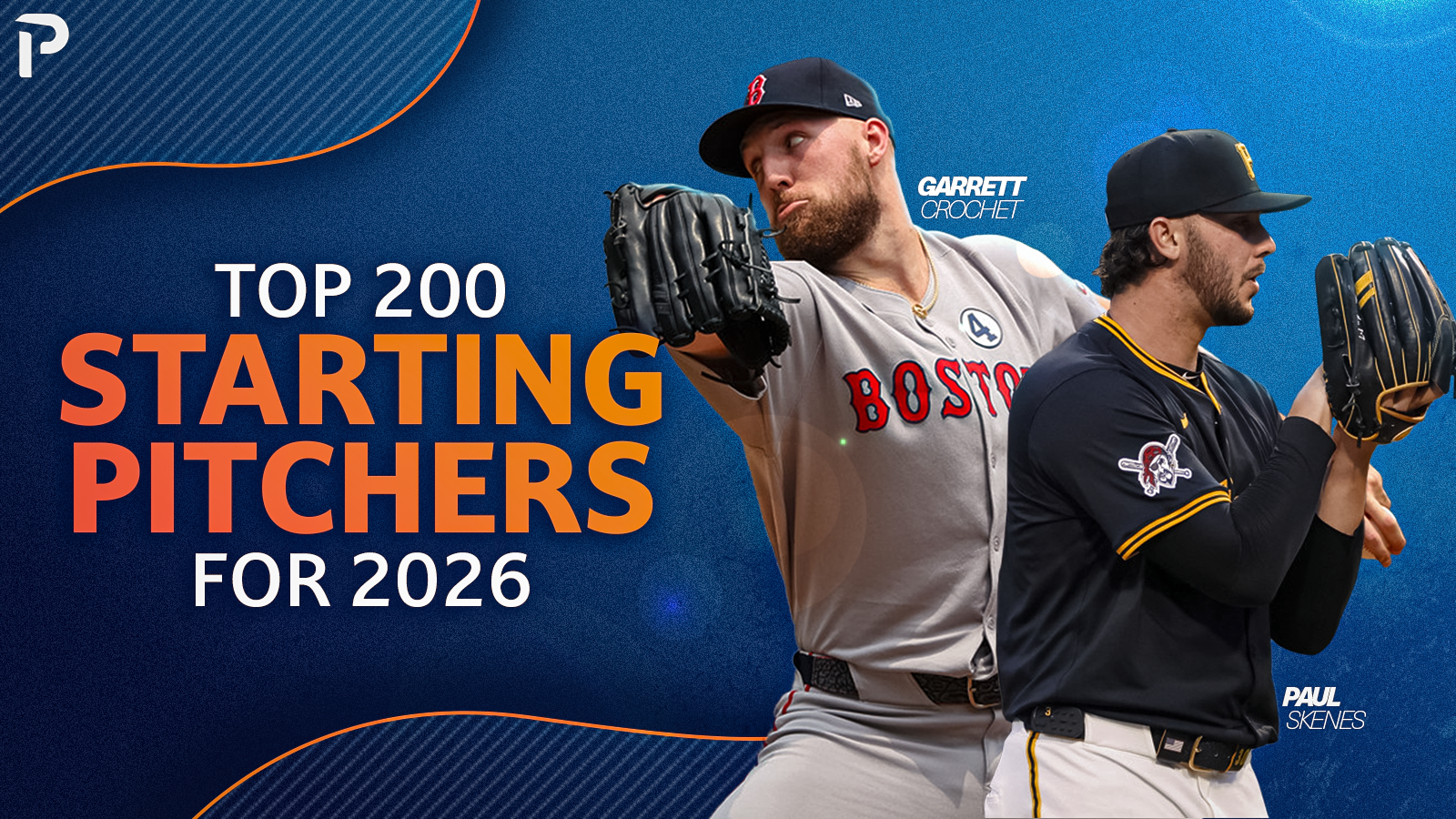
The pitcher side of hitter vs pitcher stats requires understanding a different set of metrics that reveal how well a pitcher controls a matchup.
ERA (Earned Run Average)
ERA is the most traditional pitcher stat. It measures the number of earned runs a pitcher allows per nine innings pitched. A sub-3.00 ERA is elite while the league average sits around 4.00 to 4.30.
ERA is influenced by defence and luck, making it an imperfect measure of a pitcher’s actual quality. Two pitchers with the same ERA can have very different underlying performance profiles when you look deeper at the data.
FIP (Fielding Independent Pitching)
FIP strips out defence and luck by measuring only the outcomes a pitcher can directly control: strikeouts, walks, hit batters, and home runs. It is expressed in the same scale as ERA.
A pitcher with a low FIP but a high ERA has likely been unlucky or poorly supported by his defence and should be expected to improve. A pitcher with a high FIP but low ERA may be due for regression. FIP is one of the most important advanced pitcher stats in BvP analysis.
xFIP (Expected Fielding Independent Pitching)
xFIP takes FIP one step further by replacing the pitcher’s actual home run total with an expected total based on their fly ball rate and the league average home run per fly ball rate.
This normalization makes xFIP even more stable and predictive than FIP over smaller samples. Pitchers with xFIP significantly lower than their ERA are often excellent targets to pick up or start in fantasy baseball.
K/9 (Strikeouts Per Nine Innings)
K/9 measures how many batters a pitcher strikes out per nine innings. A starter with a K/9 above 9.0 is considered a high strikeout pitcher while a reliever should ideally exceed 10.0 to be considered dominant.
In BvP analysis, facing a high K/9 pitcher is obviously a negative for hitters. Pairing a hitter with a high strikeout rate against a dominant strikeout pitcher creates an unfavourable matchup to avoid in fantasy lineups.
BB/9 (Walks Per Nine Innings)
BB/9 measures how many batters a pitcher walks per nine innings. Starters who walk fewer than 2.5 batters per nine are considered well-controlled while those above 3.5 are considered wild and risky.
Pitchers with high walk rates create natural advantages for patient hitters who draw walks frequently. A disciplined hitter facing a pitcher with a 4.0 BB/9 has a real edge in on-base percentage terms.
WHIP (Walks Plus Hits Per Inning Pitched)
WHIP adds together the total walks and hits a pitcher allows per inning. A WHIP below 1.10 is excellent while anything above 1.40 suggests a pitcher is regularly allowing baserunners.
WHIP is one of the five traditional fantasy baseball scoring categories. In BvP analysis, a pitcher with a high WHIP is more likely to be vulnerable to a hot-hitting batter than one with a tight WHIP who limits traffic consistently.
K/BB (Strikeout to Walk Ratio)
K/BB divides strikeouts by walks to show how efficiently a pitcher misses bats without giving away free bases. A ratio of 3.0 or higher is considered good for a starter while 2.5 is the general minimum to target.
Pitchers with elite K/BB ratios combine dominance with control, making them the most dangerous matchup opponents for any hitter regardless of the BvP history between them.
Spin Rate and Pitch Velocity
Statcast has added a new dimension to pitcher analysis through spin rate and velocity tracking on individual pitches. A four-seam fastball with high spin rate generates more rise and induces more swings and misses at the top of the zone.
However, velocity and spin rate alone do not define a pitch. Location and the ability to change speeds with off-speed pitches matter just as much. These Statcast metrics add valuable context when assessing specific pitcher quality in BvP matchup situations.

Top MLB Hitters in 2026 – Player Rankings
The following are the highest-ranked hitters for the 2026 MLB season based on ESPN’s MLB Rank list of the top 100 players compiled by more than two dozen baseball experts.
1. Shohei Ohtani (Los Angeles Dodgers)
Shohei Ohtani ranks as the number one overall player in baseball for 2026 according to ESPN’s expert panel. His combination of elite hitting as a designated hitter and dominant starting pitching makes him the most valuable player in any format.
As a hitter, Ohtani posts elite exit velocity numbers consistently above 93 mph and has shown the ability to hit for both average and power. His OPS in 2025 was among the best in the American League and his wOBA ranks him among the top five hitters in baseball in any given season.
2. Aaron Judge (New York Yankees)
Aaron Judge continues to be one of the most feared sluggers in baseball. His exit velocity routinely exceeds 95 mph and he combines elite power with improving plate discipline and on-base skills.
Judge is one of the premier players to target in BvP matchup analysis when facing a pitcher he has historically dominated. Against pitchers with high walk rates and low K/9, Judge’s patience and power make him almost impossible to contain.
3. Bobby Witt Jr. (Kansas City Royals)
Bobby Witt Jr. enters 2026 as one of the most dynamic young players in baseball. He combines elite speed, strong hitting for average, growing power numbers, and excellent baserunning into an all-around offensive package.
His wRC+ and wOBA have improved in each of his first three MLB seasons. In hitter vs pitcher matchups, Witt Jr. is especially dangerous against right-handed pitchers who struggle with both velocity and breaking balls.
4. Bryce Harper (Philadelphia Phillies)
Bryce Harper heads into 2026 as a player with something to prove after two seasons below his historic standards. Harper remains one of the most disciplined hitters in baseball, drawing walks at an elite rate and posing a genuine power threat from the left side.
His patience at the plate means he accumulates plate appearances even in poor matchups. When he faces a pitcher he knows well with a favourable BvP history, Harper can carry a fantasy lineup for a week on his own.
5. Francisco Lindor (New York Mets)
Francisco Lindor has averaged over 30 home runs and 30 stolen bases in each of his last three seasons. His durability, positional value at shortstop, and consistent production across five offensive categories make him a fantasy cornerstone.
In BvP data, Lindor shows balanced performance against both left and right-handed pitching, making him a reliable starter regardless of which arm he faces on a given night.
Top MLB Pitchers in 2026 – Player Rankings
These are the top-ranked pitchers heading into the 2026 MLB season based on advanced metrics and expert consensus rankings.
1. Tarik Skubal (Detroit Tigers)
Tarik Skubal is ranked as the top pitcher in baseball for 2026 after a dominant 2025 campaign. His combination of high strikeout rates, exceptional command, and elite FIP metrics place him above all other starters in the game.
Skubal sits around a 95 mph fastball with excellent extension and location. In hitter vs pitcher matchups, he is one of the most difficult at-bats in the entire American League for both left-handed and right-handed batters.
2. Logan Gilbert (Seattle Mariners)
Logan Gilbert enters 2026 averaging just 1.8 walks per nine innings over the past three seasons, making him one of the most efficient starters in baseball. At 6-foot-6 with huge extension, his 95 mph fastball plays well above its actual velocity.
Gilbert’s combination of low BB/9 and solid K/9 makes him a nightmare in BvP situations. Hitters rarely get free passes, forcing them to earn everything at the plate against him.
3. Max Fried (New York Yankees)
Max Fried brings veteran left-handed dominance to the Yankees rotation in 2026. His ability to neutralise left-handed hitters while also keeping right-handed bats in check with his two-seam fastball and curveball combination makes him one of the most well-rounded starters in the National League.
In BvP analysis, Fried’s splits show he can dominate both handedness groups, giving him a broader matchup advantage than most pitchers who only excel against one side.
4. Logan Webb (San Francisco Giants)
Logan Webb continues to be one of the most underrated starters in baseball. His sinker-heavy approach generates elite ground ball rates, which keeps the ball in the park and limits damage from power hitters.
Webb’s FIP is consistently lower than his ERA because his defence-friendly approach means batted balls often turn into routine outs. In BvP matchups, pull hitters who rely on lift and launch angle have a harder time hurting Webb than most other top pitchers.
How to Use Hitter vs Pitcher Stats for Fantasy Baseball
Fantasy baseball managers use hitter vs pitcher stats as a daily decision-making tool for setting lineups, making waiver wire pickups, and choosing which pitchers to stream for the week.
The key is not to overweight BvP data from small samples. A hitter who is 4 for 8 against a pitcher with only 8 plate appearances does not tell you as much as a hitter who is 18 for 55 with three home runs across a career’s worth of matchups.
The minimum sample size most analysts recommend for BvP data to carry meaningful weight is at least 20 to 30 plate appearances. Below that threshold, the results are driven more by variance and luck than by a true skill advantage.
How to Use Hitter vs Pitcher Stats for DFS
Daily fantasy sports players on DraftKings and FanDuel rely heavily on hitter vs pitcher stats to build profitable lineups. Identifying a hitter with a strong BvP advantage against tonight’s starter is one of the clearest edges available in DFS baseball.
Tools like RotoBaller’s BvP cheat sheet, FantasyInfoCentral’s daily matchups page, and RotoWire’s BvP table are widely used by DFS players to sort through all matchups for a given day and identify the strongest opportunities.
Look for hitters with both a strong career wOBA against the specific pitcher and a strong recent wOBA over the last 14 to 30 days. When career BvP success aligns with current hot form, you have found one of the best DFS plays available.
Handedness Splits in Hitter vs Pitcher Stats
Handedness is one of the most important variables in all of hitter vs pitcher stats analysis. Left-handed hitters historically perform better against right-handed pitchers while right-handed hitters generally fare better against left-handed pitchers.
This platoon advantage is a fundamental part of how major league managers build their lineups. When a pitcher throws from the same side as the batter hits, it is called a same-handed matchup, which generally favours the pitcher.
In BvP matchup tools, always filter by the handedness combination relevant to that day’s matchup. A right-handed hitter facing a southpaw starter has an inherent platoon disadvantage that should be reflected in your expectations.
Ballpark Factors in Hitter vs Pitcher Matchup Analysis
Where the game is played matters enormously in hitter vs pitcher stats analysis. Coors Field in Colorado dramatically inflates offensive numbers while Oracle Park in San Francisco suppresses them significantly.
A hitter with a strong BvP history against a specific pitcher gets an even bigger edge when the game is played in a hitter-friendly environment like Great American Ball Park in Cincinnati or Camden Yards in Baltimore.
Conversely, even the best matchup on paper loses some value when the game moves to Petco Park in San Diego or Dodger Stadium, both of which play as pitcher-friendly parks on most nights.
Weather and Game-Day Conditions in BvP Analysis
Beyond ballpark factors, weather conditions on the day of the game affect hitter vs pitcher matchup outcomes. Wind blowing out to the power alleys significantly boosts home run probability while cold temperatures suppress ball-flight distance.
Tools like BallparkPal incorporate weather data directly into their matchup probability models, giving DFS players and bettors a more complete picture of how conditions will affect the BvP outcome on any given night.
Temperature below 50 degrees Fahrenheit is generally considered suppressive for offensive production. Wind blowing at 15 mph or more toward the outfield wall is one of the most reliably positive factors for home run production.
Where to Find the Best Hitter vs Pitcher Stats Tools in 2026
There are several excellent free and premium tools available in 2026 for accessing hitter vs pitcher stats across MLB matchups.
Baseball Reference’s Versus Finder allows head-to-head searches going back to 1901 for regular season data and includes a full BvP breakdown with all standard and advanced stats. Stathead Baseball, the premium version of Baseball Reference, offers deeper filtering and sorting options.
RotoWire updates their BvP tables daily as of each morning and shows current matchup data alongside career figures. RotoBaller’s BvP cheat sheet grid shows all of today’s MLB hitter matchup ratings in a sortable format.
FantasyInfoCentral publishes daily BvP matchup tables with an OPS chart that shows the trend direction and an algorithm that predicts the likely outcome of the next at-bat. BallparkPal adds weather and stadium factors to their matchup probability model.
FanGraphs provides the deepest advanced stat splits available anywhere, including wOBA, wRC+, xFIP, FIP, barrel rates, and pitch-level contact quality broken down by handedness and opponent. StatSharp aggregates Statcast data for hitting and pitching leaders for the current 2026 season.
Common Mistakes When Using Hitter vs Pitcher Stats
The most common mistake when using hitter vs pitcher stats is treating small sample BvP figures as highly predictive. A hitter who is 3 for 4 in four career at-bats against a pitcher looks great on a stat sheet but four at-bats tell you almost nothing about the true matchup dynamic.
Another common error is ignoring recent form entirely and relying only on career BvP data. A pitcher who dominated a hitter three years ago but is now pitching with diminished velocity or a different pitch mix is a very different matchup today.
The right approach combines career BvP history with a minimum 20 plate appearance sample, recent 14-day rolling form for both the hitter and pitcher, handedness splits, and park and weather context for that specific game.
2026 Breakout Hitters Worth Targeting in BvP Matchups
Several young hitters are emerging in 2026 as breakout candidates worth targeting in favourable hitter vs pitcher matchups.
Jackson Chourio of the Milwaukee Brewers has averaged 3 WAR per season in his first two years and enters his age-22 season with true breakout potential. Addison Barger of the Toronto Blue Jays has elite bat speed that ranks among the top in baseball and took his game to a new level during the 2025 World Series run.
Francisco Alvarez of the New York Mets has one of the most impressive home run totals through his age-23 season in MLB history. When these young power hitters draw favourable BvP matchups against pitchers who allow high exit velocity contact, they become excellent fantasy and DFS targets.
Frequently Asked Questions
1. What are hitter vs pitcher stats?
Hitter vs pitcher stats, also called BvP data, show the historical performance of a specific batter against a specific pitcher across all their career matchups. They include batting average, OPS, home runs, strikeouts, and advanced metrics like wOBA.
2. How many plate appearances do you need for BvP stats to be meaningful?
Most analysts recommend a minimum of 20 to 30 plate appearances before BvP data carries meaningful predictive weight. Fewer than 5 plate appearances is generally considered too small a sample to rely on for decision-making.
3. What is the best hitter stat to use in BvP matchup analysis?
OPS and wOBA are the most useful quick metrics in BvP analysis. They combine getting on base with power production into a single number that reflects overall offensive contribution in a specific matchup.
4. What pitcher stats matter most in hitter vs pitcher matchups?
FIP, xFIP, K/9, and BB/9 are the most important pitcher stats for BvP analysis. They measure what the pitcher actually controls and strip out luck and defence to give a true picture of pitching quality.
5. Where can I find free hitter vs pitcher stats for the 2026 MLB season?
Free BvP tools are available at Baseball Reference, RotoWire, RotoBaller, FantasyInfoCentral, and BallparkPal. Each platform offers daily updated matchup data for current MLB games.
6. Do handedness splits matter in hitter vs pitcher stats?
Yes, handedness is one of the most important variables. Left-handed hitters generally perform better against right-handed pitchers and vice versa. Always account for the platoon advantage or disadvantage in any BvP matchup.
7. How do ballpark factors affect hitter vs pitcher stats?
Ballpark factors can significantly change expected outcomes. Hitter-friendly parks like Coors Field and Great American Ball Park boost offensive production while pitcher-friendly parks like Oracle Park and Petco Park suppress it.
8. Who is the top ranked hitter in MLB for 2026?
Shohei Ohtani of the Los Angeles Dodgers is the top-ranked overall player for 2026 according to ESPN’s expert panel. Aaron Judge and Bobby Witt Jr. rank immediately behind him among the best hitters in the game.
9. Who is the top ranked pitcher in MLB for 2026?
Tarik Skubal of the Detroit Tigers is widely ranked as the top starting pitcher in baseball for 2026 after a dominant 2025 campaign that featured elite strikeout rates and one of the best FIP marks in the American League.
10. How do I use hitter vs pitcher stats for DFS on DraftKings and FanDuel?
Use BvP tools to find hitters with strong career OPS and wOBA against that day’s starting pitchers. Combine career BvP data with recent 14-day form, handedness splits, and ballpark and weather factors to identify the best value plays for DFS lineups.
Conclusion
Hitter vs pitcher stats are the single most important matchup tool in baseball for fantasy managers, DFS players, bettors, and fans who want a deeper understanding of every at-bat.
From traditional metrics like batting average and ERA to advanced Statcast data including exit velocity, wOBA, FIP, and spin rate, the depth of BvP analysis available in 2026 is greater than at any point in baseball history.
Understanding how to read these stats, where to find them, and how to apply them alongside context like handedness, ballpark factors, and sample size gives you a genuine competitive edge. Use hitter vs pitcher stats the right way and you will make smarter decisions all season long.