Redefining Sonic Identity Through The Lens Of AI Music Generator
The modern digital economy demands an unprecedented volume of high-quality multimedia content, yet the sonic dimension of branding often remains the most difficult to scale. Content creators and developers frequently encounter a creative bottleneck when searching for the perfect acoustic accompaniment that is both unique and legally unencumbered. The AI Music Generator addresses this systemic friction by transforming music production from a specialized craft into a scalable digital asset. Instead of sifting through saturated libraries of stock music, users can now synthesize bespoke compositions that align precisely with their narrative intent. This shift represents a transition from “finding” music to “defining” it, allowing for a more authentic connection between visual storytelling and auditory experience.
The Algorithmic Composition Paradigm Shift In Digital Media
At its foundation, the technology operates by interpreting complex linguistic prompts and translating them into coherent musical structures. Unlike traditional synthesis, which relies on pre-recorded loops, these generative models understand the mathematical relationships that define specific genres and moods. This allows for a level of customization that was previously reserved for those with the budget to hire a professional composer. In my testing, the ability of the system to maintain structural integrity over a full-length track appears significantly more robust than earlier iterative models.
Bridging The Gap Between Linguistic Intent And Acoustic Reality
The primary challenge in music production has always been communication; describing a sound with words is inherently imprecise. Modern generative engines mitigate this by using large-scale multimodal training, allowing the AI to understand that a “nostalgic synthwave track” requires specific cutoff filters and gated reverb on the percussion. This technical literacy enables a smoother workflow where the creator acts as a high-level director rather than a granular editor.
Navigating The Creative Constraints Of Automated Audio Synthesis
It is essential to recognize that while the efficiency is unparalleled, the AI operates within the boundaries of its training data. For users seeking highly experimental or avant-garde structures that intentionally break musical rules, the system may initially default to more conventional harmonies. My observation suggests that achieving truly “outside the box” results requires a more nuanced approach to prompting and a willingness to generate multiple variations to find the perfect outlier.
Official Workflow For Rapid Audio Asset Prototyping
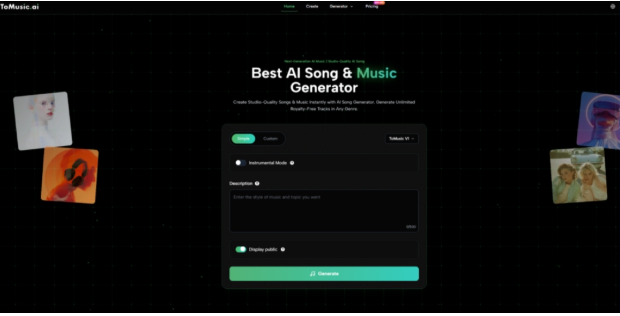
The platform utilizes a streamlined architecture to ensure that the journey from a blank page to a mastered track is as short as possible. According to the official interface logic, the process is consolidated into the following essential steps:
Input Narrative Descriptors And Style Directives
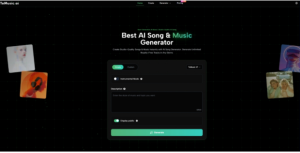
The process begins in the generation console, where you provide the conceptual blueprint for your track. You can enter a detailed text prompt describing the atmosphere, tempo, and instrumental preferences. For those who prefer a guided experience, the system offers curated style tags that help the model narrow down the rhythmic and harmonic vocabulary it will use during the synthesis phase.
Adjust Compositional Parameters And Vocal Synthesis Options
After defining the style, you move to the configuration layer where you set the structural bounds of the piece. This includes choosing the total duration of the track and deciding whether the output should be a pure instrumental or include AI-generated vocals. If vocals are selected, the system integrates text-to-singing technology to ensure the lyrics are delivered with appropriate pitch and emotional cadence.
Render The Mastered Track And Export Professional Files
Once the parameters are locked, the generation engine processes the request, typically delivering a high-definition audio preview in under a minute. Users can audition the result directly within the platform to check for stylistic alignment. If satisfied, the final step is to download the mastered file, which is ready for immediate integration into video editors, game engines, or social media broadcasts.
Technical Versatility Comparison Between Production Workflows
Understanding the distinction between traditional asset acquisition and AI-driven synthesis is crucial for optimizing a professional creative pipeline.
| Workflow Attribute | Manual Composition | Royalty-Free Libraries | AI Music Generator |
| Uniqueness | High (Original) | Low (Overused) | High (Synthetic) |
| Speed of Delivery | Days or Weeks | Minutes (Search Time) | Seconds (Generation Time) |
| Precision of Fit | Exact | Approximate | Highly Customizable |
| Production Cost | Premium Pricing | Fixed License Fee | Variable Credit Based |
| Scalability | Limited by Labor | Limited by Catalog | Virtually Unlimited |
Impact On Professional Workflows Across The Creative Economy
The integration of automated music generation is not merely a convenience; it is a strategic advantage for those operating in fast-paced digital environments where speed and originality are the primary currencies.
Optimizing Marketing Cycles With Dynamic Sound Branding
Marketing teams can now produce multiple variations of a single campaign, each with a unique soundtrack tailored to different demographic segments. In my observation, this level of personalization helps in maintaining brand freshness across various social platforms without the repetitive fatigue associated with standard library tracks.
Empowering Independent Developers With High Fidelity Assets
For small-scale game developers, the ability to generate a cohesive cinematic score on a limited budget can drastically improve the perceived production value of a title. By using an automated generator, developers can ensure that every level or character has a distinct theme, enhancing player immersion through professional-grade audio that would otherwise be cost-prohibitive.
The Evolving Relationship Between Human Taste And Machine Intelligence
As the technology matures, the definition of “originality” is being rewritten. The value of the final output is increasingly derived from the human’s ability to curate and refine the AI’s suggestions. While the machine provides the technical execution, the human provides the strategic intent and the emotional final word, ensuring that the music serves a specific purpose within the broader creative project.