
What factors most affect the resale price of a factory-built house in 2026?
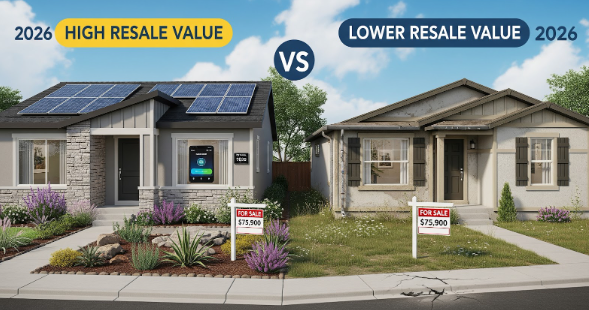
In 2026, selling a factory-built house may differ slightly from selling a conventionally built one, yet purchasers remain interested in the same basics: location, condition, comfort, and monthly payments. The distinction is that factory-built homes are sometimes accompanied by additional questions from buyers, lenders, and appraisers; thus, the details count.
In this article, we will take you through the biggest factors that will affect resale price in 2026, what you can realistically negotiate, and what you need to write to justify your asking price with confidence.
1) Location continues to establish the ceiling (and the floor)
Regardless of how your home was constructed, location is the primary driver of resale price. Buyers are more value-aware in 2026, comparing home prices not only with commuting time but also with long-term neighborhood stability and nearby amenities.
Watch what buyers will consistently pay a premium for:
- Closeness to work centres and good transportation networks.
- School catchments (where possible) and daily services (markets, clinics, parks).
- Past and future development plans, noise, and safety of the neighborhood.
- Local supply: Does it have a high frequency of the same homes being listed or is the inventory tight?
When you live in a pocket where there is high demand, your home has the advantage of market momentum. When you are in a less developed location, pricing and presentation become even more important since buyers will examine every tradeoff.
2) Type of foundation and status of real property (an enormous concern in 2026)
The fact that buyers and lenders regard it as a permanent home, as opposed to a temporary one, is among the most significant resale price drivers in factory-built housing. In most markets, this comes down to the permanence of the foundation, due approvals, and the legal classification of the home.
If you have a prefabricated home, the resale value tends to increase where you can definitely demonstrate that the home is:
- Mounted on a consented, fixed foundation.
- Authority permitted and inspected.
- Wired in a conventional, code-compliant manner.
- Registered/recorded in a manner that will satisfy the local standards of real property.
Why it is important: the more the buyers pay, the more secure they want to feel that the legal and physical permanence of the home is not difficult to check. In case of uncertainty, they will price the risk in—or will not do the deal.
3) Finish level and quality which buyers look at most
Factory-built does not necessarily imply low-end, but the customer will be quick to judge the finish quality, particularly around high-touch areas and conspicuous alignment. The market anticipates in 2026 that there will be tighter tolerances and improved materials, even in mid-range houses.
Buyers respond to the resale-price cues of:
- Alignment of doors and windows, smoothness of action and weatherproofing.
- Flooring transitions, consistency of the trim and quality of the paint.
- Kitchenware, counter-tops and finish of the backsplash.
- Waterproofing (visible caulking, grout condition, ventilation) in the bathroom.
When making a list of things to fix before selling, prioritize those fixes which minimize perceived maintenance. Even minor details of poor quality can have a monumental effect, making the entire house appear to be put together in a haphazard way—even when the house itself is in good condition.
4) Energy performance and monthly operating expenses
In 2026, a large number of purchasers will be shopping based on monthly payment and monthly operating cost. This implies that the levels of insulation, air sealing, glazing performance, and HVAC performance are directly related to the price a person is willing to pay.
The most influential efficiency factors in resale price include:
- Good performing windows (installed properly).
- Properly insulated roof and walls.
- Well-operating heating/cooling and intelligent controls.
- Hot water consumption and insulation of pipes.
- Evidence of low utility bills (you can share actual averages).
A pragmatic suggestion: in case you have performed energy improvements, collect the evidence, such as receipts, warranty papers, and a brief one-page overview of what you have upgraded and when. Buyers do not believe in promises, but they do believe in documented savings.
5) Layout, natural light and upgrade on liveability
Buyers do not necessarily purchase square meters; rather, they purchase the feel of a house in day-to-day life. By 2026, the use of a functional layout may be as important as raw size, particularly for households with work-from-home needs, multigenerational co-residence, or flexible schedules.
Characteristics that have an upward tendency on resale price:
- A design that provides privacy between bedroom and living areas.
- A working nook or a small office place (even a small one).
- Proper cross-ventilation and daylight in primary rooms.
- Purposely planned storage: pantry, linen storage, closets.
- Connection to the outside: balcony, deck, small garden, or useful entry porch.
Do not over-customise if you are renovating before selling. Customers are willing to spend more on upgrades which are generally helpful, rather than taste-specific.
6) Comparable sales: the evidence of the market supporting your asking price
Although your home might be beautiful, when you eventually resell the house, you will be pegged at the resale value of similar homes that have been sold recently. The set of comps can be limited in regions where factory-built properties are not as prevalent, making presentation and documentation more effective.
This is where real estate valuation comes in, as it is just logic that a market applies to turn features into a number. In cases with few similar sales, buyers and professionals rely more on:
- Similar neighborhood and lot features.
- Equal size and the number of bedrooms/bathrooms.
- Equivalent condition and level of upgrade.
- Sale recency (what sold within the past 3-6 months is often the most important).
A seller-friendly action: follow the listings and recent sales to which you think they will compare you, and ensure that you can clearly explain why your home is priced the way it is (better condition, lower operating expenses, better site, newer roof, etc.).
7) Paperwork confidence: warranties, permits and service history
With factory-built homes, documentation is powerful. Buyers in the year 2026 are cautious of unknown expenditures, and an increased price is backed by more documents to cut down uncertainty.
Documents to assist in preparation:
- Installation information, checks and licenses.
- Structure, roofing, windows, and major appliance warranties.
- Maintenance log (even a basic checklist with dates).
- Upgrade invoices with contractor information.
- Pest treatment records (where applicable) and drainage/waterproofing records.
Consider documentation as a constituent of the product. A confident buyer would be willing to pay near the asking mark and would negotiate less aggressively.
8) Condition, maintenance, and the triggers of the negotiation to fix first
Most resale deals do not begin with huge structural problems. They begin with minor things which suggest disregard. The best method of safeguarding your resale price is to do away with the usual triggers that customers tend to utilize in demanding discounts.
Before listing, prioritize:
- Water-related problems: leaking, staining, damp odors, poor drainage.
- Electrical and plumbing fundamentals: outlets, switches, visible piping problems.
- Doors/windows: stuck, drafts, broken locks, broken panes.
- Outside decoration: paint repair, maintainable gutters, neat walkways.
- Check bathroom and kitchen updates, sealants, hardware, and exhaust fans in operation.
If you can only do a few things, repair anything that suggests moisture issues. There is nothing buyers fear like water damage, and they will discount hard when they suspect it.
9) When you market the home, and how to tell the story
In 2026, consumers are likely to make up their minds about visiting a house within a few seconds of viewing a photo and a listing description. A detailed, scrupulous story has the ability to increase perceived value, particularly in cases where the type of home raises eyebrows.
To strengthen your listing:
- Bright photos should be used to demonstrate the flow of the room, not just corners.
- Insert measurements and a simple floor plan (where possible).
- Go the extra mile by leading with benefits that buyers are interested in: comfort, utility costs, parking, storage.
- Be honest concerning what is factory-built and what is on-site (transparency creates trust).
- Provide a clean information pack on viewings (docs + upgrades summary).
A house which is easy to comprehend is safer to purchase. Such safety leads to enhanced offers.
Put your attention on certainty, comfort, and comparables
The same fundamentals that determine the resale price of any home (location, condition, layout, and market comps) apply to the resale price of a factory-built house as well, but with additional factors of buyer and lender confidence such as permanence, documentation, and clarity. You should strive to make the situation less uncertain; to maximize the value, fix noticeable sources of negotiation, pack paperwork, and showcase the best attributes of the home in a manner that buyers can confirm at a glance.
Knowing your part of the world and the basic description of your home (size, type of foundation, age, and top upgrades), I can make recommendations on what 3-5 upgrades and paperwork would probably increase your resale value the most prior to listing.