4 High-Tech Home Entertainment Amenities That Bring the Country Club Home
Four high-tech upgrades let homeowners recreate country club amenities without leaving the house: indoor golf simulators, immersive home theaters, smart indoor sport courts, and wellness lounges. Each pairs smart tech with real recreational function, turning an unused room into a space for practice, entertaining, or recovery. Together, they replace a club membership with a private amenity at home.
Smart home technology no longer centers on thermostats and doorbell cameras. According to the 2025 Smart Home Technology Trends Survey from the Association for Smarter Homes & Buildings, entertainment systems, including smart TVs, displays, and speakers, now lead all smart home categories, reaching 55% penetration among adopters.
Homeowners are steering that same appetite for connected technology toward full-scale home entertainment spaces that look a lot like a private clubhouse.
1. What Makes a Golf Simulator Feel Like a Private Pro Shop?
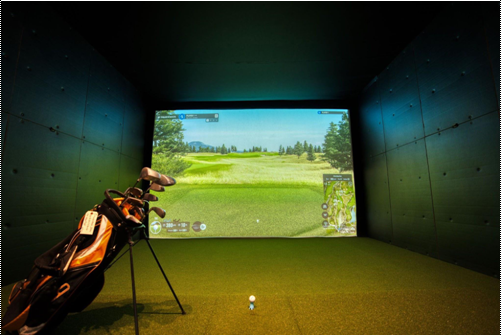
A golf simulator uses a launch monitor and a large screen to track every swing in real time. This setup actually turns a spare room or garage into a space for practice that works in any season.
Short-throw projectors throw a sharp picture onto an impact screen, so each shot looks close to the real thing. Golfers can check swing speed, spin rate, and launch angle after every shot, and many systems score each round automatically.
Many simulator bays now support more than golf, and the added features bring new ways to use the space:
- Virtual tennis and hockey modes turn the same bay into a multi-sport arena
- Automated ball machines feed shots without anyone standing behind the golfer
- Automated swing analysis compares each shot against a stored library of past sessions
Companies such as Ace Indoor Golf build bays around these tools, pairing launch monitors with multi-sport software for homeowners who want more than one game in the room.
2. Building a Home Theater That Feels Like a Private Screening Room
A home theater today does a lot more than show a movie on a big screen. Surround sound wraps the whole room in audio, and laser projectors keep the picture sharp even in a large space. Haptic seats add a layer of feeling to the picture, so viewers feel rumbles and impacts through the chair itself.
That mix of sound, picture, and feeling is what makes a theater room feel like an actual movie premiere.
Smart tech ties the whole room together, and that is where automation comes in. A theater can save a lighting, temperature, and volume preset for each family member, so the room adjusts on its own the moment someone sits down. Voice commands can start a full movie mode without anyone touching a remote, and that convenience is a big part of the appeal.
3. Can an Indoor Sport Court Double as Your Personal Event Space?
An indoor sport court brings real athletic play into the house without giving up living space when the game ends.
Modular, shock-absorbing flooring supports pickleball and basketball, and it typically holds up to daily use for years. Pro-style lighting lets players see the ball clearly, so the court feels closer to a real gym than a converted garage. Ceiling-mounted projectors and hidden speakers turn the same floor into a concert space or movie screen once the game wraps up.
The best court designs hide the technology until someone actually needs it, and a few features make that possible:
- Retractable hoops fold flush against the ceiling when not in use
- Zoned audio speakers sit inside the walls instead of on stands
- Motorized screens drop down from the ceiling for movie nights
That setup keeps the room looking clean and open, and it still feels nothing like a gym bolted onto the house.
4. Creating a Wellness and Social Lounge for Everyday Club Living
A wellness lounge brings the class and recovery side of a country club into the house. Connected resistance machines adjust weight automatically and track every rep, so a workout program can shift week to week without buying new equipment. Motion-tracking cameras can even count reps during a workout, so the equipment adjusts resistance without any manual input.
Recovery tools such as contrast therapy tubs and infrared panels sit right next to the workout space, and that setup makes it simple to train and recover in the same visit.
Outdoor summer kitchens usually round out the lounge with a grill, a motorized screen, and a sound system built for hosting. Smart coaching apps often pair with the equipment, tracking biometric data and building workout plans based on actual performance instead of a fixed routine.
Frequently Asked Questions
How Much Space Do These Amenities Typically Need?
A golf simulator bay usually needs a room around 10 feet wide and 12 feet deep to give the swing room to move. Home theaters fit into a much smaller footprint, often as compact as 12 feet by 15 feet. A sport court takes up far more space, often 30 feet by 50 feet for full pickleball or half-court play.
Does Installing This Kind of Technology Require a Professional?
Most of these systems need a trained installer to handle wiring, calibration, and acoustic treatment correctly. A poorly wired system can cause lag between the screen and the sound, so professional setup usually saves time and frustration later.
How Much Maintenance Do These Systems Need?
Projectors and screens typically need a bulb change or a filter clean every year or two to stay sharp. Court flooring and gym equipment need regular cleaning, and software on smart systems should update on its own most of the time.
Contrast therapy tubs and infrared panels need periodic parts replacement, so a basic yearly checkup helps avoid surprise repairs.
Your Private Clubhouse Awaits
Indoor golf simulators, immersive theaters, smart sport courts, and wellness lounges give homeowners the recreation, entertainment, and relaxation once reserved for club membership. With the right smart tech, any spare room or garage can host tournament practice, movie nights, competitive matches, or a private workout, all without leaving home. These amenities pay off through daily use rather than occasional visits, making the investment work harder for the people who live there.
Explore more ideas for upgrading your home entertainment setup in our Lifestyle section.