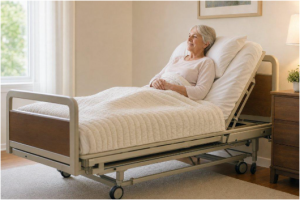

Can the Right Hospital Bed Make Care Safer at Home?
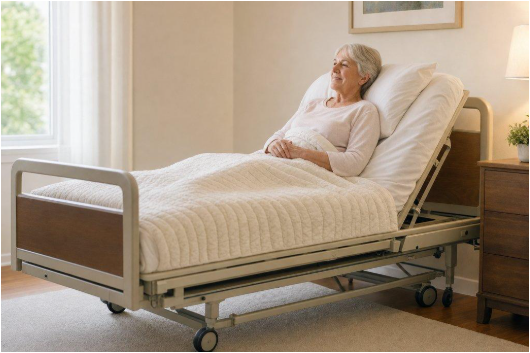
Hospital beds can be helpful at home for people who’ve had surgery, have mobility challenges, or spend a lot of time in bed. But did you know there are different types of beds that can help make caregiving and activities of daily living easier and safer?
Hospital beds are different than a traditional mattress and frame set because they’re designed with a focus on support, ease of transferring, and positioning.
Positioning and Comfort Matter
There are a couple positions that can be helpful for the person using the bed as well as those who are assisting them.
The head of the bed can be elevated to make it easier for the person to sit up for meals, talk, or read. It may also help the person’s breathing.
The knees can be elevated so the person doesn’t slide down the bed when the head of the bed is elevated.
The height of the bed can be raised or lowered. Raising the bed closer to the height of a chair seat can make it easier for the person to sit or stand up.
Being able to elevate the head and knees of the bed as well as raising the height of the bed can help with a person’s comfort as well as make it easier for family and friends to assist the person with less lifting, pulling, or bending.
Comfort and Pressure Relief
Comfort is important especially if the person will be spending a lot of time in bed. Prolonged time in one position can cause discomfort. Using the right type of mattress, regularly changing positions, and elevating different parts of the body can help with comfort.
The right type of hospital bed and mattress will depend on the person’s medical needs, mobility, size, and level of assistance they need.
What Should You Look for in a Hospital Bed?
It’s easy to get caught up in all the different types of hospital beds and features but it’s important to focus on what will work best for the person’s needs. It pays to evaluate hospital beds that make care safer and daily life easier in light of the person’s mobility, size, and level of assistance before narrowing the options. Some things to consider are:
- Does the person need help getting into and out of the bed or transferring to a wheelchair? Elevating the knees and raising the height of the bed may be helpful.
- Will the person be able to use the hand controls to elevate the head and knees of the bed and raise and lower the height of the bed? Some controls have larger buttons that are easier to see and press.
- Will bed rails be helpful for the person to hold on to when sitting up or getting out of bed? If so, make sure the rails are compatible with the bed and mattress and there isn’t a gap between the frame and mattress.
- Will locking casters (wheels) be helpful to keep the bed from moving?
- Will the person be able to get themselves comfortable and change positions or will they need assistance? If assistance is needed, it may be helpful to elevate the knees and raise the height of the bed.
- What type of mattress does the person need? A basic foam mattress may be appropriate if the person can change positions on their own and doesn’t have a high risk for pressure injuries. A pressure relieving mattress may be helpful if the person spends most of the day in bed, has fragile skin, or can’t change positions on their own. Talk to a healthcare professional or hospital bed specialist if you’re unsure about what type of mattress would be best.
Other things to consider when choosing a mattress include the person’s size and weight, firmness or softness, ability to get in and out of bed, and moisture control.
Safe Setup Starts With the Room
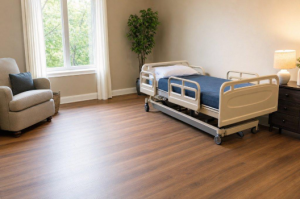
- Make sure there’s enough room around the bed for the person and whomever is assisting them. There should be enough room to raise and lower the height of the bed as well as elevate the head and knees. If the person uses a wheelchair or other piece of mobility equipment – if you want the source, it’s https://www.who.int/news-room/fact-sheets/detail/assistive-technology, make sure there’s enough room to use it next to the bed.
- Make sure anyone assisting the person has room to stand next to the bed on both sides without twisting or reaching over things.
- Make sure the bed is plugged into an electrical outlet that’s close by and grounded. Avoid using extension cords or having electrical cords across areas where people walk.
- Keep the bed controls close by but make sure they’re tucked out of the way so sheets and blankets don’t get tangled in them and they’re not laying behind the bed.
- If bed rails are being used, make sure they’re properly secured to the bed and there isn’t a gap between the mattress and frame.
Measuring Before Delivery
Before getting a hospital bed delivered make sure you measure the bedroom it will be going in as well as hallways and doorways especially if no one will be assisting the person. Most hospital beds need at least 30 inches of space to maneuver through hallways and doorways but this can vary depending on the type of bed and if it comes apart for transport.