6 Qt to Cups: A Comprehensive Conversion Guide
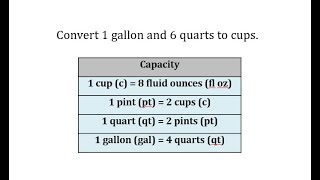
6 qt to cups is a common conversion needed in the kitchen, especially when preparing large recipes or scaling ingredients for gatherings. One quart equals 4 cups, so 6 quarts to cups conversion results in exactly 24 cups.
This straightforward calculation is vital for cooks, bakers, and anyone working with liquid or dry measurements, ensuring precision in recipes ranging from soups to baked goods. Understanding this conversion helps streamline cooking processes and maintain consistency across various dishes.
Why Understanding Quarts and Cups Matters
In the culinary world, accurate measurements are the backbone of successful recipes. A quart is a unit of volume commonly used in the United States, equivalent to 32 fluid ounces or 4 cups. Therefore, how many cups in 6 quarts is a simple multiplication: 6 quarts multiplied by 4 cups per quart equals 24 cups. This conversion is particularly useful when dealing with large quantities, such as when preparing meals for events, catering, or batch cooking.
Cups are a smaller unit, often used in home kitchens for both liquid and dry ingredients. Knowing convert 6 qt to cups allows cooks to switch between these units seamlessly, especially when a recipe specifies one unit over the other. For instance, a soup recipe calling for 6 quarts of broth can be measured as 24 cups if a quart measure isn’t available, making the process more accessible.
The Basics of Liquid Measurement Conversions
Liquid measurement 6 qt to cups is rooted in the U.S. customary system, where 1 quart equals 4 cups, 2 pints, or 32 fluid ounces. This system is widely used in American kitchens, though other countries may use metric measurements like liters. For clarity, 6 quarts is 192 fluid ounces (6 × 32), which translates to 24 cups (192 ÷ 8, since 1 cup equals 8 fluid ounces). This conversion applies to liquids like water, broth, milk, or juice, ensuring accuracy in recipes.
For dry ingredients, the conversion is the same in terms of volume: 6 qt equals how many cups remains 24 cups. However, dry ingredients like flour or sugar may require additional considerations, such as sifting or packing, which can affect the actual weight.
For example, 1 cup of all-purpose flour weighs approximately 4.5 ounces, so 24 cups would weigh about 108 ounces (6.75 pounds). Understanding these nuances ensures precise measurements for both liquid and dry ingredients.
Practical Applications in Cooking
Kitchen conversion 6 quarts to cups is invaluable for everyday cooking tasks. Large recipes, such as those for stews, casseroles, or punch for a crowd, often use quarts to specify volume.
For instance, a chili recipe requiring 6 quarts of liquid can be measured as 24 cups if you’re using a measuring cup instead of a quart container. This flexibility is especially helpful in home kitchens where specialized measuring tools may not be available.
When scaling recipes, cooking conversion 6 qt in cups simplifies the process. If a recipe serves 12 people and calls for 6 quarts of ingredients, but you need to serve 24, doubling the recipe means calculating 12 quarts, or 48 cups. This ensures the proportions remain consistent, preserving the dish’s flavor and texture. Similarly, for smaller gatherings, halving 6 quarts to 3 quarts (12 cups) allows for easy adjustments.
Tools for Accurate Measurement
To perform how to convert quarts to cups, you can use standard kitchen tools. A liquid measuring cup, typically marked with cup and ounce increments, is ideal for measuring smaller volumes like cups.
For larger quantities, a quart measuring container is useful, but if unavailable, you can measure 24 cups to reach 6 quarts is how many cups. Measuring cups come in various sizes, with 1-cup, 2-cup, and 4-cup options being common, allowing you to measure 6 quarts in batches if needed.
For precision, ensure measurements are level. For liquids, check the measurement at eye level to avoid errors. For dry ingredients, use a straight edge to level off the cup. If you’re working with a recipe that uses metric units, note that 1 quart is approximately 0.946 liters, so 6 quarts is about 5.676 liters, which can be converted to cups using the 4-cups-per-quart rule for simplicity.
Variations in Measurement Systems
While the U.S. customary system defines cups in 6 quarts as 24 cups, other countries use different systems. In the metric system, 1 liter is roughly 4.226 cups, so 6 quarts (5.676 liters) would be approximately 23.95 cups, close to the 24-cup standard. This slight difference is usually negligible in home cooking but may matter in professional settings or when precision is critical, such as in baking.
In the UK, the imperial system uses an imperial quart, which is slightly larger than the U.S. quart (1 imperial quart equals about 1.136 liters or 4.8 U.S. cups). Thus, 6 imperial quarts would be approximately 28.8 U.S. cups. When following international recipes, confirm whether the quart is U.S. or imperial to ensure accurate 6 quarts to cups conversion.
Tips for Converting Quarts to Cups
To make how to convert quarts to cups easier, consider these practical tips:
- Memorize the Basic Conversion: One quart equals 4 cups, so multiply the number of quarts by 4 to get cups.
- Use the Right Tools: A liquid measuring cup or quart container ensures accuracy, especially for large volumes.
- Check Recipe Units: Verify whether the recipe uses U.S. or imperial quarts, especially for international dishes.
- Measure Carefully: For liquids, measure at eye level; for dry ingredients, level off the cup for consistency.
- Batch Measure for Efficiency: When measuring 24 cups, use a 4-cup measure six times or a 2-cup measure twelve times to reduce effort.
These tips simplify the process, making convert 6 qt to cups straightforward and error-free.
Common Scenarios Requiring 6 Quarts
6 qt to cups conversions are common in various cooking scenarios. For example, a large stockpot for soup or stew might hold 6 quarts, equivalent to 24 cups, which is perfect for serving 12–15 people, assuming 1.5–2 cups per serving. In baking, large batches of batter for cakes or muffins may require 6 quarts of liquid ingredients, such as milk or water, translating to 24 cups.
For beverages, preparing punch or lemonade for a party often involves large quantities. A punch recipe calling for 6 quarts of juice can be measured as 24 cups, making it easier to mix in a large bowl or dispenser. Similarly, in canning or preserving, 6 quarts of fruit or liquid for jams or pickles equals 24 cups, streamlining the process when using standard measuring cups.
Considerations for Dry vs. Liquid Ingredients
While 6 qt equals how many cups is 24 cups for both liquid and dry ingredients, the weight differs significantly. Liquids like water or broth weigh about 8 ounces per cup, so 24 cups is 192 ounces (12 pounds).
Dry ingredients vary: 24 cups of granulated sugar weighs about 10.5 pounds (7 ounces per cup), while 24 cups of flour weighs around 6.75 pounds (4.5 ounces per cup). These differences are critical in baking, where weight-based measurements may be preferred for precision.
When measuring dry ingredients, consider the ingredient’s density and preparation method. For example, sifted flour takes up more volume than unsifted flour, so 24 cups of sifted flour may weigh less than 24 cups of packed flour. Using a scale for dry ingredients can complement the kitchen conversion 6 quarts to cups, ensuring accuracy in recipes where weight matters.
Scaling Recipes with Confidence
Cooking conversion 6 qt in cups is particularly useful when scaling recipes. For a family reunion requiring a tripled recipe that originally calls for 2 quarts of broth, you’d need 6 quarts, or 24 cups.
Conversely, if a recipe for 24 servings uses 6 quarts and you’re cooking for 8, you’d reduce it to 2 quarts (8 cups). These calculations maintain the recipe’s balance, ensuring consistent flavor and texture.
For professional kitchens, 6 quarts is how many cups is critical when preparing large quantities. A bakery producing dozens of muffins might use 6 quarts of batter, measured as 24 cups, to streamline production. Similarly, restaurants preparing soups or sauces in bulk rely on these conversions to maintain consistency across batches.
FAQs About 6 Quarts to Cups Conversion
1. How many cups are in 6 quarts?
Six quarts equal 24 cups, as 1 quart is 4 cups in the U.S. customary system.
2. Does the 6 quarts to cups conversion differ for dry and liquid ingredients?
The volume conversion is the same (24 cups), but the weight differs based on the ingredient’s density.
3. How do I measure 6 quarts without a quart container?
Use a measuring cup to measure 24 cups, as 6 quarts equals 24 cups.
4. Is the conversion different in the UK or metric systems?
Yes, in the UK, 6 imperial quarts equal about 28.8 U.S. cups. In metric, 6 U.S. quarts (5.676 liters) is roughly 23.95 cups.
5. Can I use a liquid measuring cup for dry ingredients?
Yes, but level off the cup and consider weighing dry ingredients for precision, as densities varies.
6. Why is knowing 6 quarts to cups useful in cooking?
It helps measure large quantities accurately, especially for batch cooking, catering, or scaling recipes.
7. How do I convert 6 quarts to cups for a recipe?
Multiply 6 by 4 (since 1 quart = 4 cups) to get 24 cups, or use a measuring cup for direct measurement.
Conclusion of 6 Qt to Cups
Mastering 6 qt to cups conversion is a valuable skill for anyone working in the kitchen, from home cooks to professional chefs. With 6 quarts equaling 24 cups, this conversion simplifies measuring large volumes for recipes like soups, batters, or beverages.
By understanding the nuances of liquid and dry measurements, regional variations, and proper measuring techniques, you can ensure precision in your culinary creations. Whether scaling recipes or adapting to different measurement systems, knowing how many cups in 6 quarts empowers you to cook with confidence and consistency.