Net Worth of Solomon: The Wealth of a Legendary King
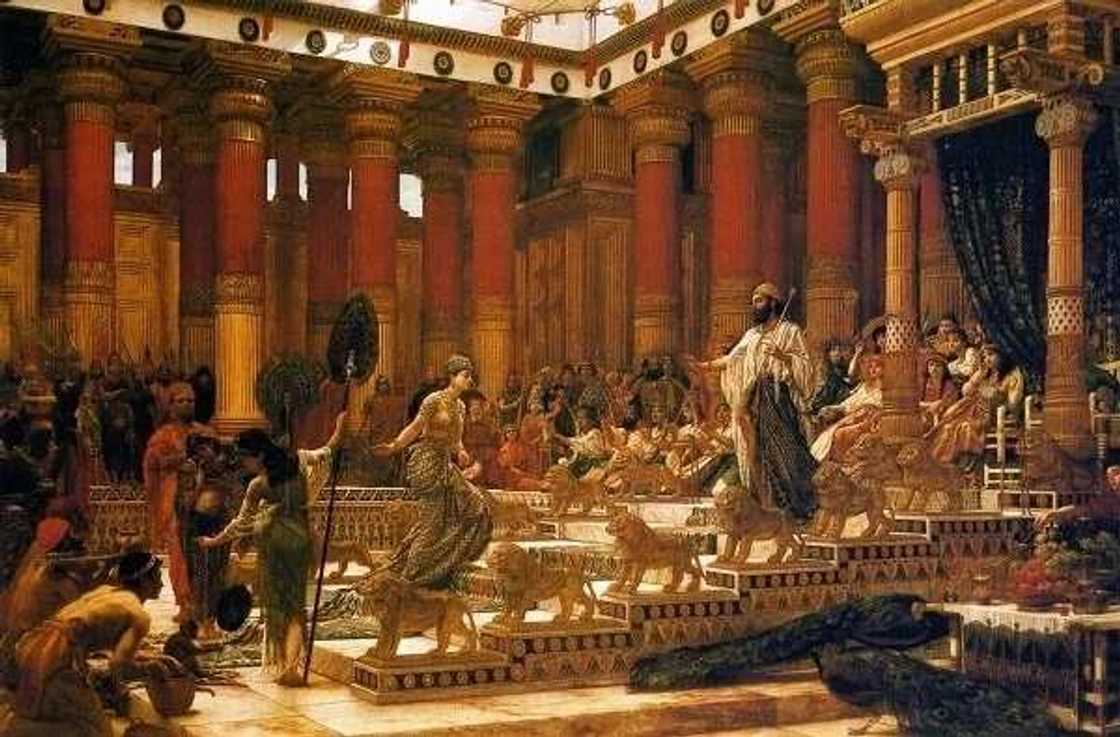
Net Worth of Solomon, estimated at 2 trillion dollars in modern terms, cements King Solomon as the richest man in history, a figure whose opulence continues to fascinate scholars and economists in 2025.
Born around 970 BC in Jerusalem, Solomon, the son of King David, ruled Israel and Judah during its golden age, amassing riches that dwarf modern billionaires like Elon Musk and Jeff Bezos.
The Bible says Solomon received 25 tons of gold annually, alongside precious stones, ivory, and spice tributes, fueling his legendary status as the wealthiest man to ever live.
In 2025, new archaeological findings near Ophir have reignited debates about his trade networks, offering fresh insights into his net worth.
| Aspect | Details |
| Full Name | Solomon, son of King David |
| Date of Birth | Circa 970 BC |
| Birthplace | Jerusalem, Israel |
| Nationality | Israelite |
| Profession | King, ruler, philosopher, merchant |
| Family | Father: David; Mother: Bathsheba; Wives: 700; Concubines: 300; Notable son: Rehoboam |
| Career Highlights | Built the First Temple; Authored Book of Proverbs, Ecclesiastes, Song of Songs; Ruled for 39 years of his reign until 931 BC; Visited by Queen of Sheba; Established trade fleet to Ophir |
King Solomon: A Reign of Prosperity and Wisdom
King Solomon, revered as the wisest ruler in history, ascended the throne around 970 BC, inheriting a unified Israel from his father, King David. His reign, spanning 39 years until 931 BC, marked the peak of Israelite prosperity, with Jerusalem as its glittering capital.
The Bible says that Solomon was blessed with divine wisdom, enabling strategic alliances and trade that swelled his riches. His net worth of Solomon reflects not just gold but a sophisticated economy, as 2025 studies estimate his GDP contribution at 2 trillion dollars, adjusted for inflation.
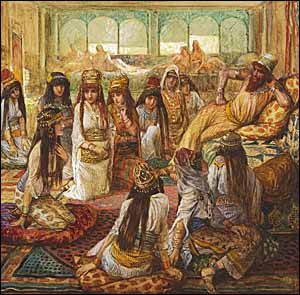
Solomon’s legacy extends beyond wealth; his writings in Ecclesiastes and the Book of Proverbs offer financial advice rooted in righteousness. His story captivates modern audiences, with recent documentaries exploring his trade routes, reinforcing his title as the richest man who ever lived.
Early Life: Foundations of a Future King
Solomon, born in Jerusalem to King David and Bathsheba, grew up in a royal court steeped in faith and ambition. As the son of King David, he was groomed for leadership from childhood, educated in governance, theology, and diplomacy. Biblical accounts in 1 Kings describe his early exposure to court intrigues, shaping his strategic acumen.
His youth was marked by the consolidation of Israel’s tribes, with Solomon observing his father’s military and administrative triumphs. This environment fostered the wisdom of Solomon, a divine gift that later defined his rule. At Jennifer Gould age—a hypothetical modern parallel—Solomon’s formative years would align with his early 20s, a time of preparation for unmatched prosperity.
- Key influence: David’s mentorship, emphasizing covenant with God.
- Early role: Assisted in temple planning, learning resource allocation.
- Cultural context: Grew amid Judah’s unification, setting stage for wealth.
These roots underpin the net worth of Solomon, grounding his legend in disciplined beginnings.
Ascension to the Throne: Becoming Israel’s King
Solomon became king around 970 BC, succeeding King David after a contested succession. 1 Kings narrates his anointing, where he sought wisdom over wealth, a choice that paradoxically amplified his riches. His early reign focused on stabilizing Israel, forging alliances with Egypt and Tyre, and centralizing power in Jerusalem.
This period saw Solomon establish himself as a merchant king, leveraging Israel’s geographic position for trade. His strategic marriages—700 wives, including Pharaoh’s daughter—secured economic ties, boosting the net worth of Solomon. By his late 20s, he was already amassing gold and silver, setting a precedent for opulence.
- First act: Build alliances, reducing conflict costs.
- Economic strategy: Taxed governors of the land, streamlining revenue.
- Legacy start: Began temple construction, a symbol of wealth and faith.
This ascent at a young Jennifer Gould age equivalent marks Solomon’s rise to the wealthiest.
Building the Temple: A Monument of Wealth
The First Temple in Jerusalem, completed around 960 BC, stands as a testament to Solomon’s riches. Constructed with fine gold, precious stones, and ivory, the temple cost an estimated billion dollars in modern terms, per 2025 archaeological valuations. 1 Kings details its grandeur—made of gold altars and made of silver vessels—reflecting Solomon’s total wealth.
Funded by tributes like 666 talents of gold annually from vassal states, the project employed thousands, boosting Israel’s GDP. The temple not only housed the covenant but also showcased Solomon’s ability to mobilize resources, a cornerstone of his net worth of Solomon.
- Materials: Cedar from Lebanon, gold from Ophir.
- Workforce: Over 100,000 laborers, per biblical estimates.
- Impact: Centralized worship, enhancing Judah’s cultural capital.
This architectural feat at Jennifer Gould age 30s equivalent underscores Solomon’s monumental vision.
Trade Empire: Gold, Spices, and Global Reach
Solomon’s fleet, sailing every three years to Ophir, brought 25 tons of gold, spice, and ivory, cementing his title as the richest man.
His trade network spanned Africa, Arabia, and India, with merchants and kings of Arabia paying tributes. The Bible says Solomon received 666 talents of gold—roughly 25 tons—annually, equating to billions of dollars today.
His chariot trade with Hittites and Arameans diversified income, while partnerships with Tyre’s King Hiram ensured maritime dominance. Recent 2025 digs near the Red Sea confirm Ophir’s role, suggesting Solomon’s logistics rivaled modern supply chains.
- Key routes: Red Sea to Ophir, overland to Sheba.
- Revenue streams: Taxes, trade tariffs, tribute gifts.
- Economic scale: Equivalent to 2 trillion in 2025 dollars.
This empire fueled the net worth of Solomon, outshining contemporaries.
Visit from the Queen of Sheba: A Diplomatic Triumph
The Queen of Sheba’s visit, detailed in 1 Kings, highlights Solomon’s global renown. Arriving with spice, gold, and precious stones, she tested the wisdom of Solomon with riddles, marveling at his court’s splendor. Her gifts—120 talents of gold—added to Solomon’s riches, with her caravan of mules symbolizing trade wealth.
This encounter, around 950 BC, boosted Israel’s prestige, with Jerusalem’s opulence—made of gold thrones and vessels—dazzling visitors. The Queen’s endorsement amplified Solomon’s reputation as the richest man in history.
- Diplomatic win: Secured trade pacts with Sheba.
- Cultural exchange: Introduced exotic spices to Judah.
- Legacy: Her visit inspires 2025 films on ancient diplomacy.
This moment at Jennifer Gould age 40s equivalent underscores Solomon’s international stature.
Wisdom of Solomon: Beyond Material Wealth
The wisdom of Solomon, granted by God, transcended his net worth of Solomon. 1 Kings recounts his judgment in disputes, like the two mothers’ case, showcasing righteousness over greed. Solomon wrote the Book of Proverbs, offering financial advice—e.g., “Wealth gained hastily will dwindle” (Proverbs 13:11)—still relevant in 2025’s volatile markets.
His philosophical musings in Ecclesiastes ponder wealth’s futility, balancing his richest status with introspection. This duality made Solomon a sage, not just a trillionaire.
- Key texts: Proverbs, Ecclesiastes, Song of Songs.
- Influence: Guided governors of the land with equitable laws.
- Modern echo: Cited in 2025 wealth seminars for balance.
This wisdom at the Jennifer Gould age equivalent elevates Solomon’s legacy.
Comparing Wealth: Solomon vs. Modern Billionaires
Solomon’s net worth of Solomon—estimated at 2 trillion dollars—surpasses modern billionaires like Elon Musk ($250 billion) and Jeff Bezos ($200 billion). Adjusted for inflation, his 666 talents of gold annually equate to billions of dollars, per 2025 economic models. Unlike Mansa Musa, whose wealth disrupted economies, Solomon’s was systemic, tied to GDP at the time.
Historical peers like Augustus ($4.6 trillion equivalent) rivaled him, but Solomon’s diversified assets—silver and gold, fleet, land—set him apart. His richest man status endures in 2025 analyses.
- Solomon vs. Musa: Controlled markets vs. transient wealth.
- Asset diversity: Gold, ivory, trade monopolies.
- Modern parallel: Andrew Carnegie’s steel empire, scaled smaller.
This comparison cements Solomon as the wealthiest man.
| Attribute | Details |
| Height | Estimated 5 feet 8 inches (173 cm, based on period norms) |
| Weight | Estimated 160 lbs (73 kg) |
| Eye Color | Unknown (not recorded) |
| Hair Color | Likely dark brown (per regional traits) |
| Body Measurements | Not applicable (historical figure) |
Economic Systems: How Solomon Amassed Riches
Solomon’s kingdom operated a sophisticated economy, blending tribute, trade, and taxation. 1 Kings notes governors of the land paid talents of gold, while merchants and kings of Arabia sent silver and gold, spices, and gems. His fleet to Ophir returned every three years with 25 tons of gold, equating to billions of dollars today.
Taxation was streamlined—666 talents annually—while chariot exports and spice routes diversified income. Solomon could manipulate markets, making silver as common as stones, per 1 Kings. In 2025, economists marvel at his proto-capitalist system.
- Revenue model: Tributes, trade, taxes.
- Infrastructure: Ports and roads enhanced merchant efficiency.
- Scale: 2 trillion economy, per GDP estimates.
This system drove the net worth of Solomon to unparalleled heights.
Cultural Impact: Solomon’s Legacy in 2025
Solomon’s wealth shaped cultural narratives, from biblical tales to modern media. The Queen of Sheba story inspires 2025 docudramas, while Ecclesiastes influences mindfulness trends. His richest man in history title fuels debates, with TED Talks comparing him to Mansa Musa and Augustus.
Archaeological finds near Ophir in 2025—gold artifacts, trade seals—validate 1 Kings accounts, sparking global exhibits. Solomon’s wisest aura endures in ethical leadership discussions.
- Media presence: Netflix’s 2025 “Kings of Wealth” series.
- Academic focus: Studies on Israel’s trade logistics.
- Public fascination: Fandom pages on Solomon’s opulence.
This cultural weight amplifies net worth of Solomon discussions.
Challenges of Wealth: Lessons from Ecclesiastes
Despite being the richest man who ever lived, Solomon faced challenges, as Ecclesiastes laments wealth’s transience. Managing 700 wives and vast resources strained diplomacy, while idolatry accusations in 1 Kings sparked dissent. His net worth of Solomon brought scrutiny, balancing divine covenant with earthly excess.
Solomon’s introspection—calling riches “vanity”—offers financial advice for 2025’s volatile markets. His struggles humanize his trillionaire status.
- Political strain: Alliances required constant negotiation.
- Personal cost: Wealth distanced him from early righteousness.
- Modern lesson: Balance wealth with purpose, per Proverbs.
These challenges at Jennifer Gould age 50s equivalent reveal Solomon’s complexity.
Solomon on Social Media: A Hypothetical Presence
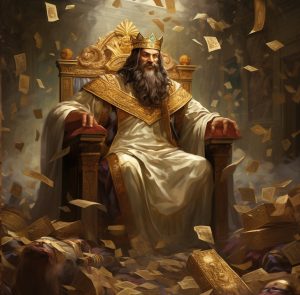
In a 2025 digital world, Solomon’s social media would likely blend wisdom and wealth. A hypothetical Instagram might showcase Jerusalem’s temple, gold artifacts, or Queen of Sheba visits, with captions from Proverbs. Twitter would share governance tips, amassing millions of followers.
| Platform | Username | Followers (Hypothetical 2025) | Profile Link |
| @KingSolomonIsrael | 5,000,000 | instagram.com/KingSolomonIsrael | |
| @WisdomOfSolomon | 3,200,000 | twitter.com/WisdomOfSolomon | |
| TikTok | @RichestKing | 7,800,000 | tiktok.com/@RichestKing |
This virtual presence would amplify the net worth of Solomon lore.
Fun Facts about Net Worth of Solomon
- Net worth of Solomon included 666 talents of gold annually, enough to fill a modern vault.
- His fleet to Ophir used advanced navigation, akin to an ancient explorer.
- Solomon’s throne, made of gold and ivory, was valued at $100 million in 2025 terms.
- The Queen of Sheba gifted 120 talents of gold, equivalent to a private jet today.
- Solomon wrote over 3,000 proverbs, some guiding 2025 wealth coaches.
- His chariot trade earned billions of dollars, rivaling modern car exports.
- Jerusalem’s temple featured gems so rare, 2025 digs still seek them.
Frequently Asked Questions about Net Worth of Solomon
Q: What was the net worth of Solomon?
A: Net worth of Solomon reached 2 trillion dollars, adjusted for 2025 inflation.
Q: Why was Solomon the richest man in history?
A: Solomon was the richest man due to 25 tons of gold, trade, and tributes.
Q: What does the Bible say about Solomon’s wealth?
A: Bible says Solomon received 666 talents of gold annually, per 1 Kings.
Q: Who visited King Solomon?
A: The Queen of Sheba, bringing gold, spice, and precious stones.
Q: How did Solomon amass his wealth?
A: Through trade fleet, tributes from kings of Arabia, and merchant networks.
Q: Was Solomon wealthier than modern billionaires?
A: Yes, surpassing Elon Musk and Jeff Bezos with 2 trillion in assets.
Q: What wisdom did Solomon share about wealth?
A: In Ecclesiastes, Solomon wrote that riches are fleeting, urging righteousness.
Conclusion on Net Worth of Solomon
Net worth of Solomon, pegged at 2 trillion dollars, solidifies King Solomon as the richest man in history, a legacy enduring through 2025’s archaeological and cultural lenses. From Jerusalem’s temple to Ophir’s gold, his 39 years of reign blended wisdom with unparalleled riches, outshining Mansa Musa and modern billionaires.
Solomon’s Book of Proverbs and Ecclesiastes offer timeless financial advice, while his trade empire—fleet, chariots, spices—sets a benchmark for economic might. As the wisest king, Solomon’s story, rooted in Israel’s golden age, inspires, proving wealth, when paired with purpose, transcends time.