Streaming Wars 2.0: The Battle for Latency, Community, and the Future of Live Media
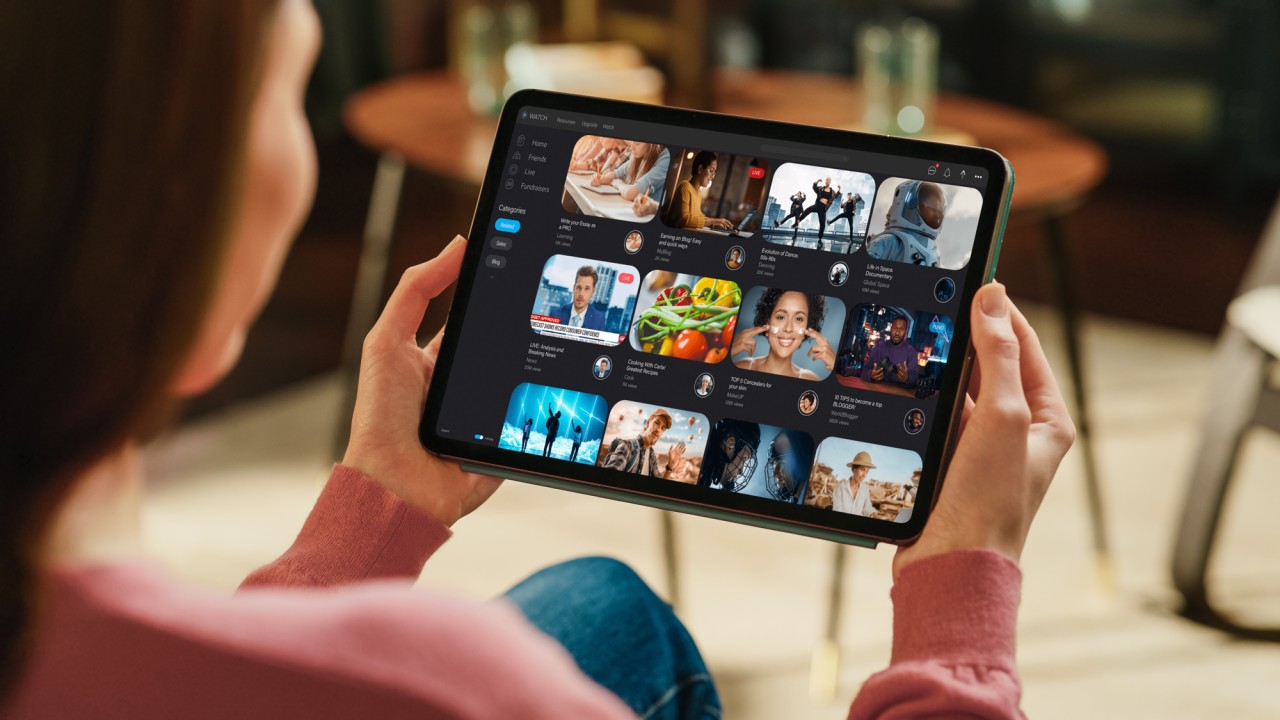
The first phase of the digital media revolution was about libraries. The second phase is about the millisecond. Why the next generation of streaming isn’t just about pixels—it’s about time and tribe.
The narrative of the last decade in the media was defined by the “Streaming Wars.” Netflix, Disney+, Amazon, and HBO fought a ruthless battle for subscriber market share, armed with massive libraries of movies and billions of dollars in original scripted content. That war has largely reached a stalemate. The market is saturated, and growth has slowed. As we move through the mid-2020s, the battleground has shifted. The new frontier is not pre-recorded drama; it is live sports.
Live events are the last bastion of the “must-watch-now” economy. They are the only content type that consistently aggregates massive, simultaneous audiences in an era of fragmentation. However, broadcasting a live football match to millions of concurrent users is infinitely more complex than streaming a 4K movie file stored on a server. This shift has triggered “Streaming Wars 2.0,” a conflict defined not by catalog size, but by technical infrastructure, latency reduction, and community engagement. This analysis explores the technological trenches of this new war and how it is reshaping the viewer experience.
The Latency Challenge: The Race to Zero
In the world of Video on Demand (VOD), latency is irrelevant. It does not matter if your movie starts five seconds later than your neighbor’s. In live sports, however, latency is the enemy. In the age of social media spoilers and live betting, a delay of 30 to 45 seconds—standard for traditional HTTP-based streaming—is catastrophic.
Imagine watching a penalty kick. Your phone buzzes with a notification from Twitter that a goal was scored, but on your screen, the player hasn’t even placed the ball yet. The tension is ruined. The product is broken.
This has forced a massive overhaul of the internet’s broadcasting infrastructure. Engineers are moving away from traditional HLS (HTTP Live Streaming) segments, which favor buffering stability over speed, toward Low-Latency HLS (LL-HLS) and WebRTC (Web Real-Time Communication) protocols. These technologies allow for chunks of video to be transmitted before they are even fully created, pushing latency down to sub-second levels. The goal is “glass-to-glass” parity with, or superiority over, cable TV. The media companies that win this decade will be the ones that can deliver the goal to your retina before your neighbor hears the cheer from the bar down the street.
Community as the New “Stickiness”
While technology solves the speed issue, psychology solves the retention issue. The most significant trend in modern media is the shift away from sterile, corporate broadcasts toward community-driven experiences. The modern viewer does not want to watch in a vacuum. They crave the communal roar of the stadium, even if they are sitting on a subway.
This desire has led to the rise of platforms that prioritize social interaction alongside the video feed. The chat window is no longer an add-on; it is central to the UI. In tech-forward markets like South Korea, which often serves as a global testbed for digital trends, we see the dominance of services that center their identity around keywords like 전국티비.COM. These platforms thrive not just because they stream content, but because they foster a digital stadium atmosphere. They succeed because they understand that “nationwide” access isn’t just about geographical reach; it’s about the collective consciousness of the fan base. By offering a stable, high-bandwidth environment where the community can react in real-time without the frustration of lag, these hubs create a “sticky” ecosystem that pure-play video services struggle to replicate.
The Convergence of Betting and Media
The wall between church and state—between the broadcast and the betting slip—has crumbled. As sports betting legalizes globally, media companies are realizing that the broadcast is merely the canvas. The real engagement (and revenue) comes from the interactive overlays.
We are witnessing the gamification of the video feed. Advanced computer vision algorithms now track the ball and players in real-time, generating millions of data points per match. This data feeds into dynamic odds engines. Soon, viewers will be able to point their remote (or tap their screen) on a player to see their live shooting percentage or place a micro-bet on the outcome of the next free throw.
This convergence is redefining the very concept of 스포츠 중계 (sports broadcasting). The term is evolving from a passive description of a video signal to an active, data-rich environment. It represents a portal where fans expect a multi-layered experience: the visual game, the statistical underlay, and the transactional opportunity. Platforms that can seamlessly integrate these elements—offering the stream, the stats, and the stakes in a single window—are positioning themselves as the operating systems of the sports world.
AI and the Democratization of Production
For decades, broadcasting live sports was prohibitively expensive. It required production trucks, satellite uplinks, and an army of cameramen. This economic reality meant that only the top-tier leagues (NFL, Premier League) received high-quality coverage.
Artificial Intelligence is dismantling this barrier. Automated camera systems, trained on thousands of hours of gameplay, can now track the action smoothly without a human operator. AI-driven production switchers can choose the best angle, zoom in on the goal scorer, and even generate instant replays automatically.
This “AI production” is unlocking the value of the long tail. High school games, niche sports, and lower-division leagues can now be broadcast with a level of polish that rivals professional television. For the consumer, this means an explosion of content. The future of media is not just about watching the Super Bowl; it’s about watching your local team, your child’s game, or a table tennis tournament in another hemisphere, all produced at a professional standard.
The Role of Edge Computing
To deliver low-latency, high-interactivity streams to billions of devices, the cloud is moving closer to the user. This is known as Edge Computing. Instead of sending a video request from a user in London to a server in California, the content is cached and processed in a data center in London.
This decentralized architecture is critical for the next generation of features. If you want to overlay personalized stats on a live video feed using Augmented Reality (AR) glasses, the processing needs to happen almost instantly. The distance data has to travel matters. Media companies are investing heavily in edge infrastructure to support these bandwidth-heavy, latency-sensitive applications.
The Return of the Bundle (But Digital)
History is cyclical. After years of unbundling, where every network launched its own app, we are seeing the “Great Re-bundling.” Consumers are fatigued by managing ten different passwords and credit card charges.
The tech giants—Apple, Amazon, Google—are positioning themselves as the new cable providers. They are aggregating these fragmented services into single, cohesive interfaces. The difference is that this digital bundle is smarter. It uses cross-platform data to recommend content, manages your subscriptions, and offers a unified search experience. In this ecosystem, the specialized sports platforms act as premium channels within the larger digital OS.
Conclusion: The Viewer as Participant
As we look toward the horizon of 2030, the distinction between “playing” a video game and “watching” a sport will continue to blur. Volumetric video technology will allow us to control the camera angle freely, flying through the stadium like a drone. Haptic suits might let us feel the impact of a tackle.
But amidst all this technology, the core human need remains unchanged. We want to witness greatness, and we want to do it together. The successful media platforms of the future will be those that master the invisible tech—the latency, the compression, the data flow—so that the visible connection between the fan and the game feels like magic. The screen is no longer a barrier; it is a bridge.