Collaborative Laser Welding Systems: Flexible Automation You Can Adapt
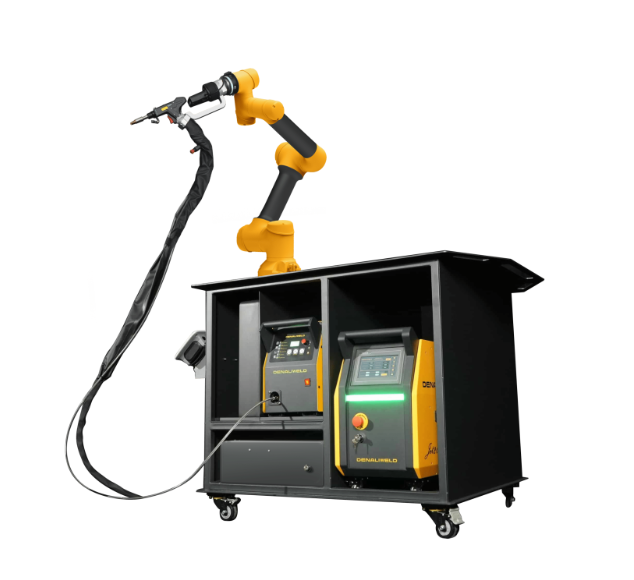
You are expected to weld faster with the same headcount, manage constant job changes, and still hit consistent quality with minimal rework. You may also be asked for traceability showing which settings were used when a weld is questioned later. Collaborative laser welding is gaining attention because it can help you standardize results without locking you into rigid automation, especially when you are considering a cobot laser welder.
A Timely Way to Modernize Welding
If your week includes prototypes, short runs, and repeat jobs, you need automation that supports changeovers rather than fights them. Denaliweld describes its cobot-ready laser-welding setup as featuring quick switching between manual and automated work, preset recipes, and performance tracking, which can help you maintain flexibility while improving repeatability. In that context, a cobot laser welding machine is less about replacing skill and more about making your best process easier to repeat across shifts.
What Collaborative Laser Welding Is
Defining Collaborative Welding in Manufacturing
A collaborative laser welding system combines a collaborative robot platform with a laser welding process package. The robot side includes safety-rated functions such as monitored speed limits and power-and-force limiting, while the laser process still requires engineered controls and a formal risk assessment. Laser welding uses a focused beam to fuse the joint, so fit-up and surface prep still matter. For context, the International Federation of Robotics reported 4,281,585 industrial robots operating in factories worldwide in 2023, up 10% year over year. That trend explains why you might evaluate a cobot laser welder as a flexible first step.
Common Environments and Application Areas
This approach often works well when flexibility matters as much as speed. If you run brackets, frames, enclosures, and assemblies in short batches, a collaborative cell can automate repeat seams and redeploy them as work changes. In those settings, a cobot laser welder can reduce day-to-day variation by reusing validated paths and recipes rather than rebuilding settings for each run.
Core Parts of Welding Cells
Cobot Motion Specs You Compare
Start with payload and reach, because they determine whether you can position the welding head and access joints without awkward angles. Then check repeatability, because it affects whether you can return to the same seam path batch after batch. Finally, confirm cable management, mounting options, and the safety functions you will rely on.
Welding Head and Process Assist
You want stable energy delivery, consistent stand-off, and service access that does not stop production. Seam tracking or vision assistance can help when joint location drifts due to tolerance stack-up or fixture wear. Process assist also includes shielding gas, nozzle setup, and wire feeding when your application needs filler.
Controls, HMI, and Connectivity
Your HMI should make it easy to select jobs, verify key parameters, and run checks without having to dig through menus. Connectivity matters too, whether you need simple I/O for clamps and doors or network links for program storage and reporting. If you cannot capture what settings were used, troubleshooting becomes guesswork.
Integration and Workflow Design
Installation and Deployment Considerations
Pilot with one part family, define acceptance criteria, and build fixtures that locate parts the same way every time. If a part can shift a few millimeters, the robot will still run the taught path, and the beam can miss the joint. Plan for safe access, part staging, routine cleaning, and fume extraction that matches your materials and duty cycle.
Switching Manual and Automated Modes
Hybrid workflows can remove bottlenecks. You can automate a repeat seam, then handle a one-off repair manually without moving to another station. Make mode changes controlled by defining who can switch modes, what checks happen before motion starts, and how interlocks prevent accidental activation during manual work.
Maintenance and Uptime Planning
Schedule quick checks for optics cleanliness, cable wear, and fixture condition, and keep critical consumables on hand. Track stop reasons to spot patterns and tighten your process window over time.
Operating the System Day to Day
Operator Experience and Programming Basics
Consistency improves when you standardize setup: how you reference the fixture, verify the tool center point, and confirm stand-off. Keep seam acceptance examples visible so operators judge results consistently.
Monitoring and Data Capture
Capture job name, key parameters, and stop reasons to tie defects to root causes and improve cost estimates. Denaliweld notes that parameters can be preset with a one-click operation and includes a welding data acquisition system to help track operations and support cost calculations.
Compatibility and Performance Checks
Verify results in the conditions you actually run, including multiple operators and fixtures. Treat fixture or recipe changes as controlled changes and re-verify after meaningful updates.
| Approach | Where It Fits | What You Trade Off |
| Manual Laser Welding | Prototypes and repairs | Results vary by operator, and documentation can be inconsistent |
| Collaborative Laser Welding Cell | High-mix repeat seams | Needs fixtures, safety planning, and process control |
| Fixed Automation Cell | High volume stable parts | Less flexible and changeovers can be expensive |
Safety, Compliance, and Support
Safety Expectations in Collaborative Cells
Laser welding introduces beam and fume hazards, so your safety plan must cover both robot motion and laser exposure. Many U.S. programs reference the ANSI Z136 series for laser safety, and you typically rely on engineered controls such as enclosures, interlocks, controlled access, appropriate eye protection, and fume extraction appropriate to your materials.
Compliance Signals Buyers Look for
Look for clear documentation and a defensible risk assessment process. For collaborative robot applications, ISO/TS 15066 is commonly referenced as guidance related to collaborative operation principles. You should also expect installation, operation, and maintenance guidance that tells you what to re-check after changes.
Training, Service, and Support Models
Confirm operator and maintenance training, spare parts availability, and how updates to software or recipes are handled before you commit.
Conclusion
Collaborative laser welding can bring repeatability into high-mix work without forcing you into rigid automation. Focus on fixtures, stable recipes, monitoring, and safety controls, then scale only after your pilot results hold up across operators and batches. Denaliweld is one example of a supplier packaging quick manual-to-automated switching and data capture into a cobot-ready offering. Still, your decision should come down to fit, verification, and support. If you are evaluating a cobot laser welder, start with one repeat seam, measure it, and expand from there.