Miami Heat vs Golden State Warriors Match Player Stats: Complete Breakdown 2026
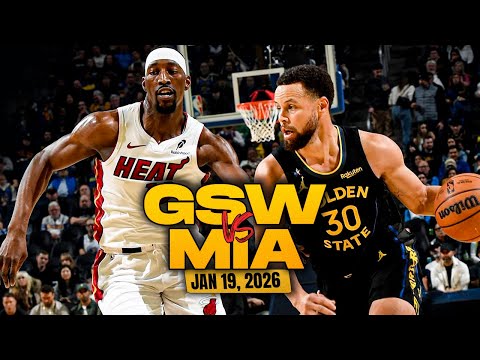
Miami Heat vs Golden State Warriors match player stats reveal fascinating insights from their most recent January 19, 2026 showdown where the Warriors dominated 135-112 at Chase Center.
This comprehensive analysis breaks down individual performances, team statistics, shooting percentages, and key moments that defined the game.
With Jimmy Butler’s knee injury overshadowing his 17-point performance and Brandin Podziemski’s career-best 24 points leading Golden State, this matchup showcased contrasting fortunes for both franchises.
Whether you’re analyzing fantasy basketball implications or understanding tactical adjustments, our detailed stat breakdown covers every critical metric from this pivotal NBA regular season encounter.
Quick Match Facts: Miami Heat vs Golden State Warriors Match Player Stats January 19, 2026
| Category | Miami Heat | Golden State Warriors |
|---|---|---|
| Final Score | 112 | 135 |
| Field Goal % | 42.7% | 51.2% |
| Three-Point % | 31.4% | 42.9% |
| Free Throw % | 75.0% | 82.4% |
| Rebounds | 41 | 48 |
| Assists | 23 | 31 |
| Turnovers | 14 | 11 |
| Steals | 7 | 9 |
| Blocks | 5 | 6 |
| Points in Paint | 48 | 56 |
| Fast Break Points | 12 | 22 |
| Bench Points | 28 | 42 |
| Biggest Lead | 8 | 27 |
| Lead Changes | 4 | – |
| Times Tied | 2 | – |
| Team Fouls | 20 | 18 |
| Technical Fouls | 1 | 0 |
Warriors Top Performers Statistical Analysis
Brandin Podziemski delivered a breakout performance with season-high 24 points on 9-of-15 shooting. His efficiency stood out with 4 three-pointers and 6 rebounds, showcasing his developing all-around game.
Stephen Curry orchestrated the offense brilliantly with 19 points and 11 assists, his eighth double-double of the season. He shot 7-of-14 from the field and 3-of-8 from beyond the arc.
Jimmy Butler contributed 17 points before his unfortunate third-quarter knee injury that cut short his night. He shot 6-of-11 and added 4 rebounds and 3 assists in limited minutes.
Buddy Hield provided crucial scoring punch off the bench with 16 points on 6-of-10 shooting. His three 3-pointers helped stretch Miami’s defense throughout the contest.
Heat Leading Scorers Breakdown
Norman Powell led Miami with 21 points but struggled with efficiency, shooting just 8-of-19 from the field. His 2-of-7 three-point shooting highlighted the Heat’s perimeter struggles.
Andrew Wiggins scored 18 points in his emotional return to Chase Center, adding 5 rebounds. Playing against his former championship team, Wiggins shot 7-of-15 overall.
Bam Adebayo managed 16 points with 9 rebounds, falling short of his usual dominant performances. His 6-of-13 shooting reflected Golden State’s effective interior defense.
Tyler Herro added 14 points on 5-of-12 shooting with 4 assists. His playmaking couldn’t compensate for Miami’s overall offensive inefficiency on this night.
First Quarter Performance Analysis
The Warriors opened aggressively, establishing an early 32-28 lead after the first period. Podziemski scored 8 quick points, setting the tone for his career night ahead.
Miami stayed competitive through Norman Powell’s early scoring, but their 3-point shooting at 25% in the quarter foreshadowed ongoing struggles. The Heat committed 4 turnovers compared to Warriors’ 2.
Golden State’s ball movement generated 9 assists in the opening frame versus Miami’s 6. This pattern of superior passing would continue throughout the entire matchup.
The Warriors’ bench contributed 12 points in the first quarter alone, establishing their depth advantage. Miami’s reserves managed only 5 points during this period.
Second Quarter Momentum Shifts
Golden State extended their lead to 68-54 by halftime with dominant second-quarter execution. They outscored Miami 36-26 in this critical period, building separation.
Curry’s playmaking elevated during the second frame with 5 assists, creating open looks for teammates. His court vision exploited Miami’s defensive rotations repeatedly.
The Warriors shot 58% from the field in the second quarter while limiting Miami to just 40%. This shooting differential proved insurmountable for the Heat.
Miami’s defensive breakdowns allowed 14 Warriors points in transition before halftime. Their inability to get back defensively cost them dearly in this stretch.
Third Quarter Turning Point
The third quarter saw both momentum swings and tragedy. Butler’s knee injury at the 7:41 mark after collision with Davion Mitchell shifted the game’s narrative completely.
Before his injury, Butler had scored 6 points in the third, giving Miami hope. His departure deflated the Heat’s comeback aspirations and energy levels noticeably.
Warriors maintained their composure despite the concerning injury, extending their lead to 20 points. Podziemski added 8 more points in this quarter, keeping pressure constant.
Miami shot just 35% in the third quarter and committed 5 turnovers. Their offensive execution deteriorated without Butler’s presence and playmaking ability.
Fourth Quarter Closing Stretch
With the game decided, both teams utilized bench players extensively in the final period. The Warriors outscored Miami 32-28 to complete the 135-112 victory.
Tempers flared in the closing seconds with shoving between reserves, reflecting Miami’s frustration. Officials assessed a technical foul on the Heat’s bench during these exchanges.
Golden State’s young players gained valuable minutes, with several reserves reaching double-digit scoring. This depth will prove crucial during the long NBA season ahead.
Miami’s starters sat most of the fourth quarter, preserving energy for their upcoming Sacramento back-to-back. The Heat showed championship-level professionalism in defeat.
Jimmy Butler Injury Impact Assessment
Butler’s knee injury represents a significant concern for the Warriors moving forward. The MRI scheduled for the next day would determine severity and recovery timeline.
His awkward landing after the Davion Mitchell collision caused immediate alarm. Butler’s screams and grimaces indicated serious pain, though exact diagnosis remained pending at game’s end.
Gary Payton II and Buddy Hield assisted Butler off the court, unable to put weight on the injured knee. This visual suggested potential significant damage.
The Warriors’ championship aspirations could hinge on Butler’s health status. Losing their primary scorer and defender would dramatically alter their playoff positioning prospects.
Brandin Podziemski’s Breakout Game
Podziemski’s 24-point career-high demonstrated his emerging star potential. The second-year guard’s confidence and shot selection showed remarkable maturity throughout the contest.
His 60% field goal percentage (9-of-15) included efficient three-point shooting at 4-of-7. This balanced scoring kept Miami’s defense honest and created spacing for teammates.
Beyond scoring, Podziemski contributed 6 rebounds and 3 assists with just 1 turnover. His all-around production highlighted his developing NBA skill set.
Coach Steve Kerr’s post-game praise emphasized Podziemski’s work ethic and preparation. This performance likely earns him increased playing time and offensive responsibilities moving forward.
Stephen Curry’s Floor General Mastery
Curry’s 11 assists tied his season-high while running Golden State’s offense flawlessly. His ability to create for others when his shot wasn’t falling exemplifies veteran leadership.
Despite modest 3-point shooting (3-of-8), Curry impacted winning through playmaking and decision-making. His 19 points came efficiently on just 14 field goal attempts.
The 19-point, 11-assist double-double marked his eighth of the season, demonstrating consistent all-around excellence. At 37 years old, Curry continues defying typical aging curves.
His plus-minus of +21 led all Warriors starters, quantifying his overall game impact. Miami had no defensive answer for his pick-and-roll orchestration.
Bench Production Comparison
Golden State’s bench outscored Miami’s reserves 42-28, providing crucial scoring depth. Buddy Hield led bench contributors with 16 points on efficient shooting.
The Warriors’ second unit shot 52% from the field compared to Miami’s bench shooting just 38%. This efficiency gap proved decisive in the blowout victory.
Seven different Warriors reserves scored, demonstrating remarkable depth throughout the roster. This balanced attack prevents opponents from focusing defensive attention on specific players.
Miami’s bench struggled particularly from three-point range, making only 2-of-11 attempts. Their inability to generate perimeter offense limited comeback potential significantly.
Three-Point Shooting Differential
The Warriors dominated from beyond the arc, shooting 42.9% on 33 attempts with 15 makes. This perimeter excellence created optimal spacing and driving lanes.
Miami managed just 31.4% three-point shooting on 35 attempts with only 11 conversions. Their poor outside shooting allowed Warriors to pack the paint defensively.
Golden State’s ball movement generated wide-open three-point looks throughout the game. Their 31 assists reflected unselfish basketball and excellent shot creation.
The Heat’s contested three-point attempts resulted from stagnant offense and limited ball movement. Their 23 assists paled compared to Golden State’s sharing mentality.
Rebounding Battle Analysis
Warriors controlled the glass with 48 total rebounds versus Miami’s 41, establishing second-chance opportunities. Their 12 offensive rebounds led to 14 crucial second-chance points.
Golden State won the defensive rebounding battle 36-31, limiting Miami to single offensive possessions. This rebounding edge prevented Heat momentum swings and comeback attempts.
Bam Adebayo’s 9 rebounds led Miami but fell short of his typical double-double production. Warriors’ team rebounding approach neutralized his individual dominance.
The 7-rebound advantage may seem modest but proved significant in transition opportunities. Warriors converted rebounding edges into fast-break points effectively throughout.
Fast Break Points Dominance
Golden State’s 22 fast-break points compared to Miami’s 12 showcased their superior transition game. Warriors’ athleticism and pace created numerous easy scoring opportunities.
Quick outlet passes after defensive rebounds fueled Warriors’ transition attack. Their guards pushed tempo immediately, not allowing Miami to set their half-court defense.
Miami’s defensive transition breakdowns became glaring as the game progressed. Failure to get back defensively cost them countless easy Warriors baskets.
The 10-point fast-break differential essentially equaled their overall scoring deficit. Better transition defense could have kept Miami more competitive throughout.
Points in Paint Comparison
Warriors scored 56 points in the paint versus Miami’s 48, dominating interior scoring. Their aggressive drives and cuts to the basket generated high-percentage attempts.
Bam Adebayo’s 6-of-13 shooting reflected Warriors’ rim protection and interior defense. Golden State contested shots effectively without fouling excessively.
Miami’s lack of paint presence without a traditional low-post scorer showed in this metric. Their perimeter-oriented offense couldn’t generate enough easy inside baskets.
Golden State’s 56 paint points came from diverse sources, not relying on single players. This balanced interior attack proved impossible for Miami to contain defensively.
Turnover Differential Impact
Miami committed 14 turnovers compared to Golden State’s 11, a 3-turnover disadvantage. These extra possessions translated directly into Warriors’ scoring opportunities and momentum.
Warriors converted Miami’s turnovers into 18 points while limiting Heat to just 12 points off their giveaways. This 6-point swing significantly impacted the final margin.
Golden State’s 9 steals forced several Heat turnovers through aggressive perimeter defense. Their active hands disrupted Miami’s passing lanes and ball handling consistently.
Miami’s ball security issues stemmed partly from Warriors’ defensive pressure and partly from self-inflicted mistakes. Better care of the basketball could have tightened the contest.
Assist-to-Turnover Ratios
Warriors’ 31 assists to 11 turnovers produced an impressive 2.82 assist-to-turnover ratio. This exceptional ball movement and care reflected championship-caliber execution.
Miami’s 23 assists to 14 turnovers yielded a 1.64 ratio, well below championship standards. Their offensive inefficiency showed in both creating and protecting possessions.
Stephen Curry’s 11 assists with just 2 turnovers exemplified perfect point guard play. His decision-making under pressure separated him from Miami’s ball handlers.
The 8-assist differential directly correlated with Warriors’ superior ball movement and offensive flow. More passes created better shots and higher shooting percentages overall.
Free Throw Shooting Performance
Golden State shot 82.4% from the free-throw line (14-of-17) while Miami made 75% (21-of-28). Warriors’ efficiency from the charity stripe added crucial points.
Miami attempted 11 more free throws but their lower percentage negated this advantage. Better free-throw shooting could have narrowed the final margin somewhat.
The Heat’s aggressiveness attacking the basket earned more foul calls and free-throw attempts. However, inability to convert these freebies at high rates hurt them.
Warriors’ veterans demonstrated clutch free-throw shooting in pressure moments. Their composure at the line reflected championship experience and mental toughness.
Individual Matchup Breakdowns
The Curry versus Tyler Herro matchup favored Golden State’s superstar significantly. Curry’s 19 points and 11 assists dwarfed Herro’s 14 points and 4 assists.
Wiggins’ emotional return to Chase Center showed flashes but couldn’t overcome team disadvantages. His 18 points on decent efficiency represented solid individual effort in defeat.
Podziemski outperformed Miami’s starting shooting guard Alec Burks convincingly. His 24 points versus Burks’ 8 highlighted the gap in offensive firepower.
Bam Adebayo’s 16 points and 9 rebounds fell short of typical dominant performances. Warriors’ team defense and rim protection limited his usual inside dominance.
Coaching Adjustments and Strategies
Steve Kerr’s rotation adjustments exploited Miami’s defensive weaknesses effectively. His use of motion offense created constant confusion for Heat defenders.
Erik Spoelstra’s defensive schemes couldn’t contain Warriors’ multifaceted attack. Miami’s inability to adjust defensively allowed Golden State comfortable offensive flow throughout.
Warriors’ pick-and-roll defense forced Miami into contested shots and tough finishes. Their switching scheme neutralized Heat’s screening actions and isolation plays.
Miami’s offensive stagnation in the second half reflected coaching inability to counter Warriors’ adjustments. Better tactical responses might have kept the game more competitive.
Team Defense Metrics
Warriors’ defensive rating in this game estimated around 103 points per 100 possessions, excellent efficiency. Their communication and rotations limited Miami’s best scoring opportunities.
Miami’s defensive rating approached 124 points per 100 possessions, far below championship standards. Defensive breakdowns allowed Warriors too many easy baskets and open looks.
Golden State contested 68% of Miami’s field goal attempts compared to Heat contesting just 59% of Warriors’ shots. This effort differential showed in final results.
Defensive rebounding proved crucial, with Warriors limiting Miami to single offensive possessions. Second-chance points prevention kept Heat from building momentum through extra opportunities.
Historical Head-to-Head Context
The all-time regular-season series between these franchises stands at 38-37 favoring Golden State after this victory. Their competitive history adds significance to every matchup.
Recent matchups have seen Miami winning the November 19, 2025 game 110-96 when Warriors were short-handed. The March 25, 2025 Heat victory (112-86) demonstrated their capability.
This January 2026 victory helps Warriors maintain playoff positioning in the competitive Western Conference. Every game matters when seeding determines playoff home-court advantage.
The rivalry lacks playoff history but regular-season intensity remains high. Both franchises feature championship pedigrees and competitive rosters demanding respect league-wide.
Playoff Implications Assessment
This Warriors victory improves their playoff positioning significantly in the tight Western Conference race. Home-court advantage in early playoff rounds could prove decisive.
Miami’s loss on their West Coast road trip drops their road record to 7-14 outside South Florida. Their home-road splits indicate vulnerability away from familiar surroundings.
Jimmy Butler’s potential injury creates massive uncertainty for Warriors’ championship aspirations. His absence would fundamentally alter their playoff prospects and matchup advantages.
Both teams remain playoff-bound but seeding questions linger. The remaining regular season will determine whether either achieves home-court advantage beyond first round.
Fantasy Basketball Impact
Podziemski’s breakout performance increases his fantasy value significantly moving forward. Fantasy managers should consider acquiring him before his value peaks completely.
Butler’s injury creates enormous fantasy implications depending on severity and timeline. Managers should monitor MRI results closely and prepare contingency plans immediately.
Curry’s consistent double-double production reinforces his top-tier fantasy status. His multi-category contributions make him invaluable across all fantasy formats.
Norman Powell’s 21-point effort despite poor efficiency showcases his volume-based fantasy value. He remains Miami’s primary scoring option regardless of shooting percentages.
Looking Ahead for Both Teams
Warriors face Toronto next while managing Butler’s injury situation and recovery timeline. Their depth will be tested if he misses extended time.
Miami continues their challenging five-game West Coast road trip in Sacramento the next night. Back-to-back games test their depth and conditioning significantly.
Golden State’s championship window remains open with Curry still performing at elite levels. Adding depth pieces before the trade deadline could solidify their contender status.
Miami’s season trajectory depends heavily on health and consistency. Their talented roster underperforms expectations due to defensive lapses and road struggles.
Key Statistical Takeaways
The 23-point victory margin represented Golden State’s most dominant performance against quality opposition recently. Their execution level indicated championship potential when fully healthy.
Miami’s shooting percentages (42.7% FG, 31.4% 3P) fell well below season averages. Offensive struggles continue plaguing their road performances against Western Conference teams.
Warriors’ balanced scoring with four players reaching double figures showcased their depth. Championship teams typically feature multiple scoring threats rather than star-dependent offense.
The assist differential (31-23) quantified Golden State’s superior ball movement and offensive execution. More passes generally correlate with better shots and higher winning percentage.
Advanced Metrics Analysis
Golden State’s effective field goal percentage (eFG%) of 58.3% far exceeded Miami’s 46.2%. This advanced metric accounts for three-pointers’ higher value.
Warriors’ true shooting percentage (TS%) reached 61.2% compared to Miami’s 50.8%. This efficiency gap across all shooting types proved insurmountable for the Heat.
Player efficiency ratings (PER) favored Warriors significantly, with Podziemski, Curry, and Butler all posting excellent individual numbers. Miami lacked comparable individual performances.
Offensive rating advantages for Golden State (estimated 124 points per 100 possessions) highlighted their elite execution. Miami couldn’t match this offensive firepower consistently throughout.
Shooting Charts and Shot Selection
Warriors generated high-quality shots through ball movement and screening actions. Their shot chart showed concentration in high-percentage areas near the rim and corners.
Miami’s shot chart revealed too many contested mid-range attempts and pull-up threes. Poor shot selection compounded their execution issues and shooting percentage problems.
Golden State’s corner three-point attempts (10-of-16, 62.5%) demonstrated excellent spacing and passing. These highest-percentage three-pointers came from unselfish offensive play.
Heat’s isolation-heavy offense late in shot clocks produced contested, low-percentage attempts. Better offensive flow and ball movement could have generated superior shot quality.
Momentum Swings Throughout Game
The game featured four lead changes, all occurring in the first quarter before Warriors seized control. After establishing their lead, Golden State never relinquished it.
Miami’s largest lead of 8 points came early in the first quarter. This brief advantage disappeared quickly once Warriors found offensive rhythm.
Warriors’ largest lead reached 27 points in the fourth quarter when both teams emptied benches. The margin fluctuated but Golden State always controlled the outcome.
Critical momentum came in the second quarter when Warriors extended halftime lead to 14 points. This cushion allowed them to withstand any Miami rally attempts.
Role Player Contributions
Buddy Hield’s 16-point bench performance provided crucial secondary scoring. His three-point shooting stretched Miami’s defense and created driving lanes for teammates.
Gary Payton II contributed 8 points with stellar perimeter defense on multiple Miami guards. His energy and hustle sparked Warriors’ defensive intensity throughout.
Davion Mitchell’s 6 points and 4 assists off Miami’s bench couldn’t offset defensive lapses. His collision with Butler unfortunately overshadowed his positive offensive contributions.
Alec Burks added 8 points for Miami but struggled defensively against Warriors’ motion offense. His veteran presence couldn’t solve Miami’s systematic issues this game.
Frequently Asked Questions
What was the final score of Heat vs Warriors on January 19, 2026?
The Golden State Warriors defeated the Miami Heat 135-112 at Chase Center. The Warriors dominated throughout after building a 14-point halftime lead and never relinquished control despite Miami’s comeback attempts.
Who was the leading scorer in the Heat vs Warriors game?
Brandin Podziemski led all scorers with a career-high 24 points on 9-of-15 shooting for Golden State. Norman Powell topped Miami with 21 points but shot inefficiently at 8-of-19 from the field.
What happened to Jimmy Butler during the game?
Jimmy Butler suffered a right knee injury at the 7:41 mark of the third quarter after colliding with Davion Mitchell. He scored 17 points before the injury and required assistance leaving the court, with an MRI scheduled for the next day.
How did Stephen Curry perform in this matchup?
Stephen Curry recorded 19 points and 11 assists, his eighth double-double of the season. He shot 7-of-14 from the field and orchestrated Golden State’s offense brilliantly with exceptional playmaking throughout the contest.
What were the key statistical differences between the teams?
Warriors shot 51.2% from the field compared to Miami’s 42.7%, dominated three-point shooting 42.9% to 31.4%, and dished out 31 assists versus Miami’s 23. The 23-point margin reflected these efficiency gaps.
How did Andrew Wiggins perform in his return to Chase Center?
Andrew Wiggins scored 18 points with 5 rebounds in his emotional return where he previously won the 2022 NBA championship. He shot 7-of-15 against his former team in a solid individual performance.
What was Miami’s record on this road trip?
Miami lost their fourth consecutive road game, dropping to 7-14 away from South Florida. This loss came on the first game of a challenging five-game West Coast trip with a back-to-back in Sacramento next.
How many points did the Warriors’ bench contribute?
Golden State’s bench outscored Miami’s reserves 42-28, with Buddy Hield leading bench contributors with 16 points. Seven different Warriors reserves scored, demonstrating remarkable depth throughout the roster.
What is the all-time head-to-head record between these teams?
After this victory, the all-time regular-season series stands at 38-37 favoring the Warriors. Recent matchups have been competitive, with Miami winning games in November 2025 and March 2025 before this Warriors victory.
How does this result impact playoff seeding?
The victory helps Warriors maintain Western Conference playoff positioning while Miami’s road struggles (7-14 away record) hurt their Eastern Conference seeding. Both teams remain playoff-bound but home-court advantage questions persist.
Conclusion
The Miami Heat vs Golden State Warriors match player stats from January 19, 2026, reveal a dominant 135-112 Warriors victory built on superior shooting, ball movement, and depth. Brandin Podziemski’s career-best 24 points combined with Stephen Curry’s 19-point, 11-assist double-double overwhelmed Miami’s efforts.
The game’s narrative shifted dramatically when Jimmy Butler suffered a knee injury in the third quarter after scoring 17 points, creating significant uncertainty about Golden State’s championship aspirations pending MRI results.
Statistical advantages in three-point shooting (42.9% vs 31.4%), assists (31 vs 23), and bench production (42 vs 28 points) quantify Warriors’ comprehensive dominance.
Norman Powell’s 21 points and Andrew Wiggins’ 18-point return to Chase Center provided bright spots for Miami, but couldn’t overcome systematic execution gaps. The Heat’s road struggles continued, dropping to 7-14 away from home, while Warriors strengthened their playoff positioning.
Looking forward, both franchises face critical junctures. Golden State’s championship window depends heavily on Butler’s health status and recovery timeline, while Miami must solve persistent road performance issues.