Grey or Gray – What’s the Difference Explained 2026
Grey or gray — which one is correct? This is one of the most searched spelling questions in the English language, and the answer is simpler than most people think. Both spellings are correct.
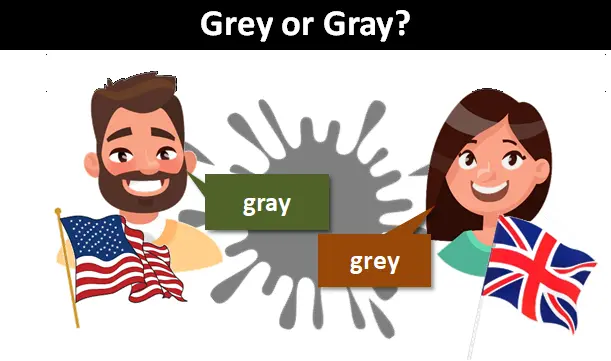
The word you use depends on where you are in the world. “Gray” is the standard spelling in American English. “Grey” is preferred in British English and most other English-speaking countries.
Same word. Same meaning. Same pronunciation. The only difference is the letter in the middle — “a” for America, “e” for England.
What Is the Difference Between Grey and Gray?
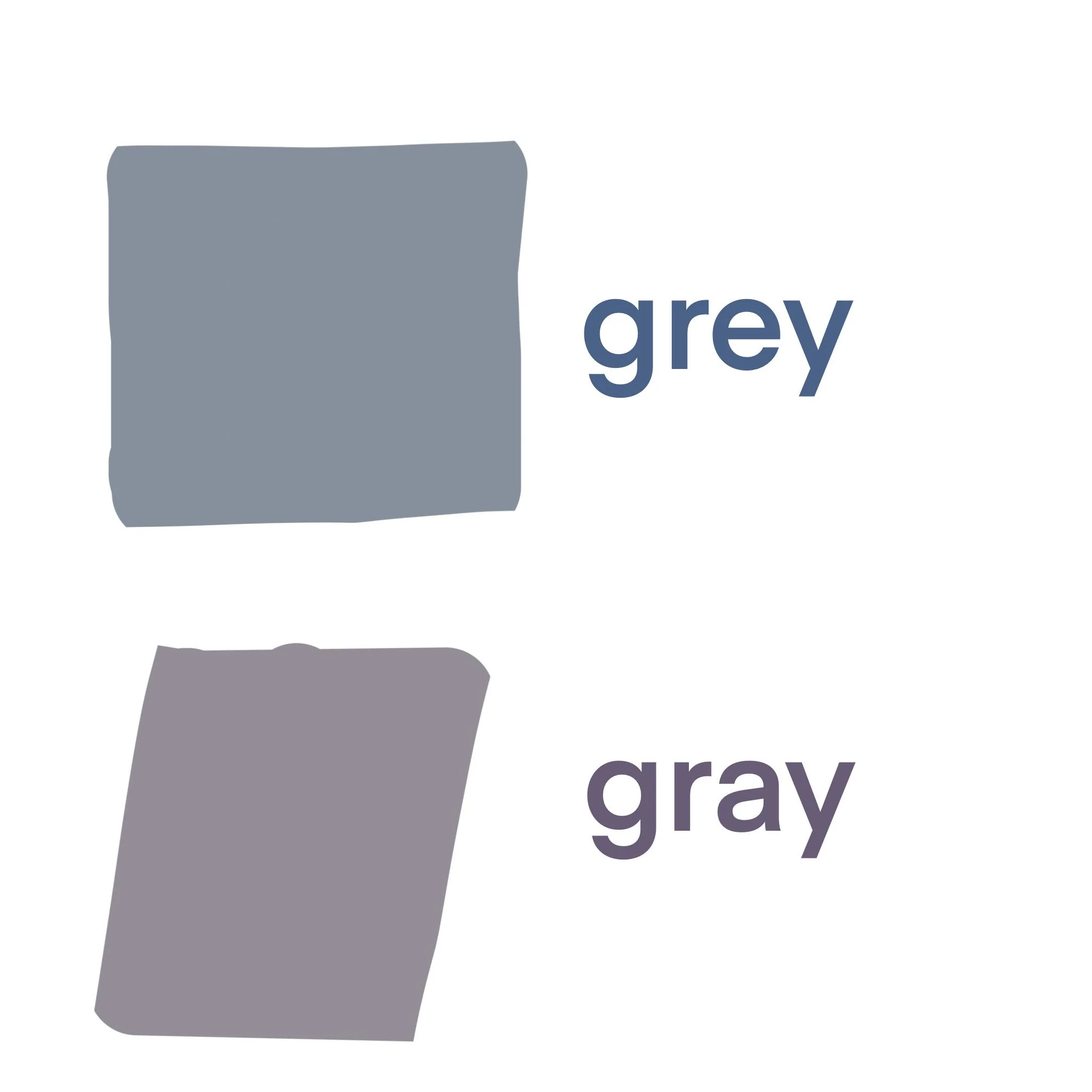
Grey and gray are two spellings of the exact same word. They describe the neutral color that sits between black and white on the color spectrum.
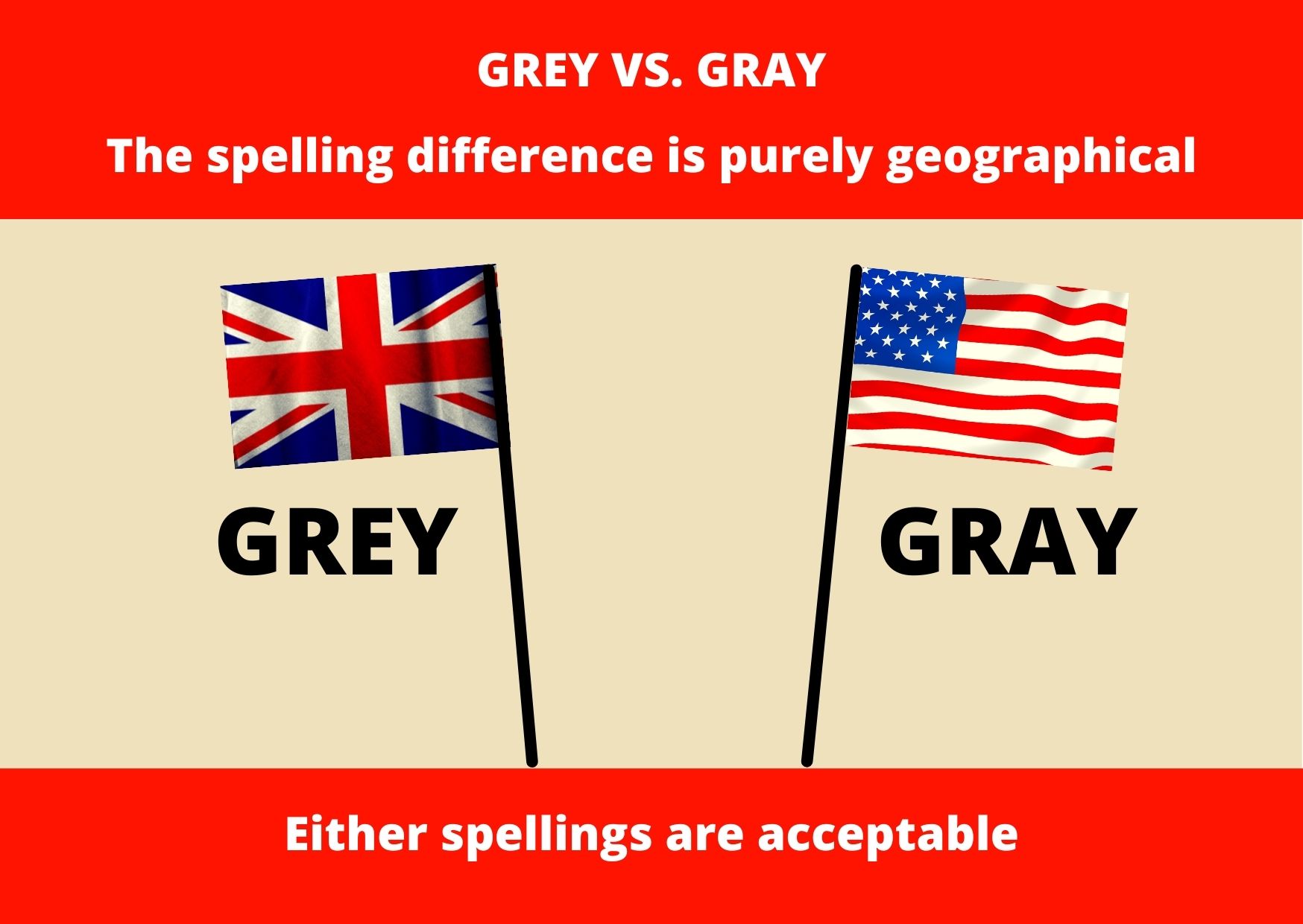
There is no difference in meaning, pronunciation, or grammar. The only difference is the spelling — and that spelling is decided by geography.
Use “gray” if you are writing for an American audience. Use “grey” if you are writing for a British, Australian, Canadian, or any other English-speaking audience outside the United States.
The Simple Rule to Remember
The easiest way to never confuse grey and gray again is this memory trick:
“A” for America = grAy “E” for England = grEy
That single tip solves the confusion for 95% of everyday writing situations. If you are in the US or writing for a US audience, go with “gray.” If you are in the UK, Australia, New Zealand, or Canada, go with “grey.”
Quick Reference Table: Grey or Gray?
| Situation | Correct Spelling |
|---|---|
| Writing for an American audience | Gray |
| Writing for a British/UK audience | Grey |
| Writing for an Australian audience | Grey |
| Writing for a Canadian audience | Grey |
| Writing for a New Zealand audience | Grey |
| Scientific unit of radiation | Gray (always) |
| Earl Grey tea (proper noun) | Grey (always) |
| Greyhound (dog breed) | Greyhound (always “e”) |
| Grayling (fish species) | Grayling (always “a”) |
| Grey’s Anatomy (TV show) | Grey (proper noun, always) |
| Fifty Shades of Grey (book/film) | Grey (proper noun, always) |
| CSS/HTML color codes | Gray (always “a” in code) |
The Etymology of Grey and Gray
Both spellings come from the same Old English root word — grǣg. This ancient word was used in Old English texts as far back as 700 CE to describe the color between black and white.
As the English language evolved through the Middle Ages, spelling was not standardized. Writers used multiple variations interchangeably — “grai,” “grei,” “graye,” “greye,” and “graye” all appeared in different manuscripts.
The 12th-century Middle English poem “The Owl and the Nightingale” uses the spelling “greie.” The 14th-century translation of the French poem “Roman de la Rose” uses the spelling “greye.” William Langland used “graye” in “Piers Plowman” in the latter half of the 14th century.
This shows that for centuries, there was no definitive right or wrong way to spell the word. Both forms coexisted naturally in the English language.
How Noah Webster Shaped American Spelling
The story of why America uses “gray” with an A is largely the story of one man — Noah Webster.
Webster was born in Connecticut in 1758 and became one of the most influential figures in the history of the American English language. He believed America needed its own standardized language identity, distinct from British English.
In 1828, Webster published “An American Dictionary of the English Language.” This dictionary introduced and standardized many spelling changes — “colour” became “color,” “centre” became “center,” “honour” became “honor,” and “grey” was listed as “gray.”
Webster’s dictionary became enormously popular and was eventually continued by Merriam-Webster, which remains the leading American dictionary authority to this day. By the 20th century, “gray” was firmly established as the standard American spelling.
How British English Kept “Grey”
Across the Atlantic, British English followed a different path. The leading authority in Britain was Samuel Johnson’s “A Dictionary of the English Language,” published in 1755. Johnson’s dictionary codified British spellings and favored “grey” with an E.
The Oxford English Dictionary, which became the definitive authority on British English, continued this tradition and standardized “grey” as the preferred British spelling.
By the 20th century, the two spellings had become firmly associated with their respective regions — “gray” in America and “grey” everywhere else in the English-speaking world.
Grey vs Gray: Regional Usage Around the World
| Country / Region | Preferred Spelling | Notes |
|---|---|---|
| United States | Gray | Strongly preferred; AP and Chicago style guides mandate it |
| United Kingdom | Grey | Standard in all formal and informal writing |
| Canada | Grey | Follows British spelling; “gray” also appears due to US influence |
| Australia | Grey | British spelling standard |
| New Zealand | Grey | British spelling standard |
| Ireland | Grey | British spelling standard |
| South Africa | Grey | British spelling standard |
| India | Grey | British spelling standard in formal writing |
| Hong Kong | Grey | British-influenced English education |
| Singapore | Grey | British-influenced English education |
Grey or Gray as a Noun
Both “grey” and “gray” can be used as nouns to refer to the color itself. The word simply describes any shade between black and white.
The plural form is “grays” or “greys” — again, depending on which variety of English you use.
American English examples:
- The walls were painted in soft grays and whites.
- Her wardrobe is mostly grays, blacks, and navies.
British English examples:
- The artist mixed various greys to create depth in the painting.
- The stormy skies showed a dozen different greys.
Grey or Gray as an Adjective
The most common use of “grey” or “gray” is as an adjective to describe something that is the color between black and white.
Both spellings work identically in this role. The only thing that changes is the letter — not the meaning, not the sound, not the grammar.
American English examples:
- The gray sky threatened rain all afternoon.
- She wore a gray suit to the interview.
- The gray wolf is one of the most studied animals in North America.
British English examples:
- The grey sky threatened rain all afternoon.
- She wore a grey suit to the interview.
- The grey wolf is one of the most studied animals in North America.
Grey or Gray as a Verb
Many people do not realize that “grey” and “gray” can also be used as verbs. The verb form means “to become grey or gray,” and it is most commonly used to describe hair turning gray with age.
American English verb examples:
- His hair started to gray in his early thirties.
- The sky tends to gray quickly when a storm approaches.
- She doesn’t mind that her temples are graying.
British English verb examples:
- His hair started to grey in his early thirties.
- The sky tends to grey quickly when a storm approaches.
- She doesn’t mind that her temples are greying.
The present participle forms are “graying” (American) and “greying” (British). The past tense forms are “grayed” (American) and “greyed” (British).
Verb Forms: Graying vs Greying
| Verb Form | American English | British English |
|---|---|---|
| Present tense | Gray | Grey |
| Past tense | Grayed | Greyed |
| Present participle | Graying | Greying |
| Adjective form | Graying (e.g., graying hair) | Greying (e.g., greying hair) |
| Comparative | Grayer | Greyer |
| Superlative | Grayest | Greyest |
| Adjective suffix | Grayish | Greyish |
Fixed Spellings: When You Cannot Switch
There are several words and proper nouns where the spelling is fixed and cannot be changed based on region. These are the exceptions to the general rule.
Words That Always Use “Grey”
- Greyhound — The slender racing dog breed is always spelled “greyhound.” Its name does not actually come from the color grey — it derives from the Old English “grīghund” which relates to a Norse word for a female dog. But regardless of origin, the spelling with E is always correct.
- Earl Grey tea — Named after Charles Grey, the 2nd Earl Grey and British Prime Minister in the 1830s. This is a proper noun and always retains the E spelling, even when consumed in the United States.
- Grey’s Anatomy — The popular American TV medical drama is named after the character Meredith Grey. As a proper noun and name, the E spelling is permanent regardless of location.
- Fifty Shades of Grey — The novel and film series by British author E.L. James uses “Grey” as the surname of a character. It is a proper noun and always uses the E.
- Grey Goose vodka — A French-origin brand that uses the E spelling and retains it globally.
- Grey Poupon mustard — Another French-origin brand that always uses the E spelling.
Words That Always Use “Gray”
- Grayling — A species of freshwater fish. The name is always spelled with an A. There is no such thing as a “greyling” fish.
- Gray (unit of radiation) — In physics and science, “gray” is the SI unit of ionizing radiation dose. It measures the absorption of one joule of radiation energy by one kilogram of matter. This scientific term is always spelled with an A — never with an E — regardless of which English variety you use.
- Grayling (butterfly) — A species of butterfly also spelled with an A.
- The Picture of Dorian Gray — Oscar Wilde’s novel uses the character surname “Gray” with an A. This is a proper noun and cannot be changed.
Fixed Spellings Summary Table
| Proper Noun / Term | Fixed Spelling | Type |
|---|---|---|
| Greyhound | Grey | Dog breed |
| Earl Grey tea | Grey | Proper noun (person’s name) |
| Grey’s Anatomy | Grey | Proper noun (TV show character) |
| Fifty Shades of Grey | Grey | Proper noun (character name) |
| Grey Goose | Grey | Brand name |
| Grey Poupon | Grey | Brand name |
| Grayling (fish) | Gray | Animal name |
| Grayling (butterfly) | Gray | Animal name |
| Gray (radiation unit) | Gray | Scientific term |
| The Picture of Dorian Gray | Gray | Proper noun (literary character) |
| African Grey Parrot | Grey | Animal name |
Grey Matter vs Gray Matter
One of the most common questions related to this topic is whether to write “grey matter” or “gray matter” when referring to the brain tissue.
The answer follows the same geographic rule. In American English, it is “gray matter.” In British English, it is “grey matter.” Both are scientifically and grammatically correct — they refer to exactly the same tissue.
Gray matter (or grey matter) is the neural tissue in the brain and spinal cord that contains the cell bodies, dendrites, and synapses of neurons. It plays a critical role in processing information, memory, and decision-making.
Grey Area vs Gray Area
A “gray area” or “grey area” is a common idiom in English. It refers to a situation that is unclear, ambiguous, or that falls between two obvious categories with no clear rules.
American writers use “gray area.” British writers use “grey area.” Both mean exactly the same thing.
Examples:
- That legal situation falls into a gray area that courts have not clearly resolved. (US)
- That legal situation falls into a grey area that courts have not clearly resolved. (UK)
- The ethics of the decision were in a gray area where no policy existed. (US)
- The ethics of the decision were in a grey area where no policy existed. (UK)
Grey or Gray Hair
“Grey hair” and “gray hair” are used interchangeably in casual writing, but again, the regional rule applies. American writers say “gray hair.” British writers say “grey hair.”
Both phrases describe hair that has lost its pigment and turned to a silver or white-gray color due to aging or other factors.
American examples:
- His gray hair made him look distinguished.
- She noticed her first gray hair at age 28.
- Gray hair is increasingly fashionable among young people.
British examples:
- His grey hair made him look distinguished.
- She noticed her first grey hair at age 28.
- Grey hair is increasingly fashionable among young people.
Grey or Gray in CSS and Web Design
This is a case where the spelling rule matters technically, not just stylistically. In CSS (Cascading Style Sheets) and HTML color names, the correct spelling is always gray with an A.
The color names used in CSS are inherited from the X11 color system, which uses American English spellings. If you type “grey” in CSS, some browsers may not render it correctly.
For example, in Internet Explorer’s Trident engine, typing “grey” instead of “gray” caused the browser to render green instead of gray — a famous bug in web design history.
In CSS, always use:
color: gray;✓color: grey;✗ (may cause rendering issues in some browsers)
The same applies to all CSS color variants — “darkgray,” “lightgray,” “dimgray,” “slategray,” and so on. Always use A in web code.
Frequency Data: Which Spelling Is More Common?
Corpus linguistics data shows a clear regional divide in usage frequency.
| Corpus | Preferred Spelling | Frequency |
|---|---|---|
| Corpus of Contemporary American English (COCA) | Gray | Gray used over 85% of the time |
| British National Corpus (BNC) | Grey | Grey used over 90% of the time |
| Google Ngram Viewer (global) | Grey | Slightly more common globally |
| AP Stylebook (US journalism) | Gray | Mandates gray for American publications |
| Chicago Manual of Style (US) | Gray | Follows Merriam-Webster; gray is primary |
| Guardian Style Guide (UK) | Grey | Mandates grey for British publications |
Globally, “grey” appears slightly more often than “gray” — simply because more English-speaking countries prefer the E spelling. However, in the United States specifically, “gray” dominates by a wide margin.
Common Mistakes to Avoid
Here are the most frequent errors writers make with grey and gray — and how to fix them.
Mistake 1: Mixing spellings in one document. Never use “gray” in one paragraph and “grey” in another within the same piece of writing. Pick one spelling and use it consistently throughout.
Mistake 2: Changing proper nouns. Never change the spelling of a proper noun — brand name, person’s name, or title — to match your regional preference. Earl Grey is always Earl Grey. Dorian Gray is always Dorian Gray.
Mistake 3: Using “grey” in CSS code. In web design, always use “gray” with an A. The CSS specification uses American spellings exclusively for all color names.
Mistake 4: Assuming one is more correct than the other. Both spellings are equally correct. Neither is wrong. The only question is which one is appropriate for your audience.
Mistake 5: Changing scientific terms. The SI unit “gray” for radiation is always spelled with an A, regardless of where you are writing. Do not change it to “grey” even in British English.
Shade Perception: Does the Spelling Change the Color?
Some people and color theorists have argued that “gray” and “grey” represent slightly different shades. This idea has existed informally for a long time but has never been formally adopted.
The color theorist George Field suggested that “gray” has a slightly cooler, bluish tint, while “grey” represents a more neutral, pure shade between black and white.
In informal surveys, some Americans reported that “grey” looks darker or more somber to them, while “gray” feels lighter. Some people associate “grey” with gloomy weather and “gray” with a lighter, more neutral tone.
However, dictionaries — both American and British — do not distinguish between the two spellings in terms of shade. They are officially the same color, just with different letters.
Famous Pop Culture Uses of Grey and Gray
The two spellings appear in some of the most recognizable cultural references in the English language.
- Grey’s Anatomy — The long-running American TV drama uses “Grey” because it is named after the character Meredith Grey. It has helped popularize the E spelling among American audiences who normally use the A version.
- Fifty Shades of Grey — The global bestselling novel by British author E.L. James uses “Grey” as a character surname and as wordplay on the color. Published in 2011, it became one of the most discussed books of the decade.
- The Picture of Dorian Gray — Oscar Wilde’s 1890 gothic novel uses “Gray” as the protagonist’s surname. This is one of the most famous uses of the A spelling in literary history.
- Earl Grey tea — Named after British Prime Minister Charles Grey (1764–1845), this tea variety with bergamot oil has been enjoyed for nearly two centuries and always retains the E spelling worldwide.
- Grey Goose vodka — A premium French vodka brand launched in 1997 that uses the E spelling and is sold globally including in the United States.
- Zane Grey — A famous early 20th-century American Western novelist who used the A spelling as his surname, showing that proper names follow family tradition rather than regional spelling rules.
- Thomas Gray — The 18th-century British poet, author of “Elegy Written in a Country Churchyard,” used the A spelling for his surname despite being British — another example of names defying regional spelling norms.
Greyed Out vs Grayed Out
Grey or Gray – What’s the Difference Explained 2026
In technology and software design, “grayed out” (American) and “greyed out” (British) refer to a user interface element that is visible on screen but inactive or disabled.
When a button, menu item, or link is grayed out, users can see it but cannot click or interact with it. It typically appears in a lighter, muted tone to signal that it is unavailable.
American English: The submit button was grayed out until all required fields were completed.
British English: The submit button was greyed out until all required fields were completed.
Both are correct. Both mean exactly the same thing. American style guides and most major tech companies based in the US use “grayed out.”
Should You Use Grey or Gray in Your Writing?
The answer comes down to three key questions:
1. Who is your audience? If you are writing for American readers, use gray. If you are writing for British, Australian, Canadian, or New Zealand readers, use grey. If your audience is global with no specific regional leaning, either spelling works — just be consistent.
2. Are you dealing with a proper noun? Always respect the established spelling of proper nouns — brand names, personal names, book or show titles. Never change them to match your regional preference.
3. Are you writing code or scientific content? Use “gray” for CSS/HTML color codes and for the scientific radiation unit — regardless of your region.
Grey or Gray: Style Guide Recommendations
| Style Guide | Recommended Spelling | Used By |
|---|---|---|
| AP Stylebook | Gray | American journalism |
| Chicago Manual of Style | Gray | American book publishing |
| Merriam-Webster | Gray (primary) | American reference standard |
| Oxford English Dictionary | Grey (primary) | British reference standard |
| Guardian Style Guide | Grey | British journalism |
| Australian Style Manual | Grey | Australian publishing |
| Canadian Press Style | Grey | Canadian journalism |
Frequently Asked Questions (FAQs)
Q1. Is grey or gray the correct spelling?
Both grey and gray are correct spellings of the same word. Use “gray” in American English and “grey” in British English and other varieties. Neither spelling is wrong — it simply depends on your audience and regional style.
Q2. What is the difference between grey and gray?
The only difference is the spelling — one uses “a” and the other uses “e.” There is no difference in meaning, pronunciation, or how the word is used. Both describe the same neutral color between black and white.
Q3. Which is more commonly used — grey or gray?
Globally, “grey” with an E is slightly more common because more English-speaking countries prefer it. However, in the United States, “gray” with an A is overwhelmingly dominant and is the standard in American publications.
Q4. What is an easy way to remember grey vs gray?
Use this simple trick: “A” for America = grAy, “E” for England = grEy. This memory aid works for nearly every everyday writing situation and will keep you consistent no matter which variety of English you use.
Q5. Is it Earl Grey or Earl Gray tea?
It is always Earl Grey with an E. Earl Grey tea is named after Charles Grey, the 2nd Earl Grey and former British Prime Minister. Because it is a proper noun based on a person’s name, the spelling is fixed and never changes.
Q6. Is it gray matter or grey matter for the brain?
Both are correct depending on your region. American English uses “gray matter” and British English uses “grey matter.” They refer to exactly the same brain tissue — the regional spelling rule simply applies as normal.
Q7. Why do Americans spell it gray instead of grey?
Noah Webster’s 1828 American dictionary standardized “gray” with an A as part of his effort to create a distinct American English identity. His dictionary also standardized spellings like “color” instead of “colour” and “honor” instead of “honour.”
Q8. Should I use gray or grey in CSS and web coding?
Always use “gray” with an A in CSS and HTML. The CSS color specification uses American English spelling, and typing “grey” can cause rendering errors in some browsers — most famously causing Internet Explorer to render the color as green.
Q9. Is greyhound spelled with grey or gray?
Greyhound is always spelled with “grey” — but this is not because of the color. The word comes from the Old English “grīghund,” which has a different etymology from the color word. The “grey” in greyhound is unrelated to the color grey or gray.
Q10. Is it Fifty Shades of Grey or Fifty Shades of Gray?
The correct title is Fifty Shades of Grey with an E. The novel by British author E.L. James uses “Grey” as the surname of the character Christian Grey. As a proper noun and title, it never changes spelling regardless of where it is read or published.
Conclusion
Grey or gray — both words are correct, both mean the same thing, and the only real difference is a single vowel that changes depending on where you live.
Use “gray” if you write for an American audience, and “grey” for British, Australian, Canadian, or any other English-speaking readership. The golden rule is consistency — pick one spelling and stick with it throughout your document.
Remember the exceptions: proper nouns like Earl Grey and Dorian Gray never change, CSS code always uses gray, and the scientific radiation unit is always gray. Once you understand these simple rules, you will never second-guess grey or gray again.