Life or Something Like It — Movie Review & Ending Explained (2026)

Life or Something Like It is one of those early-2000s films that got dismissed too quickly and is now finding the audience it always deserved.
Released in 2002, this Angelina Jolie romantic comedy-drama has quietly climbed back into public conversation in 2025 and 2026, trending on Netflix UK and sparking fresh debate about fate, ambition, and what it means to truly live.
What Is Life or Something Like It About?

Life or Something Like It centers on Lanie Kerrigan, a driven, image-obsessed television reporter at Seattle’s KQMO 4 News. She has what she thinks is a perfect life — a famous athlete boyfriend, a shot at the national AM USA Morning Show in New York, a stunning apartment, and a career on the rise.
Everything changes in one interview. Lanie is sent to cover a homeless street prophet named Jack, played by Tony Shalhoub. Jack predicts the football score and the next morning’s weather with total accuracy. Then he drops the real bomb: Lanie will die in seven days.
When both of Jack’s initial predictions come true, Lanie spirals. She starts questioning everything she has built her identity around. And in that spiral, she finds something unexpected — real connection, real feeling, and a real life worth living.
The Full Plot Breakdown
Act One — The Perfect Life That Isn’t
Lanie (Angelina Jolie) is introduced as the ultimate overachiever. Her platinum blonde hair, skin-tight pastel suits, and polished on-camera presence are a carefully constructed armor.
Her boyfriend Cal Cooper (Christian Kane) is a baseball star — more symbol than partner. Her boss Dennis (Gregory Itzin) is pushing her toward the network opportunity of a lifetime.
She is paired with Pete Scanlon (Edward Burns), her cameraman and someone she hooked up with once, making their working relationship awkward and tense.
Act Two — The Prophecy Takes Hold
After Jack’s predictions prove accurate, Lanie cannot shake the fear. She goes back to him, and he gives her nothing more than the message that her life is empty.
She begins making uncharacteristic choices. She reconnects with her estranged father Pat Kerrigan (James Gammon) and her sister, realizing how little authentic family life she has maintained while chasing ambition.
Her idol Deborah Connors (Stockard Channing), a celebrity interviewer, turns out to be a hollowed-out version of Lanie’s own future — all surface, no substance.
In the film’s most memorable scene, Lanie — slightly drunk, disheveled, and off-script — leads a group of striking transit workers in a live rendition of the Rolling Stones’ “I Can’t Get No Satisfaction.” It is chaotic, career-ending by all logic, and entirely alive.
Act Three — Choosing What Matters
With her network opportunity suddenly at risk, Lanie has to choose between the life she planned and the life that actually fills her.
Pete shows her what a slower, quieter, more human existence looks like. He has a son, Tommy, and a no-nonsense view of the world that Lanie has never allowed herself to consider.
She and Pete grow close. The bickering enemies-to-lovers dynamic, while familiar, works because both performers commit to vulnerability in their quieter scenes together.
The Ending Explained
What Happens at the End of Life or Something Like It?
In the final act, Lanie survives — but not in the way you might expect. She is shot by a stray bullet in a chaotic moment near the news studio.
The shooting is random, unpredictable, and violent. It is not a clean narrative moment. And that is entirely the point.
Was Jack’s Prophecy Real?
This is the central question the film leaves open. Jack said Lanie would die in seven days. She does not die physically. She survives the bullet.
The film’s interpretation, presented through Lanie’s closing monologue, is that Jack’s prophecy was metaphorical. The “Lanie” who had to die was the performative, surface-driven version of herself — the woman chasing approval and fame at the cost of genuine connection.
By the end, that version of Lanie is gone. The “death” Jack predicted was the death of her false self.
Does Lanie Take the New York Job?
No. Lanie turns down the AM USA Morning Show position in New York.
This is a significant choice for a character whose entire arc has been about ambition and career achievement. Giving up the job is not presented as failure. It is presented as the first truly free decision she makes in the entire film.
She chooses presence over prestige.
Do Lanie and Pete End Up Together?
The final scene shows Lanie, Pete, and Tommy at a baseball game. They are not in a dramatic declaration of love. They are simply together, quiet, and real.
The film does not spell out a traditional happy ending with wedding bells or confessions. The relationship is implied through the warmth of the scene — shared glances, Tommy between them, no cameras, no performance.
It is a relationship built on mutual understanding rather than chemistry alone, and the film earns it.
What Does Lanie’s Final Monologue Mean?
Lanie’s closing words include the line: “Someone once said, ‘Live every day as if it were your last, because one of these days, it will be.'”
This is not a throwaway quote. It wraps up the film’s core argument — that the awareness of mortality, even when feared, is actually a gift. It forces honesty. It strips away the performances we give to other people and to ourselves.
Lanie is not giving a news broadcast at the end. She is simply speaking. That shift says everything.
The Shooting Scene — Metaphor or Plot Device?
The stray bullet moment divides viewers. Critics called it a cheap shock. But read symbolically, it functions as the film’s thesis made physical.
Life is not controllable. Plans mean nothing when the unpredictable arrives. The only thing that matters is who you are in the moment before everything changes.
Lanie being shot — and surviving — is not about drama. It is about the randomness of life itself. And her survival is not a miracle. It is a second chance she is finally ready to use.
Cast Performances — How Does Everyone Do?
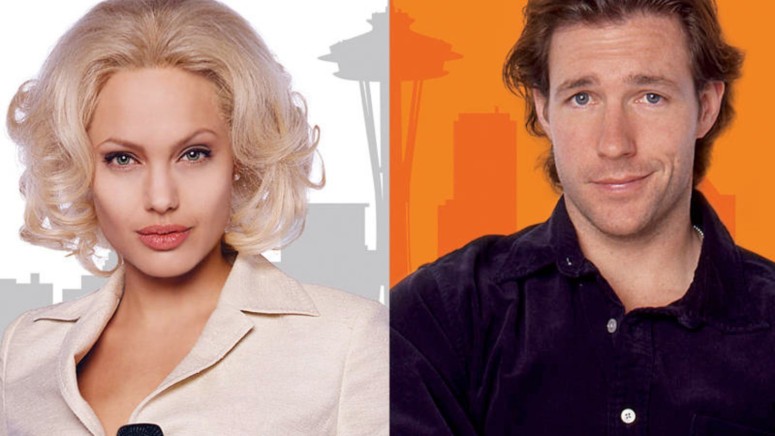
Angelina Jolie as Lanie Kerrigan
Jolie earned a Golden Raspberry nomination for this role, which feels deeply unfair in retrospect. Her performance is uneven in places — the comedic beats sometimes land awkwardly — but her emotional scenes are genuinely compelling.
When Lanie breaks down, when she lets Pete see the real person underneath the hairdo and the suits, Jolie brings real fragility to the screen. The Satisfaction scene, widely cited as the film’s highlight, shows a performer willing to look genuinely undone for the sake of the character’s truth.
Edward Burns as Pete Scanlon
Burns plays Pete as a grounded, no-nonsense counterweight to Lanie’s performed perfection. He is the film’s moral anchor. His presence is steady rather than flashy.
The chemistry between Burns and Jolie is mature rather than sparkling. Their romance builds through understanding rather than attraction alone, and that choice serves the film’s themes well.
Tony Shalhoub as Prophet Jack
Shalhoub appears in only a handful of scenes, but he dominates every one. His Jack is otherworldly without being absurd — a man who genuinely seems to exist outside the systems of ambition and approval that trap every other character.
His brief screen time carries enormous narrative weight, which is a testament to Shalhoub’s ability to create presence with very little material.
Stockard Channing as Deborah Connors
Channing plays the role of Lanie’s idol and cautionary tale with quiet elegance. Deborah Connors is what Lanie would become if she stayed on her current path — celebrated, polished, and entirely alone.
Their shared scenes are among the most thematically rich in the film.
Christian Kane as Cal Cooper
Cal exists primarily as a foil. He is handsome, shallow, and unable to see Lanie as anything other than a supporting role in his own career narrative. Kane plays the role with a likable superficiality that makes the eventual break feel both inevitable and correct.
Full Cast Table
| Actor | Character | Role in Story |
|---|---|---|
| Angelina Jolie | Lanie Kerrigan | Protagonist, TV reporter |
| Edward Burns | Pete Scanlon | Cameraman, love interest |
| Tony Shalhoub | Prophet Jack | Homeless seer, catalyst |
| Stockard Channing | Deborah Connors | Celebrity interviewer, cautionary figure |
| Christian Kane | Cal Cooper | Baseball player boyfriend |
| James Gammon | Pat Kerrigan | Lanie’s estranged father |
| Melissa Errico | Andrea | Lanie’s colleague |
| Gregory Itzin | Dennis | Station boss |
Themes Explored in Life or Something Like It
Mortality as a Catalyst for Authenticity
The film’s central device — a death prophecy — is a shortcut to a question most people avoid: if you knew your time was limited, would you still live the same way?
Lanie’s answer, arrived at through panic and then peace, is no. The film argues that most of us are already wasting the time we have. Jack’s prophecy just makes that visible.
Ambition vs. Meaning
Lanie’s career is not presented as inherently wrong. Ambition is not the villain. The villain is ambition that crowds out everything else — relationships, self-knowledge, and the ability to be present.
The New York job becomes the film’s symbol for this distinction. Turning it down is not defeat. It is clarification.
Love That Doesn’t Perform
The Lanie-Pete romance is deliberately low-key. There is no sweeping kiss in the rain, no airport chase, no grand declaration. Their connection grows through honesty rather than gesture.
This is an unusual choice for a rom-com, and the film is more interesting for it.
The Illusion of a Perfect Life
Lanie’s “perfect life” is revealed, piece by piece, to be a construction for other people. Her boyfriend sees her as a trophy. Her boss sees her as an asset. Her idol is a cautionary tale.
The film asks a simple but uncomfortable question: whose eyes are you living your life for?
Why Is Life or Something Like It Trending Again in 2026?

The film had a disastrous 2002 release — $16.9 million box office against a $40 million budget, a 28% Rotten Tomatoes score, and a Razzie nomination for Jolie.
Yet in 2025, it quietly entered Netflix UK’s top 5 trending titles. In 2026, searches for the film have surged again.
The reasons are clear when you look at the cultural moment. Audiences today are burned out on hustle culture. The idea of a woman who walks away from the dream job, not because she failed, but because she grew — that resonates in a way it simply did not in 2002.
Social media conversations around “quiet quitting,” work-life meaning, and authenticity have given the film a second cultural life. Viewers who find it through Netflix are approaching it not as a flawed rom-com but as a surprisingly honest portrait of ambition’s cost.
It was perhaps ahead of its time. In 2026, it feels right on time.
Critical Reception Then vs. Now
| Time Period | Critical View | Audience Reception |
|---|---|---|
| 2002 (theatrical) | 28% RT, Metacritic 31/100 | CinemaScore B+, mixed |
| 2025 Netflix trending | Reassessment as “underrated gem” | Widely positive, emotionally resonant |
| 2026 | Cult status growing | Strong streaming audience |
Roger Ebert gave the film 2.5 out of 4 stars, noting Jolie’s appealing presence but the script’s tendency to lag behind its own themes. Critics broadly agreed the premise had potential the execution did not fully reach.
Audiences disagreed from the start — the CinemaScore of B+ told a different story than the critical consensus. Twenty-plus years later, the audience reading looks more accurate.
Filming Locations
Most of Life or Something Like It was shot on location in Seattle, Washington. The fictional TV station KQMO was based on the real KOMO-TV, with the logo altered for the production.
Several actual KOMO news personalities appear in cameos, including anchors Dan Lewis and Margo Myers, giving the Seattle setting an authentic texture.
Additional scenes were filmed in downtown Vancouver, British Columbia. The Pacific Northwest backdrop — all grey skies, steep hills, and waterfront views — gives the film a visual character that suits its contemplative tone.
The “I Can’t Get No Satisfaction” Scene
No review of Life or Something Like It is complete without discussing the Satisfaction scene. Lanie, covering a story about striking transit workers, abandons the script entirely. Slightly drunk and emotionally raw, she starts singing the Rolling Stones classic into the live microphone.
The workers join in. It becomes a spontaneous, absurd, joyful moment of collective honesty.
The scene is both the film’s comedic peak and its emotional turning point. It is the moment Lanie stops performing and starts existing. It is also the moment audiences decide whether they are in or out — and most who watch it are firmly in.
Should You Watch Life or Something Like It in 2026?
If you enjoy thoughtful romantic comedies that take their themes seriously, yes — absolutely.
It is not a perfect film. The character development rushes in places. The love story is occasionally too convenient. Some of the humor dates the film clearly to 2002.
But the core of the film — a person waking up to the fact that they have built a life around the wrong things — is timeless. The performances from Shalhoub and Channing are outstanding. And Jolie’s arc, when she commits to vulnerability, is more moving than its Razzie nomination suggests.
It is currently available on Netflix, Amazon Prime Video, Google Play, Apple TV, and YouTube.
Frequently Asked Questions (FAQs)
What is Life or Something Like It about?
It is about a Seattle TV reporter named Lanie Kerrigan who is told by a street prophet that she will die in seven days, and how that prophecy forces her to confront the emptiness of her carefully built life.
Does Lanie die at the end of Life or Something Like It?
No. Lanie survives. She is shot by a stray bullet but lives, and the film suggests Jack’s death prophecy referred to the death of her false, performative self rather than her physical death.
Who plays the prophet in Life or Something Like It?
Tony Shalhoub plays Prophet Jack, the homeless seer who delivers the death prophecy to Lanie. His performance is widely considered one of the film’s strongest elements.
Is Life or Something Like It based on a true story?
No. The film is based on a fictional screenplay and is not inspired by or adapted from any real events or person’s life.
What is the Rotten Tomatoes score for Life or Something Like It?
Critics gave it 28% on Rotten Tomatoes. The audience CinemaScore was B+, and its reputation has significantly improved since its 2002 release.
Where was Life or Something Like It filmed?
The majority of filming took place in Seattle, Washington, with additional scenes shot in downtown Vancouver, British Columbia. The fictional TV station was based on Seattle’s real KOMO-TV.
Why is Life or Something Like It trending again in 2026?
It re-entered Netflix UK’s top 5 trending titles in 2025 and has maintained viewer interest into 2026, driven by nostalgia, its themes of authenticity over ambition, and a growing reassessment of early-2000s films.
Does Lanie take the New York job in the end?
No. Lanie turns down the AM USA Morning Show position in New York and chooses to stay in Seattle, in a life grounded in genuine connection rather than career achievement.
Are Lanie and Pete together at the end?
The film strongly implies they are building a relationship. The final scene shows them together at a baseball game with Pete’s son Tommy — quiet, happy, and real, without a dramatic romantic declaration.
Is Life or Something Like It worth watching in 2026?
Yes, especially if you enjoy romantic comedies with genuine thematic weight. Its exploration of ambition, mortality, and authenticity feels more relevant today than it did in 2002.
Conclusion
Life or Something Like It is a film that deserved more credit than it received in 2002, and the culture is slowly catching up with it. The story of Lanie Kerrigan — a woman who had to be told she might die before she could figure out how to live — is not groundbreaking in concept, but it is handled with more emotional honesty than the Razzie nomination and the 28% RT score suggest.
Angelina Jolie brings genuine fragility to a role that requires her to dismantle the very image she was famous for. Edward Burns provides a grounded, believable love interest. Tony Shalhoub’s Prophet Jack lingers long after the credits roll. And the film’s ending, quiet and unresolved in all the right ways, sticks with you because it trusts the audience to feel the weight of what Lanie chooses.
In 2026, with audiences increasingly questioning what success actually looks like, Life or Something Like It feels less like a missed opportunity and more like a film that simply had to wait for the right moment. That moment has arrived. It is worth your time.