Why Do Cats Lay on You? 7 Surprising Reasons 2026
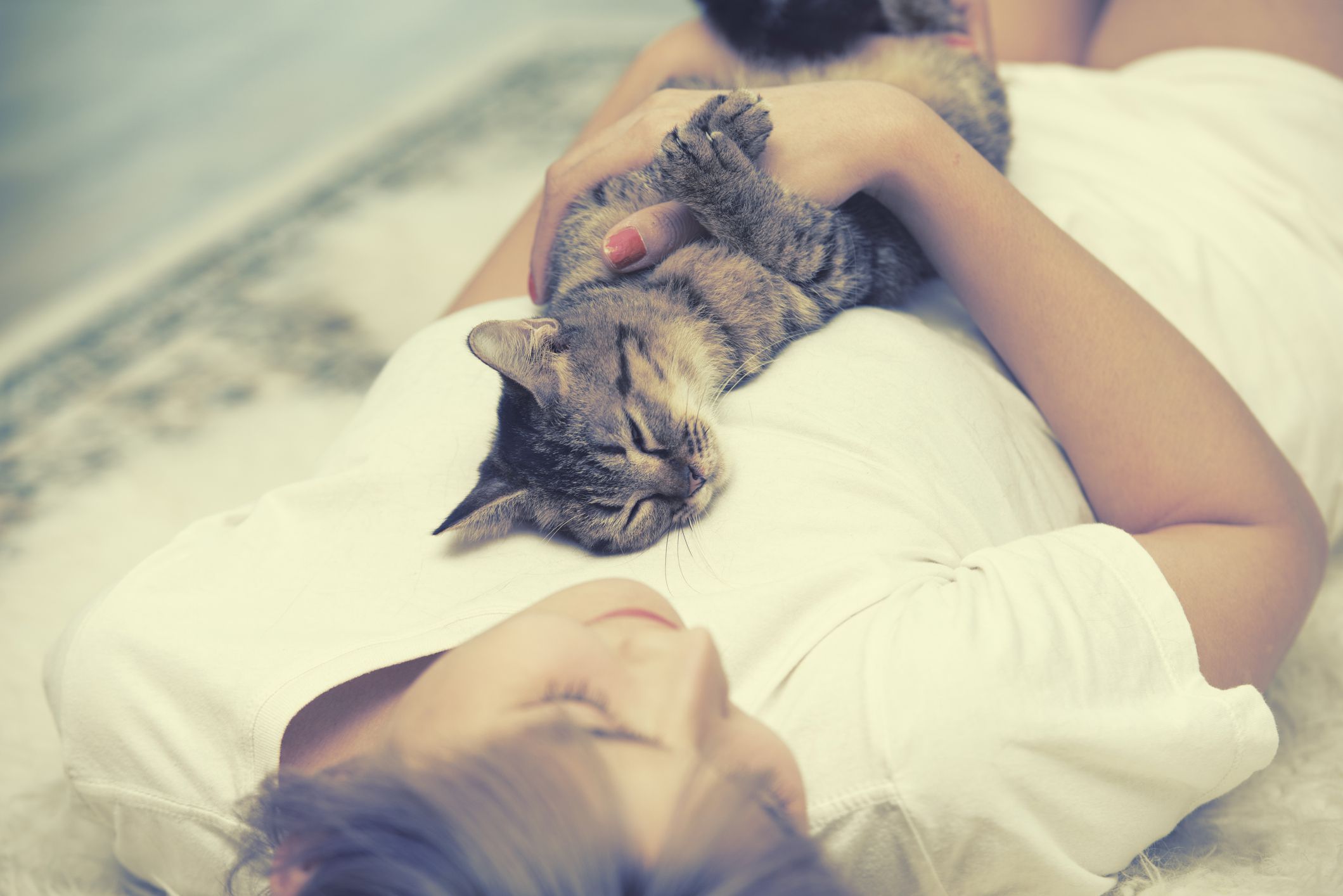
Why do cats lay on you is a question almost every cat owner has asked at least once. You finally find a comfortable position on the couch or settle into bed, and within minutes your cat materializes out of nowhere to plant itself directly on your chest, legs, or face.
It feels random, even a little inconsiderate — but there is actually a rich set of instinctual, emotional, and biological reasons behind this behavior. Understanding why cats choose you as their preferred napping spot will deepen your bond and give you a whole new appreciation for what looks like simple feline laziness.
The Science Behind Why Cats Lay on You
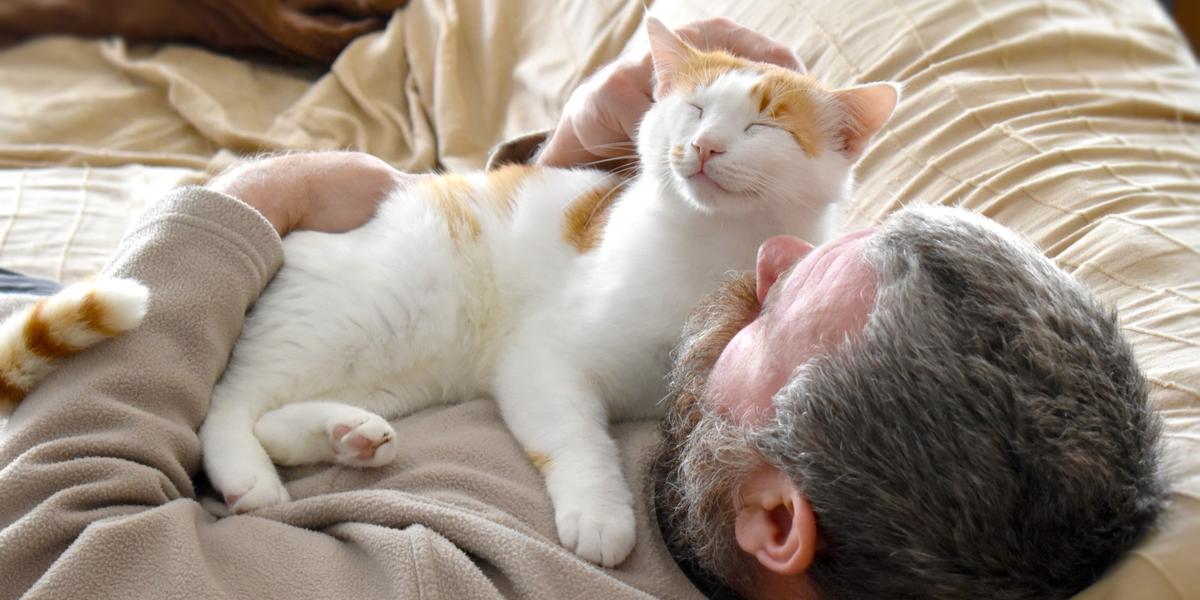
Cats are not random in their behavior. Every choice they make — including where they sleep — is driven by instinct, trust, and sensory cues.
Your body provides a combination of warmth, familiar scent, rhythmic sound, and emotional safety that is almost impossible for a cat to resist. When a cat lays on you, it is making a deliberate decision rooted in thousands of years of feline evolution.
Understanding the specific reasons behind this behavior helps you read your cat’s body language far more accurately.
Reason 1: Your Body Heat Is Irresistible
Cats are naturally heat-seeking animals. A cat’s normal body temperature sits around 101 to 102 degrees Fahrenheit, which is higher than a human’s. To maintain that warmth without burning extra energy, cats constantly seek out external heat sources.
Your body generates a steady, reliable warmth that no heated pet bed can quite replicate. Chest, stomach, and lap areas are especially warm and become prime real estate for a cat looking to conserve energy during a nap.
This is also why you will find cats draped over laptops, stretched out in sunny window spots, or curled next to radiators. When they choose you over all of those options, it means your warmth comes packaged with something those other sources cannot offer — your presence.
Hairless breeds like the Sphynx are especially drawn to human body heat because they lack the insulating fur coat that other cats rely on. But even thick-coated breeds will seek you out simply because warmth plus companionship is the ultimate combination.
Reason 2: They Trust You Completely
Sleep is the most vulnerable state any animal can be in. In the wild, a sleeping animal cannot defend itself or run from a predator. Cats carry this instinctual awareness even in the safety of a domestic home.
When a cat chooses to sleep on you, it is making a powerful statement: you are the safest place in their world. Cat behavior expert Pam Johnson-Bennett explains that because cats are animals who are both predator and prey, they want to position themselves in the safest possible location — and for a domestic cat, that location is often their trusted human.
This level of trust is not given lightly. Cats are notoriously selective about who they feel safe around. If your cat regularly lays on you, you have earned a deep level of feline respect that should genuinely be considered a compliment.
Kittens begin this behavior from the very first weeks of life. They pile onto their mother and littermates for warmth and safety. That instinct to sleep in close contact with trusted companions does not disappear as they grow into adults — it simply transfers to you.
Reason 3: They Are Marking You as Theirs
Cats are territorial creatures who communicate ownership through scent. They have scent glands located on their cheeks, chin, forehead, paws, and flanks. When a cat sleeps on you, those glands deposit pheromones directly onto your body and clothing.
This is not aggressive territorial behavior. It is intimate and affectionate in the cat world. By leaving their scent on you, your cat is essentially announcing to any other animal that you belong to their trusted circle.
It also creates a shared scent profile — a comforting familiarity that makes your cat feel more secure around you. The more your scent and their scent blend together, the more relaxed and bonded your cat becomes.
This is also why cats love sleeping on your worn clothing when you are not at home. Your scent alone is enough to trigger a sense of safety and comfort, even in your absence.
Reason 4: Your Heartbeat and Breathing Calm Them
Cats are highly attuned to rhythmic sounds. Your steady heartbeat and slow, regular breathing during rest have a measurable calming effect on your cat — similar to the comfort a kitten feels sleeping against its mother.
Veterinarian Dr. Zay Satchu, Chief Veterinary Officer at Bond Vet in NYC, confirms that cats likely find significant benefit in the very slow and calm respiratory patterns of their humans at rest. The consistent rhythm signals safety and stability to a cat’s nervous system.
This is why many cats are drawn specifically to sleeping on your chest. The combination of heartbeat, breathing, and warmth creates an environment that mimics the security of early kittenhood.
Cats who sleep near your head often enjoy a similar effect — your head releases significant body heat and moves very little during sleep, making it a stable and warm perch that also happens to be close to the familiar sounds of your breathing.
Reason 5: It Is Their Way of Showing Love
The popular idea that cats are aloof and unaffectionate is simply not true for most domestic cats. Laying on you is one of the clearest expressions of affection a cat can show.
Cats engage in many affectionate behaviors — rubbing against your legs, slow blinking, following you from room to room, and bringing you gifts. Choosing to sleep on your body is among the most intimate of these expressions.
Breeds known for strong human attachment — like Ragdolls, Maine Coons, Siamese, and Burmese — tend to be especially inclined toward this behavior. But cats of any breed or background can develop a deep enough bond with their owner to seek this closeness regularly.
Some cat behaviorists describe sleeping on their owner as a cat’s equivalent of a hug. It requires physical closeness, trust, and a genuine preference for your company over every other option available in the home.
Reason 6: The Healing Power of Purring — A Bonus for You
Here is the reason that surprises most cat owners: when your cat lays on you and purrs, they may actually be delivering measurable health benefits to your body.
Research has shown that a cat’s purr operates at frequencies between 25 and 150 hertz. Scientific studies have found that vibrations in the 25 to 50 Hz range specifically promote bone growth and healing, reduce inflammation, improve circulation, and stimulate tissue repair.
According to research cited by Inspira Health, these low-frequency vibrations can help regulate the autonomic nervous system, lower cortisol levels, reduce blood pressure, and promote a sense of calm and emotional well-being.
Petting a cat or simply being near one while it purrs triggers the release of oxytocin — the bonding hormone associated with happiness and stress reduction. Studies from 2009 and beyond have associated cat ownership with reduced stress levels and even a decreased risk of cardiovascular events.
So when your cat lays on you purring, you are not just a warm mattress — you are both engaged in a form of mutual healing that science is only beginning to fully understand.
| Purr Frequency | Documented Benefit |
|---|---|
| 25 Hz | Promotes bone growth and fracture healing |
| 50 Hz | Supports bone density and repair |
| 25–50 Hz | Reduces inflammation, aids tissue repair |
| 25–150 Hz | Lowers stress, blood pressure, cortisol |
| Sustained contact | Triggers oxytocin release in humans |
Reason 7: You Make Them Feel Emotionally Secure
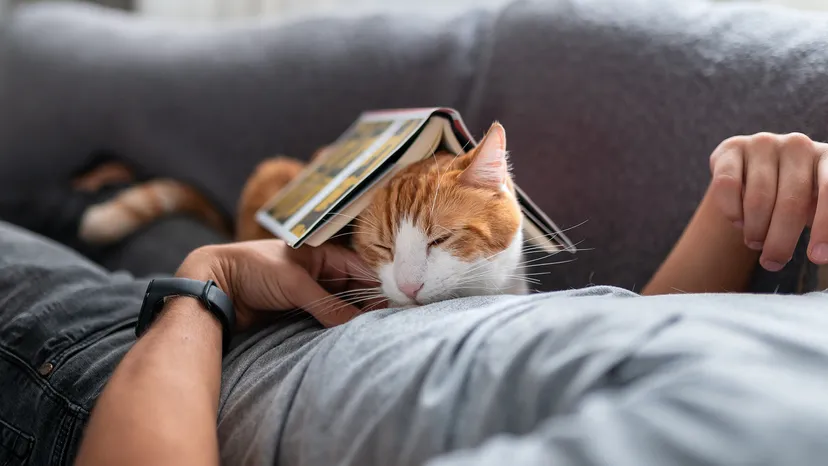
Beyond physical warmth and territorial instincts, cats experience genuine emotional attachment to their primary caregivers. Researchers have found that cats show clear signs of attachment behavior — including seeking proximity to their owner, using them as a safe base during stress, and showing distress when separated.
When your cat lays on you, they are not just comfortable. They are emotionally grounded by your presence. Studies comparing cats from home environments to shelter environments found that cats with a familiar caregiver showed significantly more attachment behaviors, including increased physical contact following periods of separation.
For anxious or sensitive cats, laying on their trusted human can serve as a genuine form of emotional regulation. Your calm, familiar presence helps their nervous system settle in ways that a blanket, a cat bed, or even another cat cannot fully replicate.
This emotional dimension is what separates a cat choosing your lap from a cat choosing a sunny windowsill. Both are warm. Only one feels safe.
Where Cats Choose to Lay on You and What It Means
Cats are specific about where they position themselves on your body. Each spot carries its own meaning based on warmth, accessibility, and what the cat is seeking in that moment.
| Position | What It Likely Means |
|---|---|
| On your chest | Drawn to your heartbeat and breathing; deep trust and affection |
| On your lap | Seeking warmth, petting, and comfortable closeness |
| On your feet | Wants connection but values an easy escape route |
| Near your head | Enjoys head warmth and hair scent; feels very safe |
| On your stomach | Warmth-seeking; comfortable with gentle movement |
| Between your legs | Nest-like security; feels cocooned and protected |
| On your neck | Very close to heartbeat and breathing; high trust |
Why Your Cat Might Suddenly Start Laying on You More
A sudden increase in clingy or lap-seeking behavior is worth paying attention to. It does not always mean something is wrong — but it can.
Cats sometimes increase physical contact when they are stressed. A new pet, a move, a change in routine, or loud construction nearby can all make a cat seek more reassurance from their person. More contact equals more comfort during uncertainty.
However, sudden changes in sleeping behavior can also signal illness. Cat behavior expert Mikel Delgado warns that if a cat who has never slept on their owner suddenly begins doing so, it is worth watching for other signs of illness or discomfort. A vet visit for a wellness check is always a reasonable response to unexplained behavioral changes.
If your cat seems more lethargic than usual, is eating less, or seems to be seeking your warmth specifically around areas of their body that might indicate pain, contact your veterinarian.
Why Some Cats Never Lay on Their Owners
Not every cat is a lap cat, and that is completely normal. Personality plays a major role in how cats express affection. Independent breeds or cats who were not well-socialized during the first 12 weeks of life may prefer to show love in other ways — following you around, slow blinking from across the room, or sleeping nearby rather than directly on you.
A cat that never lays on you is not an unloved owner. It simply means your cat expresses trust and affection differently. Respecting your individual cat’s comfort zone is far more important than trying to force cuddling behavior.
Creating a safe, enriched environment with consistent routines, positive interactions, and plenty of play will naturally increase the trust your cat feels — and may eventually lead to more physical closeness on their own terms.
Cat Breeds Most Likely to Lay on You
While any cat can become a devoted lap sitter, certain breeds are genetically predisposed toward close human contact. Understanding breed tendencies can help you choose a cat that matches your preference for physical affection.
| Breed | Lap Cat Tendency | Reason |
|---|---|---|
| Ragdoll | Very high | Bred for docility and human attachment |
| Siamese | High | Highly social, vocal, and people-oriented |
| Maine Coon | High | Affectionate and dog-like in loyalty |
| Burmese | Very high | Extremely people-dependent |
| Sphynx | Very high | Seeks human warmth to compensate for lack of fur |
| Scottish Fold | High | Calm, affectionate, and bond-heavy |
| Persian | Moderate to high | Gentle and prefer calm, close environments |
Mixed-breed and rescue cats are equally capable of becoming devoted lap cats, especially those who were socialized early and adopted into a stable, loving home.
Should You Let Your Cat Sleep on You?
This is ultimately a personal decision with real pros and cons worth considering. Many cat owners find the experience deeply comforting — the warmth, the sound of purring, and the sense of companionship all contribute to better relaxation and emotional well-being.
Petting your cat releases oxytocin in both of you. Studies have shown that time spent with a purring cat lowers cortisol, reduces stress, and may even contribute to heart health over time. The bonding opportunity of co-sleeping is real and meaningful.
However, there are genuine practical considerations. Cats are crepuscular — most active at dawn and dusk — which means they may disturb your sleep by moving, jumping, or demanding attention during the night. Larger cats sleeping on your chest or head may also cause physical discomfort over time.
Hygiene is also worth considering. Outdoor cats can bring in parasites, bacteria, or debris from outside. Indoor cats may track litter into bed. Regular vet checkups, parasite prevention, and clean bedding manage most of these risks effectively.
Cats should never co-sleep with children under five years old. The risks of accidental suffocation and nighttime scratching if the cat is startled are too significant for that age group.
How to Encourage Your Cat to Lay on You
If you want your cat to choose you as their napping spot more often, there are several approaches that actually work.
Move slowly and predictably around your cat. Sudden movements, loud voices, and erratic schedules make cats feel unsafe. A calm, consistent environment tells your cat that you are a reliable and safe presence.
Spend time in close proximity without demanding interaction. Sitting or lying near your cat while reading or watching TV allows them to approach on their own terms — which is always more effective than trying to pick them up.
Use soft blankets on your lap. The added warmth and texture make your lap even more inviting. Cats gravitate toward softness and warmth together.
Regular positive interaction — play sessions with wand toys, gentle grooming if your cat enjoys it, and offering treats — builds the trust that makes physical closeness feel safe and desirable for your cat.
How to Discourage Your Cat from Laying on You
If you love your cat but need your personal space back, setting limits is completely reasonable and does not damage your relationship.
Consistency is the key. If you want your cat off the bed at night, provide a high-quality alternative sleep spot — preferably a heated cat bed placed at a similar height and near your usual location. Do not reward nighttime disruptions by engaging with your cat, as this teaches them that waking you results in attention.
Avoid pushing your cat away harshly. Instead, gently redirect them to their designated spot each time they climb onto you where you do not want them. Positive reinforcement for using their own bed — using treats and calm praise — makes the transition much smoother.
Enrichment during the day reduces nighttime restlessness. A tired, stimulated cat is far less likely to treat your sleeping body as a playground at 3 a.m.
The Cat-Human Bond: What the Science Says
The relationship between cats and humans stretches back 10,000 to 12,000 years to the agricultural settlements of the Middle East. As humans began storing grain, rodents gathered — and wildcats followed the rodents. A partnership of convenience evolved into one of the most enduring bonds in human history.
Modern research confirms that this bond is genuine and bidirectional. Cats form real attachment relationships with their caregivers, not just transactional ones. They recognize their owner’s voice, adjust their sleep schedules to maximize time with their person, and show measurable signs of distress during prolonged separation.
When your cat lays on you, they are participating in a 10,000-year-old relationship built on mutual benefit, trust, and genuine affection. That is worth appreciating every time it happens — even at 2 a.m. when their entire body weight is somehow centered on your bladder.
Common Myths About Cats Laying on You
Several popular ideas about this behavior turn out to be either exaggerated or simply false.
Myth: Cats only lay on you because they want something. Cats do sometimes use proximity to request food or attention, but regular sleeping on a human is consistently linked to trust, affection, and comfort — not purely manipulation.
Myth: If a cat lays on you, they own you. The territorial scent-marking involved in co-sleeping is a sign of affection, not dominance. Your cat is not controlling you — they are including you in their trusted inner circle.
Myth: Cats do not care about their owners. Research published by the Journal of Veterinary Behavior and multiple university studies have confirmed that cats form genuine attachment bonds with their caregivers, comparable in some ways to those formed by dogs.
Myth: Only certain cats do this. While personality and breed influence the tendency, virtually any cat can develop the habit of laying on their owner given enough trust, positive experience, and a comfortable environment.
Signs Your Cat’s Laying Behavior Is a Sign of Affection vs. Anxiety
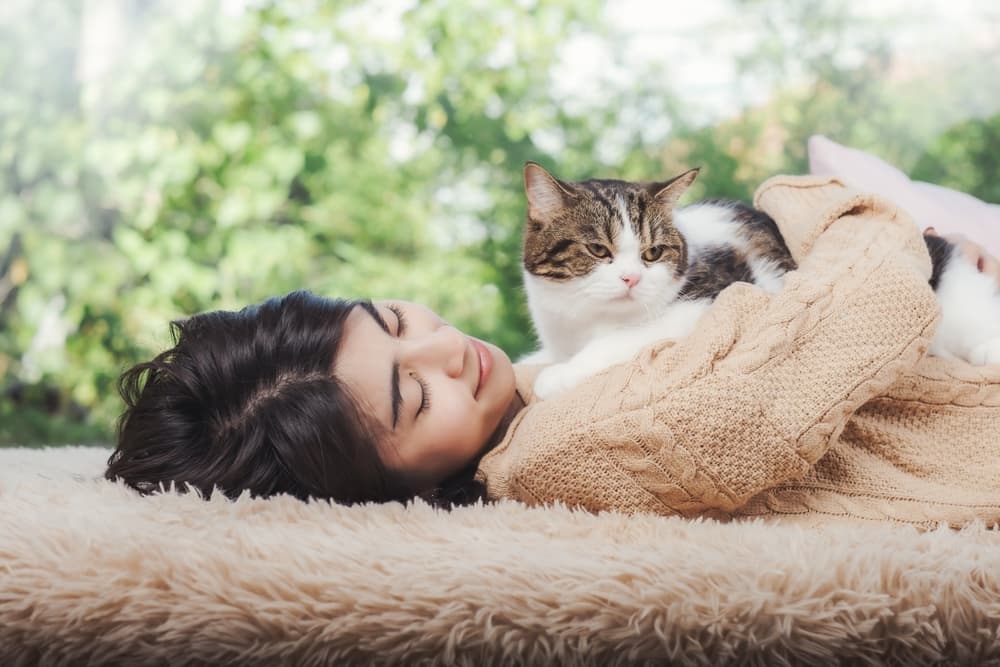
It is worth knowing the difference between a cat that lays on you from a place of security versus one that is seeking you out because they are anxious.
| Affectionate Behavior | Anxiety-Driven Behavior |
|---|---|
| Relaxed body, soft eyes | Tense muscles, wide eyes |
| Slow purring, kneading | Rapid, high-pitched purring |
| Chooses you among many options | Follows everywhere, cannot settle |
| Comfortable being set down | Distressed when separated even briefly |
| Normal eating and activity | Changes in appetite or grooming |
| Gradual, chosen approach | Sudden, clingy behavioral change |
If your cat’s behavior matches the right column consistently, a conversation with your vet or a certified feline behaviorist is a worthwhile step.
Frequently Asked Questions (FAQs)
Why do cats lay on you and purr at the same time?
When a cat lays on you and purrs, they are expressing complete contentment and trust. The purring also produces vibrations at frequencies scientifically associated with stress reduction and tissue healing in both cats and humans.
Why does my cat only lay on me and not other people in the house?
Cats form primary attachment bonds with one or two trusted individuals. Your cat has identified you as their safest and most preferred companion based on your interactions, scent, and the consistency of your presence.
Is it okay to move my cat when they are laying on me?
Yes, gently moving your cat will not damage your relationship. Cats understand context and will not hold occasional repositioning against you, especially if it is done calmly and followed by a brief gentle interaction.
Why does my cat lay on my chest specifically?
Your chest combines three of the most attractive features for a cat: significant body warmth, the rhythmic sound of your heartbeat, and the steady movement of your breathing, all of which provide a deeply calming sensory environment.
Why do cats lay on you when you are sick?
Cats are sensitive to changes in your body temperature, scent, and behavior. When you are ill, your body temperature rises and your routine changes, both of which may attract your cat’s attention and draw them closer to provide comfort and proximity.
Why does my cat suddenly want to lay on me when they never did before?
A sudden change in laying behavior can signal stress, anxiety, illness, or simply a deepening bond. Monitor for other behavioral or physical changes and consult your vet if the shift seems connected to lethargy or appetite changes.
Do cats lay on you to protect you?
Some cat behaviorists believe cats do exhibit a form of protective behavior toward trusted owners during sleep, staying alert to sounds and returning after investigating disturbances. It is a genuine expression of their care, not just instinct.
Why does my cat lay on my feet instead of my lap?
Feet offer warmth and connection while also giving your cat an easy exit route. Cats who prefer feet are often slightly more independent but still want to feel connected to you during rest.
Can cats sense emotions and lay on you to help?
Research and extensive anecdotal evidence support the idea that cats are sensitive to human emotional states. Many cats increase physical contact when their owner is sad, stressed, or unwell, suggesting a genuine empathetic response.
Why does my cat knead me while laying on me?
Kneading is a behavior rooted in kittenhood when kittens push against their mother to stimulate milk flow. Adult cats continue to knead when they feel completely safe, content, and emotionally at ease — all of which you provide.
Conclusion
Why do cats lay on you comes down to seven core reasons: your body heat, the trust they place in you, their instinct to mark you with their scent, the calming rhythm of your heartbeat and breathing, their genuine affection for you, the surprising healing properties of their purr, and the deep emotional security that your presence provides.
None of these reasons are random and none of them are selfish — they are all expressions of a bond that your cat has chosen to form with you specifically.
In 2026, science continues to confirm what cat owners have always sensed intuitively: when your cat lays on you, something real and meaningful is happening between two species who have been finding comfort in each other for thousands of years. The next time your cat commandeers your lap, take it as the highest compliment a cat can give.