How Modern Conveyor Technology Is Changing Material Handling
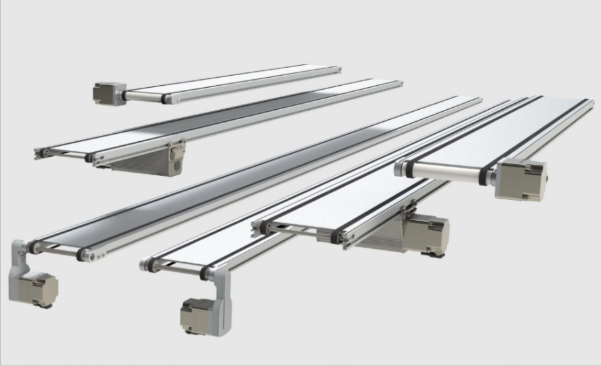
Material handling has become one of the determinants of the efficiency of modern industries. With the increased automation and time-sensitivity of manufacturing, logistics, and assembly processes, the traditional method of transporting materials is no longer sufficient. Businesses now require faster, more reliable, and flexible systems that can meet the changing production requirements.
This is where modern conveyor technology plays a major part. The current systems are much more than mere transport. They are designed with modular structures, engineered with accuracy, and can be easily integrated into automated lines. From belt and roller conveyors to advanced transfer and handling solutions, these systems help improve product flow, reduce manual effort, and increase overall efficiency.
To understand this shift in more detail, it is important to look at the key elements driving the transformation of modern conveyor technology in material handling.
1. Reduce Manual Material Handling Through Continuous Transport Systems
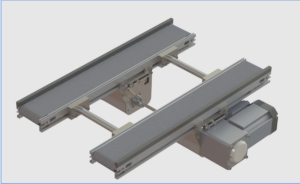
Among the most visible developments in modern industries is the shift to continuous transport systems, which minimize manual efforts in the transfer of goods. A conveyor helps in the continuous movement of materials among varying stages of production without the constant intervention of human hands. This implies that workers do not have to be bound to the repetitive tasks of transport on the shop floor.
This leads to an increase in efficiency of operations as the movement of materials is facilitated by controlled mechanical systems. It also leads to better consistency in production since it is no longer influenced by individual speed or availability. This contributes to minimizing delays over time and enhancing process coordination.
Also, set transportation routes to minimize transfer errors. There is predictability in the movement of materials, hence reducing the chances of misplacement. This leads to more reliable and stable production outcomes.
2. Increase Production Flexibility with Modular Conveyor Design
The contemporary production facilities demand systems to adapt fast to the changing layout and operational demands. Modular conveyor design helps in this need by enabling the components to be reconfigured without significant structural modifications. This makes it easier for industries to adapt their production lines when demand or processes change.
Flexibility is particularly necessary in plants that process various product types or frequent production modifications. Rather than having to re-engineer complete systems, operators can adjust parts of the conveyor configuration to suit new needs. It minimizes downtime and enables production during transitions with minimal disruption.
Moreover, the modular systems enhance the long-term scalability as they can be expanded with the increase in operations. New sections or elements may be added to the existing setups without interfering with the existing workflow. This does not make material handling systems obsolete, even as the production requirements change.
3. Improve Material Flow Precision Through Controlled Conveyor Movement
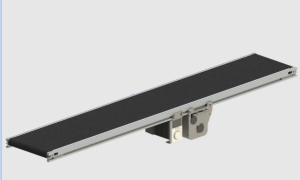
Material movement accuracy is critical in ensuring efficiency in production systems. Guided conveyor flow guarantees that goods travel at steady speeds and arrive at the proper destination without losing their path. This degree of accuracy aids in ensuring that various stages of production are synchronized.
Furthermore, controlled movement minimizes the bottlenecks that usually arise due to the accumulation of materials at certain stages of the working process. Conveyors achieve a balanced flow within the system by controlling speed and timing. Such a balance can avoid unnecessary delays, as well as enhance productivity.
Over time, better accuracy leads to better control over quality because materials are unlikely to be lost or broken during transfer. This is more so in the industries where even slight handling mistakes can influence the quality of the final product. Consequently, regulated conveyor movement is an important attribute in ensuring operational uniformity.
4. Enable Cleanroom and Sensitive Applications with Specialized Conveyor Engineering
Some industries deal with materials where even a slight contamination or disturbance can influence the results. This has been transformed by modern conveyor engineering, which involves the use of controlled transport systems that control the movement of materials in cleanrooms and sensitive production zones. This transforms the open and manual transfer of material to enclosed and predictable material movement.
In such systems, materials are transported in specified routes, and the handling conditions remain constant. This enhances uniformity in the processing and minimizes undesirable exposure during transfer. Consequently, the flow of materials is more managed and predictable between production steps.
This also serves industries like electronics, pharmaceuticals, and precision manufacturing. Materials remain stable when they are transported between processes. This renders material handling more accurate in settings that require accuracy and control.
5. Connect Manufacturing Processes Through Integrated Automation Systems
Modern manufacturing no longer relies on isolated machines but instead operates through connected systems that communicate with each other. Integrated conveyor systems play a central role in linking different stages of production into one continuous workflow. This connection improves coordination and reduces delays between processes.
As automation becomes more advanced, conveyors are increasingly synchronized with robotics, sensors, and control systems. This allows real-time adjustments based on production requirements and system feedback. Consequently, material handling becomes more responsive and aligned with overall operational demand.
In addition, integration improves visibility across the entire production process since data can be collected and analyzed from multiple points. This helps operators make informed decisions and optimize workflow performance. Over time, it leads to more efficient and coordinated manufacturing systems.
Conclusion
Modern conveyor systems have become a key part of improving how industries manage material flow within production environments. They support more structured operations by ensuring smoother coordination between different stages of manufacturing. As a result, material movement becomes more stable and aligned with operational needs.
With continued advancements in industrial automation, their importance will keep increasing. They help industries move toward more efficient and adaptable production setups where consistency, control, and responsiveness play a central role in overall performance.