Why Are My Dog’s Eyes Red? Causes & Treatment Guide 2026
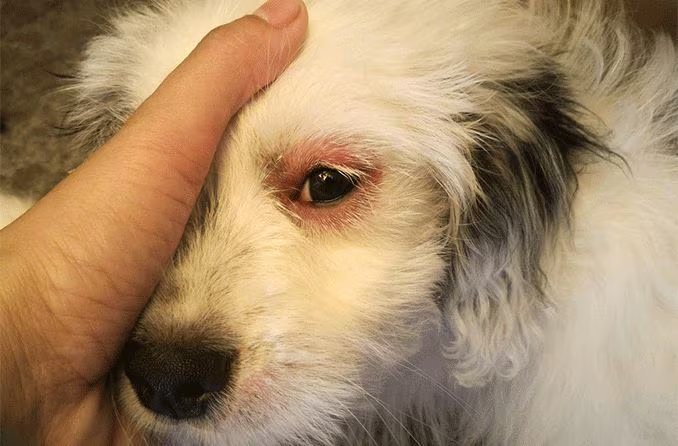
Why are my dog’s eyes red? This is one of the most common questions dog owners ask — and for good reason.
Red eyes in dogs can range from a simple irritation to a sign of something that needs urgent vet care.
Understanding the difference can protect your dog’s vision and comfort.
Whether it is one eye or both, mild or severe, this complete breakdown will help you act fast and make the right call.
What Does It Mean When a Dog’s Eyes Are Red?
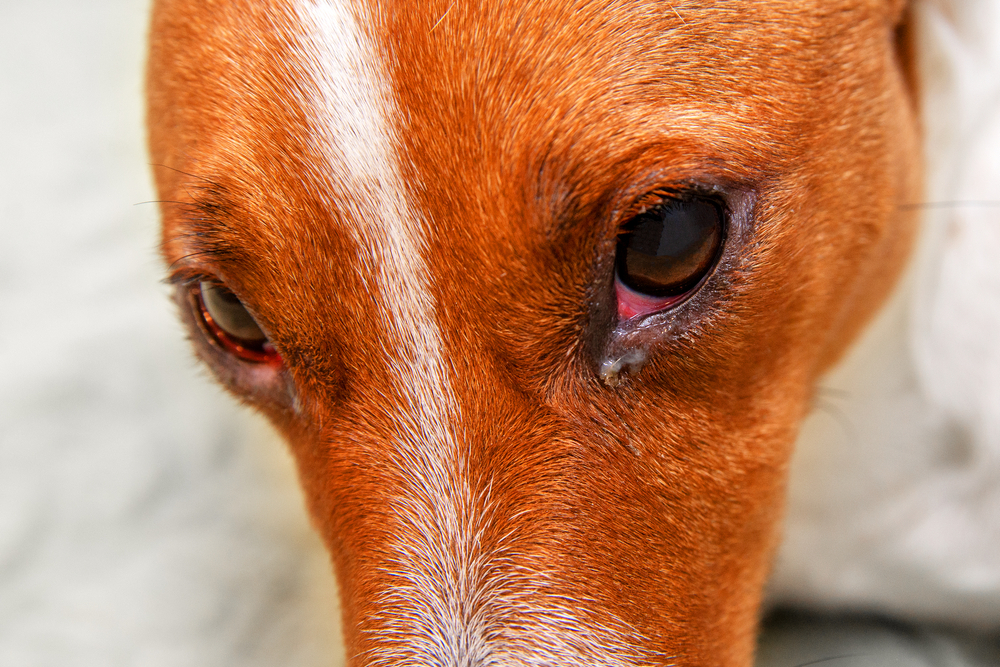
Red eyes in dogs happen when blood vessels in the eye become inflamed or irritated and grow more visible. The medical term for this is conjunctival hyperemia, meaning increased blood flow to the eye tissues.
The redness can appear in the white part of the eye (sclera), the inner lining of the eyelids (conjunctiva), or the tissue around the eye. It may affect one eye or both eyes depending on the cause.
Not every case is an emergency. Some causes are mild and clear on their own. Others need immediate veterinary attention to prevent permanent vision loss.
Common Causes of Red Eyes in Dogs
There are over a dozen conditions that can make a dog’s eyes appear red. Here are the most important ones, explained clearly.
Allergies (Environmental & Seasonal)
Allergies are the most common reason why a dog’s eyes turn red. Dogs react to pollen, dust, mold, dander, and smoke — the same triggers that affect humans.
Both eyes are usually affected. You may also notice your dog sneezing, rubbing their face on the carpet, or having watery discharge. Seasonal allergies flare in spring and fall, while indoor allergens cause year-round symptoms.
Conjunctivitis (Pink Eye)
Conjunctivitis is inflammation of the tissue lining the inner eyelids. It causes redness, swelling, discharge, and crust around the eyes.
It can be caused by bacteria, viruses, allergies, or irritants. Some forms are contagious between dogs. Your vet will identify the cause and prescribe the right treatment, which may include antibiotic or steroid eye drops.
Dry Eye (Keratoconjunctivitis Sicca / KCS)
Dry eye happens when the tear glands stop producing enough moisture to keep the eye surface lubricated. The eye becomes chronically red, irritated, and prone to infection.
Common symptoms include thick yellowish discharge, frequent blinking, and sensitivity to light. It is more common in Cavalier King Charles Spaniels, English Bulldogs, West Highland White Terriers, and Cocker Spaniels.
Corneal Ulcer
A corneal ulcer is an open sore on the transparent front surface of the eye. It is often caused by a scratch from grass, a branch, or a cat’s claw.
The eye will look red and watery. Your dog will squint and may paw at the eye. Superficial ulcers heal in a few days with antibiotic drops. Deep ulcers can rupture the eye and require urgent surgery.
Glaucoma
Glaucoma is one of the most serious causes of red eyes in dogs. It is caused by a dangerous buildup of fluid pressure inside the eye that damages the optic nerve.
Signs include intense redness, a cloudy or bluish-white cornea, dilated pupils, and obvious pain. It is a veterinary emergency. Without fast treatment, glaucoma causes permanent blindness within hours or days.
Uveitis (Internal Eye Inflammation)
Uveitis is inflammation of the interior structures of the eye — the iris, ciliary body, and choroid. It makes the eye appear red, often with a cloudy or bluish tint.
It is frequently linked to underlying systemic disease such as infections, cancer, or immune disorders. Untreated uveitis leads to glaucoma, cataracts, lens dislocation, and blindness.
Cherry Eye
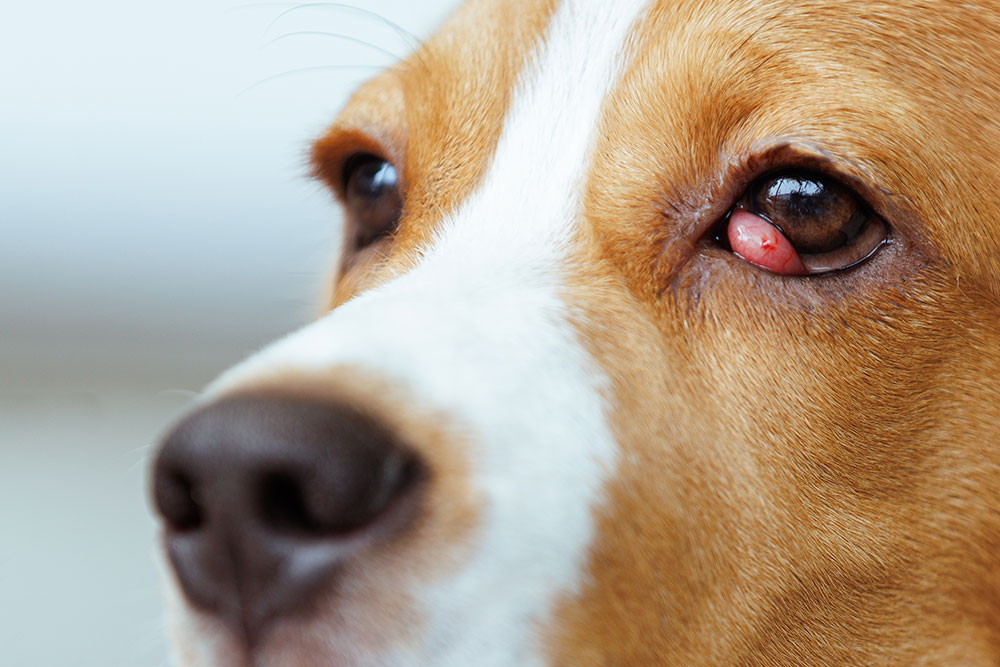
Cherry eye occurs when the gland of the third eyelid (nictitating membrane) becomes inflamed and protrudes. It appears as a small red or pink fleshy lump in the inner corner of the eye.
Mild cases may respond to anti-inflammatory drops. Most cases require corrective surgery to reposition the gland. Breeds like Bulldogs, Cocker Spaniels, Beagles, and Shih Tzus are most commonly affected.
Foreign Body or Trauma
A grass seed, speck of sand, eyelash, or tiny insect trapped under the eyelid causes immediate redness, tearing, and blinking. Outdoor and hunting dogs face the highest risk.
Trauma from rough play, another animal, or running through brush can also cause sudden severe redness. Do not try to remove a foreign object at home. Let the vet flush or extract it safely.
Environmental Irritants
Perfumes, cleaning sprays, cigarette smoke, car exhaust, and even dust can irritate your dog’s eyes and cause temporary redness. These cases often resolve once the irritant is removed.
If your dog is exposed to household chemicals or has been near fumes, rinse the eye gently with sterile saline and contact your vet if redness does not clear within a few hours.
Subconjunctival Hemorrhage (Eye Bleeding)
This is bleeding under the clear membrane covering the white of the eye. It looks alarming — a bright red pool of blood — but is sometimes less dangerous than it appears.
It can result from trauma, high blood pressure, a blood clotting disorder, or strenuous activity like coughing. Always have your vet assess it, as the underlying cause matters greatly.
High Blood Pressure (Hypertension)
Systemic high blood pressure causes changes in the blood vessels of the eyes, leading to redness and sometimes retinal detachment. It is more common in older dogs.
It is often associated with kidney disease, Cushing’s disease, or diabetes. Treatment focuses on managing the underlying condition and may include blood pressure medication.
Entropion and Ectropion
Entropion is when the eyelid rolls inward, causing eyelashes to rub against the cornea constantly. Ectropion is when the eyelid droops outward, exposing the inner eye surface to dust and debris.
Both conditions cause chronic irritation and redness. Surgical correction is usually required. Chow Chows, Shar-Peis, and Bloodhounds are prone to these structural eyelid issues.
Red Eye Causes at a Glance
| Condition | Eyes Affected | Urgency Level | Common Treatment |
|---|---|---|---|
| Allergies | Both | Low | Antihistamines, steroid drops |
| Conjunctivitis | One or both | Moderate | Antibiotic/steroid drops |
| Dry Eye (KCS) | Both | Moderate | Cyclosporine or tacrolimus drops |
| Corneal Ulcer | Usually one | High | Antibiotic drops, possible surgery |
| Glaucoma | Usually one | Emergency | Pressure-lowering drops, surgery |
| Uveitis | One or both | High | Anti-inflammatory meds, systemic treatment |
| Cherry Eye | Usually one | Moderate | Anti-inflammatory drops or surgery |
| Foreign Body | Usually one | High | Vet flush or extraction |
| Environmental Irritants | Both | Low | Remove irritant, rinse with saline |
| Subconjunctival Hemorrhage | Usually one | Moderate–High | Treat underlying cause |
| High Blood Pressure | Both | High | Blood pressure medication |
| Entropion / Ectropion | One or both | Moderate | Surgery |
Warning Signs That Require Emergency Vet Care
Some symptoms alongside red eyes should send you to an emergency vet right away. Do not wait until morning if you notice any of the following.
Go to the vet immediately if your dog has:
- Intense redness that does not improve within a few hours
- Cloudy, blue, or white appearance of the cornea
- Thick green or yellow discharge
- Visible swelling of the eye or eyelid
- Your dog keeps the eye closed and will not open it
- Pawing repeatedly at the eye or rubbing the face aggressively
- Signs of pain when you touch near the eye
- Visible blood inside the eye
- A red fleshy mass in the corner of the eye
- Sudden bumping into objects (possible vision loss)
Eye conditions can worsen within hours, especially glaucoma, corneal ulcers, and trauma. Fast action protects your dog’s vision.
When Can You Wait and Monitor at Home?
Mild cases of red eyes may be watched for 24 to 48 hours if your dog shows very specific signs. You can wait if:
- The redness is minor and appeared after possible exposure to dust or pollen
- Both eyes are mildly affected and your dog is otherwise acting normally
- There is no discharge, squinting, swelling, or pain
- Your dog is eating, playing, and not pawing at the eye
Even in these mild cases, call your vet within 24 hours to describe the symptoms. Eye problems that seem minor can escalate quickly.
How Vets Diagnose Red Eyes in Dogs
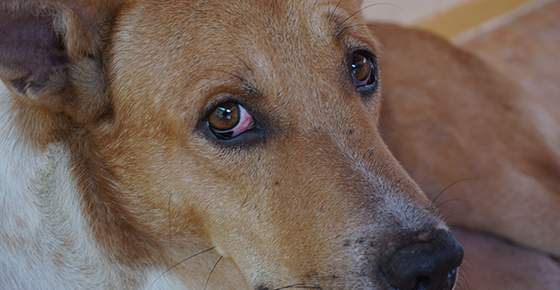
Your vet will perform a full eye examination to find the cause of the redness. Here is what the diagnostic process typically looks like.
Physical Examination
The vet will inspect both eyes visually and check for swelling, discharge, foreign bodies, and eyelid abnormalities. They assess whether one or both eyes are affected.
Schirmer Tear Test
This test measures tear production by placing a small strip of paper in the lower eyelid for one minute. Low numbers confirm dry eye (KCS).
Fluorescein Staining
A bright orange dye is placed on the eye and examined under a blue light. Any area where the dye sticks reveals a corneal ulcer or scratch that may be invisible to the naked eye.
Tonometry (Eye Pressure Test)
A tonometer gently touches the surface of the eye to measure the intraocular pressure (IOP). Normal IOP in dogs is 10–25 mmHg. Readings above 30 mmHg suggest glaucoma.
Additional Tests
In complex cases, your vet may recommend blood tests, urine analysis, chest X-rays, or eye ultrasound to identify an underlying systemic cause such as infection, cancer, or high blood pressure.
Treatment Options for Dog Red Eyes
Treatment depends entirely on the cause. Here is a breakdown of what to expect for each major condition.
Allergy Treatment
Mild allergies may be managed with antihistamines. More significant cases need corticosteroid or antihistamine eye drops prescribed by a vet. Identifying and reducing the allergen source also helps.
Conjunctivitis Treatment
Bacterial conjunctivitis is treated with antibiotic eye drops or ointment. Viral forms may need antiviral medication. Allergy-related conjunctivitis responds to steroid drops. Most cases resolve within 7 to 10 days.
Dry Eye Treatment
KCS requires lifelong management with topical cyclosporine or tacrolimus drops, which stimulate tear production by suppressing the immune attack on the tear glands. Artificial tear lubricants are also used throughout the day. Without treatment, permanent corneal scarring and vision loss develop over time.
Corneal Ulcer Treatment
Superficial ulcers heal with antibiotic drops and a recovery cone to prevent your dog from rubbing the eye. Deep or infected ulcers require aggressive treatment and possibly surgical grafting to prevent eye rupture.
Glaucoma Treatment
Glaucoma is a veterinary emergency. Prostaglandin analogue drops (latanoprost, travoprost) lower pressure quickly. Carbonic anhydrase inhibitors (dorzolamide) and beta blockers (timolol) are also used. Long-term daily medication is required. In advanced cases where vision is already lost, surgical removal of the eye may be recommended to relieve pain.
Uveitis Treatment
Treatment focuses on anti-inflammatory corticosteroid eye drops and oral NSAIDs or steroids to reduce pain and inflammation. The underlying systemic cause must also be identified and treated. Regular follow-up appointments are essential.
Cherry Eye Treatment
Anti-inflammatory drops may reduce swelling in mild cases, but most dogs need corrective surgery to reposition the prolapsed gland. Removing the gland is no longer recommended as it leads to dry eye later in life.
Foreign Body or Trauma
A vet will flush the eye with sterile saline or remove the foreign body with specialized instruments. Corneal damage from trauma is treated with antibiotic drops and a recovery cone.
Breeds Most Prone to Red Eye Conditions
Some dog breeds are significantly more likely to develop chronic or recurring red eye conditions due to their genetics, eye structure, or facial anatomy.
| Breed | Common Eye Vulnerability |
|---|---|
| Bulldogs, Pugs, Boston Terriers | Irritation from prominent eyes and shallow sockets |
| Cavalier King Charles Spaniel | Dry eye (KCS), corneal ulcers |
| Cocker Spaniel | Dry eye, glaucoma, cherry eye |
| Shih Tzu, Lhasa Apso, Maltese | Irritation from facial hair, corneal ulcers |
| Chow Chow, Shar-Pei | Entropion (inward-rolling eyelids) |
| Basset Hound, Bloodhound | Ectropion (drooping lower eyelids) |
| American Cocker Spaniel, Siberian Husky | Glaucoma |
| Beagle | Cherry eye, glaucoma |
| Golden Retriever | Uveitis |
| Border Collie | Collie Eye Anomaly (inherited eye defect) |
If you own one of these breeds, schedule annual eye exams even when no symptoms are present. Early detection makes a major difference.
Safe Home Care While You Wait for Your Vet Appointment
There are a few safe steps you can take at home to keep your dog comfortable before or while waiting to see the vet.
Gentle Cleaning
Use a clean damp cotton ball or vet-approved eye wipe to gently remove discharge. Always wipe from the inner corner outward. Never reuse the same cotton ball on the other eye.
Cold Compress
A soft, clean cloth dampened with cool water held gently near (not pressing on) the eye can temporarily reduce inflammation and soothe discomfort.
Saline Rinse
Sterile saline eye wash (made for pets or preservative-free human saline) can gently flush out minor irritants like dust or pollen. Do not use tap water.
Recovery Cone
If your dog is pawing at or rubbing the eye, put on a cone or recovery collar immediately. Rubbing can turn a minor irritation into a serious corneal injury within minutes.
Avoid These at Home
Do not use human eye drops (especially Visine or redness-relieving drops) without vet approval. Do not apply any medication not prescribed for your dog. Do not try to remove a foreign body yourself.
How to Prevent Red Eyes in Dogs
Good daily habits greatly reduce your dog’s risk of eye irritation and infection.
Keep hair around the eyes trimmed short, especially in Shih Tzus, Maltese, and Poodles, as stray hairs rubbing the cornea are a major cause of ulcers and irritation.
Clean around your dog’s eyes daily using a vet-approved wipe. Wipe gently outward from the inner corner to remove discharge and prevent bacterial buildup.
Limit exposure to smoke, strong cleaning chemicals, perfumes, and dusty environments. Good air quality at home directly benefits your dog’s eye health.
Use a harness instead of a neck collar during walks. Collar pressure on the neck raises intraocular pressure and can worsen conditions like glaucoma over time.
Schedule annual vet checkups that include a thorough eye examination. For breeds prone to glaucoma or KCS, ask your vet about baseline tonometry readings starting at age two.
Senior Dogs and Eye Health
Older dogs are more likely to develop systemic conditions like high blood pressure, diabetes, and Cushing’s disease — all of which can affect eye health and cause redness.
Senior dogs should have their eyes checked at every routine vet visit. Even mild or gradual changes in eye appearance deserve attention, as conditions caught early are far easier and cheaper to treat.
Frequently Asked Questions (FAQs)
Why are my dog’s eyes red all of a sudden?
Sudden red eyes are often caused by a foreign body, trauma, allergic reaction, or the onset of glaucoma. Seek vet care same-day if redness is severe or painful.
Can I use human eye drops for my dog’s red eyes?
No. Human eye drops, especially redness-relieving drops like Visine, can be harmful to dogs. Only use drops specifically prescribed or approved by your vet.
Are red eyes in dogs contagious?
It depends on the cause. Bacterial conjunctivitis can spread between dogs. Allergies, glaucoma, dry eye, and trauma are not contagious.
Why is only one of my dog’s eyes red?
Single-eye redness usually points to a localized cause — a foreign body, scratch, corneal ulcer, or early-stage glaucoma or cherry eye on that side.
Can dog red eyes go away on their own?
Minor irritation from dust or pollen may clear in 24 to 48 hours. Infections, ulcers, glaucoma, and uveitis will not resolve without treatment and will get worse.
What does discharge with red eyes mean?
Clear watery discharge usually signals allergies or minor irritation. Thick yellow or green discharge suggests a bacterial infection that needs antibiotic treatment.
How do I know if my dog’s red eye is an emergency?
Go to an emergency vet if you see cloudy cornea, your dog cannot open the eye, there is visible bleeding, or the dog is in obvious pain.
Can dry food or diet affect my dog’s eye health?
Yes. Omega-3 fatty acids (EPA and DHA) support retinal health and reduce inflammation. A diet lacking these nutrients can contribute to chronic eye issues.
What breeds get red eyes most often?
Flat-faced breeds (Bulldogs, Pugs), droopy-eyed breeds (Basset Hounds), and dogs with excessive facial hair (Shih Tzus, Maltese) are most prone to red eyes.
How much does treating dog red eyes cost?
Costs vary widely. Antibiotic drops may cost $20–$60. Glaucoma treatment or eye surgery can cost $1,000–$3,000 or more. Pet insurance helps offset these expenses significantly.
Conclusion
Why are my dog’s eyes red? The answer can be as simple as a bit of dust or as serious as glaucoma threatening your dog’s sight.
The most important thing you can do is observe closely, act quickly, and consult your vet rather than guessing.
Mild cases respond well to basic care and monitoring. Serious conditions like corneal ulcers, uveitis, and glaucoma demand fast veterinary intervention to save your dog’s vision.
Prevention through daily eye hygiene, regular grooming, and annual vet visits goes a long way in keeping your dog’s eyes healthy and bright.
Your dog cannot tell you when something is wrong — but their eyes often show it clearly. Trust what you see and get the help they need without delay.