Why Do Cats Bite? Expert Behavior Guide 2026
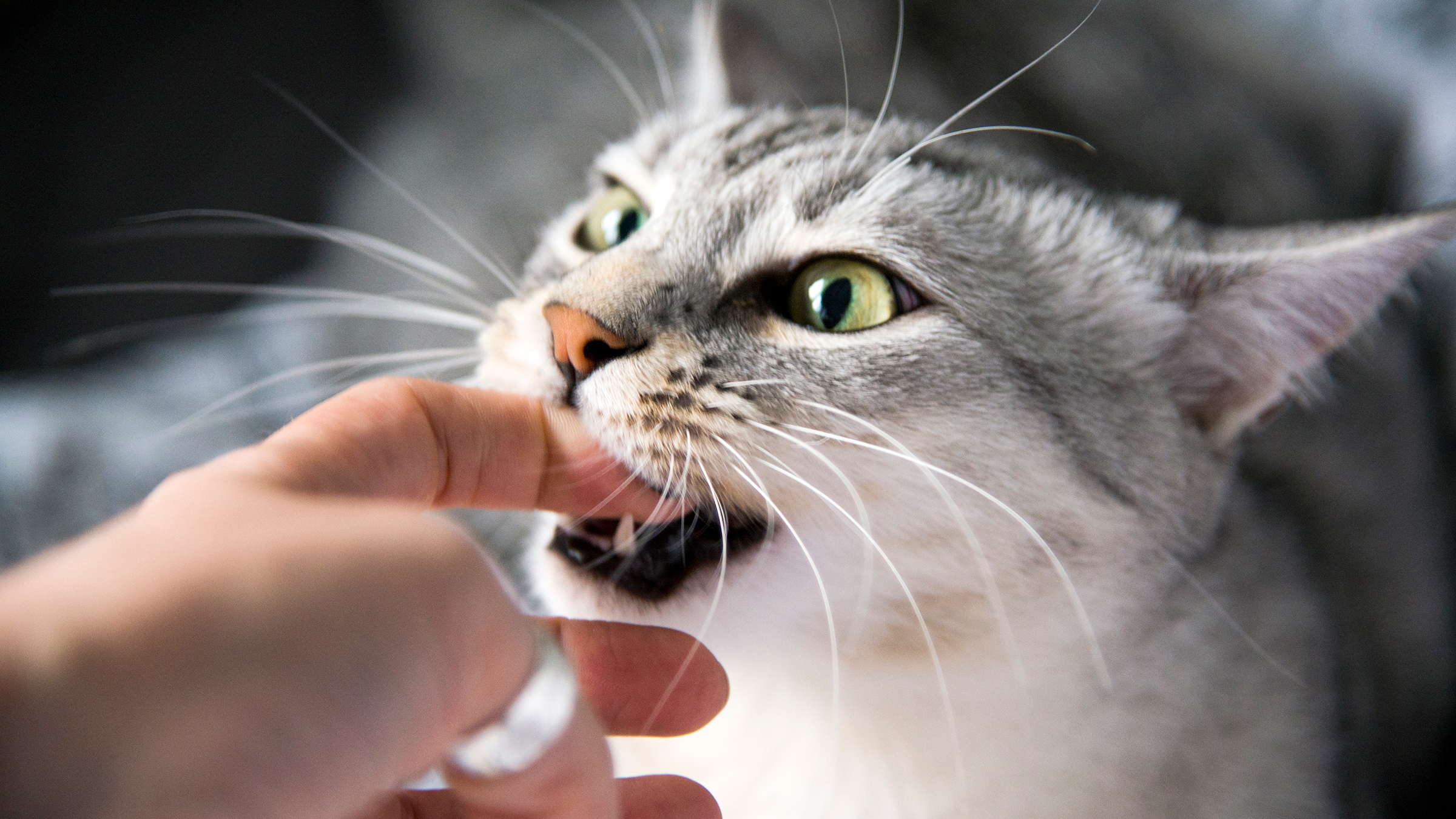
Why do cats bite — and what does it really mean when your feline sinks their teeth into you? Whether it is a gentle nibble during cuddle time or a sudden hard chomp out of nowhere, cat biting is one of the most common and confusing behaviors pet owners deal with.
The good news is that biting almost always has a clear reason behind it.
Understanding those reasons helps you respond the right way, protect yourself, and build a stronger bond with your cat.
This expert behavior guide covers every type of cat bite, what triggers it, and how to stop it for good.
Why Do Cats Bite
Most top-ranking articles use H2 for the main title and conclusion only. Body sections use H3 for main reasons/topics and H4 for sub-points, FAQs, and specific scenarios. Short paragraphs of 2–3 lines are standard across all top pages. Tables appear at least once to break up text and improve dwell time.
Understanding Cat Biting Behavior
Cats do not bite randomly. Every bite, whether soft or hard, carries a message. Feline biting is rooted in natural instinct, communication, and emotion.
Cats use their teeth the way humans use words. They bite to say “stop,” “play with me,” “I am scared,” or even “I love you.” The context around the bite tells you everything about what your cat is trying to communicate.
The 10 Most Common Reasons Why Cats Bite
1. Play Aggression
Play biting is the number one reason why cats bite, especially in kittens and young cats. When cats play, they mimic hunting behavior — stalking, pouncing, and biting are all part of the game.
Kittens that were weaned early or separated from their littermates too soon may never have learned bite inhibition. Without siblings to teach them “that was too hard,” they grow up biting people with full force.
Cats separated from litter before 8 weeks of age are significantly more likely to show play aggression toward their owners. Providing wand toys and interactive play sessions redirects this energy safely.
2. Overstimulation (Petting-Induced Aggression)
One of the most surprising reasons cats bite is overstimulation. Your cat is purring and seems happy — then suddenly bites you. This is called petting-induced aggression or petting reactivity.
Repetitive stroking in the same spot can quickly shift from pleasurable to irritating for a cat. Their nervous system gets overloaded, and biting becomes their way of saying “enough.”
Watch for these early warning signs before the bite comes:
| Warning Sign | What It Means |
|---|---|
| Tail flicking or lashing | Irritation is building |
| Skin rippling along the back | Overstimulation threshold near |
| Ears flattening or rotating back | Stress response |
| Dilated pupils | Heightened arousal or fear |
| Sudden muscle tension | About to react |
3. Fear-Based Biting
A frightened cat will bite to defend itself. Fear biting often happens when a cat feels trapped, cornered, or forced into an interaction it does not want.
Unsocialized cats are especially prone to fear biting because they were not exposed to humans during their critical socialization window of 2 to 7 weeks. Large people, loud noises, and sudden movements can all trigger fear responses.
Fear bites are usually quick and sharp. The cat bites and then immediately tries to escape. You will often see hissing, flattened ears, raised fur, and dilated pupils just before this type of bite.
4. Love Bites (Affiliative Biting)
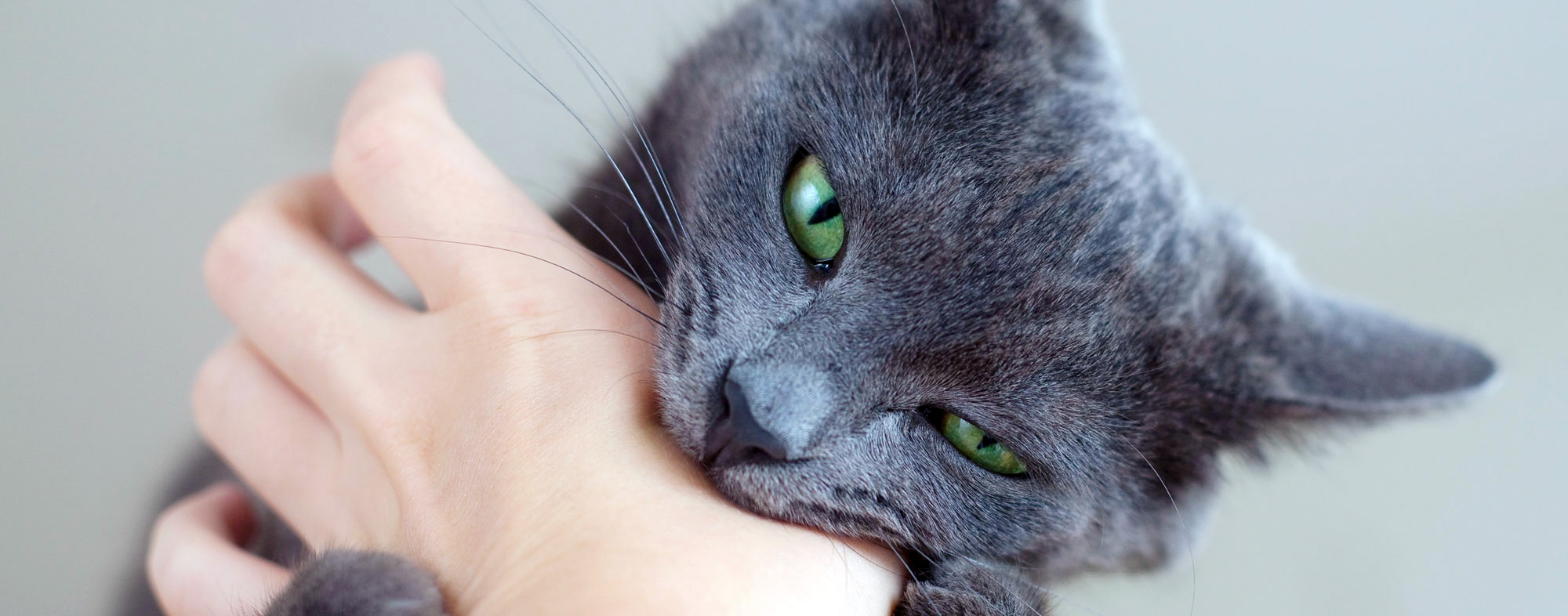
Not every cat bite is a sign of aggression. Love bites, also called affiliative biting, are gentle nips your cat gives during moments of affection and bonding.
Love bites typically happen after licking or during petting sessions when your cat seems relaxed. They do not break the skin and feel more like gentle pressure than a real bite. Your cat’s body language will be loose and calm — not tense or defensive.
This behavior mimics how cats groom each other in the wild. When your cat nibbles you gently, they are treating you like a fellow cat they trust and care about.
5. Redirected Aggression
Redirected aggression is one of the most misunderstood reasons cats bite. Your cat spots a bird outside the window, gets intensely aroused by the prey drive, cannot reach the bird — and then bites you instead.
The bite has nothing to do with you personally. Your cat’s predatory instincts were triggered and had nowhere to go. You just happened to be nearby when the energy had to release.
This type of biting can seem completely unprovoked. Your cat may have been calm for a moment, then suddenly attack. Looking for what your cat was focused on just before the bite helps identify this pattern.
6. Pain or Illness
A cat in pain will bite when touched in a sensitive area. If your normally gentle cat suddenly starts biting, an underlying health issue is a very real possibility.
Common painful conditions that can trigger biting include dental disease (especially tooth resorption), arthritis, skin conditions, and internal illness. Cats are instinctively hardwired to hide pain, so biting when touched may be their only outward sign.
If your cat bites when you touch a specific area of their body, or if the biting behavior changed suddenly, schedule a veterinary examination. Treating the underlying pain often resolves the biting completely.
7. Attention-Seeking Biting
Some cats learn that biting gets them what they want. If a cat bites and their owner immediately responds — even with a negative reaction like saying “ouch” — the cat learns that biting = attention.
This is a conditioned behavior that develops over time. The cat is not being malicious. They found something that works and keep using it.
Ignoring attention-seeking bites completely and rewarding calm behavior with treats and affection teaches the cat that gentle behavior gets them what they want.
8. Territorial Biting
Cats are naturally territorial animals. In multi-cat households or homes with new pets, cats may bite to establish or defend their territory and resources.
Signs of territorial biting include posturing before the bite, targeting new people or animals in the home, and biting near important resources like food bowls, sleeping spots, or litter boxes.
Providing each cat with their own resources and giving new pets a slow, gradual introduction reduces territorial tension significantly.
9. Kitten Teething
Kittens between 3 and 6 months old go through a teething phase where they need to chew and bite to relieve gum discomfort. This is temporary but can be frustrating for owners.
During teething, kittens explore the world with their mouths. They are not being aggressive — they are just following instinct and trying to soothe sore gums.
Offering appropriate chew toys, frozen treats, or rubber teething toys gives kittens a safe outlet for this need and protects your hands and furniture.
10. Predatory Instinct
Cats are hardwired predators. Fast-moving objects — wiggling toes under blankets, moving fingers, dangling hands — can trigger the prey drive and lead to a bite.
This is not personal. Your cat sees movement and reacts the same way they would react to a mouse. Their predatory instinct activates before they even consciously “decide” to bite.
Never use your hands or feet as toys. Always use wand toys, laser pointers, or stuffed animals to engage your cat’s hunting instinct in a safe and appropriate way.
Love Bites vs. Aggressive Bites: How to Tell the Difference
Understanding which type of bite you are dealing with changes how you respond. Here is a clear breakdown:
| Feature | Love Bite | Aggressive Bite |
|---|---|---|
| Force | Gentle, no skin break | Hard, may break skin |
| Body Language | Relaxed, purring, kneading | Tense, ears back, hissing |
| Context | During affection, grooming | Fear, pain, overstimulation |
| Duration | Brief, then releases | May bite repeatedly |
| Follow-up | Licking, continued cuddling | Cat runs away or stays tense |
| What to do | Gently redirect if bothersome | Give space, do not react harshly |
Reading Cat Body Language Before the Bite
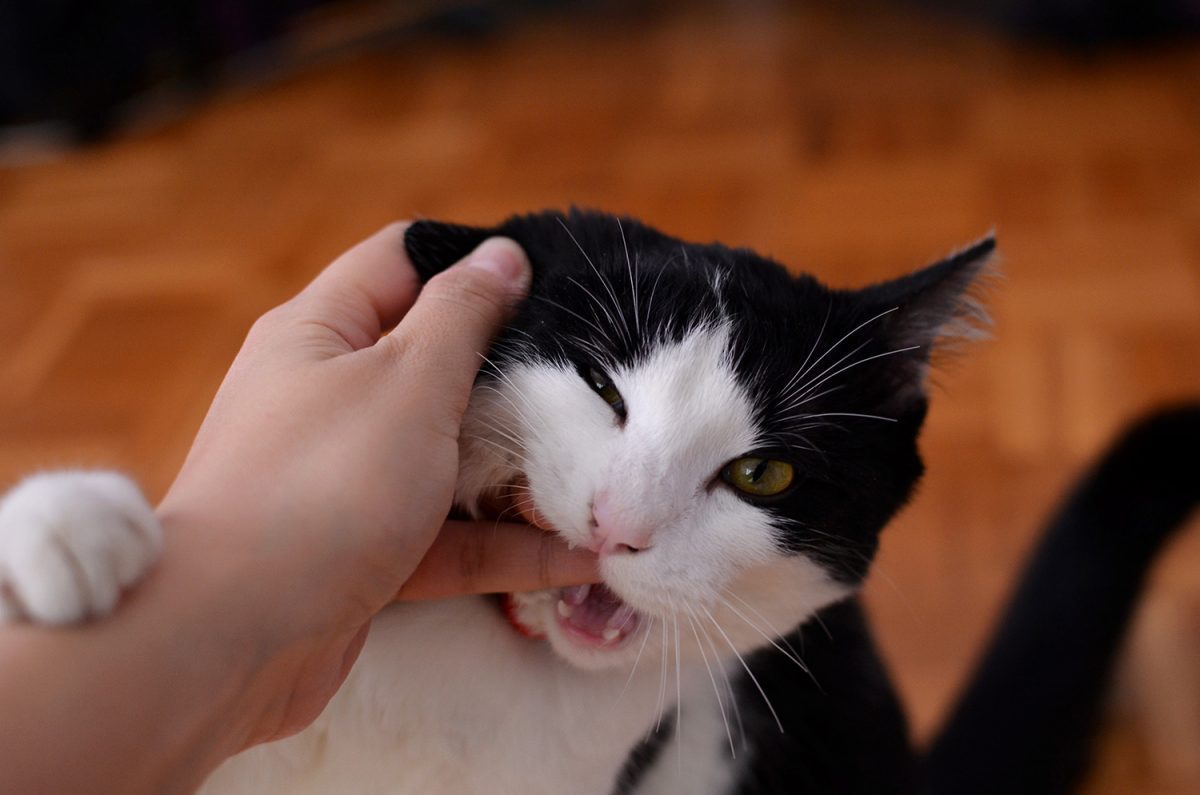
Most cats give clear warning signals before they bite. Learning to read these signs prevents the majority of bites from happening at all.
Early warning signals (yellow zone): Your cat’s tail begins to flick, their ears rotate slightly back, and they stop purring mid-petting session. These are the first signs your cat is reaching their limit. This is the moment to stop the interaction.
Escalation signals (orange zone): Pupils dilate, fur along the back may rise slightly, the cat’s muscles tense, and they may turn their head to look at your hand. A bite is very likely if you continue.
Immediate pre-bite signals (red zone): Hissing, growling, flattened ears pressed against the skull, raised hackles, and snarling. At this stage, back away calmly and give your cat space. Do not pull away fast — rapid movement can trigger the bite.
How to Stop Your Cat From Biting
Stopping biting behavior requires consistency, patience, and the right approach. Punishment does not work and will make the problem worse by increasing fear and anxiety.
Use Redirected Play
When your cat starts to bite, immediately redirect them to an appropriate toy. Wand toys, kicker toys, and stuffed animals give cats a safe outlet for their biting instinct.
Keep toys near your usual sitting spots so you can redirect quickly when needed. Consistent redirection teaches your cat that toys get bitten — not people.
Walk Away and Withdraw Attention
For attention-seeking or overstimulation biting, the most effective response is to calmly stand up, cross your arms, and remove your attention completely. Do not yell, push the cat away, or make a fuss.
Cats learn quickly that biting stops the fun. Once your cat is calm, reintroduce interaction at a lower intensity and for a shorter duration.
Daily Interactive Play Sessions
Many cats bite because they are understimulated and bored. Two 10 to 15 minute interactive play sessions per day dramatically reduce biting driven by excess energy and prey drive.
Use toys that mimic natural prey movement — things that dart, flutter, and pause unpredictably. Allow your cat to “catch” the prey at the end of the session to avoid frustration.
Never Use Punishment
Spraying your cat with water, flicking their nose, yelling, or scruffing them for biting creates fear and anxiety without teaching them what behavior is acceptable. These approaches damage your relationship and often make biting worse over time.
Positive reinforcement — rewarding calm behavior with treats and gentle praise — is the only approach proven to build lasting behavior change.
Know When to See a Vet or Behaviorist
Some biting requires professional intervention. See a veterinarian if the biting started suddenly with no clear trigger, if your cat bites when touched in specific areas, or if biting is escalating in frequency or intensity.
A certified cat behavior consultant (CCBC) can build a customized behavior modification plan for severe or persistent biting. Do not wait for injuries to seek help.
Cat Biting by Age and Stage
Kittens (0–6 months)
Kittens bite because they are learning, playing, teething, and exploring. Most kitten biting is normal and responds well to consistent redirection and proper socialization.
Adolescent Cats (6–18 months)
Adolescent cats have peak energy and may bite more during play due to hormonal changes and high prey drive. Neutering or spaying often reduces hormone-driven aggression.
Adult Cats (2–10 years)
Adult cat biting is usually rooted in overstimulation, territorial behavior, fear, or learned patterns. Addressing triggers and enriching the environment makes a major difference.
Senior Cats (10+ years)
Senior cats bite most often due to pain, cognitive decline, or hypersensitivity. Any new biting in an older cat warrants a full veterinary workup to rule out medical causes.
Cat Bite Safety: What to Do If You Are Bitten
Cat bites carry a higher infection risk than most people realize. Cat teeth are sharp and narrow, creating deep puncture wounds that seal over quickly and trap bacteria.
Immediate first aid steps:
Wash the wound immediately with soap and water for at least 5 minutes. Apply an antiseptic, then cover with a clean bandage. Monitor closely for signs of infection over the next 24 to 48 hours.
See a doctor if:
The bite is deep or on your hand, face, or near a joint. Redness, swelling, warmth, or pus appears. You develop a fever or flu-like symptoms. You do not know the cat’s vaccination history. The most common bacteria in cat bite infections is Pasteurella multocida, which can cause serious complications if untreated, especially in people with weakened immune systems.
Environmental Enrichment to Reduce Biting
A well-enriched environment reduces boredom, frustration, and redirected aggression — three major drivers of cat biting.
| Enrichment Type | Examples | Benefit |
|---|---|---|
| Interactive Play | Wand toys, laser pointers | Burns prey drive energy |
| Puzzle Feeders | Licki mats, food puzzles | Mental stimulation |
| Vertical Space | Cat trees, shelves, perches | Reduces territorial stress |
| Window Access | Bird feeders outside, perches | Safe outlet for prey watching |
| Scratching Posts | Sisal posts, cardboard scratchers | Stress relief and territory marking |
| Hiding Spots | Covered beds, boxes, tunnels | Security for anxious cats |
Common Triggers to Avoid
Certain situations consistently provoke biting in cats. Knowing these helps you prevent bites before they happen.
Avoid petting your cat’s belly, tail base, or legs — these are hypersensitive areas for most cats. Avoid prolonged petting sessions, especially in a single repetitive motion. Do not force interaction when your cat is showing warning signals. Avoid sudden loud noises or movements near a cat already in a heightened state. Do not allow children to chase, corner, or pick up cats without supervision.
Building a Bite-Free Relationship With Your Cat
The foundation of a bite-free relationship is mutual respect, clear communication, and consistent routines. Cats thrive when they feel safe, understood, and in control of their interactions.
Let your cat initiate contact as much as possible. Respect their “no” signals immediately. Invest in daily enriched play. Create a calm, predictable home environment. Over time, these habits build deep trust — and a cat that trusts you has very little reason to bite.
Frequently Asked Questions (FAQs)
Why does my cat bite me out of nowhere?
Sudden biting is usually redirected aggression or missed overstimulation signals. Your cat reacted to something in their environment and you happened to be nearby, or you overlooked early warning signs like tail flicking or muscle tension.
Why does my cat bite me gently?
Gentle biting is typically a love bite — a sign of affection and bonding. Cats groom each other this way, so a soft nibble on your hand or arm means your cat trusts and is comfortable with you.
Why does my cat bite me when I pet them?
This is petting-induced aggression or overstimulation. Your cat reached their tolerance limit for physical contact and used a bite to communicate “stop.” Watch for early signals like tail movement or twitching skin before biting happens.
Why does my cat bite me and then lick me?
Biting followed by licking is completely normal grooming behavior. Cats lick and groom each other using their teeth and tongue, and they do the same to their favorite humans as a sign of affection.
Why does my cat bite me when I walk by?
This is ambush behavior driven by play aggression or predatory instinct. Your cat sees movement and responds with a hunting attack. Increase daily play sessions to drain this energy and redirect the behavior onto appropriate toys.
Is it normal for cats to bite their owners?
Yes, biting is a natural feline behavior. It only becomes a problem when it is frequent, hard, or sudden. Most biting can be managed with enrichment, redirection, and understanding your cat’s communication signals.
Why does my kitten bite so much?
Kittens bite because they are learning bite inhibition, exploring their world, playing, and possibly teething. This phase is temporary and responds well to consistent redirection to appropriate toys.
How do I get my cat to stop biting me?
Stop using your hands as toys, redirect biting onto appropriate objects immediately, walk away calmly when bitten, and increase daily interactive play. Never punish your cat — it worsens the behavior.
Can a cat bite make me sick?
Yes. Cat bites carry a significant infection risk due to deep puncture wounds and oral bacteria like Pasteurella multocida. Clean any bite wound immediately and seek medical attention for deep bites or signs of infection.
When should I be worried about my cat biting?
Seek veterinary advice if biting started suddenly without a clear trigger, if your cat reacts to being touched in specific areas, or if biting is escalating. These can signal pain, illness, or an underlying behavioral issue that needs professional help.
Conclusion
Why do cats bite? The honest answer is: for many different reasons, all of them rooted in natural feline instinct and communication.
From playful kittens learning bite inhibition to overstimulated adults asking for space, every bite tells you something important about what your cat is feeling in that moment.
The key to reducing biting is not punishment — it is understanding.
When you learn to read your cat’s body language, respect their signals, and meet their physical and mental needs through daily enriched play, biting almost always decreases on its own.
Love bites can be appreciated as a sign of trust. Play biting can be redirected to toys.
Fear biting can be prevented by giving your cat control over their interactions.
If biting is frequent, sudden, or escalating, do not wait.
A veterinary checkup rules out pain and illness, and a certified cat behavior consultant can create a plan tailored to your specific cat.
With patience, consistency, and the right approach, a strong and bite-free bond with your cat is absolutely achievable.