Why Do Cats Lay on Your Chest? Signs of Trust 2026
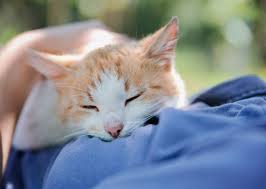
Why do cats lay on your chest is one of the most heartwarming questions a cat owner can ask.
That warm, purring weight on your chest is not random — it is your cat making a deliberate choice about where they feel safest in the world.
Cats are independent by reputation, but when they trust someone completely, they show it in physical ways.
Choosing your chest as a resting spot is one of the clearest signals of deep feline affection and security.
Understanding Feline Sleeping Behavior
Cats sleep between 12 and 16 hours a day. Where they choose to sleep matters enormously to them.
Unlike dogs that sleep almost anywhere, cats are highly selective about their sleeping spots. Safety, warmth, and familiarity all factor into every decision.
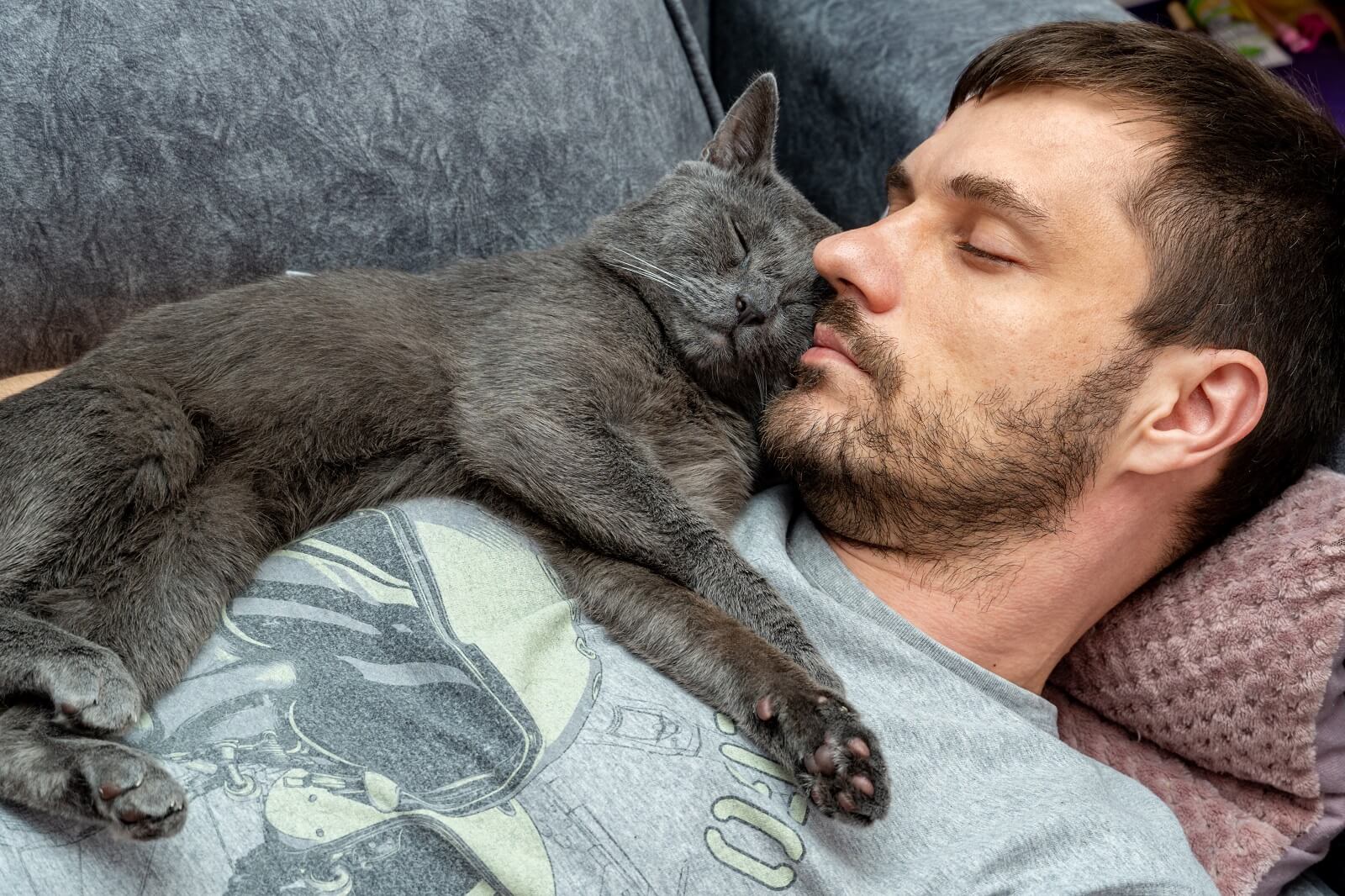
Choosing to sleep on a person — especially on their chest — is one of the most vulnerable positions a cat can take. It tells you a great deal about how that cat feels about you.
What Does It Mean When a Cat Lays on Your Chest?
When your cat settles on your chest, they are communicating through behavior rather than words. It is a statement of trust, affection, and belonging.
Cats in the wild only sleep in completely exposed positions when they feel safe from predators. Choosing your body as a sleeping surface means they see you as a source of protection.
It also means they actively want to be near you — not just in the same room, but physically connected to you. That is a significant display of attachment in the feline world.
Reason 1 — Deep Trust and Emotional Attachment
The most important reason why cats lay on your chest is trust. Cats do not expose themselves vulnerably around beings they do not fully trust.
Research published in the journal Current Biology found that cats can form secure attachment bonds with their owners — similar to the bonds infants form with caregivers. This is not just affectionate behavior — it is emotionally meaningful.
Sleeping on your chest is your cat saying, without words, that you are their safe base. They feel protected when they are close to you, and they choose this closeness whenever they can.
How Cats Show Trust Through Physical Contact
Cats who deeply trust their owners display it through body contact — slow blinks, head bunting, rubbing, kneading, and choosing to sleep on or directly next to their person.
Chest sleeping sits at the top of this trust hierarchy. It is not something cats do with people they merely tolerate.
If your cat regularly chooses your chest over every other surface in the house, they are showing you the highest form of feline affection.
Reason 2 — Your Heartbeat Is Comforting
Cats are extraordinarily sensitive to rhythmic sounds. Your heartbeat — steady and consistent — is deeply reassuring to a cat resting on your chest.
This response is rooted in early kittenhood. Kittens sleep pressed against their mother, surrounded by the sounds of her heartbeat and breathing. These sounds become hardwired as signals of safety.
When your adult cat presses against your chest, they may be re-experiencing that same primal comfort. You become a surrogate for the safety of their early life.
Why the Rhythm of Breathing Matters Too
Beyond the heartbeat, the slow rise and fall of your chest during calm breathing creates a gentle, rocking sensation.
This rhythmic movement mirrors the way a mother cat’s breathing soothes her kittens. Your cat registers it as a signal that everything is calm and no threats are present.
Cats are highly attuned to changes in breathing and heart rate. If you are stressed or anxious, your cat may actually notice — and some researchers believe cats choose this spot to offer comfort in return.
Reason 3 — Heat Seeking Behavior
Cats have a higher body temperature than humans — around 101 to 102.5 degrees Fahrenheit. They are natural heat seekers.
Your chest provides a consistent, warm surface that cats find irresistible — especially in cooler weather, at night, or for cats with thin or short coats.
The human body radiates significant heat, and your chest is one of the warmest and most enclosed areas when you are lying down. For a heat-loving cat, this is essentially a premium heated bed.
Which Cats Are Most Drawn to Human Warmth
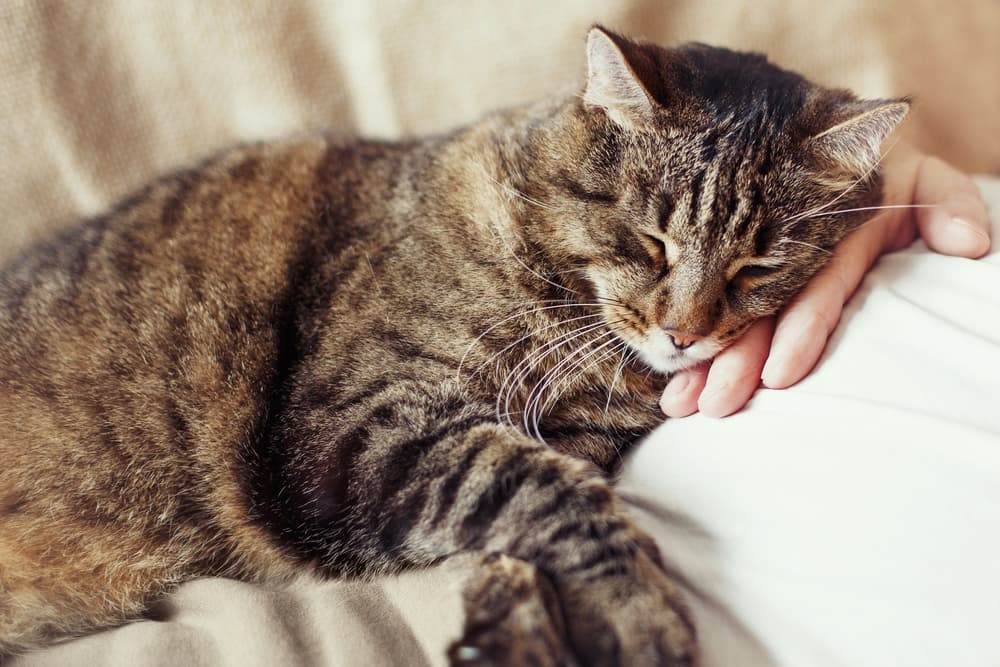
Senior cats with thinner coats are especially likely to seek out warm sleeping spots on their owners.
Cats who have spent time in shelters or lived outdoors before being adopted often show a stronger preference for body contact during sleep — warmth being part of what was missing in earlier life.
Kittens and young cats also gravitate toward warmth as part of their developmental need for close physical contact.
| Cat Type | Likely Reason for Chest Sleeping |
|---|---|
| Kitten | Warmth and early bonding imprint |
| Senior cat | Temperature regulation, comfort |
| Rescue or shelter cat | Security and warmth seeking |
| Single-pet household cat | Strong owner attachment |
| Anxious or timid cat | Safety and reassurance |
Reason 4 — Territorial Marking and Scent Bonding
Cats communicate through scent in ways humans cannot detect. They have scent glands on their head, cheeks, paws, and body.
When a cat lies on your chest, they are depositing their scent onto you. This marks you as part of their social group — their family unit.
In multi-cat or multi-pet households, this scent marking also signals to other animals that you belong to this particular cat. It is a form of claiming, but from a place of affection rather than aggression.
What Scent Exchange Means in Feline Social Life
Cats who share scent are cats who trust each other. When your cat deposits their scent on you and absorbs your scent in return, it reinforces the social bond between you.
This is the same exchange that happens between bonded cats who groom each other — called allogrooming. Your cat is treating you as a companion in their inner circle.
Over time, cats also become deeply familiar with your unique body scent. This familiarity is itself comforting — your smell signals home and safety to them.
Reason 5 — Your Cat Feels Secure With You as Their Guardian
Cats are always alert even while resting. Their nervous systems remain attuned to environmental sounds and movements during sleep.
When your cat sleeps on your chest, they are relying on you to be part of their early warning system. Your reactions to sounds and movements provide real-time information about whether the environment is safe.
If you stay still and calm, your cat registers this as confirmation that no danger is present. Your body becomes a monitoring station as much as a warm resting spot.
Why Cats Often Face Away From You While Sleeping on Your Chest
Many cat owners notice their cat faces away from them — toward the room — while resting on their chest.
This is deliberate. The cat is watching the environment so both of you are covered. They face outward to monitor for potential threats while trusting you to protect their back. It is cooperative sleeping — and it is a profound sign of social bonding.
Reason 6 — Seeking Emotional Comfort
Cats experience stress, anxiety, and emotional discomfort. When these feelings arise, they seek proximity to the being they associate with safety and positive emotions.
Major life changes — moving homes, introducing a new pet, changes in your schedule, or even your own emotional state — can trigger increased chest-seeking behavior in cats.
A cat that suddenly starts sleeping on your chest more often after a change in the household is likely seeking reassurance that their world is still stable and you are still their anchor.
Signs Your Cat Is Seeking Comfort Rather Than Just Warmth
A comfort-seeking cat will often approach you with slow, deliberate movements. They may knead before settling, purr immediately upon contact, or push their head against your chin.
They may also follow you between rooms more frequently during stressful periods, wanting visual contact even when not directly resting on you.
Recognizing when your cat needs emotional reassurance lets you respond with gentle petting, soft speaking, and stable routines — all of which help reduce feline anxiety.
Reason 7 — Purring on Your Chest — What It Really Means
The combination of chest sleeping and purring is one of the most studied behaviors in cat-human relationships. Most people assume purring always means happiness.
Purring is more complex than that. Cats purr when content, but also when seeking comfort, when injured, or even when helping themselves heal.
Research by sound scientist Dr. Elizabeth von Muggenthaler found that domestic cats purr at frequencies between 25 and 150 Hz — a range associated with bone density maintenance, wound healing, and pain management.
The Healing Frequency of Cat Purring
When your cat purrs on your chest, you are receiving low-frequency vibration across your sternum and ribcage. Some researchers suggest this vibration may have mild therapeutic effects.
Multiple studies have noted correlations between cat ownership and reduced blood pressure, lower cortisol levels, and decreased risk of cardiovascular events.
Whether the purring itself causes these benefits or the broader relationship does is still being studied — but the association is real and repeatedly documented.
| Purring Context | What It Likely Means |
|---|---|
| Loud purring immediately upon settling | Contentment and relaxation |
| Quiet, rhythmic purring | Deep comfort and security |
| Purring while kneading | Kitten-like comfort seeking |
| Purring when unwell | Self-soothing behavior |
| Purring when you are upset | Possible empathic response |
Reason 8 — Kneading Alongside Chest Lying
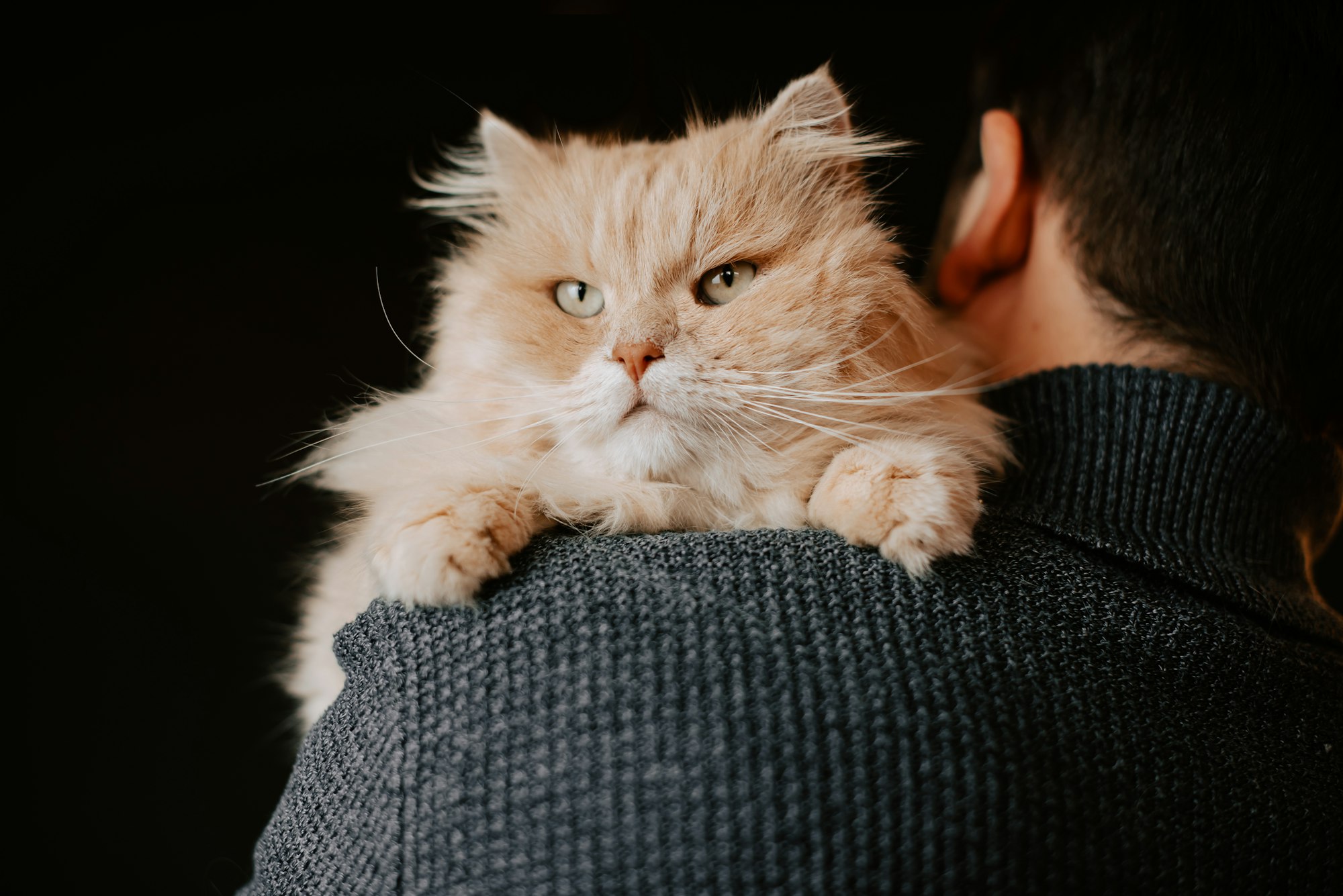
Many cats knead — rhythmically pushing their paws in and out — while or before settling on your chest. This behavior is deeply rooted in early life.
Kittens knead their mother’s belly to stimulate milk production. In adult cats, kneading resurfaces when they experience intense feelings of comfort and security.
A cat kneading on your chest before lying down is expressing that you trigger the same deep sense of safety they had with their mother. It is about as vulnerable and affectionate as cats get.
Why Some Cats Knead More Than Others
Cats that were weaned very early from their mothers tend to knead more in adulthood. The behavior becomes a comfort mechanism they use more frequently.
Cats raised with plenty of warmth and contact during kittenhood may also knead more readily because their early associations between physical contact and safety are strongly established.
Never discourage kneading — it signals deep contentment. Trimming your cat’s nails regularly makes it more comfortable for both of you.
Reason 9 — Social Bonding Through Co-Sleeping
In feral and wild cat colonies, cats that have strong social bonds sleep in contact with each other. This is called co-sleeping, and it strengthens social ties over time.
When your cat chooses to sleep on your chest regularly, they are treating you as a bonded companion in their social group — not merely a caregiver who provides food.
This distinction matters. A cat who sees you as a companion will display far more consistent affection, seek interaction during waking hours, and show distress when you are absent for extended periods.
How Co-Sleeping Changes the Human-Cat Relationship
Studies from the Human-Animal Bond Research Institute have found that physical closeness during sleep deepens attachment between cats and their owners over time.
The more frequently a cat chooses to sleep on or near their owner, the stronger the measurable bond tends to be — assessed through behavioral tests similar to those used to measure human infant attachment.
This is a reciprocal relationship. Your positive response to your cat’s chest sleeping — staying calm, allowing it, offering gentle strokes — reinforces and strengthens the bond from your side too.
Reason 10 — Ownership and Possessiveness
Cats are territorial in ways that extend to people. Some cats develop a strong sense of ownership over their primary caregiver.
Laying on your chest is partly a way of establishing that you are their person. In households with multiple cats or multiple people, a cat may become especially consistent about this habit to reinforce their special relationship with you specifically.
This is not aggression — it is feline possessiveness rooted in attachment. Your cat values their relationship with you and uses physical proximity to maintain it.
When Chest Sleeping Becomes Overly Clingy
Occasionally, chest sleeping is part of a broader pattern of separation anxiety in cats. Signs include excessive vocalization when you leave, destructive behavior while alone, and frantic greeting behaviors when you return.
If your cat cannot seem to settle unless physically on your body, and shows distress when denied this, a conversation with your vet or a feline behavior specialist is worthwhile.
Mild clinginess is normal and endearing. Severe attachment-related anxiety can be managed with environmental enrichment, pheromone diffusers, and behavioral support.
Reason 11 — Your Chest After Illness or Emotional Distress
Anecdotal reports from cat owners — and some small studies — suggest that cats respond differently to their owners when those owners are unwell or emotionally distressed.
Many people report their cats seeking more chest contact, more purring, and more sustained proximity during periods of illness, grief, or high stress.
This may reflect cats detecting changes in body temperature, breathing patterns, scent (cortisol levels), or subtle behavioral cues that signal something is different with their person.
Is Your Cat Trying to Heal You?
While the idea of cats having healing intent is debated among researchers, the evidence that they respond to human distress is stronger.
Cats whose owners show signs of illness or emotional pain often increase proximity-seeking behavior — not just chest sleeping, but following, watching, and staying close in unusually sustained ways.
Whether this is empathy, curiosity, or instinctive response to detected change, the effect on owners — feeling less alone during difficulty — is real and well-reported.
Why Do Cats Lay on Your Chest at Night Specifically?
Night-time chest sleeping is particularly common. Several factors make nighttime the peak period for this behavior.
You are fully still during sleep — removing the movement that sometimes disturbs cats during the day. Your body is at its warmest under blankets. The environment is quiet and dark, reducing the stimuli that keep cats alert.
For cats who are partially nocturnal, the transition into your sleep cycle is also the moment they are winding down from their own activity peaks and seeking a secure resting spot.
Tips for Managing Nighttime Chest Sleeping
If you enjoy it, simply allow it — there is no harm and significant bonding benefit. If it disrupts your sleep, create an equally warm and comfortable alternative sleeping spot near your bed.
A heated cat bed placed within arm’s reach of your sleeping area often works well. Your cat retains physical proximity to you while you both sleep more comfortably.
Consistency matters. If you allow it some nights but not others, your cat may become more anxious and persistent about it — consistent boundaries in either direction are kinder.
Why Does My Cat Lay on My Chest All of a Sudden?
Sudden onset of chest sleeping in a cat that has not done it before often has a specific trigger. Changes in your household, routine, or health are the most common causes.
Moving home, a new baby or pet, a change in work schedule, or your own emotional state — any of these can prompt a cat to seek closer physical contact as a reassurance-seeking response.
It can also reflect your cat’s own changing needs — older cats often seek more physical closeness as they age, both for warmth and for the security that close human contact provides.
| Trigger | Why It Causes Sudden Chest Sleeping |
|---|---|
| New pet in the household | Seeking reassurance of your bond |
| Owner working from home more | Increased opportunity and familiarity |
| Recent house move | Anxiety about new environment |
| Owner illness or sadness | Cat detecting distress signals |
| Seasonal temperature drop | Heat-seeking response increasing |
| Cat aging | Greater need for warmth and security |
Health Benefits of Letting Your Cat Lay on Your Chest
Beyond the emotional rewards, research points to measurable health benefits from this kind of close cat-human contact.
Regular cat contact is associated with lower blood pressure and reduced risk of heart attack — a finding that appeared in a study from the University of Minnesota involving over 4,000 participants over 10 years.
The physical warmth, the gentle pressure, and the sound of purring create a combination that many people find deeply calming — helping reduce anxiety, ease tension, and support better sleep onset.
Benefits Specifically From Chest Contact
Chest contact adds the element of deep pressure — similar to what is used therapeutically for anxiety. The weight of a cat resting on the sternum area creates a gentle grounding sensation.
The heartbeat synchronization that can occur between a calm cat and a calm human resting together also appears to promote parasympathetic nervous system activity — the rest-and-digest state associated with recovery and relaxation.
For people dealing with loneliness, depression, or grief, the consistent physical presence of a cat on their chest during rest periods is cited frequently as a meaningful source of comfort.
Is It Safe to Let Your Cat Sleep on Your Chest?
For most healthy adults, yes — it is completely safe and mutually beneficial. The weight of a typical cat (7 to 12 pounds) causes no harm during sleep.
A few exceptions apply. People with severe asthma or cat allergies may find sustained chest contact exacerbates symptoms overnight. Those with open chest wounds or recent thoracic surgery should keep cats off the chest during recovery.
For infants, the guidance is clear — cats should not share sleep surfaces with babies under 12 months due to suffocation risk. Keep the baby’s sleep area strictly separate from cat access.
How to Encourage or Discourage This Behavior
If you want to encourage chest sleeping in a cat that does not yet do it, build the relationship through consistent gentle handling, calm energy, and time spent lying still while your cat is nearby.
Never force physical contact. Let the cat initiate. Reward any voluntary approach to your body with calm stillness and soft speaking — not sudden movement or overly enthusiastic handling.
To discourage it — if sleep disruption is a genuine issue — provide a warm, elevated alternative resting spot close to your bed. Use a piece of worn clothing to transfer your scent to the new bed, making it smell familiar and safe to your cat.
What Not to Do if You Want to Redirect the Behavior
Never push your cat off your chest suddenly or with force. This breaks trust and creates anxiety.
Always lift them gently and place them on their alternative spot. Repeat consistently. Cats learn through repetition and association — a gentle, consistent redirect is far more effective than a harsh one.
Be patient. A cat that has established a chest-sleeping habit will not abandon it immediately. Gentle, consistent redirection over several weeks typically produces good results.
What Different Chest-Sleeping Positions Reveal
The exact position your cat takes while on your chest adds another layer of meaning. Each position reflects a slightly different emotional state.
A curled-ball position indicates deep relaxation and warmth-seeking. A stretched-out flat position signals maximum trust and comfort. A loaf position — paws tucked under — shows contentment but with mild alertness retained.
A cat who sleeps with their head tucked under your chin or pressed against your neck is expressing maximum attachment — choosing the closest possible proximity to your face, voice, and pulse.
| Chest-Sleeping Position | What It Indicates |
|---|---|
| Curled ball on sternum | Warmth and deep relaxation |
| Stretched flat across chest | Maximum trust and comfort |
| Loaf position, paws tucked | Content but partially alert |
| Head under your chin | Highest level of attachment |
| Facing outward toward room | Watching environment cooperatively |
| Kneading before settling | Deep contentment, early comfort recall |
Frequently Asked Questions (FAQs)
Why do cats lay on your chest specifically rather than other body parts?
Your chest offers warmth, your heartbeat, and the steady rhythm of your breathing — a combination that mimics the comfort of their mother. It is the most soothing combination of stimuli on the human body.
What does it mean when a cat lays on your chest and purrs loudly?
Loud purring combined with chest sleeping is a strong signal of deep contentment and trust. Your cat feels completely safe and is expressing maximum comfort through both physical closeness and vocalization.
Why does my cat suddenly lay on my chest when it never did before?
A sudden change usually has a trigger — a new pet, a home change, your emotional state, or seasonal temperature drops. Your cat is seeking reassurance or warmth in response to something that has shifted in their environment.
Do cats lay on your chest because they love you?
Yes, significantly. Chest sleeping requires trust and reflects genuine attachment. Research confirms cats form secure emotional bonds with their owners, and physical closeness like chest sleeping is one of the primary ways they express this.
Is it healthy to let your cat sleep on your chest?
For most healthy adults it is safe and beneficial — associated with lower blood pressure and reduced anxiety. Exceptions include severe allergy sufferers, people recovering from chest surgery, and any sleeping surface shared with infants.
Why does my cat knead on my chest before lying down?
Kneading is a behavior rooted in kittenhood — kittens knead their mother to stimulate milk. Your cat kneading on you means you trigger the same deep, instinctive sense of safety and comfort they had as a kitten.
Why does my cat face away from me while lying on my chest?
Your cat faces outward to monitor the room for potential threats. They trust you to protect their back while they watch the environment — it is a cooperative, bonded sleeping arrangement, not rejection.
Can cats tell when you are sad or sick and lay on your chest to comfort you?
Evidence suggests cats do detect changes in human emotional and physical states through scent, breathing, and behavioral cues. Many owners report increased chest-seeking behavior during illness or emotional distress, though intentional healing behavior is debated scientifically.
Why does my cat only lay on my chest and not my partner’s?
Cats form primary attachments to the person who provides the most consistent care, calm energy, and positive interaction. If you are that person, your cat has identified your specific heartbeat, scent, and warmth as their preferred comfort source.
Should I let my cat sleep on my chest every night?
If it does not disrupt your sleep and you enjoy it, there is no reason to stop — it deepens your bond over time. If it causes sleep problems, gently redirect your cat to a warm nearby alternative rather than removing access completely.
Conclusion
Why do cats lay on your chest comes down to one core truth — your cat trusts you completely and wants to be as close to you as possible.
The heartbeat, the warmth, the familiar scent, and the reassuring rhythm of your breathing all combine to create the most comfortable and secure resting spot your cat can find.
This behavior draws on deep feline instincts stretching back to kittenhood and reflects the genuine emotional attachment your cat has built with you over time.
Science supports what cat owners already feel — this is a meaningful, bonding behavior with real benefits for both parties.
Whether your cat has always done this or recently started, understand it for what it is — one of the clearest signs of love and trust a cat can show.
Cherish it, respond gently, and know that your chest is your cat’s favorite place in the world.