Why Are They Called Wisdom Teeth? The History Behind It 2026
Why are they called wisdom teeth is a question that has puzzled people for centuries — and the answer has nothing to do with making you smarter.
These late-arriving molars got their name from the age at which they appear, not from any increase in intelligence or judgment.
They typically erupt between the ages of 17 and 25, a period historically known as the age of wisdom or early adulthood.
That timing, observed by ancient civilizations long before modern dentistry existed, gave rise to a name that has endured across thousands of years, dozens of languages, and every major culture on earth.
What Are Wisdom Teeth
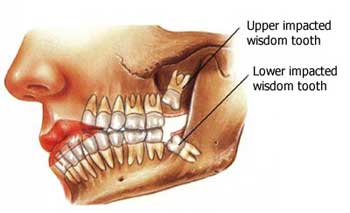
Wisdom teeth are the third and final set of molars that develop in the human mouth. They sit at the very back of the jaw — one in each corner, upper and lower.
Most people develop four wisdom teeth in total. Unlike every other permanent tooth, which arrives during childhood, wisdom teeth erupt much later in life. That delayed arrival is the foundation of their unusual name.
They are formally referred to as third molars in dental and medical terminology. But the nickname has stuck so thoroughly that most people have never heard them called anything else.
The Core Reason for the Name
The name comes entirely from timing, not from any connection to intelligence. These teeth emerge during a person’s late teens or early twenties — an age that was historically linked to the attainment of maturity, responsibility, and adult judgment.
Ancient cultures interpreted the arrival of these final teeth as a physical signal that a young person had crossed into adulthood. The teeth appeared precisely when a person was considered to be gaining real-world wisdom and experience.
The logic was straightforward: childhood teeth come in when you are young and naive. These final teeth come in when you are older and wiser. Hence — wisdom teeth.
Ancient Greek Origins of the Name
The earliest recorded use of this concept comes from ancient Greece. The Greek term for wisdom teeth was dens sophias or odontias sophias, which translates directly as teeth of wisdom.
Aristotle wrote about them explicitly in his fourth-century BC work, History of Animals. He described them as the last teeth to come in man, noting they appear at around age twenty in both sexes.
Aristotle’s observation was clinical and accurate. He did not assign magical properties to them — he simply noted their timing and connected that timing to the age of maturity that Greek culture recognized.
The Latin Connection: Dens Sapientiae
The ancient Romans inherited the Greek concept and translated it into Latin. The Latin term is dens sapientiae, where dens means tooth and sapientiae means wisdom or understanding.
This Latin phrase became deeply embedded in medical and scientific writing throughout the Roman Empire and the medieval period. It was used in formal anatomical texts, in ecclesiastical medicine, and in early dental science.
Most European languages trace their equivalent terms for wisdom teeth directly back to this Latin root. The phrase did not fade — it spread.
How the Name Traveled Through Languages
One of the most remarkable things about the wisdom teeth name is how universally it was adopted across completely different cultures and languages. The concept of connecting these teeth to maturity was not unique to Greece or Rome — it appeared independently and through linguistic borrowing across the entire world.
| Language | Local Name | Literal Translation |
|---|---|---|
| Latin | Dens sapientiae | Tooth of wisdom |
| Greek | Odontias sophias | Teeth of wisdom |
| French | Dents de sagesse | Teeth of wisdom |
| German | Weisheitszähne | Wisdom teeth |
| Spanish | Muelas del juicio | Teeth of judgment |
| Italian | Denti del giudizio | Teeth of judgment |
| Arabic | Ders al-aql | Tooth of the mind |
| Dutch | Verstandskies | Understanding molar |
| Turkish | Yirmi yaş dişi | Twentieth-year tooth |
| Korean | Sa-rang-nee | Love teeth |
| Japanese | Oyashirazu | Unknown to parents |
The Korean name is particularly poetic — love teeth, referring to the age of first love and heartbreak. The Japanese name is equally evocative — unknown to parents because by the time these teeth erupt, the person has often left the family home and entered the world independently.
The 17th Century: Teeth of Wisdom
The transition from the Latin dens sapientiae to an English phrase took several centuries. In the seventeenth century, the common English expression was teeth of wisdom — a direct translation of the Latin construction.
This older form of the name appeared in English medical and natural philosophy texts of the 1600s. It reflected the scholarly convention of the era, where Latin terms were translated relatively literally into English academic prose.
The shift from teeth of wisdom to wisdom teeth as a compound noun happened gradually and was largely complete by the nineteenth century.
The 19th Century: The Modern Name Is Standardized
The term wisdom teeth as used in modern English became widespread during the 1800s. The Industrial Revolution brought major changes to food production — more processed, softer foods became the norm — and this period saw a sharp increase in impaction and wisdom tooth problems.
As dentistry developed into a recognized profession during the nineteenth century, it inherited the ancient name and standardized it into the clinical and common vocabulary. The term wisdom teeth was the one that took hold in English-speaking medicine and has remained ever since.
By the mid-1800s, the phrase appeared regularly in dental textbooks, popular health writing, and everyday conversation.
Aristotle’s Detailed Observations
Aristotle’s documentation in History of Animals is worth examining more closely. He wrote specifically that these teeth come at the age of twenty years in the case of both sexes, and noted that cases had been known in women upwards of eighty years old where wisdom teeth had come up at the very close of life, causing great pain.
This observation — that wisdom teeth could erupt at almost any age in rare cases — was remarkably accurate. Modern dentistry confirms that late eruptions, while uncommon, do occur.
Aristotle’s account shows that the clinical reality of these teeth was understood and documented over 2,300 years ago. The naming of them was not casual folklore — it was a considered observation by one of history’s most systematic thinkers.
The Brain Development Connection
Modern neuroscience has added an interesting layer to the historical connection between wisdom teeth and maturity. Scientists now know that the human brain does not fully finish developing until approximately age 25.
The areas of the brain responsible for long-term planning, abstract thinking, emotional regulation, and sound judgment — primarily the prefrontal cortex — are among the last regions to complete their development.
Wisdom teeth typically erupt between 17 and 25 years old. The brain reaches full maturity around 25. These two biological processes overlap almost exactly.
This is not a coincidence that ancient people could have known about — they had no neuroscience. But it gives the historical name an unexpectedly accurate scientific foundation. These teeth do emerge at a time when wisdom, in the truest neurological sense, is actively being built.
Why Were Wisdom Teeth Actually Useful
Understanding why wisdom teeth exist requires looking back at human prehistory. For our ancient ancestors, these teeth were not a problem — they were a necessary tool.
Early humans had significantly larger jaws than modern humans. Their diet consisted of raw meat, tough roots, fibrous plants, uncooked grains, and hard nuts. Chewing these foods required powerful molars with substantial grinding surface area.
Third molars added that grinding capacity. With a larger jaw, all four wisdom teeth had adequate room to erupt fully and function normally alongside the other molars.
The concept of impaction — a wisdom tooth trapped beneath the gum line — was essentially nonexistent among early humans, because the jaw was large enough to accommodate every tooth comfortably.
The Jaw Shrinkage Problem
The core reason wisdom teeth cause so many problems today is a mismatch between tooth count and jaw size — a mismatch created by human evolution over tens of thousands of years.
As human diets changed — first with the discovery of cooking, then with agriculture, and eventually with industrial food processing — jaws became smaller. Softer foods required less raw chewing power. Over many generations, the jaw slowly reduced in size.
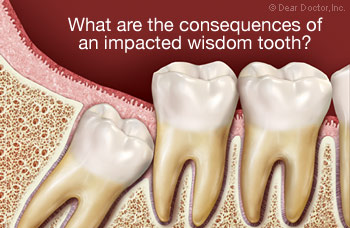
The number of teeth, however, did not reduce at the same rate. Modern humans still develop 32 teeth, including 4 wisdom teeth, in a jaw that often only has comfortable space for 28.
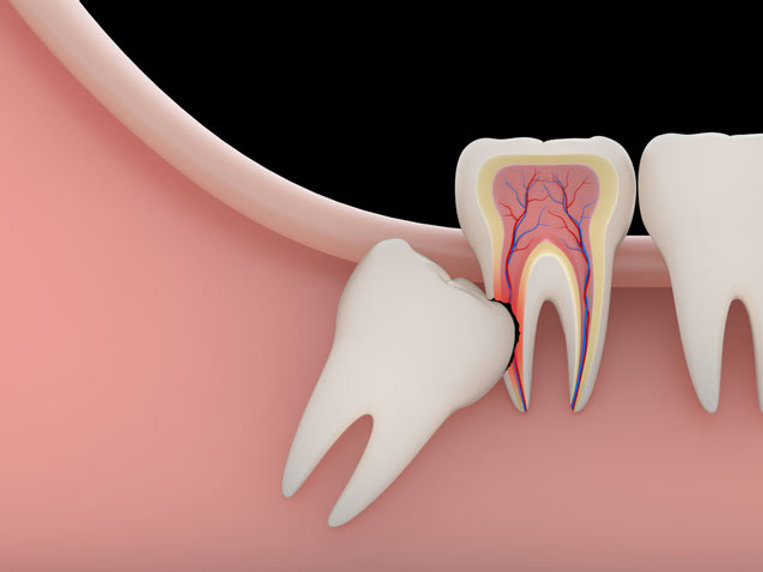
The result is that wisdom teeth frequently have nowhere to go. They become impacted, grow at angles, partially erupt, or push against neighboring teeth.
What Impacted Wisdom Teeth Actually Mean
An impacted wisdom tooth is one that cannot erupt normally because it is blocked — either by other teeth, by bone, or by the angle at which it is positioned in the jaw.
Impaction affects the majority of people. According to the American Association of Oral and Maxillofacial Surgeons, only around 15 percent of wisdom teeth do not need removal. The remaining 85 percent either cause problems or carry significant risk of future complications.
| Type of Impaction | Description | Risk Level |
|---|---|---|
| Soft tissue impaction | Crown has emerged from bone but gum covers it | Moderate — infection risk |
| Partial bony impaction | Tooth partially emerged from jawbone | High — decay and infection |
| Complete bony impaction | Tooth fully trapped inside jawbone | Very High — cyst, nerve risk |
| Distoangular impaction | Tooth angled backward toward jaw joint | High — structural damage |
| Horizontal impaction | Tooth growing sideways into adjacent molar | Very High — serious damage |
The type of impaction guides the complexity and approach of surgical removal.
Who Gets Wisdom Teeth and Who Doesn’t
Not everyone develops wisdom teeth. This is a genuine and growing evolutionary variation in the human species.
Approximately 35 percent of people are born without one or more wisdom teeth. A small percentage of people are born with none at all. This condition is called hypodontia or agenesis when it affects third molars specifically.
Genetics strongly influences whether wisdom teeth develop, how many develop, and how they position themselves. People of Asian descent and Arctic populations such as the Inuit have among the lowest rates of wisdom tooth development globally.
This variation is itself evidence of evolution in action — a population gradually losing a structure that has become functionally unnecessary.
The Eruption Timeline
Wisdom teeth have the longest and most complex development timeline of any tooth in the human mouth.
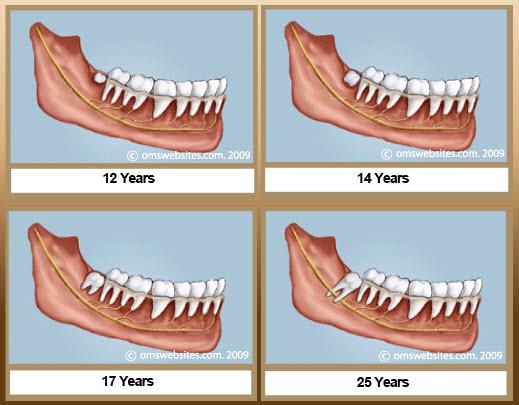
The development process begins surprisingly early — tooth buds for wisdom teeth start forming between the ages of 6 and 12 years. Root formation begins around age 16. The actual eruption through the gum line typically occurs between ages 17 and 22, though for many people it extends to 25 or beyond.
The entire process from tooth bud to full eruption — in cases where full eruption occurs — can span nearly two decades.
| Development Stage | Typical Age Range |
|---|---|
| Tooth bud formation begins | 6 to 12 years |
| Root formation starts | Around 16 years |
| Crown formation completes | 15 to 18 years |
| Eruption through gum begins | 17 to 22 years |
| Full eruption (if it occurs) | Up to 25 years or later |
| Rare late eruptions | Even into middle age or beyond |
This is why wisdom teeth are invisible on X-rays during early childhood but become clearly visible as teenagers age into their mid-teens.
Symptoms of Wisdom Teeth Erupting
Many people first become aware of their wisdom teeth not through a dentist but through symptoms. Recognizing these early signs helps people seek evaluation before problems become serious.
Common signs that wisdom teeth are beginning to erupt include pressure or dull aching pain at the very back of the jaw, red or swollen gum tissue behind the last visible molar, occasional headaches that seem to originate from the jaw area, a slight difficulty fully opening the mouth, and visible swelling along the jaw line.
When eruption becomes complicated or impacted, symptoms intensify significantly. Severe throbbing pain, persistent bad taste or bad breath despite good oral hygiene, jaw stiffness that limits mouth opening, visible swelling in the cheek or jaw, and fever are all signs that require urgent dental evaluation.
Common Problems Wisdom Teeth Cause
The combination of limited space and late eruption means wisdom teeth create a predictable set of dental problems that affect a large portion of the population.
Impaction and crowding: When there is not enough room, wisdom teeth push against adjacent second molars. This can damage the roots of neighboring teeth and shift the alignment of teeth that were previously straight.
Pericoronitis: When a wisdom tooth only partially erupts, the gum flap covering it traps bacteria and food particles. This creates a persistent infection called pericoronitis, which causes pain, swelling, and in severe cases, spreading infection toward the throat or jaw.
Cyst formation: Impacted wisdom teeth can develop cysts around them. These fluid-filled sacs slowly expand within the jawbone, gradually destroying bone tissue and potentially weakening the structural integrity of the mandible.
Decay and gum disease: Wisdom teeth are positioned in an area that is extremely difficult to clean effectively. Food and bacteria accumulate around them regardless of good oral hygiene habits, leading to cavities and gum disease that often affect both the wisdom tooth and the adjacent second molar.
Sinus complications: Upper wisdom teeth sometimes develop roots that extend into the maxillary sinuses. When these teeth become infected or impacted, they can cause sinus pressure, congestion, and chronic headaches that seem unrelated to dental issues.
What Dentists Look for on X-Rays
Modern dental imaging allows dentists and oral surgeons to assess wisdom teeth long before symptoms develop. Panoramic X-rays — which capture a full image of all teeth and both jaws in a single image — are standard for wisdom tooth evaluation.
Dentists examine the angle of the tooth, the amount of available space in the jaw, the proximity to the inferior alveolar nerve in the lower jaw, and the relationship to sinus cavities in the upper jaw.
Complex impactions may require cone beam computed tomography, a three-dimensional imaging technique that gives surgeons a precise map of the tooth’s position relative to surrounding nerves and bone structures before proceeding with removal.
When Wisdom Teeth Should Be Removed
Not every wisdom tooth requires removal. The decision depends on whether the tooth is causing problems or showing clear signs that problems are coming.
Removal is generally recommended when the tooth is impacted and cannot erupt normally, when there are signs of infection, decay, or cyst formation, when the tooth is damaging adjacent teeth, when gum disease is developing around a partially erupted tooth, or when imaging shows a high likelihood of future complications based on position and available space.
Early removal — typically between ages 16 and 25 — is favored when removal is indicated. Younger patients heal more quickly, root development is incomplete making extraction technically simpler, and complications from the procedure are statistically less common.
The American Association of Oral and Maxillofacial Surgeons states that monitoring asymptomatic wisdom teeth is acceptable but recommends regular follow-up imaging at minimum.
When Wisdom Teeth Can Stay
Some wisdom teeth erupt fully, align correctly with the bite, and can be cleaned as effectively as any other molar. These teeth do not need removal.
A wisdom tooth that meets these criteria — fully erupted, properly positioned, healthy, and accessible for cleaning — can be maintained in place indefinitely with good oral hygiene and regular monitoring.
The key requirement is that the tooth can genuinely be cleaned. If a toothbrush cannot reach behind it effectively, it will accumulate plaque and bacteria regardless of the person’s hygiene efforts.
Surprising Facts About Wisdom Teeth
The history and biology of wisdom teeth contain some genuinely unexpected details that even many dental patients do not know.
Wisdom teeth are a remarkable source of mesenchymal stem cells. Research has shown that the pulp tissue inside wisdom teeth contains stem cells capable of being used in tissue regeneration therapies. Studies are currently exploring their potential in ophthalmological and neurological treatments.
Nine out of ten people will develop at least one impacted wisdom tooth during their lifetime. That statistic makes wisdom tooth impaction one of the most common dental conditions in the world.
Some people develop extra wisdom teeth called supernumerary molars — fifth or even sixth molars that erupt further back than the standard wisdom teeth. These are rare but well-documented in dental literature.
Genetics also influence whether wisdom tooth roots wrap around the nerve canal — a factor that significantly affects removal difficulty and surgical planning.
Wisdom Teeth Across Cultures: A Rite of Passage
The universal nature of wisdom tooth naming across cultures reflects something deeper than linguistics. In many traditional communities throughout history, the eruption of wisdom teeth was treated as a genuine rite of passage.
In traditional Chinese medicine, the emergence of wisdom teeth was interpreted as a marker of critical life transition — the point at which a young person acquired adult responsibility.
In various Native American traditions, the appearance of wisdom teeth was associated with entering a period of heightened personal power and social standing.
In Japanese culture, the name oyashirazu — unknown to parents — reflects the reality that by the time these teeth appear, the young person has left the parental home and begun an independent life. The teeth emerge in private, away from family oversight.
The Korean name sa-rang-nee, or love teeth, connects the experience to the emotional intensity and pain of young love — drawing an analogy between the physical discomfort of erupting wisdom teeth and the emotional discomfort of first romantic experiences.
These cultural interpretations, however different, all converge on the same underlying idea: these teeth mark a specific and meaningful threshold in human development.
The Modern Medical Perspective
Today, wisdom teeth are classified by evolutionary biologists as a vestigial structure — a feature of human anatomy that once served a clear functional purpose but has been rendered largely obsolete by changes in the environment and lifestyle of the species.
They are in the same category as the appendix, the palmaris longus muscle in the forearm, and the coccyx — anatomical remnants of an earlier stage of human development.
The fact that many people are now born without them, and that this trait appears to be more common in younger generations, suggests that wisdom teeth are a structure the human species may be gradually phasing out of existence over evolutionary time.
Why the Name Has Lasted
The term wisdom teeth is over two thousand years old in concept and has been in continuous use in some form for the entire history of recorded medicine. Few medical terms have that kind of longevity.
It persisted because it is accurate in the most practical sense — these teeth do arrive at the age when people are becoming wiser. It is intuitive, memorable, and culturally resonant.
Even as dentistry has replaced the folk understanding of these teeth with precise surgical science, the ancient name has remained. It is one of the few places in modern healthcare where a name from ancient Greece still travels unchanged into a dental office conversation.
Frequently Asked Questions (FAQs)
Why are they called wisdom teeth if they don’t make you smarter?
The name refers to the age of eruption, not to intelligence. They erupt between 17 and 25, historically called the age of wisdom or early adulthood, so the name reflects timing, not any cognitive benefit they provide.
What is the origin of the term wisdom teeth in ancient history?
The term traces to ancient Greece, where they were called odontias sophias meaning teeth of wisdom, and to Latin dens sapientiae meaning tooth of wisdom, both reflecting the belief that they arrive when a person is becoming an adult.
What do other languages call wisdom teeth?
Other languages have their own versions — French says dents de sagesse, Spanish says muelas del juicio meaning teeth of judgment, Korean calls them love teeth, and Japanese calls them oyashirazu meaning unknown to parents.
When did Aristotle write about wisdom teeth?
Aristotle documented them in History of Animals in the fourth century BC, describing them as the last teeth to come in man and noting they appear at around age twenty in both sexes, one of the earliest clinical records of these teeth.
Why do wisdom teeth cause so many problems today?
Human jaws have shrunk over thousands of years due to diet changes and cooking, but the number of teeth has stayed the same. Modern jaws often lack sufficient room for third molars to erupt normally, causing impaction, infection, and crowding.
Does everyone get wisdom teeth?
No. About 35 percent of people are born without one or more wisdom teeth. A small percentage develop none at all. This variation is genetic and appears more commonly in people of Asian and Arctic descent.
At what age do wisdom teeth usually come in?
Wisdom teeth typically begin erupting between ages 17 and 22 and may continue emerging until age 25. Root formation begins around age 16, and in rare cases eruption can occur in middle age or later.
Are wisdom teeth always removed?
No. Wisdom teeth that are fully erupted, properly aligned, healthy, and accessible for cleaning can be kept indefinitely. Removal is recommended when impaction, infection, decay, or crowding threaten dental health.
What is the Latin name for wisdom teeth?
The Latin name is dens sapientiae, meaning tooth of wisdom. It was used throughout the Roman Empire in medical and anatomical writing and is the root from which most European language equivalents directly descend.
Are wisdom teeth useful for anything?
Historically they helped grind tough raw foods. Today they serve no necessary chewing function in most people. Research has found that wisdom tooth pulp contains valuable stem cells with potential use in tissue regeneration therapies.
Conclusion
Why are they called wisdom teeth connects a simple dental question to thousands of years of human history, cultural tradition, and linguistic evolution.
The name began in ancient Greece, traveled through Latin into every major European language, and arrived in modern English as the widely recognized term used by dentists and patients alike today.
These teeth were named for the one thing that made them distinctive — their timing.
Arriving during the age of wisdom, somewhere between late adolescence and full adulthood, they carry a name that proved durable enough to survive the entire span of recorded human civilization.
Whether they erupt smoothly and cause no trouble or become impacted and require surgical removal, wisdom teeth remain one of the most fascinating intersections of biology, history, and language in the human body.
Their name is a small but remarkable reminder that ancient observations about the human experience still shape the words we use in modern medicine every day.