Driver Behavior Monitoring: What Should Fleets Actually Track?
Driver behavior monitoring is most effective when fleets focus on behaviors that directly indicate safety risks and can be acted upon. Speeding, harsh braking, rapid acceleration, distracted driving, tailgating, fatigue, phone use, seat belt violations, and unsafe lane changes can reveal patterns that increase crash risk long before an incident occurs. In 2024, speeding was a contributing factor in 29% of U.S. traffic fatalities, while crashes involving distracted drivers resulted in 3,208 deaths and more than 315,000 injuries.
A targeted approach helps fleet managers move beyond simply collecting driving data to identifying which behaviors require coaching, intervention, or policy changes. Driver behavior monitoring software combines telematics data with video and AI-powered analysis to continuously detect risky events, identify recurring patterns, and provide actionable insights for individual drivers and entire fleets. This makes it possible to address unsafe habits proactively rather than waiting for a crash, complaint, or violation to reveal the problem.
What Driver Behaviors Should Fleets Monitor?
Effective driver behavior monitoring should focus on behaviors that provide clear signals of safety risk and can be addressed through coaching or intervention. The key indicators include speeding, harsh braking, rapid acceleration, distracted driving, tailgating, seat belt use, fatigue, phone use, and unsafe lane changes. Together, these behaviors can reveal aggressive driving, poor situational awareness, lack of attention, or fatigue. Research using large-scale telematics data has also found links between behaviors such as speeding, hard braking, and hard acceleration and collision risk, with the strength of each indicator varying by road type.
The important distinction is between an isolated event and a repeated pattern. A single harsh-braking event, for example, may be a reasonable response to a pedestrian or sudden obstacle, while frequent harsh braking may indicate following too closely or poor anticipation. Fleets should therefore consider frequency, severity, location, driving conditions, and behavior trends over time rather than automatically penalizing individual events.
No single metric provides a complete picture of driver risk. Combining telematics with video and AI-powered detection allows fleets to connect vehicle-level signals such as speeding or hard braking with behaviors such as phone use, distraction, fatigue, and tailgating. This broader view makes it easier to identify high-risk patterns, prioritize drivers for coaching, and intervene before unsafe habits contribute to an incident.
How Can Fleets Detect and Analyze Risky Driving?
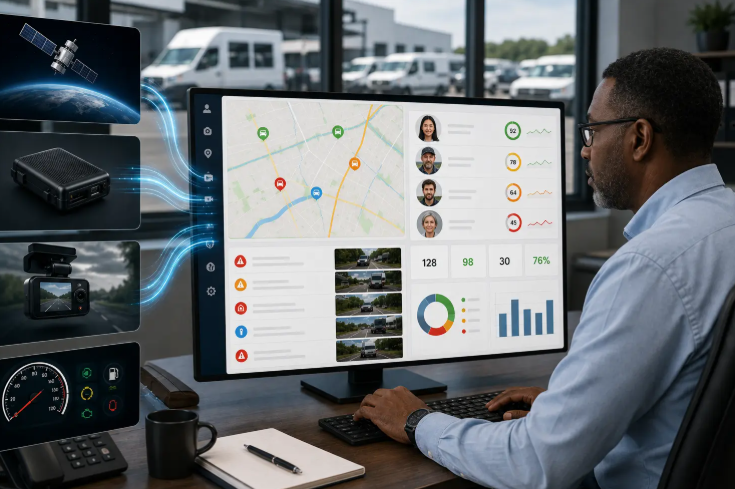
Modern fleets can combine several technologies to build a more complete picture of driver behavior. GPS tracking and telematics capture vehicle speed, location, acceleration, braking, cornering, and other driving patterns, while dash cameras provide visual context around what happened on the road. AI-powered video analysis adds another layer by detecting behaviors that vehicle sensors cannot see as easily, such as phone use, distraction, tailgating, fatigue, and seat belt violations.
Real-time alerts allow fleets to respond while risky behavior is happening rather than relying only on post-trip reports. Depending on the system, drivers can receive immediate in-cab warnings about speeding, distraction, or following too closely, while managers can receive notifications about critical events that require review. This creates an opportunity to correct behavior before it develops into an incident.
However, effective analysis should go beyond simply counting violations. Driver risk scores, historical trends, mileage, event frequency, severity, location, and video context help distinguish an isolated event from a recurring high-risk pattern. Combining multiple indicators also produces a more balanced assessment: for example, frequent speeding combined with harsh braking and tailgating may indicate substantially greater risk than any one behavior alone.
The ultimate goal is to turn this data into targeted action. Fleet managers can use behavior trends and event footage to identify specific coaching needs, assign personalized training, reinforce safety policies, and track whether driver performance improves over time. This shifts driver monitoring from simply documenting violations to creating a proactive safety program focused on preventing incidents.
How Should Fleets Turn Driver Behavior Data Into Action?
Collecting driver behavior data is only useful when fleets have a clear process for turning it into action. The first step is to establish meaningful thresholds for behaviors such as speeding, harsh braking, distraction, or fatigue, taking into account factors such as mileage, road conditions, vehicle type, and event severity. Instead of treating every violation equally, managers can prioritize repeated or high-risk behaviors and use driver risk scores to identify where intervention is most needed.
Behavioral trends can then guide targeted coaching and safety programs. A driver who repeatedly exceeds speed limits may need speed-management training, while frequent harsh braking or tailgating could indicate a need to improve following distance and hazard anticipation. Regular feedback should be specific, timely, and focused on improvement rather than punishment. Transparent scorecards, positive reinforcement, and follow-up assessments can help drivers understand why a behavior is risky and track their progress over time.
COAX Software brings this approach into custom fleet management software development, building solutions that can integrate telematics, GPS data, driver monitoring, analytics, and automated alerts into existing fleet safety workflows. Its fleet platforms can combine driver behavior scoring with real-time data and configurable KPIs, giving managers the tools to identify risks, trigger timely interventions, and measure safety improvements across the fleet.
From Monitoring to Safer Driving
Effective driver behavior monitoring is not about collecting as much data as possible—it is about identifying meaningful risk patterns and turning them into timely action. By focusing on behaviors such as speeding, harsh braking, distraction, fatigue, tailgating, and unsafe lane changes, fleets can better understand where safety risks are emerging and which drivers may need support.
Combining real-time detection with historical analysis, driver risk trends, and ongoing coaching allows fleets to move from reacting to incidents to preventing them. The ultimate goal is not punitive surveillance, but using driver data to provide timely feedback, reinforce safer habits, and build a stronger culture of road safety across the entire fleet.