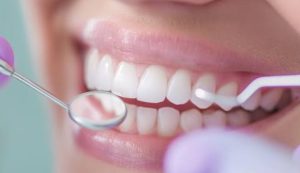
Why Are My Gums Black? Smoking and Other Causes 2026
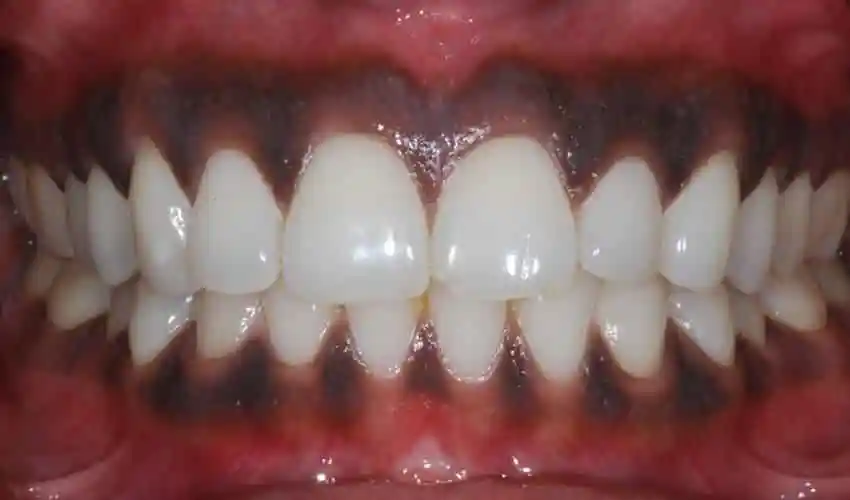
Why are my gums black is a question that concerns thousands of people every year, and the answer depends entirely on what is causing the discoloration.
Black or dark gums can be completely normal for some people based on their natural skin tone, or they can signal something that needs urgent dental or medical attention.
Smoking is one of the most common culprits, but it is far from the only one.
From tartar buildup and medications to rare systemic diseases and oral cancer, the causes range widely.
Are Black Gums Always a Problem?
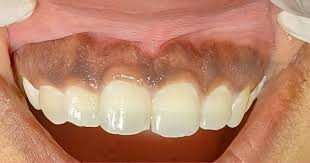
Not always. Gum color exists on a wide natural spectrum — from coral pink to light brown, dark brown, and even purplish-black.
Healthy gums are not required to be uniformly pink. For people with darker skin tones, including those of African, Asian, Mediterranean, and Middle Eastern heritage, naturally dark or blackish gums are completely normal and require no treatment.
The key question is not the color itself but whether the color has recently changed. A sudden change in gum color — especially in patches — paired with other symptoms like pain, swelling, or bleeding, is always worth investigating.
What Gives Gums Their Color?
Gum color is determined primarily by melanin — the same pigment responsible for skin, hair, and eye color.
Melanocytes are specialized cells that sit in the basal layer of the gum tissue and produce melanin. The more melanin produced, the darker the gum tissue appears.
Several factors influence how much melanin your melanocytes produce, including genetics, tobacco use, certain medications, hormonal conditions, and some systemic diseases. Understanding this helps explain why gums can turn dark.
The 12 Main Causes of Black Gums
Natural Melanin Pigmentation
The most common reason for dark or black gums is simple genetics. People with deeper skin tones naturally have higher levels of melanin in their oral tissue.
This pigmentation is usually even, bilateral (on both sides of the mouth), and has been present since childhood or early adulthood.
No treatment is medically necessary. If appearance is a concern, cosmetic gum depigmentation procedures are available and highly effective.
Smoking and Smoker’s Melanosis
Smoking is one of the most widely recognized answers to “why are my gums black.” The nicotine in tobacco stimulates melanocytes to overproduce melanin, causing a condition known as smoker’s melanosis.
This darkening typically appears on the front gums of the lower jaw first and can spread to the inside of the cheeks, palate, and lower lip. It may be patchy or diffuse.
The good news is that smoker’s melanosis is largely reversible. Research shows that quitting smoking often leads to gradual fading of the dark pigmentation, with many patients seeing significant improvement within three months of stopping.
Black Tartar Buildup
Tartar (calculus) is hardened dental plaque. When tartar sits on the teeth and under the gumline for long periods without removal, it can turn black.
Subgingival tartar — tartar that forms below the gumline — absorbs blood pigmentation and proteins from the surrounding tissue. This mixture gives it a characteristic black or very dark brown color that makes the gums appear black along the gumline.
Only a dental professional can remove tartar. Attempting to scrape it at home risks damaging gum tissue. The professional procedure is called scaling and root planing — a deep cleaning that removes buildup above and below the gumline.
Medications That Cause Gum Darkening
Several medications are known to cause dark discoloration of the gum tissue as a side effect.
Minocycline — commonly prescribed for acne and certain infections like chlamydia — is one of the most documented culprits. It can cause blue-gray to black pigmentation in the mouth, including the gums, teeth, and bone.
Other medications associated with oral pigmentation include antimalarial drugs, certain oral contraceptives, some chemotherapy agents (like busulfan and doxorubicin), and medications containing bismuth. If gum darkening began after starting a new medication, speak with your prescribing doctor about alternatives.
Amalgam Tattoo
An amalgam tattoo is a small, flat, blue-gray or black spot on the gum tissue caused by tiny particles of dental amalgam (silver filling material) becoming embedded in the gum during a dental procedure.
These spots are completely harmless, do not spread, and will not become cancerous. They typically appear next to a tooth with an existing amalgam filling.
A dentist can confirm an amalgam tattoo with a visual examination and X-ray, which may show tiny metallic particles. No treatment is needed unless the spot is cosmetically bothersome.
Acute Necrotizing Ulcerative Gingivitis (Trench Mouth)
Acute necrotizing ulcerative gingivitis (ANUG), often called trench mouth, is a severe and painful bacterial gum infection that can turn gums black or gray.
The blackish discoloration occurs when a layer of dead tissue builds up over the infected gum. Early symptoms include rapidly worsening gum pain, profuse bleeding, extreme bad breath, and visible ulcers at the edges of the teeth.
ANUG is caused by rapid bacterial overgrowth, often triggered by poor oral hygiene, stress, sleep deprivation, smoking, or an unhealthy diet. It requires immediate dental treatment — professional cleaning and antibiotics. This is not a condition to monitor and wait on.
Addison’s Disease
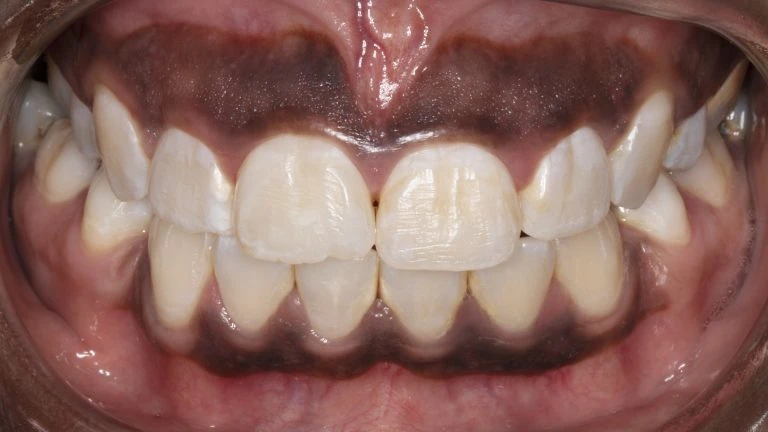
Addison’s disease is a rare but serious disorder of the adrenal glands, which sit on top of the kidneys. The adrenal glands fail to produce sufficient hormones, including cortisol and aldosterone.
As part of the body’s hormonal response to this insufficiency, melanocyte-stimulating hormone levels rise, causing increased melanin production throughout the body — including in the gums, lips, inside of the cheeks, and on skin over the knees, elbows, and palms.
Gum darkening can actually be one of the earliest visible signs of Addison’s disease, appearing as patches of hyperpigmentation across the gum tissue and oral mucosa. If you have dark gum patches alongside unexplained fatigue, weight loss, and dizziness, see a doctor for an adrenal evaluation.
Peutz-Jeghers Syndrome
Peutz-Jeghers syndrome is a rare hereditary condition caused by a gene mutation. It leads to the development of benign polyps in the gastrointestinal tract and characteristic dark pigmentation in and around the mouth.
Oral signs include dark blue or brown freckle-like spots on the gums, lips, inside of the cheeks, and the skin around the mouth, as well as on the fingers and toes.
It is typically also associated with abdominal cramping and vomiting from gastrointestinal polyps. Peutz-Jeghers syndrome carries a significantly elevated risk of certain cancers and requires ongoing specialist monitoring.
Gum Disease (Gingivitis and Periodontitis)
Gum disease in its early form (gingivitis) causes red, swollen, bleeding gums. If it advances to periodontitis, the gums can appear darker, discolored, and even blackish at the margins due to tissue damage and bacterial toxins.
Black tartar below the gumline — a direct product of untreated gum disease — contributes heavily to the darkened appearance.
Left untreated, periodontitis destroys the bone and tissue supporting the teeth, eventually leading to tooth loss. Professional treatment including deep cleaning, antibiotic therapy, and improved home care can halt its progression.
Oral Malignant Melanoma
Oral malignant melanoma is rare — accounting for only 1–2% of all oral malignancies — but it is aggressive and potentially life-threatening.
It typically appears as dark, irregularly shaped, rapidly growing patches that may be black, dark gray, purple, or red. Unlike stable pigmented spots, it tends to grow quickly, may be raised, and can bleed without trauma.
Because of the rich blood supply in the mouth, oral melanoma can spread rapidly. Early detection dramatically improves outcomes. Any unexplained, fast-growing, or irregular dark patch on the gums should be seen by a dentist or oral specialist immediately for biopsy.
Heavy Metal Exposure
Prolonged exposure to certain heavy metals — including lead, bismuth, mercury, arsenic, and silver — can cause gum discoloration.
A classic example is the “lead line” or “Burton’s line,” a bluish-black line along the gumline seen in cases of chronic lead poisoning.
This is uncommon in most modern environments but can still occur in occupational settings involving metal smelting, battery manufacturing, or other industrial exposures. If you work in these settings and notice unusual gum pigmentation, mention it to your physician.
Chromogenic Bacteria
Certain harmless bacteria in the mouth (chromogenic bacteria) can produce dark pigments that stain the gums and teeth.
These stains are external and generally superficial, sitting on the surface of the gum tissue and teeth rather than within the tissue itself.
A professional dental cleaning usually removes chromogenic stains completely. Improved daily brushing and flossing helps prevent their return.
Cause-by-Cause Comparison Table
| Cause | Appearance | Pain | Contagious | Urgency | Treatment |
|---|---|---|---|---|---|
| Natural Melanin Pigmentation | Even, bilateral dark color | No | No | None | None required |
| Smoker’s Melanosis | Patchy, front lower gums | No | No | Low | Quit smoking |
| Black Tartar | Along gumline, hard deposits | No | No | Moderate | Scaling and root planing |
| Minocycline/Medications | Blue-gray patches | No | No | Low | Review medication with doctor |
| Amalgam Tattoo | Small flat blue-black spot | No | No | None | None required |
| Trench Mouth (ANUG) | Gray-black dead tissue, ulcers | Severe | No | URGENT | Antibiotics + cleaning |
| Addison’s Disease | Diffuse patchy darkening | No | No | High | Treat underlying condition |
| Peutz-Jeghers Syndrome | Dark freckle-like spots | No | No | High | Specialist monitoring |
| Gum Disease | Dark, swollen margins | Mild–Moderate | No | Moderate | Professional cleaning, care |
| Oral Melanoma | Irregular, growing dark patch | May bleed | No | URGENT | Biopsy, oncology referral |
| Heavy Metal Exposure | Blue-black gumline | No | No | Moderate | Occupational health evaluation |
| Chromogenic Bacteria | Surface staining | No | No | Low | Professional cleaning |
Black Gums from Smoking: A Closer Look
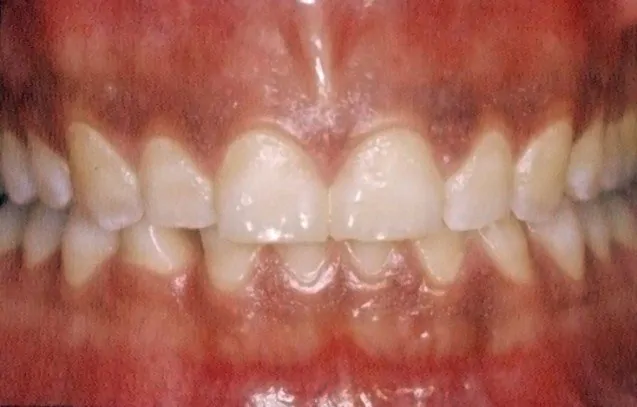
Smoking is consistently the most searched cause of black gums, and it deserves a detailed look.
Tobacco smoke irritates the oral tissue and directly stimulates melanocytes in the gum tissue. The nicotine acts as the trigger, causing cells to produce far more melanin than they normally would.
Smoker’s melanosis is most visible on the front surface of the lower gums. It may also affect the inside of the cheeks, the palate, and the lower lip. In Caucasian individuals, the contrast is most striking because the baseline gum pigmentation is lowest.
Crucially, smoker’s melanosis is benign and not precancerous. However, smoking also significantly increases the risk of actual oral cancer, including oral melanoma, gum disease, and oral infections. So while the dark color itself may not be dangerous, the habit causing it absolutely is.
Studies confirm that quitting smoking reduces gum pigmentation. Most patients see meaningful lightening within three months of cessation.
How to Tell If Black Gums Are Serious
Not every dark gum warrants panic, but certain features distinguish harmless pigmentation from something requiring urgent attention.
Reassuring signs (likely benign):
- Color has been present since childhood or as long as you can remember
- Darkening is even and symmetrical across both sides of the mouth
- No pain, swelling, bleeding, or other symptoms
- You are a long-term smoker and color has been stable for years
- Discoloration appeared after starting a new medication
Warning signs (see a dentist promptly):
- Dark patch appeared suddenly or is growing rapidly
- The spot has irregular borders or multiple colors
- The area bleeds spontaneously or with gentle touch
- Discoloration is accompanied by pain, ulcers, or fever
- You have unexplained fatigue, weight loss, or dizziness alongside gum darkening
- The patch feels raised or firm
Any combination of the warning signs above warrants a dental appointment within days, not weeks.
Treatment Options for Black Gums
Treatment depends entirely on the underlying cause. There is no single solution for all types of black gum discoloration.
Quitting Smoking
For smoker’s melanosis, quitting tobacco is the most effective and direct intervention. Research shows meaningful reduction in gum darkening within three months for most people.
Nicotine replacement therapy, prescription medications like varenicline, and behavioral support all significantly improve quit rates. Your doctor or dentist can refer you to appropriate smoking cessation support.
Professional Dental Cleaning
For tartar-related black gums, scaling and root planing removes hardened deposits above and below the gumline. This procedure is performed by a dentist or hygienist.
For chromogenic bacteria stains, a standard professional polish is usually sufficient.
Regular dental checkups — twice a year for most people — prevent tartar from accumulating to the point where gums darken.
Laser Gum Depigmentation
Laser gum depigmentation is a cosmetic dental procedure that uses laser energy to target and remove melanin-producing cells from the upper layer of gum tissue.
Studies show it is effective and well-tolerated, with results lasting many years. The procedure typically takes under an hour per arch, requires little to no downtime, and causes minimal discomfort.
After treatment, the gums heal and new tissue grows in with significantly lighter pigmentation. Some patients require a second session for optimal results.
Surgical Gum Depigmentation
For patients who prefer alternatives to laser therapy or for whom laser is not suitable, surgical depigmentation using a scalpel is performed.
The top layer of pigmented gum tissue is carefully removed, exposing lighter underlying tissue. The procedure is effective but involves a slightly longer recovery period than laser treatment.
Medication Review and Change
If a medication like minocycline is causing gum darkening, switching to an alternative treatment — after discussion with the prescribing physician — may resolve or prevent further discoloration.
Do not stop prescribed medication without medical advice. The decision to change must be weighed against the medication’s therapeutic necessity.
Treating Underlying Medical Conditions
For Addison’s disease, hormone replacement therapy (hydrocortisone and fludrocortisone) manages the disease and can reduce melanin overproduction. The gum darkening itself is a secondary effect of the hormonal imbalance.
For Peutz-Jeghers syndrome, specialist oncology and gastroenterology monitoring is essential. The pigmentation itself is not directly treated but the polyps and cancer risk require ongoing management.
Antibiotics for Trench Mouth
ANUG requires professional cleaning to remove dead tissue and antibiotics (commonly metronidazole or amoxicillin) to control the bacterial infection.
Medicated mouthwash and improved oral hygiene after treatment help prevent recurrence. Recovery is usually rapid once treatment begins.
How to Prevent Black Gums
Prevention is far more straightforward than treatment for most causes of gum darkening.
Brush effectively twice a day. Use a soft-bristled toothbrush and fluoride toothpaste. Brush along the gumline at a 45-degree angle to remove plaque before it hardens into tartar.
Floss once daily. Flossing removes bacteria and debris from between teeth and along the gumline where your toothbrush cannot reach. Subgingival tartar starts with plaque between the teeth.
Visit your dentist every six months. Professional cleanings remove tartar before it darkens. Regular checkups also catch early signs of gum disease, oral infections, and suspicious pigment changes.
Quit smoking. There is no oral health argument for continuing tobacco use. Quitting protects against smoker’s melanosis, gum disease, oral cancer, and a wide range of systemic conditions.
Drink plenty of water. Water helps wash away food particles and bacteria between brushing, reducing plaque accumulation and the bacterial environment in which gum infections thrive.
Review medications regularly. If you are on long-term medications known to cause oral pigmentation, ask your doctor at annual reviews whether alternatives exist.
Reduce sugar intake. Sugar feeds the bacteria responsible for plaque, tartar, and gum disease. Cutting back on sugary drinks and foods significantly slows tartar formation.
When to See a Dentist About Black Gums
Many people delay dental visits because black gums are painless and seem harmless. This is a mistake in certain situations.
See a dentist as soon as possible if:
- Gum color has changed noticeably in the past few weeks or months
- You notice a dark spot that is growing, changing shape, or has irregular borders
- The dark area bleeds when touched gently or spontaneously
- You have gum pain, ulcers, or severe bad breath alongside darkening
- You have fever alongside swollen, dark, painful gums (possible ANUG)
- You are diabetic — gum disease is a serious complication of diabetes and needs monitoring
A routine appointment is fine if:
- Gums have been dark your whole life and nothing has changed
- Darkening appeared gradually after starting a medication
- You are a long-term smoker and gum color has been stable
Black Gums vs. Dark Gums: Understanding the Spectrum
It is worth understanding that not all dark gums are the same shade or cause the same concern.
| Description | Most Likely Cause | Action Needed |
|---|---|---|
| Even dark brown/black, lifelong | Natural melanin pigmentation | None |
| Patchy brown-black, smoker | Smoker’s melanosis | Quit smoking |
| Black line along gumline | Black tartar buildup | Dental cleaning |
| Small flat blue-black spot near filling | Amalgam tattoo | None (confirm with dentist) |
| Grayish-black dead tissue + pain + fever | Trench mouth (ANUG) | Urgent dental care |
| Diffuse darkening + fatigue + weight loss | Possible Addison’s disease | See physician |
| Rapidly growing irregular dark patch | Possible oral melanoma | Urgent biopsy |
| Dark spots around mouth + GI symptoms | Possible Peutz-Jeghers syndrome | Specialist referral |
The Link Between Black Gums and Oral Health Overall
The state of your gums is a reliable indicator of your overall oral health — and in many cases, your systemic health too.
Gum disease has been linked in research to cardiovascular disease, diabetes complications, adverse pregnancy outcomes, and respiratory conditions. Gum changes that signal systemic disease — like Addison’s or Peutz-Jeghers — can literally save lives when caught early.
Do not dismiss changes in your gum color as merely cosmetic. Even if the cause turns out to be benign, a dental professional confirming that is far better than assuming it and being wrong.
Natural Remedies: What Actually Works and What Does Not
Online sources often promote home remedies for black gums including coconut oil pulling, turmeric paste, and hydrogen peroxide rinses. It is worth being honest about what the evidence supports.
Coconut oil pulling may have mild antibacterial effects but will not remove tartar, reverse smoker’s melanosis, or treat any medical cause of dark gums. It is a useful complement to brushing but not a replacement for professional care.
Hydrogen peroxide in low dilutions is used in some whitening mouthwashes and may reduce surface staining slightly. It does not address the melanin in gum tissue.
Turmeric has some anti-inflammatory properties but no documented effect on gum pigmentation.
What does work at home: quitting smoking, flossing daily, brushing thoroughly twice a day, reducing sugar, and keeping dental appointments. These are evidence-based habits that prevent and address the most common causes of dark gums.
Frequently Asked Questions (FAQs)
Why are my gums black all of a sudden?
Sudden gum darkening can indicate trench mouth (ANUG), a medication side effect, or — in rare cases — early oral melanoma. Any rapid change in gum color should be evaluated by a dentist promptly rather than monitored at home.
Can smoking really turn your gums black?
Yes. The nicotine in tobacco stimulates melanocytes in the gum tissue to overproduce melanin, causing a condition called smoker’s melanosis that appears as brown to black patches, most often on the lower front gums.
Will black gums from smoking go away if I quit?
Yes, in most cases. Research confirms that quitting smoking leads to gradual reduction in gum pigmentation, with significant lightening visible for many patients within three months of stopping tobacco use.
Are black gums a sign of cancer?
Rarely, but oral malignant melanoma can appear as dark patches on the gums. Warning signs include a rapidly growing patch with irregular borders that bleeds on touch. Any suspicious spot warrants an urgent dental visit and possible biopsy.
Is it normal to have black gums?
Yes — for many people. Individuals with African, Asian, Mediterranean, or Middle Eastern heritage often have naturally dark or black gums due to higher genetic melanin levels. This is healthy and normal if the color has been stable since childhood.
What is an amalgam tattoo on the gums?
An amalgam tattoo is a small, flat, blue-gray or black spot caused by dental filling particles embedding in the gum during a procedure. It is completely harmless, does not grow, and does not require treatment unless cosmetically bothersome.
How do dentists treat black gums?
Treatment depends on the cause — scaling and root planing removes black tartar; laser or surgical depigmentation removes excess melanin for cosmetic reasons; antibiotics treat infection; and medication changes address drug-induced darkening.
Can gum disease cause black gums?
Yes. Advanced gum disease causes tissue damage and accumulates black subgingival tartar below the gumline, both of which make gums appear dark. Treating gum disease with professional cleaning and improved hygiene reverses much of this discoloration.
What is laser gum depigmentation?
Laser gum depigmentation is a cosmetic dental procedure where laser energy removes melanin-producing cells from the surface of the gum tissue, revealing lighter gums beneath. Results are long-lasting and the procedure usually takes under an hour per arch.
When should I see a doctor about my black gums?
See a dentist promptly if gum color changed suddenly, a dark spot is growing or has irregular borders, the area bleeds with gentle touch, or you have pain, ulcers, or fever. Stable, lifelong dark gums with no other symptoms can be evaluated at a routine appointment.
Conclusion
Why are my gums black has a wide range of answers — from the completely normal to the genuinely urgent.
For many people, dark gums are simply the result of natural melanin pigmentation that has been present their entire lives and requires nothing more than reassurance.
For others, gum blackening signals something that needs prompt attention: a bacterial infection requiring antibiotics, a systemic condition like Addison’s disease, medication side effects, or in rare cases, the early signs of oral melanoma.
Smoking sits in the middle — not immediately dangerous in terms of the pigmentation itself, but a serious risk factor for oral cancer, gum disease, and overall health.
The most important step is knowing the difference. If your gums have recently changed color, if a dark patch is growing, or if other symptoms accompany the discoloration, do not wait. See your dentist, get a clear diagnosis, and take action.
Black gums are not always a problem — but assuming they are not, without checking, is a mistake worth avoiding.