Why Is My Tire Pressure Light Blinking? Causes & Fixes 2026
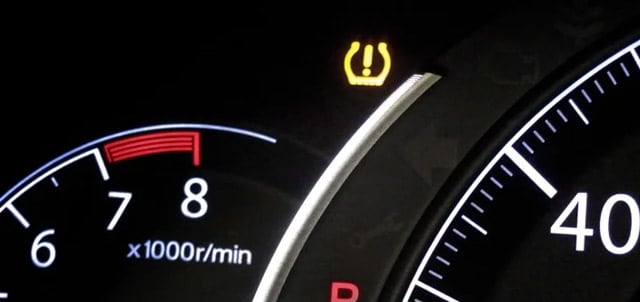
Why is my tire pressure light blinking? This is one of the most common dashboard warning questions drivers ask in 2026. A blinking tire pressure light does not always mean your tires need air.
It usually points to a deeper issue with your Tire Pressure Monitoring System (TPMS). Understanding the difference between a solid light and a blinking light can save you time, money, and prevent a dangerous situation on the road.
What Is the Tire Pressure Monitoring System (TPMS)?
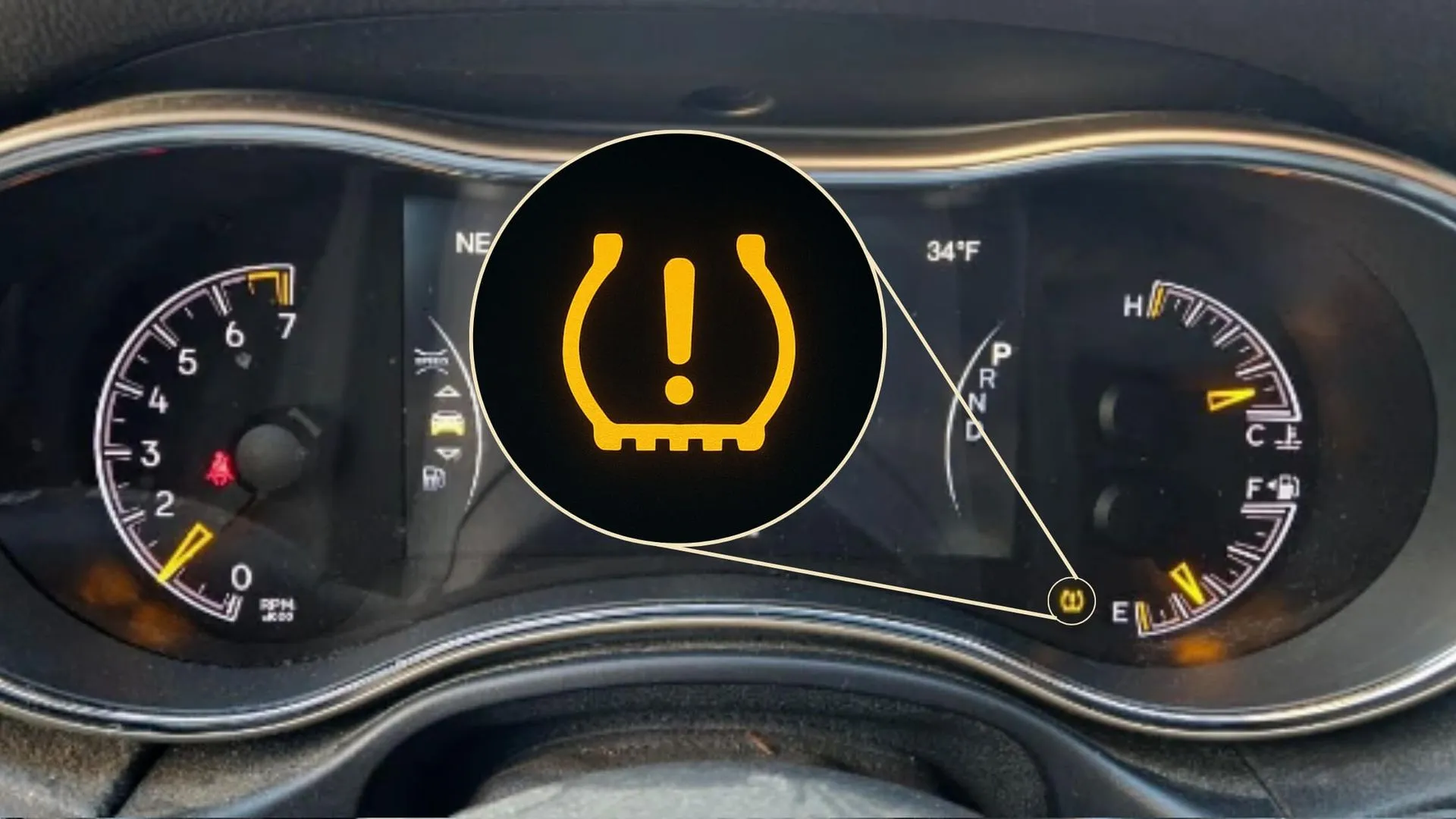
The Tire Pressure Monitoring System, commonly called TPMS, is a built-in electronic safety feature in all vehicles sold in the United States after September 2007.
It continuously monitors the air pressure inside each tire and sends a real-time signal to your vehicle’s onboard computer.
When pressure drops or the system detects a fault, a warning light shaped like a horseshoe with an exclamation point appears on your dashboard.
Solid Light vs Blinking Light: Key Difference
This is the most important distinction every driver must understand.
| Light Behavior | What It Means | What You Should Do |
|---|---|---|
| Solid ON | One or more tires have low pressure | Check and inflate tires to correct PSI |
| Blinks for 60–90 seconds then stays solid | TPMS system fault detected | Schedule TPMS diagnostic |
| Blinks continuously while driving | Sensor communication failure | Inspect sensors and visit a shop |
| Comes on and off randomly | Borderline pressure or weak sensor | Check pressure and monitor closely |
A solid light is a pressure problem. A blinking light is a system problem.
Why Is My Tire Pressure Light Blinking? Top 7 Causes
Cause 1: Dead or Weak TPMS Sensor Battery
Each TPMS sensor runs on a small internal battery, similar to a watch battery. These batteries typically last 5 to 10 years.
When the battery weakens, the sensor cannot broadcast a signal to the vehicle’s computer, and the tire pressure light begins to blink.
This is the single most common cause of a blinking TPMS light, especially in vehicles that are more than five years old.
Cause 2: Damaged or Faulty TPMS Sensor
Sensors sit inside the wheel, mounted to the valve stem. Road debris, potholes, curb impacts, and aggressive tire changes can physically damage a sensor.
A damaged sensor sends incorrect readings or no readings at all. The system detects this mismatch and triggers the blinking warning light.
Replacing the damaged sensor and reprogramming the system usually resolves this issue.
Cause 3: TPMS Sensor Not Reprogrammed After Tire Rotation or Replacement
When you rotate, replace, or swap tires, the sensors move to new positions. The TPMS system assigns each sensor to a specific wheel location.
If the system is not reprogrammed after the change, it detects a position mismatch and blinks the warning light.
Many tire shops forget to perform a TPMS relearn procedure after rotation, which is why you might see the light shortly after a service visit.
Cause 4: Extreme Cold Weather
Cold temperatures reduce tire pressure by roughly 1 PSI for every 10°F drop in temperature.
In very cold weather, aging sensors with weak batteries may also fail to communicate properly, triggering a blinking light even if your tire pressure is close to correct.
This is extremely common in winter months and is why TPMS issues spike during cold snaps.
Cause 5: Wrong or Incompatible Sensor Installed
If a tire shop installs an aftermarket or incompatible TPMS sensor, the vehicle’s computer may not recognize the signal frequency or sensor ID.
The system treats an unrecognized sensor as a fault and blinks the warning light.
Always confirm that replacement sensors are compatible with your vehicle’s make, model, and year before installation.
Cause 6: TPMS Module or Receiver Malfunction
Beyond the individual sensors, there is a central TPMS control module or receiver in the vehicle that processes all sensor signals.
If this module develops a software glitch, hardware fault, or electrical problem, it may fail to read signals from otherwise working sensors.
This causes the blinking light even when all four tires have correct pressure and all sensors have good batteries.
Cause 7: Electrical Issues
Loose wiring, blown fuses, or a weak car battery can disrupt communication between TPMS sensors and the vehicle’s computer.
These electrical faults are less common but can cause persistent blinking that does not go away even after sensor replacement.
A full electrical diagnostic is needed to rule out this cause if everything else checks out fine.
Blinking TPMS Light After Cold Weather: What to Do
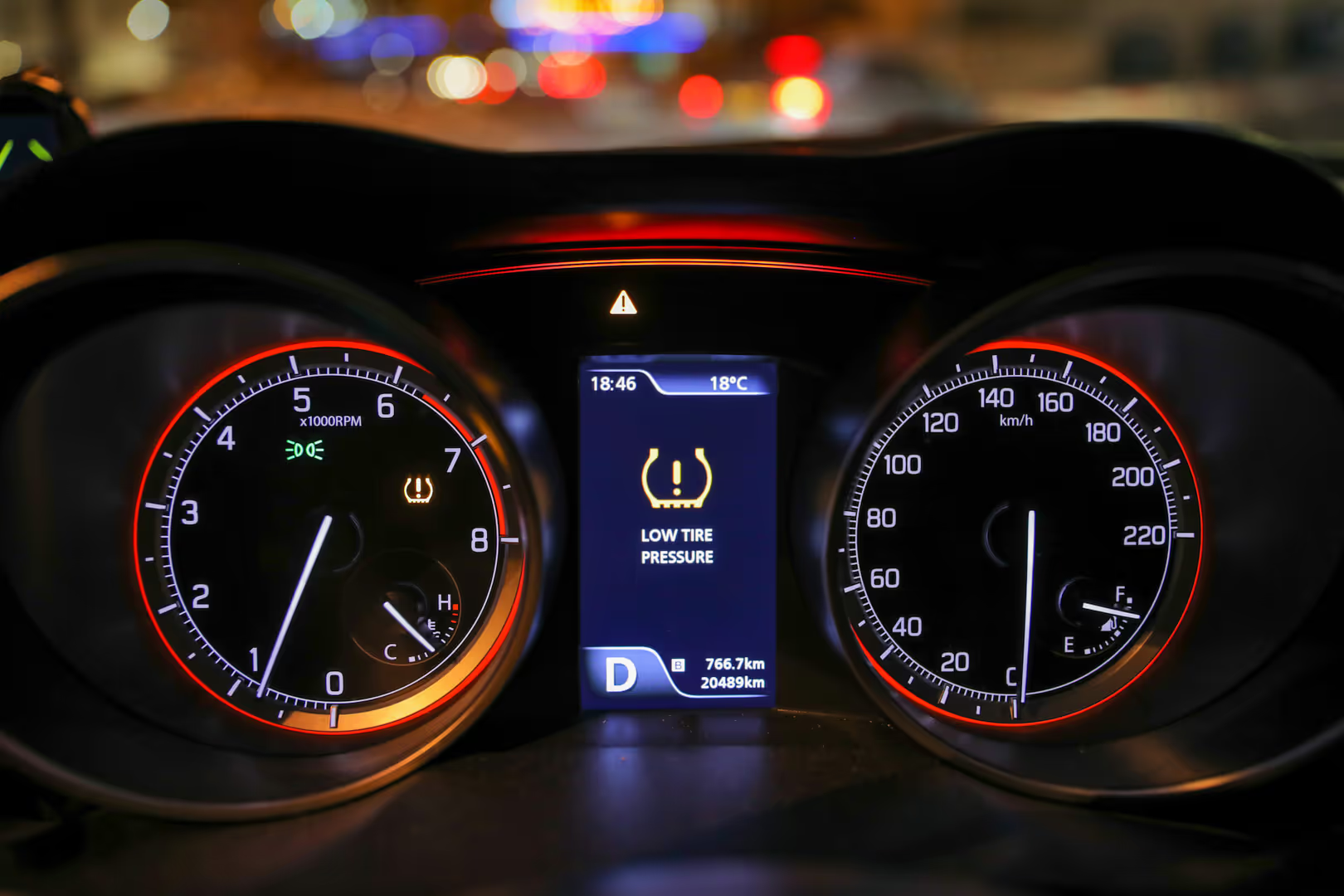
Cold weather is responsible for a large percentage of winter TPMS complaints. Here is a simple step-by-step response plan.
Step 1: Check all four tires including the spare with a reliable pressure gauge.
Step 2: Inflate tires to the PSI listed on your driver-side door jamb sticker, not the number on the tire sidewall.
Step 3: Drive at 50 mph or above for 10 to 15 minutes to let the system recalibrate.
Step 4: If the light continues to blink after correct inflation and driving, schedule a TPMS diagnostic.
Step 5: Do not ignore a persistent blinking light. Without a working TPMS, you have no warning if a tire goes dangerously low.
Recommended Tire Pressure by Vehicle Type
| Vehicle Type | Typical Recommended PSI | Notes |
|---|---|---|
| Compact Cars | 30–35 PSI | Check door jamb sticker |
| Sedans | 32–35 PSI | Front and rear may differ |
| SUVs | 33–38 PSI | Check each axle separately |
| Pickup Trucks | 35–45 PSI | Load affects recommended PSI |
| Electric Vehicles | 38–44 PSI | Often higher due to battery weight |
Always check your owner’s manual or door jamb sticker for the exact recommended PSI for your vehicle. Never use the maximum PSI number printed on the tire itself.
How to Reset a Blinking Tire Pressure Light
Resetting the TPMS light only works if the underlying issue has been resolved. Attempting a reset without fixing the root cause will cause the light to come back on.
Method 1: Drive at Speed
Inflate all tires to the correct PSI and then drive at or above 50 mph for 10 to 15 minutes.
Many vehicles reset the TPMS light automatically after detecting stable, correct pressure readings during driving.
This is the easiest method and works for most cases where low pressure was the original trigger.
Method 2: Use the TPMS Reset Button
Turn the ignition to the ON position without starting the engine.
Locate the TPMS reset button, usually found under or near the steering wheel.
Hold the button down until the TPMS light blinks three times, then release. Start the vehicle and drive for about 20 minutes.
Method 3: Inflate, Deflate, and Reinflate
Inflate all tires to 3 PSI over the recommended level, then fully deflate all tires including the spare.
Reinflate all tires back to the correct recommended PSI.
This process forces the sensors to recalibrate and can clear false fault codes in the system.
Method 4: Disconnect the Battery
Turn off the vehicle and disconnect the positive battery cable using a wrench.
Turn the ignition to the ON position and honk the horn for three seconds to discharge remaining stored power.
Reconnect the battery and start the vehicle. This hard reset clears all stored codes including TPMS faults.
TPMS Sensor Replacement: Cost Breakdown
If a sensor is dead or damaged, it must be replaced. Here is a realistic cost breakdown for 2026.
| Service | Estimated Cost |
|---|---|
| Single TPMS sensor (parts only) | $40 – $200 |
| Single sensor replacement (parts + labor) | $50 – $350 |
| Full set of 4 sensors (parts + labor) | $200 – $900+ |
| TPMS diagnostic fee | $50 – $100 |
| TPMS relearn / reprogramming only | $20 – $75 |
Costs vary by vehicle brand, sensor brand (OEM vs aftermarket), and labor rates in your area. Dealer pricing is typically higher than independent tire shops.
TPMS sensor batteries are sealed inside the sensor unit and cannot be replaced separately. When the battery dies, the entire sensor must be replaced.
Direct vs Indirect TPMS: Understanding Your System
There are two types of TPMS systems, and understanding yours helps diagnose the blinking light correctly.
Direct TPMS uses individual pressure sensors mounted inside each wheel. These transmit live PSI data. Most modern vehicles use this system. Sensors have batteries that wear out over time.
Indirect TPMS uses the vehicle’s ABS wheel-speed sensors to detect if one tire is rotating at a different speed, which indicates lower pressure. There are no individual tire sensors to replace or worry about. Some 2025 Honda Civic models use this system.
If your vehicle has indirect TPMS, a blinking light is almost always a system or ABS fault rather than a sensor battery issue.
Can You Drive With a Blinking Tire Pressure Light?
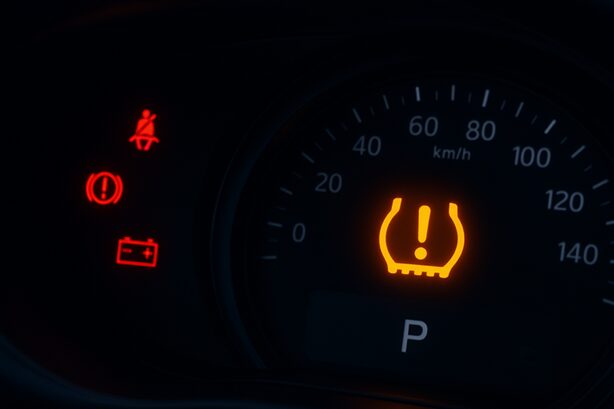
Technically yes, but it is not recommended for more than a short distance.
When the TPMS light is blinking, the system is not reliably monitoring your tire pressure. That means a tire could go dangerously low without triggering any warning.
Check your tire pressure manually before continuing to drive. If all tires are properly inflated, you can drive to a shop without immediate danger.
Do not ignore the blinking light for extended periods. A vehicle without functioning TPMS is essentially driving blind to potential tire failure.
TPMS Light Blinking on Specific Vehicles
Different manufacturers have slightly different TPMS behavior. Here is what to expect on some of the most popular vehicles.
Toyota and Lexus
Toyota TPMS lights typically blink for about 60 to 90 seconds after startup and then remain solid to indicate a fault.
The TPMS reset button is usually found under the steering wheel on most Toyota models. Holding it until the light blinks three times initiates the relearn process.
Nissan
On Nissan vehicles, a blinking TPMS light usually means a sensor communication issue rather than low pressure.
Nissan TPMS reset can be performed by pressing the reset button until the light blinks three times, then driving at 30 mph for 10 minutes.
Honda and Acura
Some newer Honda models use indirect TPMS. In those cases, inflating tires and driving is usually all that is needed to clear the warning.
For models with direct TPMS, the process mirrors Toyota and Nissan resets.
Ford, Chevy, and GMC
American trucks and SUVs often require a TPMS relearn tool when sensors are replaced, as they do not always perform automatic relearns.
Many Ford and GM vehicles prompt you to press a special button sequence through the driver information center to initiate sensor learning.
When to See a Professional
You should visit a tire shop or auto repair technician if any of the following apply.
The blinking light does not go away after correctly inflating all tires and driving for 15 or more minutes.
The light keeps returning even after you perform a manual TPMS reset.
Your vehicle is more than seven years old and the TPMS sensors have never been replaced.
You recently had tires rotated, replaced, or repaired and the light came on immediately after.
You notice a tire that consistently loses pressure faster than the others.
A qualified technician with a TPMS diagnostic tool can read sensor fault codes, identify the exact failing sensor, and reprogram the system after replacement.
TPMS Maintenance Tips to Prevent Blinking Lights
Following a few simple practices can significantly reduce TPMS problems over the long term.
Check tire pressure manually once per month, even if no warning lights are on.
Ask your tire shop to perform a TPMS relearn after every tire rotation or replacement.
Replace all four sensors at the same time if one fails and the vehicle is more than eight years old. The others are likely near end of life too.
Avoid using tire sealant sprays unless absolutely necessary. Sealant foam can coat the sensor inside the tire and cause false readings or permanent sensor damage.
Keep the valve stem caps in place at all times. They protect the sensor valve from dirt, moisture, and corrosion.
Monitor tire pressure more frequently during winter months when temperature swings cause greater pressure fluctuation.
TPMS Sensor Lifespan at a Glance
| Factor | Impact on Sensor Life |
|---|---|
| Battery chemistry | Non-replaceable sealed battery |
| Average lifespan | 5–10 years |
| Cold climate | Shortens battery performance |
| Aggressive driving | Increases physical damage risk |
| Tire sealant use | Can damage sensor permanently |
| OEM vs aftermarket | OEM sensors typically last longer |
Frequently Asked Questions (FAQs)
Why is my tire pressure light blinking and not staying solid?
A blinking light means the TPMS system has a fault, not just low tire pressure. Solid means low pressure; blinking means sensor or system issue.
Can I drive with the tire pressure light blinking?
Yes, for a short distance, but check all tire pressures manually first. A blinking TPMS means the system cannot alert you to future pressure drops.
How long do TPMS sensor batteries last?
TPMS sensor batteries typically last 5 to 10 years. They are sealed inside the sensor and cannot be replaced separately.
Will the TPMS light reset itself?
Sometimes. Many vehicles auto-reset after driving above 50 mph for 10 to 15 minutes once pressure is correct. A system fault may require a manual reset or repair.
How much does TPMS sensor replacement cost?
Replacing a single TPMS sensor typically costs between $50 and $350 for parts and labor. A full set of four can cost $200 to over $900 depending on vehicle and location.
Why is my tire pressure light blinking after I added air?
The blinking after inflation means there is still a TPMS system fault, likely a dead sensor battery, positioning mismatch from a tire rotation, or need for a manual reset.
Where is the TPMS reset button?
On most vehicles it is located under or near the steering wheel. Some vehicles use a steering wheel button or touchscreen menu. Always check your owner’s manual for the exact location.
Does cold weather cause the tire pressure light to blink?
Cold weather causes tire pressure to drop and can weaken aging sensor batteries, both of which trigger the TPMS light. Inflating tires to correct PSI and driving usually resolves it.
What is the difference between direct and indirect TPMS?
Direct TPMS uses in-wheel pressure sensors with batteries. Indirect TPMS uses ABS wheel-speed sensors and has no individual tire sensors to replace.
How often should I check tire pressure manually?
Check tire pressure manually at least once per month and before any long trip, regardless of whether the TPMS light is on or off.
Conclusion
A blinking tire pressure light is your vehicle’s way of telling you that the Tire Pressure Monitoring System needs attention, and the issue goes beyond simply needing more air. The most common causes include a dead sensor battery, a damaged sensor, a missed TPMS relearn after tire service, cold weather effects, or an incompatible replacement sensor.
In most cases, the fix is straightforward: check your tire pressure, attempt a reset, and if the light persists, visit a trusted shop for a TPMS diagnostic. Do not ignore a blinking TPMS warning light for long.
Without a functioning system, you lose your early warning against dangerous tire pressure drops. Regular monthly pressure checks, proper post-rotation relearns, and timely sensor replacement will keep your TPMS working reliably and your drives safe in 2026 and beyond.