Why Is My Cat Biting Me? Causes & How to Stop It 2026
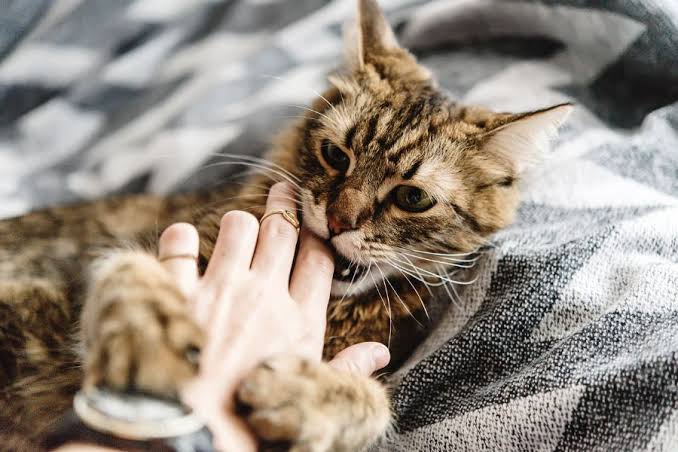
Why is my cat biting me? It’s one of the most common questions cat owners type into Google after a calm cuddle session suddenly turns into a surprise nip.
Cats bite for many reasons — play, overstimulation, fear, pain, or simple communication — and almost none of them mean your cat is angry at you.
Why Is My Cat Biting Me? The Short Answer
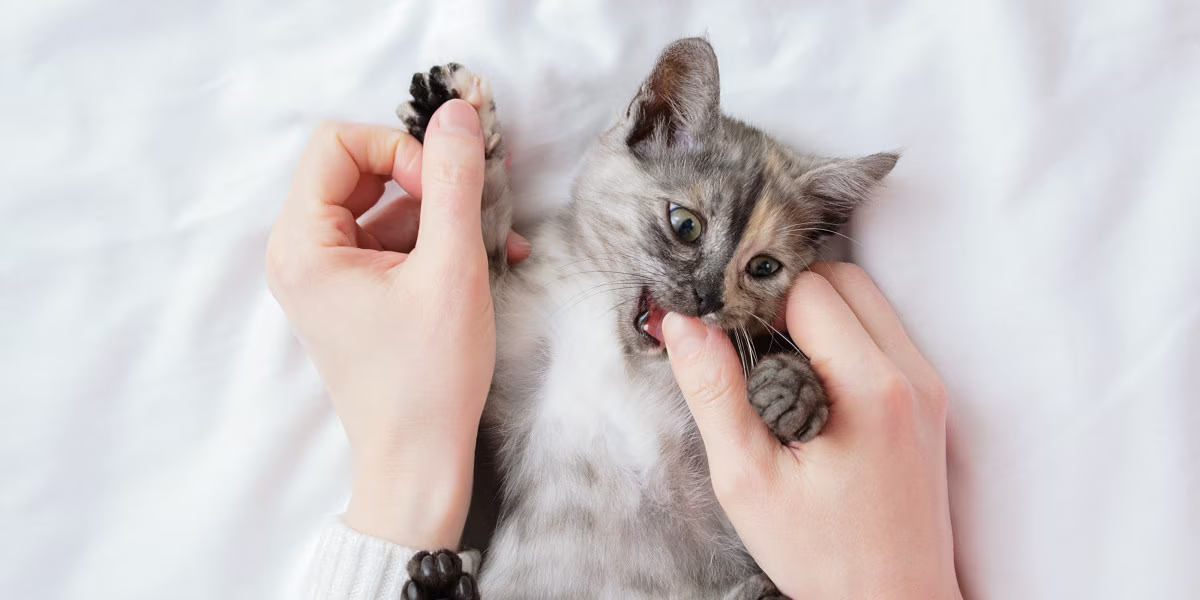
Most cat bites fall into one of a few categories: playful, affectionate, overstimulated, fearful, territorial, or medical. None of these are “bad” cat behavior — they’re communication.
Your cat doesn’t have hands or words, so teeth (and claws) become the main tool for saying “stop,” “I’m scared,” “play with me,” or “something hurts.” Once you know which category your cat falls into, fixing the behavior becomes much easier.
Common Reasons Cats Bite — At a Glance
This quick-reference table sums up the most frequent triggers so you can identify your cat’s pattern before reading the full breakdown below.
| Reason | What It Looks Like | Quick Fix |
|---|---|---|
| Play aggression | Ambushing ankles, biting hands during play | Switch to wand toys |
| Overstimulation | Sudden bite mid-petting session | Watch for tail flicks, stop petting |
| Love bites | Gentle nibble while relaxed | No fix needed, it’s affection |
| Fear or defense | Quick, hard bite with hissing | Give space, remove the trigger |
| Pain or illness | Bite when touched in one spot | Schedule a vet visit |
| Territorial behavior | Biting around food, doorways, other pets | Separate resources |
| Attention-seeking | Bite, then stare at you | Ignore, then redirect to a toy |
| Stress | Biting plus hiding or over-grooming | Add enrichment, reduce triggers |
1. Play Aggression and Hunting Instinct
Play aggression is the single most common reason cats bite, especially kittens and young adult cats. It’s rooted in natural predatory instinct, not anger.
Cats who were separated from their littermates too early often missed out on learning bite inhibition. Without siblings to “teach” them how hard is too hard, they practice their hunting moves on human hands and feet instead.
You’ll usually notice this type of biting paired with crouching, tail twitching, and sudden pounces from around furniture corners. It’s a game to your cat, even if it doesn’t feel like one to you.
2. Overstimulation (When Petting Goes Too Far)
Overstimulation, sometimes called petting-induced aggression, happens when a cat enjoys affection at first but reaches a sensory limit. The nervous system simply gets overloaded.
Your cat may seem completely relaxed one moment and bite the next, almost without warning. This isn’t aggression in the traditional sense — it’s a built-in “off switch.”
Watching for early cues like skin twitching, tail flicking, or ears turning sideways lets you stop petting before the bite happens.
3. Affectionate “Love Bites”
Not every bite is a warning. Many cats give gentle nips known as love bites, which mimic the soft grooming bites they give littermates or their own kittens.
Love bites rarely break the skin and are usually paired with relaxed body language: soft eyes, slow blinking, or purring. Your cat is essentially saying “you’re part of my family.”
If your cat licks you and then nips gently, that’s almost always bonding behavior, not a problem to fix.
4. Fear-Based and Defensive Biting
Fear-based biting is a last-resort defense mechanism. It tends to be fast, hard, and accompanied by hissing, growling, or flattened ears.
Common triggers include loud noises, unfamiliar visitors, sudden movements, or being cornered with no escape route. A cat that feels trapped will use its teeth to create distance.
Cats with a history of rough handling or limited socialization are more prone to defensive biting than confident, well-socialized cats.
5. Pain or an Underlying Medical Issue
A sudden change in biting behavior is one of the clearest signs something physical is wrong. Cats are experts at hiding pain, so biting may be their only “tell.”
Dental disease, arthritis, skin infections, and internal pain can all make normal touch feel unbearable in specific spots. A bite that happens only when you touch a certain area is a major clue.
If a previously friendly cat starts biting out of nowhere, a veterinary exam should always be the first step, not training.
6. Territorial Biting
Cats are territorial by nature, and biting can be a way to defend space, food, or favorite resting spots. This is more common in multi-cat households or homes with frequent visitors.
You might notice territorial biting around feeding stations, litter boxes, or doorways where cats feel resources are limited. Competition between pets often makes this worse.
Giving each cat separate food bowls, litter boxes, and resting areas usually reduces this type of biting significantly.
7. Attention-Seeking and Redirected Aggression
Some cats learn that biting gets an instant reaction — you flinch, you yelp, you look at them. To a bored cat, that’s a win.
Redirected aggression is a related pattern: your cat gets worked up by something it can’t reach, like a bird outside the window, and bites whoever happens to be nearby instead.
In both cases, the fix is the same — ignore the bite, walk away calmly, and never reward it with extra attention.
8. Stress in the Home
Stress-related biting often shows up alongside other symptoms like hiding, over-grooming, or litter box avoidance. Biting is rarely the only sign something’s off.
Common stressors include moving house, new pets, schedule changes, or even rearranged furniture. Cats are creatures of routine, and disruption shows up as behavior changes.
Reducing stress usually means restoring predictability: consistent feeding times, a quiet retreat space, and minimal sudden changes.
9. Why Kittens Bite More Than Adult Cats
Kittens explore the world mouth-first, much like human toddlers. Biting during play is part of normal development, not a sign of future aggression.
Kittens raised without littermates often bite harder and more often because no one taught them bite inhibition. Humans become the substitute “playmate” who has to set those boundaries instead.
Consistent redirection to toys during kitten months prevents the habit from carrying into adulthood, so early training really does pay off.
10. Nighttime Biting and Your Cat’s Body Clock
Cats are crepuscular, meaning they’re naturally most active at dawn and dusk — exactly when many owners are trying to sleep. This biological rhythm explains a lot of nighttime nipping.
If your cat bites your feet or hands under the blanket at 3 a.m., it’s often an invitation to play, not aggression. Movement under covers looks like prey.
A vigorous play session an hour before bed, plus a timed feeder for early morning hunger, can dramatically cut down on nighttime bites.
Myths About Cat Biting You Should Stop Believing
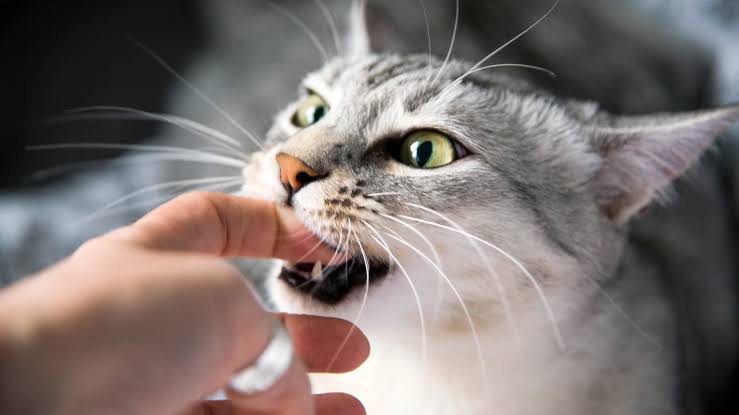
A lot of bad advice circulates about cat biting, and most of it makes the problem worse instead of better. Clearing up these myths helps you respond the right way.
Myth: Cats bite out of spite. Cats don’t plan revenge bites. Every bite traces back to instinct, communication, overstimulation, fear, or pain, never grudges.
Myth: A hard swat will teach them. Physical correction only teaches your cat to fear your hands, which usually increases defensive biting rather than reducing it.
Myth: Biting always means aggression. Many bites, especially love bites and play bites, are gentle and affectionate. Context and body language matter far more than the act itself.
Myth: Older cats grow out of biting on their own. Without training or addressing the root cause, biting habits can persist or worsen with age, especially if pain develops later in life.
How to Read Your Cat’s Body Language Before a Bite
Most bites are preceded by warning signs that are easy to miss if you don’t know what to look for. Learning these signals lets you stop the interaction before teeth get involved.
| Signal | What It Usually Means |
|---|---|
| Tail flicking or thumping | Irritation or overstimulation building |
| Flattened or sideways ears | Fear, stress, or annoyance |
| Dilated pupils | Excitement, fear, or sensory overload |
| Skin twitching along the back | Overstimulation threshold reached |
| Low growl or hiss | Clear warning, back off now |
| Stiff body, low crouch | Defensive posture before a possible bite |
How to Stop Your Cat From Biting You
Once you understand the why, stopping the behavior is mostly about consistency, patience, and removing the reward for biting. These six strategies work for nearly every type of cat biting.
Use Toys, Not Hands, During Play
Wand toys, laser pointers, and toy mice satisfy your cat’s hunting instinct without putting your skin in the line of fire. Hands should never be a toy.
If your cat bites your hand during play, freeze instead of pulling away, then calmly swap your hand for a toy. Movement excites a cat; stillness usually doesn’t.
Respect the “Enough” Signals
Pay close attention to tail flicks, ear position, and skin twitching during petting sessions. Stop before your cat has to escalate to a bite to get the message across.
Short, frequent petting sessions are safer than long ones for cats prone to overstimulation. Let your cat approach you for more rather than chasing them down for affection.
Never Punish or Yell
Yelling, swatting, or spraying water teaches fear, not good manners. Cats don’t connect punishment with the bite itself — they only learn that you’ve become unpredictable and scary.
Punishment tends to increase anxiety-driven biting over time. A calm, consistent response works far better than any form of discipline.
Build a Predictable Routine
Cats feel safer, and bite less, when feeding times, play sessions, and quiet hours follow a consistent daily rhythm. Predictability lowers baseline stress.
Sudden household changes are a leading trigger for stress-related biting, so introduce new pets, furniture, or schedules gradually whenever possible.
Reward Calm Behavior
Positive reinforcement works far better than correction. Offer a treat or gentle praise when your cat plays gently or tolerates handling without biting.
Pause the interaction the moment a bite happens, then resume only once your cat is calm again. This teaches your cat that biting ends the fun, not extends it.
Give Your Cat Outlets for Energy
Bored cats bite more. Scratching posts, puzzle feeders, window perches, and daily interactive play sessions burn off the energy that would otherwise go toward biting.
Aim for at least two short play sessions a day, especially for indoor-only cats or kittens without feline playmates at home.
Tools and Products That Help Reduce Biting
The right supplies make consistent training much easier, since they give your cat an outlet that isn’t your hands or feet.
| Tool | Why It Helps |
|---|---|
| Wand or teaser toys | Keeps hands out of strike range during play |
| Puzzle or treat-dispensing feeders | Burns mental energy, reduces boredom biting |
| Scratching posts | Redirects claws and excess energy away from skin |
| Window perches | Provides stimulation for indoor cats, lowers frustration |
| Pheromone diffusers | Can ease stress-related biting in anxious cats |
None of these tools replace addressing the root cause, but they make the day-to-day training process much smoother.
How Long Does It Take to Stop a Cat From Biting
Most playful or attention-seeking biting improves within two to four weeks of consistent redirection and ignoring the behavior. Cats learn quickly once biting stops getting a reaction.
Overstimulation-related biting often improves almost immediately once you start respecting early warning signals like tail flicks and ear position.
Fear-based or pain-related biting can take longer, especially if there’s an underlying medical issue or a history of negative experiences. Patience and, when needed, professional support make the biggest difference here.
What to Do Immediately After a Cat Bite
How you respond right after a bite depends mostly on whether the skin was broken. Use this table as a quick guide.
| Bite Type | Signs | What To Do |
|---|---|---|
| No skin broken | Mild pressure, no marks | Apply ice if sore, monitor your cat’s mood |
| Skin broken, minor | Small puncture, light bleeding | Wash with soap and water for 5 minutes, bandage |
| Skin broken, severe | Deep puncture, heavy bleeding, swelling | Wash immediately, seek medical care same day |
| Infected bite | Redness, warmth, oozing, fever | See a doctor promptly, do not wait |
Cat bites carry bacteria that can cause infection quickly, sometimes within 24 hours. Even small punctures deserve proper cleaning rather than being ignored.
When to See a Vet About Cat Biting
A sudden change in biting behavior is one of the strongest signals that something medical is going on, especially in cats that were previously gentle and predictable.
Schedule a vet visit if biting starts suddenly, happens only when one specific area is touched, comes with hiding or appetite changes, or escalates in frequency and intensity over a short time.
A veterinarian can rule out arthritis, dental disease, or internal pain, while a certified cat behaviorist can help with biting that’s purely behavioral rather than medical.
Do Certain Cat Breeds Bite More Than Others?
Breed alone rarely causes biting, but some breeds are naturally more vocal, energetic, or sensitive to touch, which can influence how often nips happen.
Active, high-energy breeds like Bengals, Abyssinians, and Siamese often play harder and may need more structured play to avoid hands becoming the target. Breeds known for affection, like Ragdolls or Persians, may lean toward gentle love bites instead.
Individual personality and early socialization usually matter far more than breed when it comes to predicting biting habits.
Cat Biting in Multi-Cat Households
Biting can increase when multiple cats compete for the same resources, since stress and territorial instinct both go up in crowded conditions.
Giving each cat its own food bowl, litter box, and resting spot reduces competition significantly. A simple rule of thumb is one litter box per cat, plus one extra.
If biting happens mainly when other pets are nearby, the trigger is likely social tension rather than anything you’re doing personally.
Cat Biting vs Cat Scratching: What’s the Difference
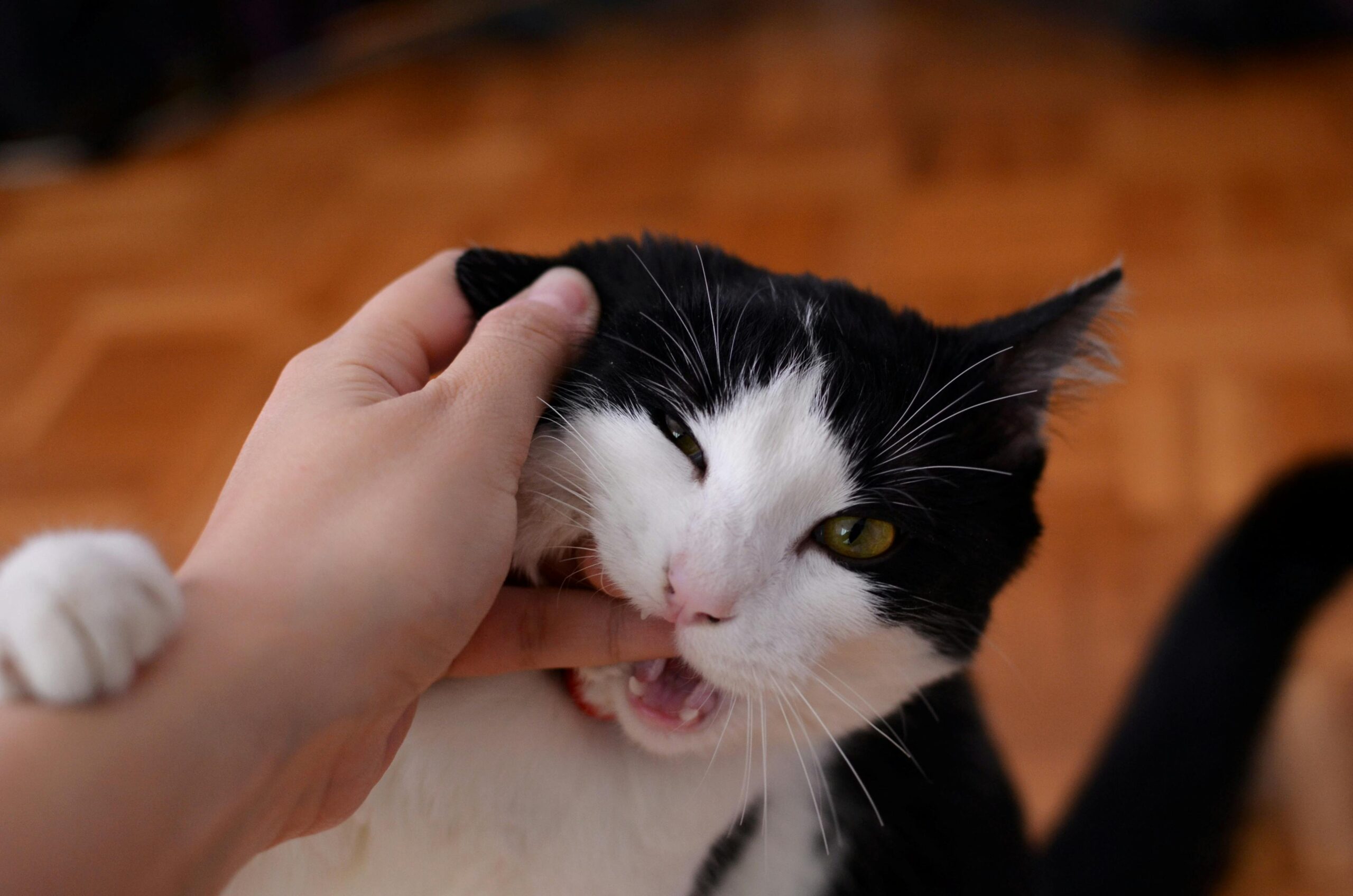
Owners often lump biting and scratching together, but the triggers and fixes aren’t always identical. This table breaks down the key differences.
| Factor | Biting | Scratching |
|---|---|---|
| Main trigger | Communication, play, fear, pain | Marking territory, claw maintenance |
| Common context | Petting, play, handling | Furniture, posts, stretching |
| Best fix | Redirect to toys, respect limits | Provide scratching posts, regular nail trims |
| Medical link | Pain, dental issues, illness | Rarely medical, mostly instinctual |
Frequently Asked Questions (FAQs)
Why does my cat bite me when I pet them?
This is usually overstimulation. After a certain point of petting, your cat’s nervous system gets overloaded and a bite signals “that’s enough” for now.
Why does my cat bite me out of nowhere?
Sudden, unexplained biting often points to pain, fear, or a startled reaction. If it’s a new pattern, a vet check is the smart first step.
Why does my kitten bite me so much?
Kittens explore and play with their mouths, especially if they lack littermates to teach bite control. Redirecting to toys early fixes this quickly.
Is it bad if my cat bites me until it bleeds?
Yes, this needs immediate first aid. Wash the wound thoroughly and watch for redness, swelling, or fever, which signal infection.
Why does my cat bite me and then lick me?
This combo is typically affectionate, mimicking grooming behavior between cats. As long as your cat looks relaxed, it’s a bonding gesture, not aggression.
Why does my cat bite my feet at night?
Cats are naturally active at dawn and dusk, so movement under blankets often looks like prey. Evening play sessions usually solve this.
Should I punish my cat for biting?
No, punishment increases fear and anxiety rather than fixing the behavior. Ignoring the bite and redirecting to a toy works far better.
How do I know if my cat’s bite is aggressive or playful?
Playful bites are gentle and paired with relaxed body language. Aggressive bites are hard, fast, and come with hissing, growling, or flattened ears.
Can stress cause my cat to bite me?
Yes, stress from changes at home, new pets, or disrupted routines often shows up as increased biting, hiding, or over-grooming.
When should I take my cat to the vet for biting?
See a vet if biting starts suddenly, focuses on one body area, or comes with other changes like hiding, appetite loss, or reduced grooming.
Conclusion
So, why is my cat biting me? In almost every case, the answer comes down to communication, not aggression. Your cat is telling you it wants to play, needs space, feels overstimulated, or might be in pain — and biting is simply the clearest tool it has to say so.
By learning to read body language signals like tail flicks, flattened ears, and skin twitching, you can usually step in before a bite ever happens. Pair that awareness with toy-based play, consistent routines, positive reinforcement, and zero punishment, and most biting habits improve within a few weeks.
If biting starts suddenly, focuses on one area, or comes with other behavior changes, a vet visit should always come before training. Understanding the reasons behind cat biting doesn’t just stop the behavior — it builds a stronger, more trusting bond between you and your cat for years to come.