Why No Dairy After Dental Implant? Foods to Eat 2026
Why no dairy after dental implant surgery? Many dentists recommend a short dairy break to lower infection risk, reduce mucus, and protect a healing blood clot at the implant site.
The advice is common, though the science behind some of these reasons is more mixed than most patients realize, and recommendations differ noticeably from one dental practice to another.
Quick Answer: Why Dentists Recommend Avoiding Dairy
Most dairy advice after implant surgery centers on a handful of repeated concerns. The table below summarizes them at a glance, and the sections that follow explain each one in more detail.
| Concern | Why It’s Mentioned |
|---|---|
| Infection risk | Sugar in dairy can feed bacteria near the surgical site |
| Blood clot disruption | Calcium is sometimes linked to clotting interference |
| Mucus production | Some patients report more mucus after dairy |
| Medication interaction | Dairy can affect how some antibiotics absorb |
| Temperature discomfort | Cold dairy can irritate a sensitive surgical area |
| Sticky residue | Milk-based foods can coat healing gum tissue |
The Common Reasons Dentists Give for Avoiding Dairy
Dental practices generally repeat a similar set of explanations. Understanding each one helps you judge how much it actually applies to your situation.
Bacteria and Infection Risk
Sugary dairy items like milkshakes can encourage bacterial growth in the mouth. Combined with limited brushing right after surgery, this raises concern around the healing surgical site, especially during the first day or two.
Blood Clot Interference (Calcium Theory)
Some sources suggest dairy’s calcium content may interfere with clot formation at the implant site. This clot is essential for protecting the area during early healing, which is why any perceived threat to it gets taken seriously by dental teams.
Increased Mucus Production
A portion of patients report more mucus after drinking milk or eating dairy. Extra mucus can feel uncomfortable when you are already healing from oral surgery, particularly if swallowing or breathing already feels slightly restricted.
Medication Interactions
Dairy can interfere with how certain antibiotics are absorbed in the body. If dairy reduces a medication’s effectiveness, that could slow healing or increase infection risk, which is why timing matters as much as the food itself.
Cold Temperature Discomfort
Cold dairy products like ice cream can feel harsh against a tender surgical area. This is more about comfort than direct harm to the implant itself, and many patients find the discomfort fades quickly as swelling goes down.
Sticky Residue
Milk-based foods can leave a film that clings to teeth and gums. This residue is harder to rinse away gently while stitches and healing tissue are still sensitive, especially before you are cleared to brush normally again.
Is There Real Scientific Evidence Behind This Advice?
Not every reason listed above has strong research behind it. It helps to separate commonly repeated advice from what studies actually confirm.
What Research Actually Shows
Major implant providers note there is no direct evidence linking dairy to dry sockets or implant failure. The calcium-blocks-clotting theory is also not well supported by current research, even though it gets repeated frequently online and in patient handouts.
Why the Recommendation Still Persists
The advice likely persists because sugary dairy products are genuinely linked to bacterial growth. Hygiene and sugar content, not dairy itself, may be the real underlying factor, and once an idea like this becomes common practice, it tends to stick around regardless of updated research.
Common Myths About Dairy and Dental Implants
A few claims about dairy and implants get repeated often without much support. Separating these myths from real concerns helps you make a more informed decision.
Myth: Dairy Always Causes Infection
Dairy itself is not inherently infectious or dangerous to a healing implant. The real concern is usually sugar content combined with limited brushing during early recovery, which can apply to many other sugary foods as well.
Myth: Calcium Always Blocks Healing
The idea that dietary calcium blocks blood clot formation is not strongly supported by research. Calcium plays a normal role in many body processes, including healthy clotting, which makes this particular theory difficult to fully justify.
Myth: All Dairy Must Be Avoided for Weeks
Some sources suggest weeks of strict avoidance, while others see no issue after the first few days. Recommendations vary widely because the underlying evidence itself is inconsistent across different studies and dental specialties.
Myth: Avoiding Dairy Guarantees a Smooth Recovery
Skipping dairy alone will not prevent complications if hygiene or aftercare instructions are ignored. Diet is only one part of a much larger recovery picture that also includes hygiene, rest, and medication timing.
What Different Dental Sources Recommend
Because evidence is mixed, advice varies noticeably across dental practices. The table below compares a few commonly seen recommendations.
| Source Type | Typical Dairy Guidance |
|---|---|
| General dental practice blogs | Avoid for 48-72 hours, focus on hygiene |
| UK-based implant clinics | Avoid for several weeks during initial healing |
| Large implant provider networks | Dairy is not strictly necessary to avoid |
| Oral surgery specific practices | Avoid mainly due to sugar and medication timing |
How Long Should You Avoid Dairy After a Dental Implant?
Recommendations vary by dental practice and individual healing speed. The table below shows typical timeframes mentioned across dental sources, though your own dentist’s instructions should always take priority over any general guideline.
| Timeframe | What’s Typically Advised |
|---|---|
| First 24-72 hours | Strictest avoidance period, focus on liquids |
| First 1-2 weeks | Continue avoiding sugary or very cold dairy |
| 4-6 weeks | Some practices suggest waiting this long |
| After full healing | Most patients can resume dairy normally |
What Happens During Dental Implant Healing
Knowing what your mouth is actually doing helps explain the dietary caution. Healing happens in a few distinct, overlapping stages.
Blood Clot Formation
Right after surgery, a blood clot forms over the implant site. This clot protects the area and supports the earliest stage of healing, and disturbing it too early is one of the few risks dentists agree on universally.
Osseointegration (Bone Fusion)
Over several weeks, the implant gradually fuses with the surrounding jawbone. This process, called osseointegration, determines the implant’s long-term stability and can continue developing strength for months after the visible gum tissue looks fully healed.
Gum Tissue Closure
Soft tissue around the implant slowly closes and tightens during recovery. Until it fully closes, the area stays more sensitive to irritation, which is part of why soft, predictable foods are recommended early on.
Best Foods to Eat After a Dental Implant
A soft, nutrient-rich diet supports healing without putting pressure on the surgical site. Foods should be easy to eat without chewing near the implant, and variety helps prevent recovery meals from feeling repetitive or boring.
Liquid and Pureed Foods (First 24-48 Hours)
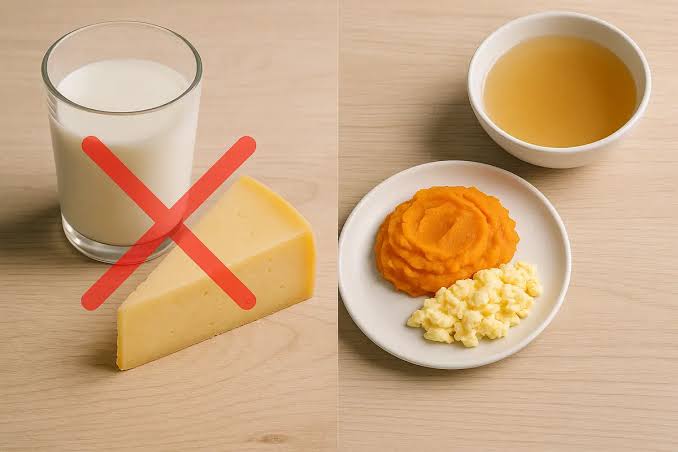
Broths, blended soups, and smooth purees work well immediately after surgery. They provide hydration and nutrients without requiring any real chewing, which keeps pressure off the implant site during the most delicate hours.
Soft Protein-Rich Foods
Scrambled eggs, mashed fish, and protein shakes support tissue repair. Protein plays a direct role in helping wounds heal properly, so skipping it entirely can actually slow your recovery timeline.
Soft Fruits and Vegetables
Bananas, avocados, mashed potatoes, and applesauce are gentle on the mouth. They also provide vitamins that support the overall healing process, including vitamin C, which plays a role in tissue repair.
Non-Dairy Smoothies and Shakes
Fruit-based smoothies made without milk or yogurt are a popular recovery choice. They feel soothing while avoiding the common dairy concerns mentioned earlier, and they are easy to customize with added protein powder if needed.
| Food Type | Examples |
|---|---|
| Liquids | Broth, blended soup, herbal tea |
| Proteins | Scrambled eggs, mashed fish, protein shake |
| Fruits & vegetables | Banana, avocado, mashed potato, applesauce |
| Non-dairy drinks | Fruit smoothie, coconut yogurt shake |
| Grains | Soft oatmeal, well-cooked pasta |
Foods and Drinks to Avoid After a Dental Implant
Some foods create more risk for the implant than others. Avoiding these helps protect both the surgical site and the healing blood clot.
| Food/Drink | Why to Avoid It |
|---|---|
| Hard nuts and seeds | Can damage or dislodge the healing implant |
| Sticky candy | Can pull at stitches or healing tissue |
| Spicy or acidic foods | May irritate the sensitive surgical area |
| Alcohol | Can interfere with healing and medications |
| Drinks through a straw | Suction risk can disturb the blood clot |
Dairy Alternatives That Are Safe to Try
If you want to skip dairy during recovery, several substitutes still deliver good nutrition. These options are widely used in soft-food recovery diets.
| Dairy Item | Suggested Alternative |
|---|---|
| Milk | Oat milk or almond milk |
| Yogurt | Coconut yogurt |
| Cheese | Skip temporarily, add back once healed |
| Ice cream | Frozen fruit-based sorbet |
| Milkshake | Dairy-free fruit smoothie |
Special Situations to Consider
A few specific cases call for extra caution beyond the general advice above. These situations are worth mentioning to your dentist directly.
Lactose Intolerance
If you are already lactose intolerant, dairy may cause discomfort regardless of implant healing. In this case, avoiding dairy is simply good general practice, not just post-surgery advice, and your usual dietary habits should continue as normal.
Diabetic Patients
Blood sugar control plays an important role in wound healing for diabetic patients. Sugary dairy products may be worth limiting for blood sugar reasons, separate from any implant-specific theory, and working closely with both your dentist and physician is wise.
Bone Graft or Sinus Lift Procedures
Patients who also received a bone graft or sinus lift often face a longer, more cautious healing period. Dietary restrictions, including dairy, may be extended slightly in these more complex cases, since the surgical site itself is larger and more sensitive.
Multiple Implants or Full-Arch Procedures
Recovering from several implants placed at once, such as an All-on-4 procedure, usually means a longer soft-diet phase overall. Your dentist may give more detailed dairy guidance in these larger cases, since more of the mouth is affected at the same time.
Sample One-Day Meal Plan After Dental Implant Surgery
Planning meals in advance makes the first few recovery days much easier. Below is one example of a simple, dairy-free day.
| Meal | Example Option |
|---|---|
| Breakfast | Soft oatmeal with mashed banana |
| Mid-morning | Dairy-free fruit smoothie |
| Lunch | Blended vegetable soup with soft bread |
| Afternoon snack | Mashed avocado on soft toast |
| Dinner | Scrambled eggs with mashed potato |
| Evening | Herbal tea or warm broth |
Tips for a Smooth Recovery
Diet is only one part of a successful recovery. A few extra habits can meaningfully improve your healing timeline.
Stay Hydrated
Drinking enough water supports tissue repair and overall comfort. Dehydration can also make swelling and soreness feel more intense, so keeping a water bottle nearby during recovery is a simple but effective habit.
Avoid Straws
Straws create suction that can dislodge the protective blood clot. This is one of the more universally agreed-upon recovery rules, and most dentists ask patients to avoid them for at least a week.
Maintain Gentle Oral Hygiene
Light rinsing and careful brushing keep the area clean without disturbing healing tissue. Your dentist will usually give you specific timing for this, often starting with saltwater rinses before full brushing resumes.
Don’t Skip Follow-Up Appointments
Check-ups let your dentist monitor healing and catch any issues early. Skipping these visits can delay noticing a developing problem, even if everything currently feels fine on your end.
How to Reintroduce Dairy Safely After Healing
Once your dentist confirms healing is on track, dairy can usually return gradually. A slow approach helps you notice any personal sensitivity along the way.
Start With Room-Temperature Dairy
Begin with dairy that is not ice-cold, since temperature is often the bigger comfort factor. Room-temperature yogurt or milk is a gentler starting point than frozen options, and easing in this way reduces unnecessary irritation.
Watch for Sensitivity Around the Implant Site
Pay attention to any soreness, swelling, or discomfort after reintroducing dairy. If something feels off, pause and mention it at your next dental check-up, since catching a reaction early makes it much easier to address.
Reintroduce One Type at a Time
Try one dairy product at a time instead of returning to your full normal diet at once. This makes it easier to spot any individual food that causes irritation, rather than guessing which item might be responsible later.
When You Can Eat Normally Again
Most patients return to a completely normal diet once healing is fully complete. This usually takes a few weeks, though full bone integration can take longer in the background and rarely affects what you are allowed to eat day to day.
Your dentist will confirm when it is safe to reintroduce hard, crunchy, or very cold foods. Following their specific guidance matters more than any general timeline you read online, since healing speed genuinely varies from one patient to the next.
Frequently Asked Questions (FAQs)
Why no dairy after dental implant surgery specifically?
Dentists often cite infection risk, mucus production, and possible clotting interference. Evidence for some of these claims is limited, but the advice remains common practice across many dental offices.
Is avoiding dairy actually backed by science?
Not fully. Some implant providers note there is no strong evidence linking dairy to implant failure or dry sockets, so the strictness of this advice really does vary by practice.
How long should I avoid dairy after getting an implant?
Most advice ranges from 48 hours up to a few weeks. Always follow your own dentist’s specific recommendation over general guidelines you find online.
Can I eat ice cream after a dental implant?
Cold ice cream can feel soothing but may also irritate a sensitive area. Many patients tolerate it fine once initial swelling has gone down, though sugar content is still worth considering.
What foods should I avoid besides dairy?
Avoid hard, crunchy, sticky, spicy, and very acidic foods during early healing. These can all stress the surgical site or interfere with stitches and the protective blood clot.
Why do dentists say dairy interferes with blood clots?
The theory involves dairy’s calcium content affecting normal clotting processes. Current research does not strongly support this specific claim, though the recommendation is still widely repeated.
Can dairy really affect my antibiotics?
Yes, certain antibiotics can bind with calcium and absorb less effectively. This is one of the more medically supported reasons for caution, especially in the first few days of treatment.
What is the best first meal after dental implant surgery?
A blended soup or smooth protein shake is a common first choice. Both options are easy to consume without chewing near the implant or disturbing the healing site.
Are dairy-free smoothies a good recovery food?
Yes, they are soft, nutritious, and avoid the common dairy-related concerns. Many patients find them soothing in the first few days after surgery, especially when blended with soft fruit.
When can I go back to a completely normal diet?
Most patients return to normal eating within a few weeks of surgery. Full bone integration continues quietly in the background for several months afterward.
Conclusion
So, why no dairy after dental implant surgery? The honest answer is mixed. Dentists commonly cite infection risk, clotting concerns, mucus production, and medication interactions, but not all of these claims have strong scientific backing behind them, even though they get repeated often.
What does seem clear is that sugary, sticky, or very cold foods can genuinely slow healing if oral hygiene slips during recovery. A short, cautious break from dairy is a low-risk habit, even if the underlying science is still debated among professionals, and it costs you very little to follow it for a few days.
The safest approach is always to follow your own dentist’s personalized instructions, since they know your specific procedure and healing progress. Pair that guidance with soft, nutrient-rich foods, proper hydration, and gentle oral hygiene, and your dental implant should heal smoothly within just a few weeks.