Why Does My Dog Snore? Reasons & Home Remedies 2026

Why Does My Dog Snore? is a question almost every pet owner asks after hearing an unexpected snort or rumble from their sleeping companion. It can sound funny at first, but it often makes you wonder if something is wrong.
Snoring in dogs happens when airflow through the nose or throat gets partially blocked. This causes nearby tissues to vibrate, creating that familiar snoring sound while your dog sleeps.
Quick Facts About Dog Snoring
Before diving into causes and remedies, here is a quick overview of what veterinarians commonly report about snoring dogs.
Snoring is medically called stertor, and it happens when airflow through the nose or throat is partially restricted.
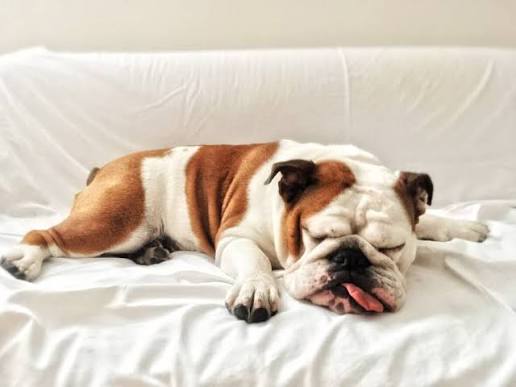
Brachycephalic breeds like Pugs, Bulldogs, and Boston Terriers snore far more often due to their flat facial structure.
Obesity is one of the leading preventable causes, since extra fat around the neck narrows the airway.
Mild snoring during deep sleep is usually normal, but sudden or new snoring often deserves a vet check.
Sleeping position, allergies, and age can all influence how often and how loudly a dog snores.
Table: Dog Snoring Snapshot
| Factor | Detail |
|---|---|
| Medical Term | Stertor |
| Common Cause | Partial airway blockage in nose or throat |
| High-Risk Breeds | Pugs, Bulldogs, Boston Terriers, Shih Tzus |
| Usual Trigger | Anatomy, weight, sleep position, allergies |
| Warning Sign | Sudden onset, snoring while awake, breathing difficulty |
Why Does My Dog Snore? What Does Dog Snoring Actually Mean?
Snoring happens when structures in the back of your dog’s throat vibrate as air moves in and out during sleep.
These structures include the soft palate, tongue, tonsils, and small pouches in the larynx called laryngeal saccules.
When any of these tissues are too large, swollen, or relaxed, they partially block the airway and create vibration.
That vibration is what produces the snoring sound you hear, ranging from a soft snuffle to a loud rumble.
In most healthy dogs, occasional light snoring is completely normal and nothing to worry about.
Common Causes of Dog Snoring
There are several reasons a dog might snore, ranging from harmless anatomy to conditions that need veterinary attention.
Below are the most frequently reported causes according to veterinary sources, along with what sets each one apart.
Brachycephalic Breed Anatomy
Flat-faced breeds like Pugs, French Bulldogs, and Boston Terriers have naturally narrow airways and shortened snouts.
Their compact facial structure often includes a long soft palate and narrow nostrils, both of which restrict airflow and cause frequent snoring.
Obesity and Excess Weight
Extra fat deposits around a dog’s neck and throat put pressure on the airway, making it narrower.
This narrowing increases resistance to airflow during sleep, which is one of the most common and preventable causes of loud snoring.
Sleeping Position
When a dog sleeps flat on its back, the tongue can relax and fall toward the back of the throat.
This partially blocks the airway and often causes snoring that stops as soon as the dog changes position.
Allergies
Environmental allergens like pollen, dust, and dander can inflame the nasal passages and throat tissues.
This swelling narrows the airway, leading to snoring that may come with sneezing or a runny nose.
Nasal Congestion or Respiratory Infection
Just like humans, dogs snore more when they have a cold or upper respiratory infection.
Congestion clogs the nasal passages, making it harder for air to flow smoothly, which increases snoring until the illness clears.
Age-Related Muscle Loss
Older dogs often lose muscle tone in the throat, making airway tissues more likely to relax and vibrate during sleep.
This is a gradual, natural change that becomes more noticeable as dogs enter their senior years.
Foreign Objects or Growths
Dogs explore the world through smell, and sometimes they accidentally inhale small objects like grass seeds or debris.
Tumors, nasal polyps, or other growths inside the airway can also physically block airflow and cause persistent snoring.
Abscessed Tooth
A bacterial infection from an abscessed tooth can cause inflammation and swelling in nearby throat tissues.
This swelling can restrict airflow and cause snoring until the infected tooth is treated or removed.
Hypothyroidism
Hypothyroidism occurs when a dog’s thyroid gland doesn’t produce enough hormone to regulate metabolism properly.
Snoring linked to hypothyroidism often appears alongside a dull coat, weight gain, low energy, and skin issues.
Laryngeal Paralysis
This condition mostly affects large-breed dogs and causes the muscles controlling the voice box to weaken.
It narrows the airway opening and produces a loud, honking type of respiratory noise, especially during activity.
Table: Causes and Their Typical Signs
| Cause | Typical Sign | Usually Needs Vet Visit? |
|---|---|---|
| Brachycephalic anatomy | Ongoing mild-to-moderate snoring | Only if severe or worsening |
| Obesity | Louder snoring with weight gain | Yes, for weight management |
| Sleeping position | Snoring only in certain positions | No |
| Allergies | Snoring with sneezing or runny nose | Sometimes |
| Respiratory infection | Sudden snoring with congestion | Yes |
| Laryngeal paralysis | Honking noise during activity | Yes, urgently |
Breeds Most Prone to Snoring
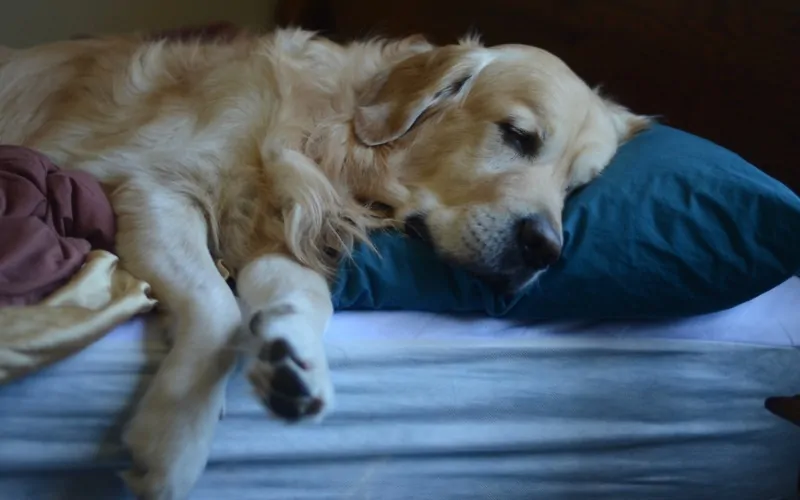
Some dog breeds are simply built in a way that makes snoring far more common than in others.
Brachycephalic breeds, meaning dogs with short, flat faces, top this list because of their compact airway structure.
Table: Breeds Known for Snoring
| Breed | Why They Snore |
|---|---|
| Pug | Short snout and narrow nostrils |
| French Bulldog | Elongated soft palate, narrow airway |
| English Bulldog | Compact face and narrow trachea |
| Boston Terrier | Flat face, small nasal passages |
| Shih Tzu | Short muzzle, crowded airway |
| Boxer | Brachycephalic structure |
| Saint Bernard | Large size and heavy facial tissue |
Symptoms That Often Come With Dog Snoring
Snoring rarely shows up completely alone, and paying attention to accompanying symptoms helps you judge how serious it might be.
Sneezing or nasal discharge alongside snoring often points toward allergies or a mild respiratory infection.
Labored breathing, especially while awake or during exercise, is a sign that should never be ignored.
Sudden weight gain, lethargy, or a dull coat paired with snoring may suggest an underlying issue like hypothyroidism.
Loud honking sounds during activity, rather than only during sleep, can be linked to laryngeal paralysis.
Is Dog Snoring Serious?
For most dogs, especially brachycephalic breeds, mild snoring during deep sleep is completely normal and not a cause for concern.
It becomes more concerning when the snoring starts suddenly, gets progressively louder, or happens while your dog is awake.
Snoring paired with visible breathing effort, blue-tinted gums, or fainting spells should be treated as an emergency.
Persistent snoring in a dog that previously didn’t snore is also worth mentioning to your veterinarian at the next visit.
When to See a Veterinarian
You don’t need to worry about every soft snore, but certain signs mean it’s time to schedule a vet visit.
See a vet if the snoring appeared suddenly with no clear explanation, such as a new sleeping position.
Seek care if your dog struggles to breathe, pants excessively, or shows signs of distress while resting.
A vet visit is also wise if snoring is paired with nasal discharge, coughing, or noticeable weight loss.
Brachycephalic breeds showing worsening breathing difficulty should be evaluated promptly, since surgery can often improve their airflow significantly.
How to Help Reduce Dog Snoring at Home
Many mild cases of dog snoring can improve with a few simple changes to your dog’s routine and environment.
Try gently repositioning your dog if they tend to snore only while sleeping flat on their back.
An orthopedic bed with raised edges can encourage a curled-up sleeping position that keeps the airway more open.
Help your dog maintain a healthy weight through proper portion control and regular exercise, since obesity is a major snoring trigger.
Keep your home clean by vacuuming and washing bedding often to reduce allergens like dust and pet dander.
Use an air filter or humidifier in your dog’s sleeping area to ease nasal congestion and keep airways moist.
Wipe your dog down after outdoor walks to remove pollen and allergens before they settle into bedding.
Table: Home Remedies at a Glance
| Remedy | How It Helps | Frequency |
|---|---|---|
| Reposition while sleeping | Opens airway blocked by tongue or neck angle | As needed |
| Orthopedic or raised bed | Encourages side-sleeping posture | Nightly |
| Weight management | Reduces fat pressure on airway | Ongoing |
| Regular cleaning | Lowers allergen exposure | Weekly |
| Humidifier | Keeps nasal passages moist | Nightly, as needed |
Medical Treatments for Dog Snoring

When home care isn’t enough, a veterinarian may recommend treatment based on the underlying cause of the snoring.
Brachycephalic dogs with severe airway restriction may benefit from surgery to shorten an elongated soft palate or widen nostrils.
Allergy-related snoring is often managed with antihistamines, medicated shampoos, or changes to the home environment.
Respiratory infections are typically treated with medication that clears congestion and reduces inflammation in the airway.
An abscessed tooth causing snoring usually requires extraction along with a course of antibiotics.
Hypothyroidism is managed with daily thyroid hormone medication, which often reduces snoring within a few weeks.
Laryngeal paralysis may require surgical correction, especially in dogs showing significant breathing difficulty during activity.
How to Prevent Excessive Snoring
Prevention often comes down to a few consistent habits that support your dog’s overall respiratory health.
Keep your dog at a healthy weight through balanced meals and consistent daily exercise appropriate for their breed.
Provide a comfortable, supportive bed that encourages healthier sleeping positions and reduces pressure on the throat.
Manage allergies proactively by cleaning your home regularly and limiting exposure to known triggers.
Schedule routine veterinary checkups so early signs of thyroid issues, dental problems, or airway changes are caught quickly.
Monitor brachycephalic breeds closely, especially during hot weather or exercise, since their airways are naturally more restricted.
Table: Prevention Checklist
| Habit | Why It Matters |
|---|---|
| Healthy weight maintenance | Reduces fat pressure on the airway |
| Supportive sleeping bed | Encourages open-airway sleeping posture |
| Allergen control at home | Prevents airway inflammation |
| Routine vet checkups | Catches thyroid or dental issues early |
| Careful monitoring in hot weather | Prevents breathing strain in flat-faced breeds |
Dog Snoring vs Other Breathing Sounds
Not every noisy breath is a snore, and knowing the difference can help you describe symptoms accurately to your vet.
Stertor is the low-pitched snoring sound that usually comes from the nose or upper throat.
Stridor is a higher-pitched, more concerning wheezing sound, often linked to a narrower airway obstruction.
Reverse sneezing is a rapid snorting sound dogs make while awake, often triggered by excitement or irritation, and it’s different from snoring.
Coughing is a sharp, repetitive sound distinct from the continuous rumble of snoring and often points to a different issue entirely.
Table: Breathing Sound Comparison
| Sound | Pitch | When It Happens |
|---|---|---|
| Snoring (stertor) | Low-pitched rumble | During sleep |
| Stridor | High-pitched wheeze | During breathing effort, often serious |
| Reverse sneeze | Rapid snorting | While awake, often triggered by excitement |
| Coughing | Sharp, repetitive | Anytime, often linked to irritation or illness |
Puppy Snoring vs Adult Dog Snoring
Puppies can snore too, and the reasons are often slightly different compared to adult or senior dogs.
Puppy snoring is frequently linked to smaller airway structures that haven’t fully developed yet.
As puppies grow, mild snoring related to anatomy often becomes less noticeable unless they belong to a brachycephalic breed.
In adult and senior dogs, weight gain, muscle loss, and age-related changes become more common explanations for snoring.
If a puppy’s snoring is paired with poor growth, lethargy, or feeding difficulty, a veterinary check is recommended.
Myths vs Facts About Dog Snoring
There is a lot of misleading information floating around about why dogs snore and what it means.
Myth: All snoring in dogs is dangerous. Fact: mild, occasional snoring during deep sleep is very common and usually harmless.
Myth: Only flat-faced breeds snore. Fact: any breed can snore due to weight, allergies, or sleeping position.
Myth: Snoring always needs surgery. Fact: many cases improve significantly with weight management and simple home adjustments.
Myth: Snoring means a dog is sleeping deeply and happily. Fact: sudden or loud new snoring can sometimes signal an underlying health issue.
Table: Myths vs Facts
| Myth | Fact |
|---|---|
| All snoring is dangerous | Mild, occasional snoring is usually normal |
| Only flat-faced breeds snore | Any breed can snore for various reasons |
| Snoring always needs surgery | Many cases improve with home care and weight control |
| Snoring means deep, happy sleep | Sudden or loud snoring can signal a health issue |
How Vets Diagnose the Cause of Snoring
If your dog’s snoring seems abnormal, a veterinarian will usually start by asking about when it began and how it changes over time.
They will want to know if the snoring happens only during sleep or also while your dog is awake and active.
Details about your dog’s breed, weight history, and any other symptoms like sneezing or coughing help narrow down the cause.
A physical exam allows the vet to check the nose, mouth, and throat for visible swelling, growths, or abnormalities.
In more complex cases, imaging tools like X-rays, CT scans, or endoscopy help pinpoint exactly where the airway is restricted.
Table: Common Diagnostic Steps
| Step | Purpose |
|---|---|
| Health history review | Identifies patterns and possible triggers |
| Physical exam | Checks nose, mouth, and throat directly |
| X-rays | Reveals structural or soft tissue changes |
| CT scan | Provides detailed airway imaging |
| Endoscopy | Allows direct view inside the airway |
Does Diet Play a Role in Dog Snoring?
Diet doesn’t directly cause snoring, but it plays a major indirect role through its effect on body weight.
A high-calorie diet without enough exercise can lead to weight gain, which is one of the most common snoring triggers.
Feeding age-appropriate, portion-controlled meals helps dogs maintain a healthy weight and reduces pressure around the neck and airway.
Some dogs with food allergies may also experience mild airway inflammation, which can contribute to occasional snoring.
Discussing your dog’s diet with a veterinarian is especially helpful if weight-related snoring has become a persistent issue.
Table: Diet Tips to Support Healthy Breathing
| Tip | Benefit |
|---|---|
| Portion-controlled meals | Prevents excess weight gain |
| Regular exercise routine | Supports healthy body condition |
| Limiting high-calorie treats | Reduces fat buildup around the neck |
| Identifying food allergies | Lowers airway inflammation risk |
Snoring in Dogs vs Snoring in Cats
Snoring isn’t unique to dogs, and cats can experience similar airway restrictions during sleep.
In cats, a common cause of snoring is a nasopharyngeal polyp, a benign growth that can affect the throat.
Flat-faced cat breeds, similar to brachycephalic dogs, are also more prone to snoring because of their compact facial structure.
While the underlying causes overlap in many ways, snoring in cats is generally less common than in dogs.
If a cat begins snoring suddenly, it’s worth mentioning to a veterinarian, just as you would with a dog.
Frequently Asked Questions (FAQs)
1. Why do dogs snore so loudly sometimes?
Loud snoring often happens when the airway is more restricted, such as with obesity or a brachycephalic breed. Sleeping position can also make snoring noticeably louder.
2. Is it normal for puppies to snore?
Yes, mild puppy snoring is common due to still-developing airway structures. It usually becomes less frequent as the puppy grows, unless the breed is naturally prone to snoring.
3. Can dog snoring be a sign of a serious problem?
Yes, sudden or worsening snoring can indicate allergies, infection, obesity, or in rare cases, a growth in the airway. A vet visit is recommended if snoring changes suddenly.
4. Do all flat-faced dog breeds snore?
Most brachycephalic breeds like Pugs and Bulldogs snore due to their compact facial structure. However, snoring severity can vary between individual dogs.
5. Can weight loss reduce dog snoring?
Yes, losing excess weight reduces fat pressure around the neck and airway. Many overweight dogs snore noticeably less after reaching a healthy weight.
6. Why does my dog only snore on its back?
Sleeping on the back can cause the tongue to relax and partially block the throat. Repositioning your dog to sleep on its side often reduces this type of snoring.
7. Can allergies really cause a dog to snore?
Yes, allergens can inflame nasal passages and throat tissue, narrowing the airway. Snoring caused by allergies is often paired with sneezing or a runny nose.
8. When should I take my snoring dog to the vet?
You should see a vet if snoring starts suddenly, worsens quickly, or happens while your dog is awake. Breathing difficulty or blue-tinted gums require immediate attention.
9. Can dog snoring be fixed with surgery?
Yes, severe cases in brachycephalic breeds are sometimes treated with surgery to widen the airway or shorten the soft palate. Surgery is usually reserved for dogs with significant breathing difficulty.
10. Does snoring mean my dog has sleep apnea?
Some dogs, especially brachycephalic breeds, can experience a condition similar to sleep apnea in humans. A veterinarian can assess symptoms and recommend appropriate testing if this is suspected.
Conclusion
Dog snoring is a common experience for many pet owners, and in most cases it comes from harmless factors like breed anatomy, sleeping position, or mild weight gain. Understanding why your dog snores helps you tell the difference between a normal nighttime habit and a sign that something needs attention.
Simple changes such as weight management, a supportive bed, and a cleaner sleeping environment can noticeably reduce snoring in many dogs. However, sudden, loud, or worsening snoring, especially paired with breathing difficulty, should always be checked by a veterinarian.
Paying attention to your dog’s snoring patterns is a simple way to stay ahead of potential health issues. When in doubt, a quick vet visit offers peace of mind and the right plan to help your dog breathe, and sleep, more comfortably.