Why Do Cows Wear Bells? Farming Purpose Revealed 2026
Why do cows wear bells is a question that comes up almost every time someone visits the countryside and hears that familiar clanging sound drifting across a field.
The simple answer is that bells help farmers locate their cattle across large, open, or hilly land where cows can easily wander out of sight. But the full story involves centuries of tradition, herd management, safety, and even ongoing debate about animal welfare.
What Is a Cowbell?
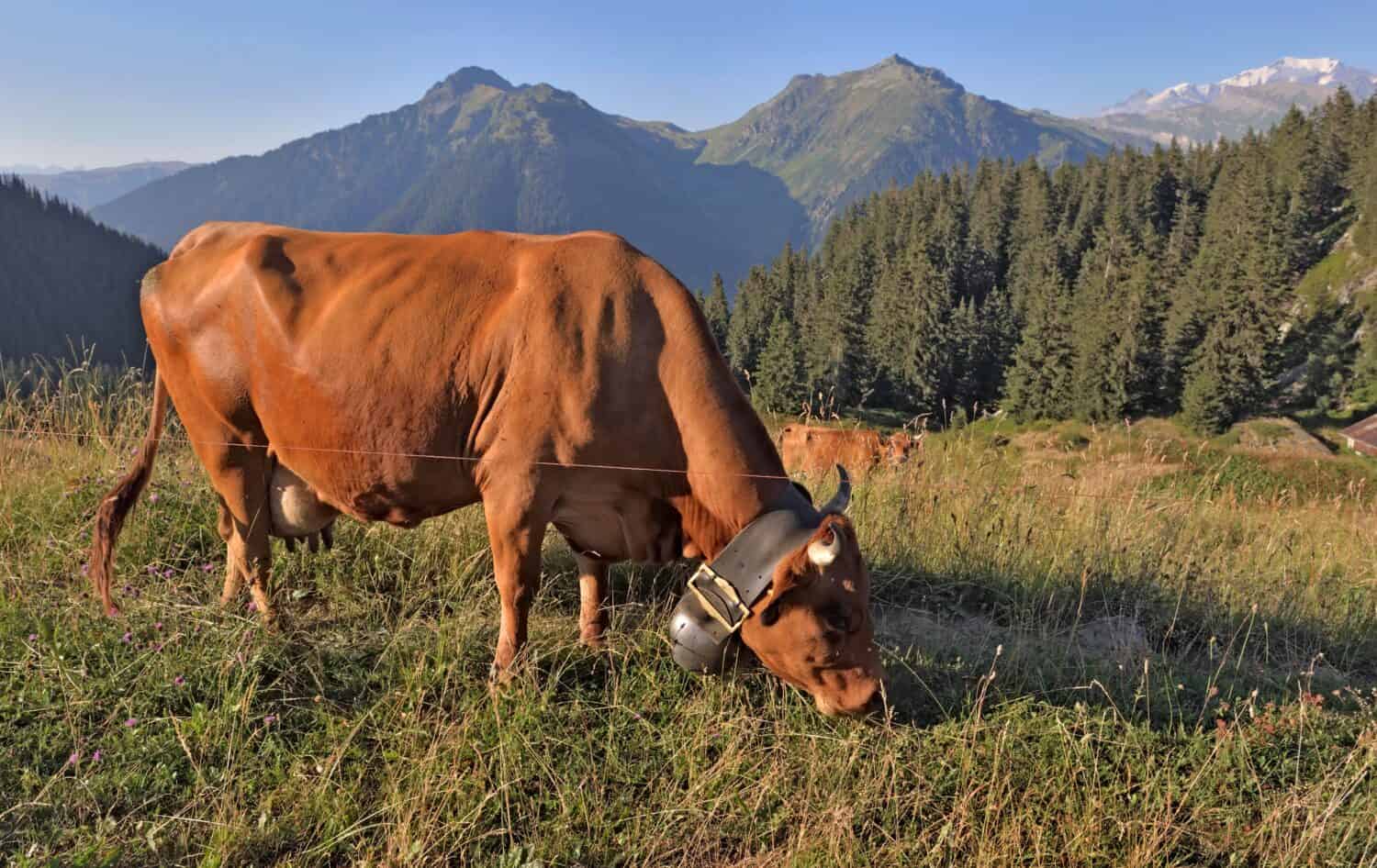
A cowbell is a bell attached to a collar and worn around the neck of grazing livestock, most commonly cows, though goats, sheep, and reindeer wear them too.
Traditional cowbells are made from metals like iron, brass, copper, or bronze, while the collar is usually crafted from leather or woven wood fiber.
The bell’s clapper strikes the inside walls as the animal moves, producing a distinct clanging sound that carries across open land.
Why Do Cows Wear Bells? The Main Reason
The primary reason cows wear bells is to help farmers locate their herd when animals are grazing across large, hilly, or forested land.
In areas without fencing, cows can wander far in search of food, sometimes covering several miles in a single day.
By listening for the sound of the bell, farmers can estimate where their cattle are without having to visually track every animal at all times.
A Brief History of Cowbells
The tradition of putting bells on livestock is extremely old, with archaeologists finding cow-shaped pottery bells dating back roughly 5,000 years in China.
In medieval Germany, cowbells appeared in records as early as the 1300s and 1400s, often reserved for only the best or leading animal in a herd.
By the 15th century in parts of Europe, only the top-performing cow in a herd was given a bell, marking it as a symbol of status and leadership.
Over time, the practice spread more widely, and bells became common across entire herds rather than being reserved for a single leading animal.
Herd Tracking and Farm Management
On large farms, especially those without complete fencing, tracking the exact location of every animal by sight alone is simply not practical.
The sound of bells gives farmers an ongoing sense of where the herd is, even if the cows are grazing out of direct view.
If the sound of bells suddenly stops or moves further away than expected, it can alert a farmer that something unusual may be happening.
Bells as a Safety and Warning System
Cowbells also serve an important safety function by warning nearby people that cattle are present, especially in areas where cows and humans share paths or trails.
The sound can alert hikers, cyclists, or drivers that a cow, or even a startled or charging animal, may be nearby.
This warning function is especially useful in mountainous regions where visibility is limited and cattle may appear suddenly around a bend or ridge.
Cowbells as a Status Symbol
In many alpine farming communities, the size and quality of a cow’s bell reflects the animal’s rank or milk production within the herd.
The highest milk-producing cow is traditionally given the largest and most decorative bell, marking her as the leader of the group.
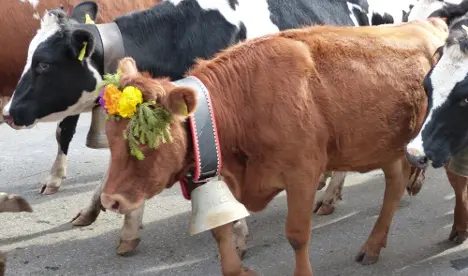
This tradition is especially visible during seasonal events, when the lead cow proudly wears the biggest bell during the procession to and from mountain pastures.
Tradition and Cultural Significance
Cowbells carry deep cultural meaning in regions such as Switzerland, the Alps, parts of Latin America, and the Mediterranean.
In Switzerland, the Alpaufzug tradition celebrates cows returning from high alpine pastures each autumn, with animals decorated in floral wreaths and their finest bells.
In some historical traditions, people believed the sound of bells could ward off evil spirits or protect livestock from sickness and misfortune.
Even ornamental designs on the bell collar were sometimes believed to carry symbolic protective power, beyond their practical use.
Identification Within a Herd
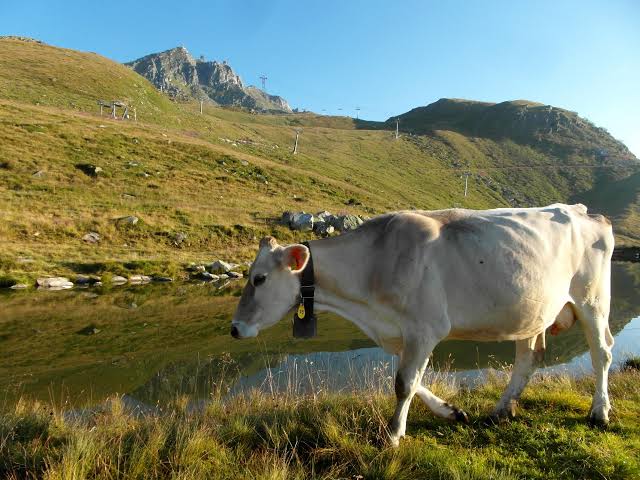
Bells also help farmers tell individual animals apart, especially in herds where many cows look nearly identical from a distance.
Each bell often has a slightly different size, tone, or pitch, allowing an experienced farmer to recognize which specific animal is nearby just from the sound.
This makes it easier to monitor the health, behavior, and location of specific cows, particularly ones that may need closer observation.
Do Cowbells Scare Away Predators?
Many people believe that the sound of a cowbell helps scare off predators such as coyotes, bobcats, or wild dogs.
However, research suggests the opposite may actually be true in some cases, since predators can learn to associate the bell’s sound with the presence of prey.
This means the predator-deterrent theory is more folklore than proven fact, and its real effectiveness likely varies by region and predator behavior.
Do Cowbells Belong to Only Cows?
Despite the name, cowbells are not exclusive to cattle and are commonly used on several other types of grazing livestock.
| Animal | Common Regions | Main Purpose |
|---|---|---|
| Cows | Europe, Latin America, parts of Asia | Location tracking, tradition, status |
| Goats | Mediterranean, Africa, Asia | Herd tracking in rugged terrain |
| Sheep | Europe, Latin America | Locating flocks across open land |
| Reindeer | Scandinavia, Arctic regions | Tracking herds across vast tundra |
Even some pets, like dogs on hikes or outdoor cats, sometimes wear small bells for similar tracking and warning purposes.
Why Calves Usually Don’t Wear Bells
Unlike adult cows, calves typically do not wear bells, mainly because they stay close to their mothers and rarely wander far on their own.
Calves are also still growing quickly, which would require frequent collar adjustments that most farmers find impractical.
Additionally, the added weight and noise of a bell could be more distressing for a young, still-developing calf compared to a mature cow.
How Loud Are Cowbells?
Cowbells are intentionally designed to be loud enough to carry across large distances, but this same loudness has raised welfare questions.
| Sound Comparison | Approximate Decibel Level |
|---|---|
| Normal conversation | 60 dB |
| Hair dryer | 90 dB |
| Traditional cowbell (close range) | 90 to 113 dB |
| Jackhammer | 100 to 120 dB |
At close range, some cowbells have been measured at over 110 decibels, which is louder than many industrial tools.
The Animal Welfare Debate
In recent years, animal welfare groups have raised concerns about the potential impact of cowbells on the animals wearing them.
A widely cited 2015 study found that cows wearing a bell for several days spent less time feeding, ruminating, and lying down compared to those without one.
Some researchers have also pointed out that cow hearing may be more sensitive than human hearing at certain frequencies, raising concerns about long-term noise exposure.
At the same time, long-term studies have not found clear evidence that seasonal bell use causes permanent deafness in dairy cows.
Because of this ongoing debate, some organizations, including certain animal welfare groups, have called for reduced or more careful use of traditional metal bells.
Weight of Cowbells and Physical Impact
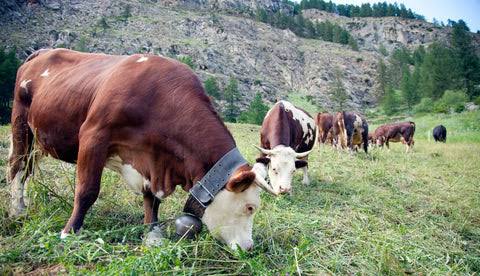
Beyond noise, the physical weight of a bell and its collar is another factor considered in the welfare discussion.
Some traditional bells used in alpine regions can weigh several kilograms, adding noticeable extra weight around an animal’s neck for months at a time.
Farmers who continue using heavier traditional bells often argue that cows adapt over time and show no visible signs of ongoing distress.
Arguments in Favor of Continued Cowbell Use
Farmers and rural communities who support the continued use of cowbells generally point to several practical and cultural reasons.
| Argument | Explanation |
|---|---|
| Practical tracking | Still effective in areas with poor cell or GPS coverage |
| Low cost | No batteries, charging, or subscription fees required |
| Cultural tradition | Deeply tied to regional identity and seasonal festivals |
| Simplicity | Works reliably without technology or maintenance |
For many small or traditional farms, cowbells remain a low-cost, reliable tool that has worked for generations.
Modern Alternatives to Traditional Cowbells
As technology has advanced, several modern alternatives have emerged that aim to track cattle without relying on constant loud noise.
GPS ear tags and collars allow farmers to monitor a cow’s exact location in real time through a smartphone or computer.
Some newer “electronic cowbells” use a quieter, intermittent chime or beep instead of the traditional continuous clanging sound.
These alternatives can reduce potential noise-related stress while still providing farmers with reliable location tracking across large properties.
| Method | Pros | Cons |
|---|---|---|
| Traditional metal bell | No batteries needed, low cost, traditional | Can be loud and heavy |
| Electronic bell | Quieter, adjustable sound | Requires charging or batteries |
| GPS tracker or ear tag | Precise real-time location | Higher upfront cost, needs technology |
| Standard fencing | No noise or weight on the animal | Less useful on very large or hilly land |
Where Cowbells Are Most Commonly Used Today
Cowbells remain most common in specific regions where traditional grazing practices are still widely practiced.
Switzerland and other alpine countries are perhaps the most famous for cowbell use, largely due to seasonal high-pasture grazing traditions.
Cowbells are also commonly used across parts of Latin America, the Mediterranean, and regions of Africa and Asia that practice transhumance, or seasonal herd movement.
In the United States, cowbell use is far less common, with most farms relying on fencing, ear tags, or GPS tracking instead.
Cowbells in Culture and Popular Media
Beyond farming, cowbells have become a recognizable cultural symbol, especially associated with Swiss tourism and alpine imagery.
They are also famously used at sporting events, including alpine skiing competitions and cyclo-cross races, where spectators ring handheld cowbells to cheer competitors.
The phrase “more cowbell,” popularized by a well-known comedy sketch, has even become a common pop-culture reference unrelated to farming at all.
How Cowbells Are Made
Traditional cowbells are typically crafted from thin sheets of metal that are bent, hammered, and welded into a bell shape before being plated for durability.
Two main styles exist: cast bells, known as “Glocken,” which produce a deeper tone, and hammered sheet-metal bells, known as “Treicheln,” which produce a sharper clang.
The size, shape, and material of a bell often depend heavily on regional tradition and what materials were historically available to local craftsmen.
Countries like Switzerland, India, Indonesia, and Korea continue to produce cowbells today, often as handmade village crafts rather than mass-produced items.
In the United States, companies such as Bevin Brothers Manufacturing have continued making metal bells since the 1800s, preserving a long-standing craft tradition.
How Farmers Choose the Right Bell for Their Herd
Selecting a bell is not random, since farmers often consider tone, size, and weight based on the terrain and herd size they manage.
Larger herds spread across expansive land may use bigger, louder bells so the sound carries further across valleys or open plains.
In contrast, smaller or more enclosed pastures may only require lighter, quieter bells, since the animals stay within a more limited range.
Farmers also consider the specific tone of each bell, since a recognizable pitch helps them identify individual animals purely by sound.
Cowbells and Weather-Related Herd Management
Bells become especially useful during sudden weather changes, such as fog, storms, or heavy snowfall, when visibility drops sharply.
In these conditions, farmers may not be able to see their herd at all, making the sound of bells the only reliable way to locate cattle.
This is particularly important in mountainous regions, where sudden weather shifts can make it dangerous for farmers to search visually across steep or unstable terrain.
Bells also help during emergencies, such as when cattle scatter after being startled by a predator or an unexpected loud noise.
Do Cowbells Affect Milk Production?
Some traditional beliefs suggest that a calm, well-managed herd produces better quality milk, and bells play a small role in that broader management system.
While a bell itself does not directly affect milk output, easier herd tracking can indirectly support better health monitoring and quicker responses to issues.
Since sick or distressed cows are easier to locate and check when wearing a bell, farmers may catch health issues earlier, indirectly supporting herd productivity.
This is separate from the older tradition of awarding the largest bell to the top milk-producing cow, which is more symbolic than functional.
Regional Differences in Cowbell Design
Bell shapes, materials, and sounds vary noticeably from one farming culture to another, often reflecting centuries of local tradition.
| Region | Typical Bell Style | Notable Trait |
|---|---|---|
| Switzerland and the Alps | Large cast bronze or brass bells | Deep, resonant tone tied to alpine festivals |
| India | Handcrafted iron or brass bells | Often used with religious or symbolic motifs |
| Latin America | Lightweight metal bells | Common on cattle in open grazing regions |
| Scandinavia | Smaller bells for reindeer herds | Designed for use across vast tundra |
These regional differences highlight how a simple farming tool evolved into distinct cultural traditions across the world.
Quick Summary: Key Reasons Cows Wear Bells
Before moving into the FAQ section, here is a condensed overview tying together the main reasons covered in this guide.
| Reason | Purpose |
|---|---|
| Location tracking | Helps farmers find cattle across large or hilly land |
| Safety warning | Alerts people to nearby cattle, including charging animals |
| Status symbol | Marks top milk-producing cows in a herd |
| Tradition | Central to alpine festivals and rural culture |
| Identification | Helps distinguish individual animals by sound |
This table captures why do cows wear bells in one simple overview, tying together practicality, tradition, and herd management.
Cowbells and Tourism Economies
In many alpine and rural regions, cowbells have become more than a farming tool, evolving into a small but meaningful part of local tourism.
Visitors to Switzerland, for example, often associate the sound of distant cowbells with the overall experience of alpine travel, even before seeing any cattle.
Local shops in these regions frequently sell decorative cowbells as souvenirs, turning a practical farming item into a lasting cultural keepsake for tourists.
This blend of function and symbolism helps explain why cowbells have remained so recognizable long after more advanced tracking technology became available.
Even farmers who have switched to GPS tracking sometimes keep a few traditional bells on lead animals simply to preserve this cultural connection for visitors and locals alike.
This shows that cowbells, much like other farming traditions, can continue to hold value even after their original practical need has been partly replaced by technology.
Final Thoughts Before the FAQs
Understanding why do cows wear bells comes down to a mix of practical necessity, centuries-old tradition, and ongoing debate about animal comfort.
For farmers managing cattle across vast or hilly terrain, bells remain a simple, reliable way to keep track of a herd without relying on technology.
At the same time, growing awareness of animal welfare is pushing some farms toward quieter alternatives or GPS-based tracking systems.
Frequently Asked Questions (FAQs)
1. Why do cows wear bells around their necks?
Cows wear bells mainly so farmers can track their location across large, hilly, or forested land where visibility is limited.
2. Do cowbells hurt or harm cows?
Some studies suggest bells can affect grazing and resting behavior, though long-term hearing damage has not been clearly proven.
3. Why do only some cows in a herd wear bells?
Often, only the lead or highest milk-producing cow wears the largest bell, since it traditionally marks status within the herd.
4. Do cowbells scare away predators?
Not reliably. Some research suggests predators may actually associate the sound with nearby prey, reducing any deterrent effect.
5. Why don’t baby cows (calves) wear bells?
Calves stay close to their mothers and grow quickly, making bells unnecessary and impractical for their fast-changing size.
6. How loud are traditional cowbells?
Traditional cowbells can reach 90 to 113 decibels at close range, similar to or louder than a hair dryer or jackhammer.
7. Are cowbells still used on modern farms?
Yes, especially in alpine and rural regions, though many modern farms now use GPS trackers or electronic bells instead.
8. Why are cowbells associated with Switzerland?
Swiss alpine farming traditions, including seasonal high-pasture grazing and the Alpaufzug festival, made cowbells a cultural symbol there.
9. Do other animals besides cows wear bells?
Yes, goats, sheep, and reindeer commonly wear similar bells for the same tracking and safety purposes.
10. What are modern alternatives to traditional cowbells?
GPS ear tags, electronic collars, and quieter chime-based bells are increasingly used as modern alternatives on many farms.
Conclusion
Cowbells serve a practical, time-tested purpose on farms, helping herders locate cattle across large, hilly, or hard-to-see terrain while also signaling status, tradition, and safety.
From ancient origins in China thousands of years ago to today’s alpine festivals in Switzerland, the cowbell has remained a lasting symbol of rural life and herd management.
At the same time, growing research into animal behavior has sparked real debate about noise levels and animal comfort, leading some farms to adopt quieter electronic bells or GPS tracking instead.
Whether traditional or modern, the core reason remains the same: farmers need a reliable way to know where their herd is at all times. So the next time you hear that familiar clanging sound drifting across a pasture, you will know exactly why do cows wear bells and the long history behind that simple, practical tradition.