
5 Top Private Stock Marketplaces for Buying and Selling Pre-IPO Shares
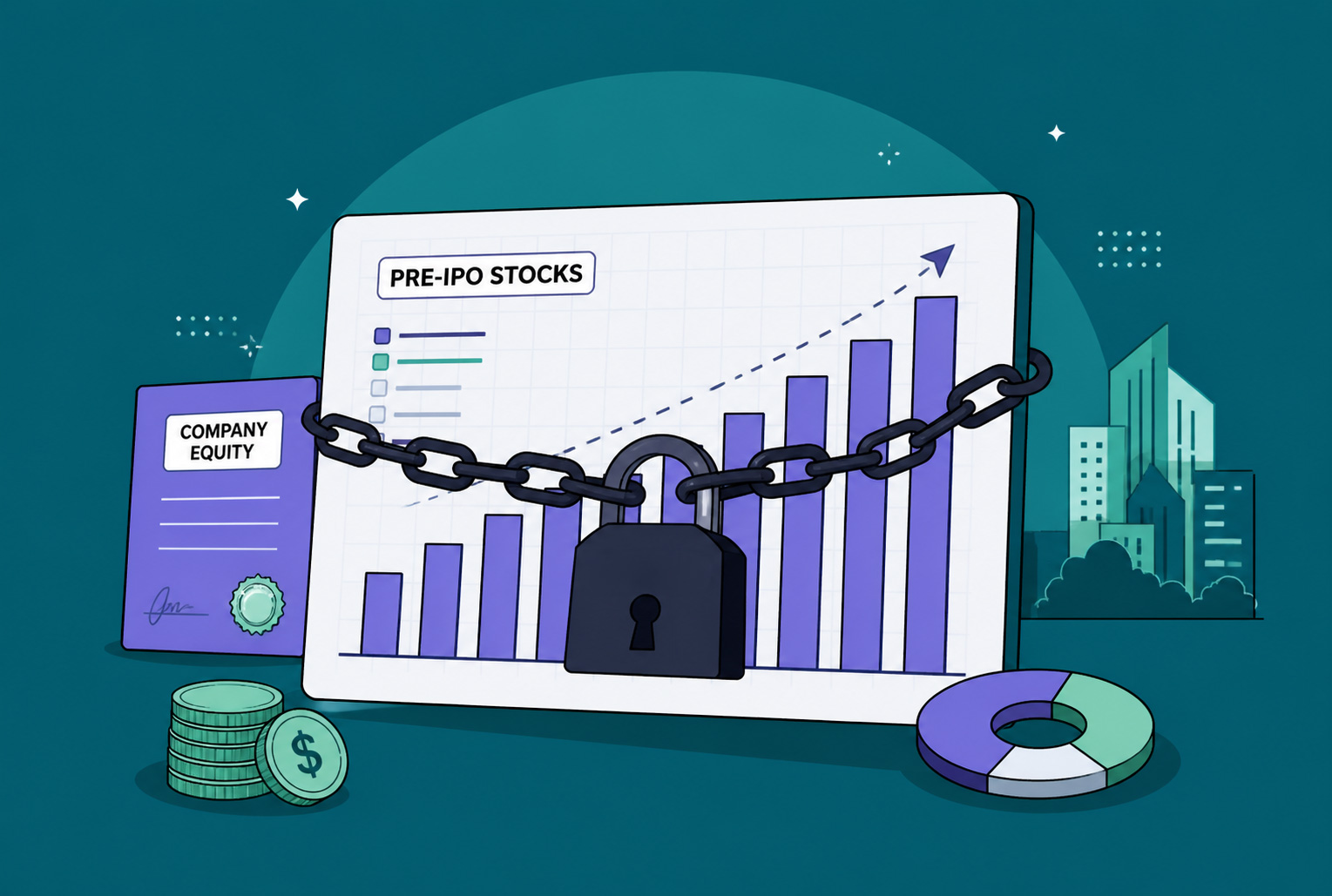
The global private secondary market hit $124 billion in early 2026, doubling 2021 levels. Most high-growth value creation now happens before IPOs, as companies stay private for a median of 12 years, up from four in the late 1990s. This shift forces investors and employees to find new ways to access liquidity in an illiquid asset class. Below is a comprehensive evaluation of five top private stock marketplaces for buying and selling pre-IPO shares.
1. Caplight
Pricing: Fees are not publicly disclosed. No stated minimums, though live order examples range from $1.4M to $8.6M. Access is limited to accredited investors and institutional participants. Valuations use the patented Caplight MarketPrice™. It incorporates funding rounds and trade activity, order data, alongside other market signals. Users receive daily pricing and bid-ask spreads, as well as secondary-market premiums/discounts versus the last funding round.
Features: Founded in 2021 and operates through Caplight Markets LLC (FINRA/SIPC member). Institutional marketplace with $5B+ in live buy/sell interest and anonymous matching via Caplight Connect. Research tools cover 135,000+ VC-backed companies with funding and cap table alongside momentum data. Supports tender offers and co-investment opportunities; secondary liquidity; and connections to 200+ brokers. Includes MarketPrice™ valuation data and historical pricing; investor databases and portfolio insights; Broker CRM tools and API/MCP integrations.
Use Cases: This stock marketplace is beneficial for accredited investors and institutions looking for pre-IPO exposure and real-time pricing data. It also serves employees and early shareholders pursuing liquidity through secondary sales, as well as founders and startups providing shareholder liquidity via tender offers or structured secondary sales. Also, companies managing cap tables through tender offers alongside funds seeking LP/portfolio liquidity solutions may use it.
Alternatives: Forge Global and Clarity; secondary funds; company-sponsored tender offers; SPVs, direct secondary transactions, and broker-led liquidity solutions.
Concepts: Private-company secondary markets and pre-IPO investing, accredited-investor requirements; rights of first refusal (ROFR) and lockup periods; tender offers and liquidity events; proprietary valuation models and institutional trade matching.
Pros
- Institutional-grade pricing transparency through MarketPrice™, supported by $300B+ in proprietary secondary-market data
- Combines trading, research, sourcing, valuation, and broker CRM tools within a single platform
Cons
- Access is limited to institutional participants and accredited investors
- Fee structures and transaction costs are not publicly disclosed
2. Clarity
Pricing: Fees are not publicly disclosed. Operates through Clarity Capital Limited (FINRA/SIPC member) and Clarity Securities Limited in certain Canadian provinces. No stated minimums. The platform reports $300M+ in monthly transaction volume and $6B+ in completed transactions since inception. Transparency is provided through company pricing pages and the Clarity Liquidity Index.
Features:www.clarity.com is an institutional trading platform supporting anonymous negotiated transactions and shareholder liquidity management. Access is limited to accredited investors and institutional investors. Direct investing and fund advisory services are segmented through its SEC-registered investment adviser, Clarity Investment Management Inc. (Clarity Investments). It provides custom liquidity programs and tender offers alongside share buybacks and LP liquidity options. Core data coverage focuses heavily on a curated selection of active global late-stage venture companies. This includes 147+ unicorns actively managing liquidity on the platform.
Use Cases: Clarity is suitable for accredited investors seeking pre-IPO exposure; employees and shareholders seeking liquidity; founders and startups managing shareholder equity through tender offers or buybacks; and funds pursuing institutional GP/LP liquidity solutions.
Alternatives: Other marketplaces like Caplight; private-market funds and tender offers.
Concepts: Secondary market, pre-IPO, unicorn, accredited investor, transfer restrictions, ROFR, and lockups.
Pros
- Strong structural pricing transparency through the Clarity Liquidity Index
- Backed by deep institutional alignment, working with 95% of tier-1 VCs
Cons
- Late-stage and pre-IPO investments carry a huge risk of loss
- Transaction fees, asset management fees and liquidity program costs are not publicly disclosed
3. InvestX Capital
Pricing: Fees are not publicly detailed. Valuations incorporate fundamental analysis alongside last-round pricing and data from the InvestX GEM platform. Pricing information is provided through fund reporting and market insights.
Features: Founded in 2014 and operates through InvestX Markets LLC (U.S.) and InvestX Financial (Canada) Ltd. InvestX GEM marketplace facilitates private-share transactions for institutions and verified accredited investors under Regulation D. Offers single-company and diversified growth-equity funds focused on sectors such as AI, cybersecurity, fintech, and space. Provides co-investment opportunities alongside research insights and educational resources, as well as broker-dealer support for transaction execution.
Use Cases: It’s best for accredited investors needing diversified pre-IPO exposure or wealth managers integrating private markets into client portfolios and institutions executing secondary transactions. Founders and early employees pursuing liquidity or financial institutions seeking private-market access solutions may also use it.
Alternatives: Clarity; Caplight; Forge Global; secondary funds; direct transactions; company-sponsored tender offers; SPVs; and broker-led liquidity solutions.
Concepts: Pre-IPO investing; private-company secondary markets; accredited-investor requirements under Regulation D, ROFRs; lockup periods; liquidity events; valuation based on fundamentals and funding rounds; and fund-based private-market access.
Pros
- Strong institutional backing by firms like Jefferies and Canaccord Genuity
- Offers diversified exposure through single-company and multi-company funds
Cons
- Provides less public real-time pricing information than platforms centered on marketplace-based price discovery
- Access is limited to accredited investors under Regulation D
4. Secfi
Pricing: Fees for secondary sales are not publicly disclosed. Valuations incorporate secondary-market data alongside 409A valuations and financing rounds, as well as fund marks via its Private Market Insights platform.
Features: Operates via Secfi Securities, LLC (FINRA/SIPC member). The platform serves employees (has worked with employees from over 80% of all US unicorns) and shareholders of private companies, whilst buyers usually come from its network of accredited investors and institutions.
It’s a full-service secondary-sales platform with negotiation alongside legal support, tax planning, and equity strategy guidance. Offers non-recourse financing as an alternative to selling shares. It provides market data on 1,800+ late-stage companies, updated November 2026. Also has an AI-powered planning assistant, Maeve and equity-planning tools, as well as institutional investment vehicles.
Use Cases: Secfi is ideal for Employees and shareholders wanting liquidity/diversification; founders and executives pursuing customized liquidity strategies; accredited investors seeking pre-IPO exposure through secondary offerings/funds; and companies providing equity education and financing benefits to employees.
Alternatives: Forge Global and secondary funds, as well as direct transactions and company-sponsored tender offers.
Concepts: Secondary stock sales; pre-IPO investing; equity compensation planning; non-recourse financing; 409A valuations; liquidity events; and negotiated private share transactions.
Pros
- Combines secondary sales with non-recourse financing, providing multiple liquidity options
- Includes equity-planning, tax-planning and AI-powered advisory tools
Cons
- Does not offer the same live-order-book pricing transparency as marketplaces such as Clarity or Caplight
- The platform is designed for employees and shareholders of private companies and also offers institutional investment vehicles
5. Collective Liquidity
Pricing: No fees are charged to exchange shares into the fund. The Collective Exchange Fund charges a 1.75% annual management fee and a 15% performance fee. Minimum participation is $100,000. Eligibility is limited to accredited investors holding shares in approved private companies. Valuations are generated through the proprietary Private Market Valuation Algorithm using primary financings alongside secondary transactions and bids/asks, 409A valuations, as well as fund marks.
Features: Enables shareholders to exchange concentrated private-company shares for diversified fund interests on a tax-deferred basis. It supports quarterly redemptions, LP BuyBacks and loans secured by fund interests (up to 60% Loan-to-Value (LTV)). Includes Compass AI planning tools, valuation modeling, liquidity analysis, and institutional-grade administration, auditing, and custody.
Use Cases: Collective liquidity is suitable for shareholders seeking tax-efficient diversification and accredited investors seeking diversified pre-IPO exposure. Financial advisors helping clients manage concentrated private-company wealth and individuals looking for liquidity via LP BuyBacks/loans whilst retaining fund exposure may also use it.
Alternatives: Direct secondary stock sales, single-stock loans, SPVs, company-sponsored tender offers.
Concepts: Exchange funds; tax-deferred diversification; pre-IPO investing; accredited investor requirements; capital gains tax deferral; liquidity programs; proprietary valuation models; ROFR management; and passive institutional ownership structures.
Pros
- Allows shareholders to diversify concentrated private-company holdings without triggering immediate capital gains taxes
- Supported by independent administration, auditing and custody providers
Cons
- Participation is limited to shareholders of eligible companies selected by the Investment Committee
- Liquidity is subject to quarterly redemption limits, holding periods and LP BuyBack settlement terms
Summary Comparison Table
| Platform | Pricing | Key Features | Best For |
| Caplight | Fees undisclosed; no minimum; MarketPrice™ valuations | $5B+ marketplace, anonymous matching, 156K+ profiles, Broker CRM | Institutions and brokers seeking real-time pricing and trade matching |
| Clarity | Fees undisclosed; no minimum; Clarity Price and C50 Index | Negotiated trades, direct investing, tender offers, LP/SPV markets | Institutions and startups wanting combined fundraising and trading |
| InvestX Capital | Deal-dependent fees; Reg D accredited access | GEM marketplace, growth funds, co-investments, broker execution | Accredited investors and wealth managers seeking diversified funds |
| Secfi | Fees disclosed per deal; Private Market Insights valuations | Full-service secondary sales, non-recourse financing, Maeve AI | Startup employees and founders needing equity planning or financing |
| Collective Liquidity | $0 exchange fee; 1.75% mgmt + 15% carry; $100K minimum. | Tax-deferred share exchanges, quarterly redemptions, fund loans | Accredited shareholders seeking tax-deferred stock diversification |
“Private markets provide access to companies during their fastest growth years, but come with longer commitments.” — Investing.com.
Conclusion
The Problem
Buying pre-IPO shares is complex due to illiquidity alongside opaque pricing and strict investor eligibility rules, as well as strict transfer rules like ROFR. Fee structures also vary widely, making direct comparisons difficult for investors and employees.
Key Takeaways
- Platform Fit: Marketplaces serve different needs. This ranges from institutional trading and pricing indices to employee liquidity and tax-deferred exchange funds.
- Pricing Clarity: Transparency varies. Some platforms offer algorithmic benchmarks, whilst others rely on negotiated deals or fund marks.
- Access Limits: Most options require accredited investor status. Liquidity depends on patience and adherence to company-specific transfer rules.
Next Steps
- Clarify your goal, be it pre-IPO exposure or liquidity, along with your eligibility and time horizon
- Shortlist two to three platforms. Then request full fee schedules and transfer requirements before committing
- Consult a financial/tax advisor to assess how private-market illiquidity fits your portfolio
FAQs
Who can use these pre-IPO marketplaces?
Most platforms restrict access to accredited investors and institutions under rules like Regulation D. Employees may use specific services for liquidity or financing on existing equity.
How do these platforms determine share price?
Prices use proprietary models analyzing funding rounds, 409A valuations, bid-ask spreads, and trade data. Caplight and Clarity offer daily updates, whilst others rely on negotiated deals.
Does selling shares on a secondary market dilute existing shareholders?
No. Existing shares change hands without issuing new ones. So ownership percentages remain unchanged.