Cancelled or Canceled? Grammar & Usage Explained 2026
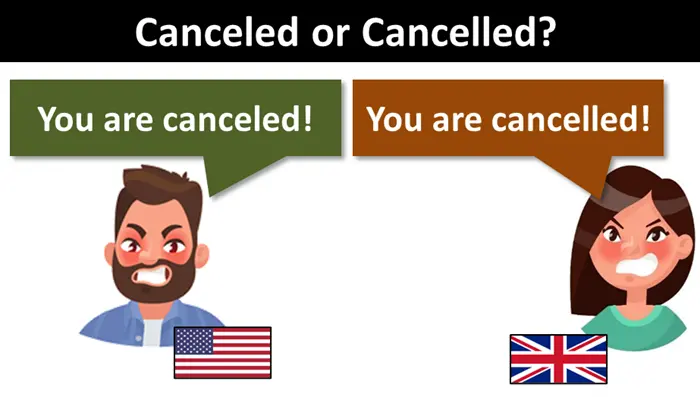
Cancelled or canceled — if you have ever stared at one of these words and second-guessed yourself, you are not alone.
This is one of the most commonly searched grammar questions in English, and the answer trips up native speakers every single day. The good news is that both spellings are correct.
The choice between them comes down to where you are writing and who your audience is.
What Is the Difference Between Cancelled and Canceled?
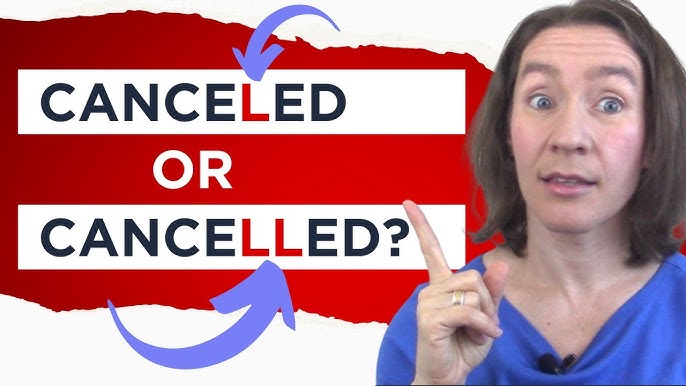
The difference is purely regional. Both words are the past tense of the verb “cancel.”
Canceled (one L) is the standard spelling in American English. Cancelled (two Ls) is the standard spelling in British English, Australian English, and Canadian English.
Neither spelling is wrong. The one you use simply signals where you are writing from — or who your audience is.
The Simple Answer
If you write for an American audience, use canceled.
If you write for a British, Australian, or Canadian audience, use cancelled.
If you are unsure, or writing for a global audience, pick one and stay consistent throughout your entire document.
The History Behind the Spelling Split
The story behind this split goes back to the early 1800s and one very determined American lexicographer named Noah Webster.
Webster believed English spelling was unnecessarily complicated. He set out to simplify American English by cutting letters he considered redundant.
He applied this philosophy to dozens of words — colour became color, honour became honor, and cancelled lost one of its Ls to become canceled. The simplified spelling first appeared in his 1828 dictionary, though it did not fully take over American usage until around the 1980s.
Noah Webster’s Broader Simplification Project
Webster was not just changing cancel. He reformed a whole category of words at once.
The same logic he used for canceled applies to traveled vs travelled, labeled vs labelled, and modeled vs modelled. American English drops the extra L in all these words; British English keeps it.
This means once you understand the canceled/cancelled rule, you automatically understand an entire family of similar word pairs.
Why British English Keeps the Double L
British English follows a different rule for adding suffixes to verbs ending in a vowel-plus-consonant pattern.
In British English, the final consonant is typically doubled before adding -ed or -ing, regardless of where the stress falls in the word. So cancel becomes cancelled and cancelling everywhere outside the United States.
American English, by contrast, only doubles the final consonant when the stress falls on the last syllable. Since cancel is stressed on the first syllable (CAN-cel), American English does not double the L.
Full Breakdown of All Cancel Word Forms
Understanding canceled vs cancelled is just the beginning. The same question applies to every inflected form of the verb cancel.
| Word Form | American English | British English |
|---|---|---|
| Past tense | Canceled | Cancelled |
| Present participle | Canceling | Cancelling |
| Agent noun | Canceler | Canceller |
| Adjective | Cancelable | Cancellable |
| Noun | Cancellation | Cancellation |
Notice the last row. Cancellation is always spelled with two Ls, in both American and British English. This is the one exception to the regional rule and catches many people off guard.
Cancellation: The Exception That Everyone Misses
Cancellation is spelled with two Ls in every variety of English — no exceptions.
You will never see “cancelation” in a major publication, formal document, or style guide. The double-L form is universal for the noun form.
The reason is pronunciation and syllable structure. When you add -ation to cancel, it creates two new syllables: can-cel-LA-tion. The double L acts as a phonetic bridge, holding the word together across those syllables.
Think of it this way: the verb forms lose an L (in American English), but the noun form keeps both Ls because the extra syllables demand it.
Canceling vs Cancelling
The present participle follows the exact same regional rule as the past tense.
American English uses canceling (one L). British English uses cancelling (two Ls).
You will see this every time a verb is in the -ing form. Writers canceling subscriptions in New York. Fans cancelling concert tickets in London. Same action, different spelling, different side of the Atlantic.
Regional Guide: Which Spelling to Use Where

Different countries follow different standards, and it helps to know each one clearly before you write.
| Country / Region | Preferred Past Tense | Preferred -ing Form |
|---|---|---|
| United States | Canceled | Canceling |
| United Kingdom | Cancelled | Cancelling |
| Canada | Cancelled | Cancelling |
| Australia | Cancelled | Cancelling |
| New Zealand | Cancelled | Cancelling |
| Ireland | Cancelled | Cancelling |
| South Africa | Cancelled | Cancelling |
The pattern is straightforward. The United States stands alone with the single-L versions. Every other major English-speaking country uses the double-L spelling.
Style Guide Recommendations
Professional writers and editors follow specific style guides, and these guides have clear positions on the canceled vs cancelled question.
The AP Stylebook (Associated Press), which governs most American journalism, recommends canceled and canceling — one L throughout.
The Chicago Manual of Style also follows American spelling conventions and prefers canceled.
The Oxford Style Guide, used widely in British and academic publishing, recommends cancelled with two Ls.
Australian and Canadian style guides align with Oxford and British conventions, favoring cancelled.
What This Means for Your Writing
If you are writing a news article for a US publication, always use canceled.
If you are writing for a UK, Canadian, or Australian publication, always use cancelled.
If you are writing for an international or global audience, pick American or British English as your base dialect, choose one standard, and apply it consistently.
Why Consistency Matters More Than Which Spelling You Choose
The biggest mistake writers make is mixing the two spellings within a single piece of content.
Using canceled in one paragraph and cancelled in the next paragraph looks unprofessional and signals a lack of attention to detail. Editors notice. Readers notice.
Choose the spelling that matches your audience and your platform, then stick with it all the way through.
How Autocorrect Makes Things Confusing
Autocorrect tools on phones, tablets, and computers often switch between the two spellings based on the device’s language setting.
If your phone is set to US English, it will flag cancelled as a misspelling and suggest canceled. If it is set to UK English, it does the opposite.
This is why many writers end up with mixed spellings in a single document — their autocorrect is quietly changing words while they type.
The fix is simple. Check your spell-checker language settings in Word, Google Docs, or any other editor you use. Set it to match your intended audience and leave it there.
The “Cancel Culture” Question
The phrase “cancel culture” and the use of canceled or cancelled in social media contexts follows the same rule — American users write “canceled,” British users write “cancelled.”
However, when used informally as in “she got canceled,” this is considered slang or colloquial usage. It is informal and should be avoided in academic writing, formal essays, legal documents, and professional correspondence.
In formal writing, canceled and cancelled refer strictly to events, plans, subscriptions, or obligations that have been called off or revoked.
Common Sentences Using Canceled and Cancelled
Seeing both spellings in context makes the choice much clearer.
American English examples (canceled):
- The airline canceled the flight due to a mechanical issue.
- The meeting was canceled at the last minute.
- He canceled his gym membership after three months.
- The event was canceled because of heavy rain.
- She canceled her appointment and rescheduled for next week.
British English examples (cancelled):
- The airline cancelled the flight due to a mechanical issue.
- The match was cancelled after the storm rolled in.
- He cancelled his subscription before the renewal date.
- The concert was cancelled and fans were issued full refunds.
- She cancelled her plans to visit after feeling unwell.
The meaning is identical in every pair. Only the spelling differs.
Words That Follow the Same Double-L Pattern
Canceled and cancelled are not isolated. They belong to a large family of British vs American spelling pairs involving double-L verbs.
| Verb | American English | British English |
|---|---|---|
| Travel | Traveled / Traveling | Travelled / Travelling |
| Label | Labeled / Labeling | Labelled / Labelling |
| Model | Modeled / Modeling | Modelled / Modelling |
| Level | Leveled / Leveling | Levelled / Levelling |
| Cancel | Canceled / Canceling | Cancelled / Cancelling |
| Fuel | Fueled / Fueling | Fuelled / Fuelling |
| Signal | Signaled / Signaling | Signalled / Signalling |
| Quarrel | Quarreled / Quarreling | Quarrelled / Quarrelling |
The rule is consistent. American English drops the extra L; British English keeps it.
Cancelable vs Cancellable
The adjective form follows the same pattern.
In American English, cancelable (one L) is the accepted form. In British English, cancellable (two Ls) is standard.
You will see this most often in contracts, subscription agreements, and terms of service — phrases like “this subscription is cancelable at any time” or “the reservation is cancellable with 24 hours’ notice.”
How to Remember Which Spelling to Use
A few simple memory tricks help lock in the right choice.
Trick 1 — Shorter = American. American English tends to simplify. If you are writing for the US, use the shorter spelling: canceled (one L), canceling (one L).
Trick 2 — Double L = Double U (UK). British English keeps two Ls. Think of the double L as representing the double letters in United Kingdom: UK becomes UU in your mind, and two Ls follow.
Trick 3 — Match your other spellings. If you are writing colour, honour, and favour — you are in British English territory. Write cancelled. If you are writing color, honor, and favor — you are in American English territory. Write canceled.
Trick 4 — Cancellation always has two Ls. No matter what, the noun form cancellation uses double L. Memorize this as the one absolute rule.
Canceled or Cancelled: Which Is More Common Online?
Google Ngram data and web corpus searches show that “canceled” is more common in American publications and “cancelled” dominates everywhere else.
On the global internet, which has a large proportion of American English content, both forms appear at high frequency. Neither flags as universally incorrect in search engines or grammar tools.
What matters for SEO and web writing is matching your target audience’s natural language. American audiences expect canceled; British audiences expect cancelled.
Practical Tips for Professional Writers
Always set your word processor to the correct regional English before starting any document.
Use a style guide as your authority — AP for US journalism, Chicago for US books, Oxford for UK and academic writing.
Run a final find-and-replace check before publishing to catch any mixed spellings that slipped through.
When writing for international audiences, note in your style guide which English variant you are using so the entire team stays consistent.
If writing for SEO purposes, consider that some users search for canceled and others for cancelled. Both spellings appear naturally in different sections of your content to capture both search variants — but maintain consistency within each paragraph.
Frequently Asked Questions (FAQs)
Is cancelled or canceled correct?
Both are correct — canceled is standard in American English and cancelled is standard in British, Australian, and Canadian English. Use the version that matches your audience.
Which spelling does AP Style recommend?
AP Style recommends canceled and canceling with one L, following American English conventions. Use this for US journalism and news writing.
Is it cancellation or cancelation?
It is always cancellation with two Ls, in both American and British English. The single-L form cancelation is technically a variant but is rarely accepted in formal or published writing.
Why does cancellation have two Ls if canceled only has one?
The extra syllables in cancellation (-ation) require a double L as a phonetic bridge. The verb forms (canceled, canceling) follow the regional rule; the noun form does not.
Is cancelled wrong in American English?
It is not wrong, just uncommon. Both spellings appear in American dictionaries. However, the single-L form canceled is the widely accepted standard in American publications, style guides, and everyday usage.
Which spelling should I use for a global audience?
Choose one dialect consistently — either American English (canceled) or British English (cancelled) — and apply it throughout. Never mix both spellings in the same document.
Does Canada use canceled or cancelled?
Canada follows British English conventions and uses cancelled with two Ls, along with cancelling for the -ing form.
Does Australia use canceled or cancelled?
Australia uses the British spelling: cancelled and cancelling, both with two Ls.
What is the present participle of cancel?
Canceling (one L) in American English, cancelling (two Ls) in British English. The rule matches the past tense pattern exactly.
What is the adjective form of cancel?
Cancelable (one L) in American English and cancellable (two Ls) in British English. You will see this in legal and commercial contexts most often.
Conclusion
Cancelled or canceled — now you have the full picture. Both spellings are correct past tenses of the verb cancel.
The single-L version, canceled, is the standard in American English, while the double-L version, cancelled, is used across British, Australian, Canadian, and most other English-speaking countries.
The same regional split applies to canceling vs cancelling and cancelable vs cancellable. The one universal exception is cancellation, which always uses two Ls regardless of where you are writing.
The most important takeaway for any writer in 2026 is consistency. Choose the spelling that fits your audience, apply it throughout your document, and never mix both versions in the same piece.
Getting this right is a small detail that signals professionalism, precision, and respect for your reader.