Heads or Tails: Random Coin Toss Generator 2026

Heads or tails is one of the oldest and most universally trusted methods of making a fair, unbiased decision in seconds.
From ancient Roman coin games to today’s NFL Super Bowl kickoff, the coin toss has been a cornerstone of fairness across cultures, sports, classrooms, and everyday life for over 2,000 years.
What Is Heads or Tails?
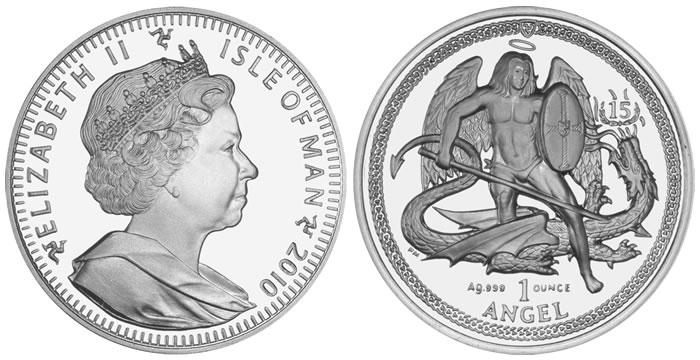
Heads or tails is a binary random decision method in which a coin is tossed and the outcome — either heads or tails — determines a choice. It is one of the simplest and most effective tools for achieving fairness between two parties.
The term comes directly from coin design. The obverse side of a coin (the “heads” side) traditionally features a portrait — a monarch, president, or national symbol. The reverse side is called “tails” — a catch-all term for the non-portrait face.
With exactly two equally weighted outcomes, a coin flip provides perfect statistical fairness. Neither side holds any natural advantage, making it the world’s most universally accepted neutral arbitrator.
How a Random Coin Toss Generator Works in 2026
Modern online heads or tails generators do not simply animate a spinning coin. They use sophisticated mathematical algorithms to produce genuinely random outcomes.
Pseudo-Random Number Generators (PRNG)
Most basic coin flip tools use a Pseudo-Random Number Generator (PRNG). A PRNG uses a mathematical algorithm seeded by an unpredictable value — often the current system time in milliseconds — to produce a sequence of numbers that appears random.
The algorithm generates a number. If the number is below 0.5, the result is heads. If it is 0.5 or above, the result is tails. This produces statistically equal 50/50 distribution across a large number of flips.
Cryptographically Secure Pseudo-Random Number Generators (CSPRNG)
The gold standard for digital coin flipping in 2026 is CSPRNG — the same class of randomness used in encryption systems, banking security, and lottery software.
CSPRNG algorithms are designed to be computationally infeasible to predict, even with knowledge of previous outputs. This means each flip is completely independent of every flip that came before it. Sites like RANDOM.ORG go even further, using atmospheric noise — actual physical randomness from the environment — to generate true random numbers.
Why Digital Is Fairer Than Physical
A Stanford University study led by mathematician Persi Diaconis found that a hand-flipped coin lands on the same side it started on approximately 51% of the time. This small but measurable bias comes from a physics phenomenon called precession — the wobble of the coin as it rotates.
Physical coins also carry manufacturing imperfections. Uneven embossing, slight weight differences, and worn edges all create tiny but real biases. A properly implemented digital coin flipper eliminates all of this, delivering mathematically perfect 50/50 outcomes every single time.
The Complete History of Heads or Tails
Understanding where the coin flip came from adds richness to what feels like a simple, everyday act.
Ancient Origins: Greece and Rome
The concept predates coins entirely. Historians believe the first version originated in Ancient Greece, where players coated one side of a seashell with dark tree pitch and left the other side natural. They would toss the shell and call a side — a direct ancestor of heads or tails.
The first true coin-based version emerged in Ancient Rome, where the game was called “navia aut caput” — meaning “ship or head.” Roman coins of the era featured the head of the emperor on one side and a ship on the reverse. Julius Caesar himself endorsed coin flips in 49 BC, and outcomes were legally binding for certain disputes.
Medieval Europe: Cross and Pile
In medieval Britain, the game evolved into “Cross and Pile.” The cross on one face of a medieval coin and the pile (the reverse design) on the other gave the game its name. Medieval courts occasionally used coin flips to resolve minor legal matters when evidence was inconclusive.
In Britain and parts of Europe, the coin flip was seen as an appeal to divine will — God would guide the coin to its rightful outcome. This gave coin flips a quasi-religious authority that made their results difficult to dispute.
The Renaissance and the Birth of Probability Theory
The Renaissance brought mathematical rigor to coin flipping for the first time. In the 16th and 17th centuries, mathematicians Gerolamo Cardano and Blaise Pascal began studying probability using the coin flip as their foundational example.
Pascal’s work on probability theory — developed partly through correspondence with Pierre de Fermat — used the 50/50 coin flip as the simplest possible model of chance. This mathematical revolution transformed coin flipping from a folk practice into a pillar of scientific study. The concept of the “fair coin” became the cornerstone of probability theory that it remains today.
Famous Historical Coin Flips
Some of history’s most consequential moments turned on a coin toss.
| Event | Year | Outcome |
|---|---|---|
| Julius Caesar endorses coin flip | 49 BC | Legally binding dispute resolution |
| City of Portland, Oregon named | 1845 | “Portland” won over “Boston” on a coin flip |
| Wright Brothers determine first pilot | 1903 | Wilbur called it but lost; Orville flew first |
| First Super Bowl coin toss | 1967 | Kansas City Chiefs won the toss |
| NFL introduces commemorative toss coin | 1997 | Coin sent to Pro Football Hall of Fame |
| New Zealand Big Wednesday lottery | Ongoing | Coin toss decides jackpot vs luxury prizes |
The Digital Age: Coin Flipping Online
Digital coin flipping began in the 1950s and 1960s with early computer random number generators used in research and simulation. The first publicly accessible online coin flip tools appeared in the mid-1990s with the rise of the internet.
Since 2010, coin flip simulators have become sophisticated, feature-rich tools. Today’s leading platforms offer customizable coins, multiple simultaneous flips, statistical tracking, sound effects, shareable results, and CSPRNG-powered randomness — all accessible from a smartphone in under one second.
The Mathematics of Heads or Tails
The coin flip is one of the most elegant demonstrations of probability theory in existence. Its simplicity is what makes it so mathematically powerful.
Basic Probability
A fair coin has two equally likely outcomes: heads (H) and tails (T). The probability of each outcome on a single flip is:
P(Heads) = 1/2 = 0.5 = 50% P(Tails) = 1/2 = 0.5 = 50%
These probabilities are fixed and independent. The outcome of flip number 10 does not influence the outcome of flip number 11. This is known as statistical independence — one of the most misunderstood concepts in probability.
The Gambler’s Fallacy
The gambler’s fallacy is the mistaken belief that after a long run of one outcome (say, five heads in a row), the other outcome (tails) is somehow “due.” This is completely false.
Every coin flip is an independent event. The coin has no memory. After ten consecutive heads, the probability of heads on the next flip remains exactly 50%. The law of large numbers guarantees that over thousands of flips the ratio approaches 50/50 — but it does not operate over short sequences in the way most people assume.
The Law of Large Numbers
The law of large numbers states that as the number of trials increases, the observed results converge toward the theoretical probability. In practice this means:
| Number of Flips | Expected Deviation from 50/50 |
|---|---|
| 10 flips | Can easily be 70/30 or 80/20 |
| 100 flips | Typically within 5-10% of 50/50 |
| 1,000 flips | Usually within 2-3% of 50/50 |
| 10,000 flips | Very close to 50/50 (within 1%) |
| 100,000 flips | Essentially identical to 50/50 |
This is why short-run coin flip results can feel wildly unbalanced — and why you should never read significance into a short streak.
Binomial Probability Formula
When you want to calculate the probability of getting a specific number of heads in a series of flips, you use the binomial probability formula:
P(X = k) = C(n, k) × p^k × (1-p)^(n-k)
Where n is the number of flips, k is the number of heads you want, and p is 0.5.
For example, the probability of getting exactly 2 heads in 3 flips is: P(X = 2) = C(3,2) × (0.5)² × (0.5)¹ = 3 × 0.25 × 0.5 = 0.375 or 37.5%
Common Coin Flip Probability Results
| Scenario | Probability |
|---|---|
| Exactly 1 head in 1 flip | 50% |
| 2 heads in a row | 25% |
| 3 heads in a row | 12.5% |
| 5 heads in a row | 3.125% |
| 10 heads in a row | 0.098% (about 1 in 1,024) |
| At least 1 head in 3 flips | 87.5% |
| Exactly 2 heads in 4 flips | 37.5% |
Heads or Tails in Sports: Official Uses Worldwide
The coin toss holds a formal, ceremonial role in professional sports across the world. Its fairness and simplicity make it the universally accepted method for making pre-match decisions.
American Football (NFL)
The NFL has used the coin toss before every game since the league’s founding. Since 1997, the NFL has used a specially minted commemorative coin for each game. After the toss, that coin is sent to the Pro Football Hall of Fame in Canton, Ohio.
The NFL also uses coin flips for tie-breaking among teams for playoff berths and seeding in the draft. A referee tosses the coin at midfield with both team captains present. The visiting team calls the flip while the coin is in the air.
Soccer (Association Football)
In soccer, the pre-match coin toss determines which team kicks off and which team chooses their preferred end of the field. Wind direction, sun position, and slope of the pitch can all make end choice strategically important. The referee performs the toss with both captains present.
Cricket
Cricket has one of the most strategically significant coin tosses in all of sport. The winning captain chooses whether to bat or bowl first — a decision that can be profoundly influenced by pitch conditions, weather, and time of day. In Test cricket, the toss is often described as a potential 20-run advantage before a single ball is bowled.
Tennis
At the start of every professional tennis match, a coin toss determines who serves first and which end of the court each player starts on. For best-of-five Grand Slam matches, the toss can carry subtle tactical implications for the first set.
Other Sports That Use Coin Tosses
| Sport | What the Coin Toss Decides |
|---|---|
| NFL Football | Kickoff direction, overtime possession |
| Soccer | Kickoff and end choice |
| Cricket | Bat or bowl first |
| Tennis | First serve and starting end |
| Rugby | Kicking or receiving, end choice |
| Australian Rules Football | First possession direction |
| Volleyball | Serve and court side |
| Chess (some formats) | Colour of pieces |
Creative and Everyday Uses for a Coin Flip
A heads or tails generator is not just for sports officials and statisticians. It is one of the most versatile decision-making tools in everyday life.
Breaking Decision Deadlocks
When two options are genuinely equal and you cannot decide, a coin flip provides an instant, unbiased resolution. It eliminates decision fatigue and stops endless deliberation from wasting your mental energy.
The famous Freudian coin toss insight suggests that your emotional reaction to the result reveals your true preference. If the coin lands on heads and you feel a twinge of disappointment, you actually wanted tails. The coin flip becomes a mirror for your subconscious desire — useful regardless of the actual result.
Classroom Probability Demonstrations
Teachers worldwide use coin flips to teach probability, fractions, percentages, the law of large numbers, and statistical sampling. An online generator that allows 100 or 1,000 simultaneous flips makes it possible to demonstrate convergence toward 50/50 in seconds.
Students can compare their theoretical predictions against actual results, building intuitive understanding of randomness that abstract formulas alone cannot convey.
Game Nights and Board Games
Coin flips determine who goes first in board games, card games, video games, and tabletop role-playing games. They are faster and fairer than drawing cards or rolling dice for pure start-order randomness.
In fantasy sports drafts, a heads or tails coin toss fairly determines draft order among friends. Online generators make this easy even when players are in different locations.
Personal Daily Decisions
Struggling to choose between two restaurants? Two movies? Two workout routines? A coin flip resolves minor daily decisions instantly, freeing your mental bandwidth for choices that actually deserve careful thought.
Research shows that humans make approximately 35,000 decisions per day. Using a coin flip for trivial binary choices is a genuinely effective way to reduce decision fatigue and preserve cognitive resources for important matters.
How to Flip a Physical Coin Correctly
Even in 2026, knowing how to properly flip a physical coin is a useful skill.
Hold the coin on the tip of your thumb with your forefinger curled behind it. The coin should sit flat on the pad of your thumb. Flick your thumb upward sharply, sending the coin spinning into the air with enough height to complete multiple rotations — ideally at least four full spins.
Call the result while the coin is still in the air. Let it land naturally on a flat surface rather than catching it — catching and slapping it onto your hand introduces additional variables and was identified in the Stanford Diaconis study as a source of same-side bias.
If you catch and flip onto your arm, the result may be reversed from how it landed in your hand. Standardize your method and communicate the procedure clearly before any important toss.
Best of Three and Best of Five: How to Use Multiple Flips
When a single coin flip feels too decisive for an important decision, best-of-three and best-of-five methods reduce the impact of any single random outcome.
Best of Three
Flip the coin three times. The outcome that appears at least twice wins. This gives the winner a two-thirds majority result. The three-way flip variant (for three-person decisions) is 75% likely to produce a clean result on the first set of three flips.
Best of Five
Flip five times. The outcome appearing three or more times wins. This further smooths out single-flip variance and is useful for higher-stakes binary decisions where a single flip feels insufficient.
| Method | Flips Required | Winner Determined By |
|---|---|---|
| Single flip | 1 | First result |
| Best of 3 | 3 | First to 2 |
| Best of 5 | 5 | First to 3 |
| Best of 7 | 7 | First to 4 |
Choosing the Right Online Coin Flip Tool in 2026
Not all heads or tails generators are equally trustworthy. Here is what to look for when choosing a reliable tool.
True Randomness — Look for tools that specify their randomization method. CSPRNG or cryptographically secure randomness is the gold standard. RANDOM.ORG uses atmospheric noise for genuine physical randomness.
No Bias Disclosure — A trustworthy tool should explicitly state that results are 50/50 and explain how randomness is achieved. Transparency is a strong trust signal.
Multiple Flip Support — The ability to flip 10, 100, or 1,000 coins simultaneously is essential for educational use, probability experiments, and statistical research.
Statistics Tracking — A good tool shows your running tally of heads vs tails results, allowing you to observe convergence toward 50/50 in real time.
No Registration Required — The best coin flip tools are completely free and require no account creation, download, or installation. They work instantly from any browser on any device.
Mobile Friendly — In 2026, most coin flip tool usage happens on mobile devices. A responsive, fast-loading design that works perfectly on smartphones is essential.
Heads or Tails Around the World: Different Names, Same Game
The coin flip is universal, but it carries different names and cultural traditions across the globe.
| Country / Region | Local Name | Meaning |
|---|---|---|
| Ancient Rome | Navia aut caput | Ship or head |
| Medieval Britain | Cross and pile | Cross or reverse design |
| Peru | Cara o sello | Face or seal |
| Spain | Cara o cruz | Face or cross |
| France | Pile ou face | Pile or face |
| Germany | Kopf oder Zahl | Head or number |
| India | Chit or pat | Obverse or reverse |
| Turkey | Yazı tura | Writing or circle |
| Brazil | Cara ou coroa | Face or crown |
Despite the different names, every version of the game is identical in structure — two sides, equal probability, one flip. The universality of this concept across independent cultures throughout history speaks to how deeply the 50/50 binary is embedded in human thinking.
Coin Flip vs Other Random Decision Methods

How does a coin flip compare to other common randomization methods?
| Method | Outcomes | True Random | Speed | Requires Equipment |
|---|---|---|---|---|
| Coin flip (digital) | 2 | Yes (CSPRNG) | Instant | No |
| Coin flip (physical) | 2 | Near-random (51% bias) | 5 seconds | Yes (coin) |
| Dice roll (6-sided) | 6 | Near-random | 5 seconds | Yes (dice) |
| Random number generator | Unlimited | Yes | Instant | No |
| Drawing straws | 2+ | Yes | 30 seconds | Yes (straws) |
| Rock Paper Scissors | 3 outcomes | No (human influenced) | 5 seconds | No |
| Spinning a wheel | 2+ | Near-random | 10 seconds | Yes or No |
For binary decisions requiring maximum fairness and speed, a digital coin flip is the superior choice by every measurable metric.
Frequently Asked Questions (FAQs)
Q1. Is an online heads or tails generator truly random?
Yes, quality online coin flip tools use cryptographically secure random number generators (CSPRNG) that produce mathematically unpredictable, perfectly 50/50 results with zero measurable bias.
Q2. Is a digital coin flip fairer than a physical coin toss?
Yes. A Stanford University study confirmed physical coin flips carry a 51% same-side bias due to precession physics. Digital flippers eliminate all physical variables and deliver exact 50/50 outcomes every time.
Q3. What does heads mean on a coin?
Heads refers to the obverse side of a coin — the face that typically depicts a portrait of a monarch, president, or national symbol. The opposite side is called tails or the reverse.
Q4. What is the probability of getting heads ten times in a row?
The probability is (0.5)^10 = 0.098%, or roughly 1 in 1,024. It is rare but entirely possible, since each flip is an independent event with no memory of previous outcomes.
Q5. Can I flip multiple coins at once with an online generator?
Yes, most modern coin flip tools support flipping between 2 and 100 coins simultaneously, making them ideal for probability experiments, classroom demonstrations, and best-of-N decisions.
Q6. Why is a coin toss used in sports?
A coin toss provides instant, universally accepted fairness for pre-match decisions like possession, direction, or serve order — with zero chance of human bias or argument affecting the outcome.
Q7. What is the gambler’s fallacy in coin flipping?
The gambler’s fallacy is the incorrect belief that past results influence future flips. In reality, each coin flip is statistically independent — a long streak of heads does not make tails more or less likely on the next flip.
Q8. Who invented the coin flip?
The coin flip originated in Ancient Rome as “navia aut caput” (ship or head). Julius Caesar endorsed it in 49 BC. The mathematical study of coin flip probability began with Blaise Pascal and Gerolamo Cardano in the 16th and 17th centuries.
Q9. Can a coin land on its edge?
Yes, but it is extraordinarily rare. The probability of a standard coin landing and balancing on its edge is estimated at approximately 1 in 6,000 flips under ideal conditions. It is statistically negligible in practice.
Q10. Is the heads or tails coin flip used in elections?
Yes. In tied political elections in the United States and several other countries, a coin toss is a legally recognized method of breaking the tie when all other procedures have been exhausted.
Conclusion
Heads or tails is far more than a simple game of chance. It is a 2,000-year-old institution of fairness that has decided wars, named cities, determined champions, resolved legal disputes, and taught generations of students the foundations of probability and statistics.
From ancient Roman streets to the Super Bowl stadium, the coin flip has remained remarkably constant — two sides, one toss, equal odds.
In 2026, digital heads or tails generators have made the process faster, fairer, and more accessible than ever before. Armed with cryptographic randomness and statistical tracking, they outperform physical coins on every measurable fairness metric.
Whether you need to break a personal deadlock, run a classroom experiment, determine sports draft order, or simply decide between pizza and tacos, a random coin toss generator delivers an instant, unbiased, universally trusted answer.