How Cities Stay Lit: The Complex Journey of Electricity
When the World Glows Without Asking
Every night, as cities shimmer to life and neon signs flicker across skylines, few of us pause to consider the journey behind the glow.
But what if the very thing keeping our cities alive is far more fragile, fragmented, and fiercely orchestrated than we realize?
As climate extremes intensify and energy demands climb, powering the world has become more than just a technical challenge, it’s a cultural and existential one. Beneath the hum of streetlights and the pulse of subways lies a complex choreography of generation, transmission, and delivery that most of us never see. Even discussions around georgia gas company rates highlight how deeply intertwined our daily lives are with the economics of energy. The cost of keeping homes warm or industries running is not merely a financial figure—it’s a reflection of our collective priorities and the sustainability choices we make.
And yet, our future may depend on understanding it.
Effortless Light
We’ve been conditioned to think of electricity as a constant, like gravity or air. It’s only when the lights flicker or a blackout hits that the illusion breaks. We scramble, not just for candles, but for control.
This sense of permanence is a trap.
The reality is, cities don’t stay lit because of some central, unshakable system. They stay lit because of delicate cooperation between dozens of moving parts: weather-affected grids, time-sensitive loads, aging infrastructure, and human decision-making across miles of terrain.
Imagine a city as a living organism. Its veins? The power lines snaking across vast landscapes. But these aren’t simple wires. They’re part of a vast system of transmission and distribution, a layered network balancing high-voltage highways with neighborhood-level capillaries.
Yet this system isn’t just technical. It’s political, financial, and emotional. And as urban populations grow and energy usage spikes, our faith in its invisibility becomes riskier.
So we must ask: What else are we taking for granted?
Journey of a Single Spark
What if we stopped viewing electricity as a given and started seeing it as a relationship?
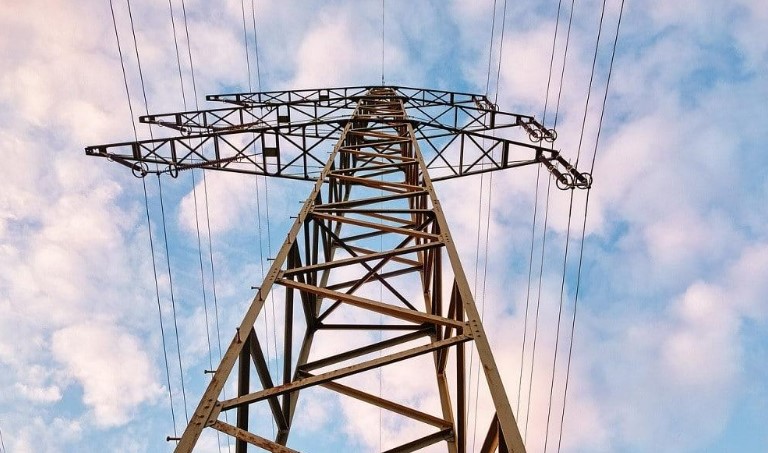
Instead of imagining a “power plant” somewhere out there fueling our homes, picture a dance: energy generated by sun, wind, water, or fossil fuels, traveling through massive substations, high-voltage towers, and local transformers, only to reach your phone charger at just the right voltage.
When we shift our thinking, we begin to see how brittle and beautiful the system is.
Consider microgrids, smaller, local power ecosystems that can operate independently. Or smart meters that adjust in real-time. Or backup batteries quietly storing energy during calm moments so they can deliver during a storm.
The point isn’t to overwhelm. It’s to awaken.
Because once we understand how cities truly stay lit, we also realize how many choices, big and small, contribute to that light.
The Soul in the Circuit
In many Indigenous cultures, energy is not a commodity, it’s a spirit. It flows, it responds, it’s alive. Modern infrastructure, too, echoes this belief, even if unintentionally. The grid breathes. It shifts with wind, reacts to usage, flexes during crises.
Even the way electricity reaches your home depends on deeply coordinated systems. Without understanding distribution and transmission lines, we remain passive users, blind to the very network that supports us.
Let There Be Light: But Know Why
The cities of the future will not just be brighter. They’ll be smarter, more flexible: and more fragile, too, if we don’t pay attention.
Powering the world is no longer just an engineering feat. It’s a human story, one of awareness, adaptation, and shared responsibility.
So the next time you flip a switch, consider this: what networks, systems, and decisions made that moment possible?