
How to Prepare Your Stock and Order Flow for a Major Sales Event
Major sales events such as Black Friday, Singles’ Day and end-of-season campaigns can bring in more orders in a day than a brand normally sees in a week. They can also expose every weakness in stock control and order handling at the worst possible moment.
Most peak-day failures are predictable. Stock counts that were slightly off become oversells, order queues back up faster than the warehouse can pick, and carriers arrive to find parcels still unlabeled.
This guide walks through a preparation timeline for ecommerce teams, from forecasting and stock checks to order flow testing and the review that should follow every event.
Forecast Demand Product by Product
Peak planning starts with a product-level forecast, not a single growth figure for the whole business. Discounts, featured placements and bundles shift demand toward specific items, and those items drive most of the operational strain.
Use data from previous campaigns where you have it. Look at which products sold out, how quickly, and on which channel. Then adjust for this event’s mechanics, such as deeper discounts, new marketplace placements or a planned influencer push.
Flag products with long reorder lead times or minimum order quantities separately. These are the items you cannot top up once the campaign starts, so their forecast deserves a second review and a conservative safety margin.
Share the forecast with suppliers early. Inbound lead times often decide whether you have enough stock on the day, and a late container cannot be fixed with extra effort in the final week.
Fix Stock Accuracy Before the Event
Every unit counted wrongly before a sale becomes either a lost sale or an oversell during it. Accuracy work belongs in the weeks before the event, not the night before.
Disciplined inventory management in this window means full counts on your forecast best sellers, clearing any backlog of unprocessed returns and checking that bundles and kits map to the right components. These checks matter because peak traffic leaves no time to investigate why a channel shows ten units when the shelf holds four.
Freeze nonessential stock movements in the final days before the event. Transfers, relabeling projects and layout changes can wait until volumes settle.
Position Stock Where Orders Will Ship From
Stock needs to be in the right building and the right bins before orders arrive. Inbound receiving during peak competes with outbound picking for the same people and space.
Schedule final inbound deliveries with a buffer before the event, and slot fast movers close to packing stations. For brands using more than one site, decide which location will ship campaign products, then move stock accordingly rather than relying on transfers mid-event.
Some brands pre-pack their highest-volume single-item orders in advance. This works well for gift sets or hero products where the contents never change.
Stress-Test Your Order Flow
Order handling needs as much preparation as stock. Rules that work at normal volume can create bottlenecks when thousands of orders land in the same hour.
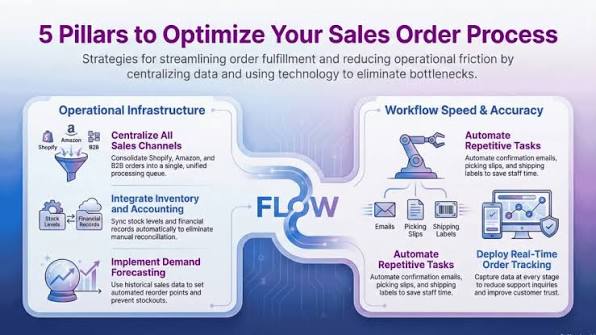
Well-configured order management software can prioritize express orders, hold suspicious orders for review and release work to the warehouse in waves that match picking capacity. Setting these rules ahead of time keeps the warehouse working through a steady queue instead of a sudden wall of orders it cannot sequence.
Run a test before the event. Push a batch of sample orders through every channel, confirm their route to the correct location, and check that tracking updates flow back to each marketplace. Fix integration errors now, while volume is low.
Prepare the Floor and the Team
People and space set the ceiling on how many orders leave the building. Planning them is as important as planning stock.
Use this checklist in the final week:
- Confirm temporary staff numbers and run hands-on training before the event
- Stock up on packaging, labels and printer supplies with a safety margin
- Agree extra carrier pickups and cut-off times with each courier
- Set up a clear escalation path for system issues during the event
- Brief customer service on likely questions and approved responses
Plan shifts so the busiest picking hours have your most experienced staff on the floor.
Review What Happened Afterward
The review after one event is the best preparation for the next. Hold it within a week, while details are fresh.
Compare actual sales against the product forecast, and note where oversells, stockouts or delays occurred. Check how long orders took from placement to dispatch at the busiest point, and which steps caused the longest waits. Record every fix in a shared document that the team opens at the start of the next planning cycle.
Final Thoughts
Peak events reward preparation far more than effort on the day. Forecast at the product level, fix stock accuracy early, position stock before orders arrive, configure order flow for volume and prepare the team. Then review the results honestly, so each event runs more smoothly than the last.