Start With Why Book: Top Quotes and Insights 2026
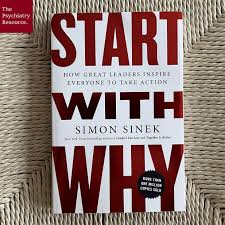
Start With Why book by Simon Sinek is one of the most important leadership and business books published in the last two decades.
First released in 2009, it introduced a deceptively simple question that changed how millions of leaders, entrepreneurs, and organizations think about purpose, communication, and loyalty.
The book argues that great leaders do not start by explaining what they do or how they do it — they start with why.
About the Author: Simon Sinek
Simon Sinek is a British-American author, speaker, and organizational consultant born on October 9, 1973. He studied anthropology at Brandeis University and began his career in advertising before founding his own firm.
In 2009, Sinek published Start With Why alongside a TED Talk titled “How Great Leaders Inspire Action.” That talk became one of the most-viewed TED Talks of all time and introduced millions of people to The Golden Circle framework.
Sinek has since written several other books including Leaders Eat Last, Together Is Better, Find Your Why, and The Infinite Game. He is widely regarded as one of the most influential voices in modern leadership thinking.
What Is the Start With Why Book About?
The core premise of the Start With Why book is that inspiring leaders and organizations all think, act, and communicate in the same way — and it is the opposite of what most people do.
Most organizations communicate from the outside in. They start by explaining what they sell, then sometimes explain how they are different, and rarely articulate why they exist at all. Sinek argues that truly inspiring leaders reverse that order. They start from the inside out, beginning always with why.
The book is organized around this single insight and builds a rich framework called The Golden Circle to explain why it works biologically, psychologically, and in practice.
The Golden Circle Explained
The Golden Circle is the central framework of the Start With Why book. It consists of three concentric circles representing three questions every leader and organization must answer:
| Circle | Question | Meaning |
|---|---|---|
| WHY (innermost) | Why do you do what you do? | Your purpose, cause, or belief |
| HOW (middle) | How do you do it? | Your values, principles, and differentiators |
| WHAT (outermost) | What do you do? | Your products, services, or job function |
Most organizations only know their WHAT clearly. Many can articulate their HOW. Very few can clearly and consistently articulate their WHY.
Sinek’s central argument is that when leaders communicate starting from WHY, they tap into the part of the human brain that governs emotion, trust, and decision-making. When they start from WHAT, they only reach the rational, analytical part of the brain that processes features and facts but rarely drives loyalty.
The Biology Behind Why It Works
One of the most compelling parts of the Start With Why book is how Sinek connects The Golden Circle to the biology of the human brain.
The outer section of the brain, called the neocortex, corresponds to the WHAT layer of The Golden Circle. It handles rational thought, language, and analysis. This is where facts and figures are processed.
The inner sections of the brain, the limbic system, correspond to the WHY and HOW layers. The limbic system governs feelings, trust, loyalty, and behavior. Critically, it has no capacity for language.
This is why, Sinek explains, gut decisions are so powerful. When something feels right, that feeling comes from the limbic system. When leaders communicate their WHY clearly, they speak directly to this emotional center. When they only communicate WHAT, they leave the limbic system untouched — and loyalty does not develop.
This biological reality explains why facts alone rarely inspire action, and why purpose-driven communication creates movements.
The Two Ways to Influence Human Behavior
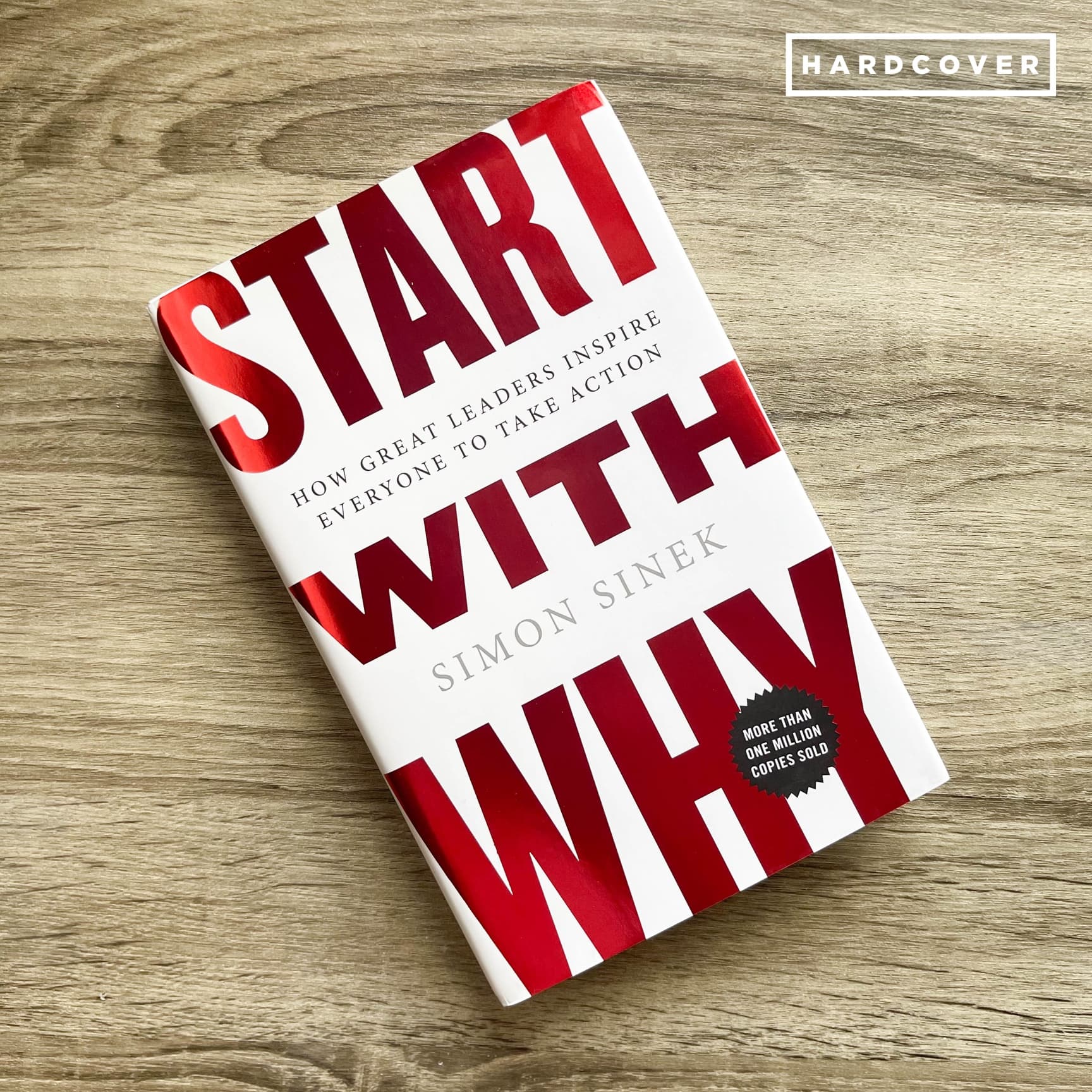
Early in the Start With Why book, Sinek makes a foundational distinction that sets the tone for everything that follows.
He argues there are only two ways to influence human behavior: manipulation or inspiration.
Manipulation includes tactics like price discounts, promotions, fear-based messaging, novelty, aspirational advertising, and peer pressure. These tactics can produce short-term results. But they are transactional and require constant renewal. The moment the incentive disappears, so does the behavior.
Inspiration is fundamentally different. When people act because they genuinely believe in what you stand for, their commitment is intrinsic. They stay loyal even when a better offer appears elsewhere. They advocate for you. They become part of a movement.
| Manipulation | Inspiration |
|---|---|
| Based on external incentives | Based on shared beliefs and purpose |
| Produces short-term results | Produces long-term loyalty |
| Requires constant renewal | Self-sustaining once established |
| Drives transactions | Builds relationships |
| Based on WHAT you offer | Based on WHY you exist |
| Price wars and promotions | Community and advocacy |
Sinek’s argument is not that manipulation is evil — it can work. But it is expensive, exhausting, and ultimately cannot build the kind of deep loyalty that great organizations create.
The Apple Example: A Case Study in Starting With Why
No case study appears more frequently in the Start With Why book than Apple. Sinek uses Apple to show exactly what starting with WHY looks like in practice.
Apple’s WHY is not about making computers or phones. It is about challenging the status quo and thinking differently. Every product Apple releases, every piece of marketing, every keynote address, communicates this belief first and foremost.
When Apple introduced the iPod, they did not say “We have made a great music player with 1GB of storage.” They said, “1,000 songs in your pocket.” The product description came second. The feeling of possibility and freedom came first.
Sinek contrasts Apple with other companies that had equally good technology at the time but failed to build the same loyalty. Dell, Gateway, and other PC makers communicated from the outside in. They led with features and specs. Apple led with belief.
The result is a customer base that lines up for new products before they are released, pays premium prices, and actively promotes the brand without being paid to do so. That is what starting with WHY produces.
The Wright Brothers vs. Samuel Langley
One of the most memorable contrasts in the Start With Why book is the story of the Wright Brothers compared to Samuel Pierpont Langley.
Langley was a well-funded, well-connected, and highly educated inventor who was racing to be the first to achieve powered flight. He had a grant from the War Department, the best engineers money could hire, and regular front-page coverage in major newspapers.
The Wright Brothers had none of that. Orville and Wilbur ran a bicycle shop. They were self-financed, lacked formal scientific training, and attracted no press attention.
Yet the Wright Brothers flew first. And when they succeeded, their team reportedly wept with joy. When Langley heard they had beaten him, he quit. He never tried again.
Sinek’s point is not about resources. It is about motivation. The Wright Brothers were driven by a belief — they were convinced that powered flight would change the world, and they were consumed by that purpose. Langley was motivated by fame and financial reward.
Purpose outlasts external motivation. That is why the Wright Brothers won.
Martin Luther King Jr. and the Power of WHY
Sinek uses Martin Luther King Jr. as perhaps his most powerful human example of starting with WHY.
On August 28, 1963, Dr. King stood at the Lincoln Memorial and delivered one of the most famous speeches in history. Note what he said: “I have a dream.” Not “I have a plan.” Not “Here is a 12-step program for racial equality.”
He articulated a belief. He shared a vision of what he believed the world could become. He started with WHY.
Roughly 250,000 people showed up on that day in Washington, D.C. They were not invited by a mass mailing. There were no event websites or social media promotions. They came because Dr. King’s WHY resonated with their own beliefs.
Sinek points out that many other civil rights leaders at the time had similar information and similar grievances. But Dr. King had a gift for communicating WHY — and that is what turned a message into a movement.
The Law of Diffusion of Innovation
A major concept in the Start With Why book is the Law of Diffusion of Innovation, developed by sociologist Everett M. Rogers in 1962.
Rogers’ model describes how innovations spread through a population across five distinct groups:
| Group | Percentage of Market | Characteristic |
|---|---|---|
| Innovators | 2.5% | Love novelty, take risks for new ideas |
| Early Adopters | 13.5% | Visionary, quick to embrace purpose-driven products |
| Early Majority | 34% | Pragmatic, need social proof before committing |
| Late Majority | 34% | Skeptical, adopt only when the norm shifts |
| Laggards | 16% | Resistant, adopt only when they have no choice |
Sinek’s insight is that to reach mass market success, you must first win over Innovators and Early Adopters. These groups do not buy products — they buy beliefs. They are the only ones willing to take a risk on something unproven.
When your WHY is clear, you attract these early groups naturally. Once you have roughly 15 to 18 percent of a market on your side, you reach the tipping point. After that, the Early Majority follows, then the rest.
This is why TiVo — a technically superior product in the DVR space — struggled despite excellent features. They marketed to the middle of the bell curve instead of winning the left side first. They could tell you WHAT they did but could not clearly articulate WHY it mattered.
The Celery Test
One of the most practical tools in the Start With Why book is what Sinek calls the Celery Test.
Imagine you are at a party and everyone gives you different advice about what your business needs. Someone says sugar. Someone says butter. Someone says celery. Someone says gluten-free options. All of it sounds plausible.
The question is: which advice do you take?
If you know your WHY, the answer is easy. You filter every decision through your core belief. If your WHY is about health and natural living, you buy celery. You ignore the sugar and the butter not because they are bad ideas in general, but because they do not align with your purpose.
The Celery Test teaches that knowing your WHY makes every business decision simpler, faster, and more consistent. Without a clear WHY, you end up trying to be everything to everyone — and you build nothing that lasts.
Why People Do Not Buy What You Do
The most famous line from the Start With Why book is: “People don’t buy what you do; they buy why you do it.”
This insight reframes almost everything about marketing, sales, hiring, and leadership. Here is what it means in practice:
When you walk into an Apple Store, you do not simply buy a laptop. You buy into a belief about creativity, thinking differently, and challenging the status quo.
When you put on a pair of Nike shoes, you are not just buying footwear. You buy into the belief that you have an athlete inside you.
When someone joins your company as an employee, they are not just accepting a salary. If you have a clear WHY, they are choosing to be part of something that aligns with their own values.
This is why great brands can charge premium prices. This is why great companies attract the best talent without outbidding competitors. And this is why customers of truly purpose-driven organizations become advocates rather than just buyers.
WHY Leaders vs. HOW Leaders
The Start With Why book makes a useful distinction between two types of leaders that every great organization needs.
WHY leaders are visionaries. They are driven by belief and purpose. They inspire others through a compelling sense of what could be. Steve Jobs is the classic example. He could articulate Apple’s WHY with electricity and clarity.
HOW leaders are operators. They are disciplined, process-oriented, and excellent at turning a vision into reality. Steve Wozniak was the HOW to Jobs’ WHY at Apple. Bill Gates needed Paul Allen.
Neither type is superior. WHY leaders without HOW leaders often build movements that never become sustainable organizations. HOW leaders without WHY leaders build efficient machines with no soul and no loyalty.
The Start With Why book argues that the healthiest organizations have both types working in close partnership, with the WHY at the center of every major decision.
Trust, Consistency, and the WHY
Sinek dedicates significant attention to the relationship between WHY and trust. Trust is not built through words — it is built through consistency of behavior over time.
An organization’s WHY must be evident not just in its marketing campaigns but in every decision it makes: who it hires, what products it launches, how it treats customers, how it handles failure.
When actions align with stated WHY, trust deepens. When they diverge — when a company that claims to stand for community lays off workers callously, or a brand that claims authenticity runs dishonest advertising — the mismatch destroys credibility faster than any competitor ever could.
Sinek calls this alignment between WHY and WHAT the key to building authentic brands and organizations that endure.
The Split: When Organizations Lose Their WHY
One of the most sobering sections of the Start With Why book examines what happens when organizations lose touch with their original WHY.
Sinek traces how companies often start with a powerful sense of purpose — a founder’s original belief — and then, as they grow, gradually shift focus to metrics, market share, and quarterly results. The WHY fades. The WHAT becomes everything.
Walmart began with Sam Walton’s genuine belief in serving everyday working people. As it scaled, that belief became harder to maintain at every level of the organization.
Microsoft began with a belief in a computer on every desk in every home. After achieving that dream, the company struggled to articulate a new WHY, and innovation stagnated for years.
Sinek calls this phenomenon “the split” — the moment when an organization’s public face no longer reflects its internal belief system. Recovery requires going back to the original WHY and rebuilding from there.
Applying the Start With Why Book to Personal Life
The Start With Why book is not only for businesses and corporations. Sinek is explicit that the same framework applies to individuals.
Your personal WHY is your sense of purpose — the reason you get out of bed in the morning. It is not about money or status. Those are results. Your WHY is the belief or cause that drives you when results are not yet visible.
Finding your personal WHY involves asking honest questions: What makes you feel most alive? What do you stand for? What would you do even if you were not paid? What do you want your contribution to the world to look like?
When your personal WHY is clear, career decisions become easier. You stop chasing opportunities that look good on paper and start pursuing work that aligns with who you are. You become more energized, more resilient, and more magnetic to others who share your beliefs.
The Start With Why Book vs. Other Leadership Books
| Book | Core Idea | Best For |
|---|---|---|
| Start With Why | Purpose drives loyalty and inspiration | Leaders, founders, marketers |
| Leaders Eat Last | Great leaders put people first | Managers, team builders |
| The Infinite Game | Play for long-term survival, not short-term wins | CEOs, strategists |
| Good to Great (Collins) | Disciplined people and ideas build great companies | Executives, analysts |
| The 7 Habits (Covey) | Personal effectiveness through principled living | Individuals, managers |
| Dare to Lead (Brown) | Vulnerability and courage define great leaders | People leaders, coaches |
Start With Why stands out because it addresses the most foundational question: not how to lead better, but why to lead at all. It is the logical starting point for any deeper reading on leadership.
Top Quotes From the Start With Why Book
These are the most widely shared and most instructive quotes from the Start With Why book:
“People don’t buy what you do; they buy why you do it. And what you do simply proves what you believe.”
This is the central thesis of the entire book. Purpose is the real product.
“There are only two ways to influence human behavior: you can manipulate it or you can inspire it.”
Manipulation is exhausting and expensive. Inspiration is self-sustaining.
“Working hard for something we don’t care about is called stress. Working hard for something we love is called passion.”
WHY turns effort into fuel rather than drain.
“Dream big. Start small. But most of all, start.”
Purpose without action is just an idea. The WHY must drive movement.
“Leadership is not about being in charge. It is about taking care of those in your charge.”
True leaders serve their people. Authority is not the same as leadership.
“Innovation is not born from the dream. Innovation is born from the struggle.”
Purpose creates the resilience needed to push through difficulty.
“Those who truly lead are able to create a following of people who act not because they were swayed, but because they were inspired.”
Followers become advocates when led by WHY.
“The goal is not to do business with everybody who needs what you have. The goal is to do business with people who believe what you believe.”
Shared beliefs create deeper loyalty than any product feature ever could.
Key Lessons From the Start With Why Book
Here is a summary of the most actionable lessons from the book:
Clarify your WHY before anything else. You cannot inspire others with a purpose you have not clearly defined for yourself. Take time to identify the belief that drives you, not the outcome you are chasing.
Communicate from the inside out. In presentations, pitches, and marketing, lead with WHY. Follow with HOW. Save WHAT for last. This is the opposite of how most people naturally communicate.
Target your early adopters first. Do not try to convince everyone. Find the people who already believe what you believe and give them the language to spread your message.
Hire for belief, not just skill. Skills can be taught. Belief in the WHY cannot be manufactured. Build teams of people who share your purpose.
Maintain consistency between WHY and action. Every decision your organization makes is a test of whether your WHY is real. Let it guide product development, customer service, hiring, and culture.
Use the Celery Test for every major decision. When facing a strategic choice, ask which option best aligns with your WHY. That is your answer.
Who Should Read the Start With Why Book?
The Start With Why book is valuable for a wide range of readers:
Entrepreneurs and startup founders will find it essential for building a brand that attracts the right customers and talent from day one.
Managers and team leaders will gain a new understanding of how to motivate people through shared purpose rather than incentives alone.
Marketers will rethink how they position products and write messaging that connects emotionally, not just rationally.
Individuals in career transition will find the WHY framework useful for identifying work that aligns with their values and energizes rather than drains them.
Anyone feeling stuck, unmotivated, or uncertain about direction will benefit from the simple clarity that asking WHY provides.
The Start With Why TED Talk
Before the book reached its current fame, Sinek’s 2009 TED Talk “How Great Leaders Inspire Action” introduced The Golden Circle to the world. It is consistently ranked among the top three most-viewed TED Talks of all time.
The talk condenses the core message of the Start With Why book into approximately 18 minutes. It uses the same examples — Apple, the Wright Brothers, and Martin Luther King Jr. — to illustrate how WHY-driven communication produces results that WHAT-driven communication never can.
If you have not read the book yet, the TED Talk is an excellent starting point. If you have read the book, watching the talk reinforces the concepts through Sinek’s natural enthusiasm and clarity of delivery.
Is the Start With Why Book Still Relevant in 2026?
The Start With Why book was first published in 2009. In 2026, its core message is arguably more relevant than ever.
Consumers are more skeptical of advertising than at any point in history. Trust in institutions is at historic lows. Employees demand meaning from their work, not just compensation. Brands that stand for nothing are losing ground to those that stand for something.
The 15th Anniversary Edition of the book introduced Sinek’s thinking to a new generation of readers and added fresh context. The fundamental framework has not changed because human biology has not changed. People still make decisions with their limbic system. Purpose still drives loyalty more powerfully than any promotion ever could.
In a world increasingly shaped by AI, automation, and information overload, the one thing that machines cannot replicate is authentic human purpose. The WHY is more of a competitive advantage in 2026 than it was in 2009.
Frequently Asked Questions (FAQs)
What is the main message of the Start With Why book?
The book argues that great leaders and organizations inspire action by communicating their purpose first. People do not buy what you do — they buy why you do it.
Who wrote the Start With Why book?
Simon Sinek wrote the book. He is a British-American author, speaker, and leadership expert who published it in 2009 alongside a widely viewed TED Talk on the same subject.
What is The Golden Circle in the Start With Why book?
The Golden Circle is Sinek’s central framework. It consists of three concentric circles — WHY (purpose), HOW (process), and WHAT (product) — and argues that inspiring leaders always communicate from the inside out, starting with WHY.
What are the best examples used in the Start With Why book?
Sinek uses Apple, the Wright Brothers, and Martin Luther King Jr. as his primary examples of leaders and organizations that succeeded by starting with WHY. He also references Southwest Airlines, TiVo, and Samuel Langley as contrasting cases.
What is the Celery Test from the Start With Why book?
The Celery Test is a decision-making tool. It says that when your WHY is clear, you can filter every piece of advice or strategic option through your core belief and quickly identify which choices align with your purpose and which do not.
What is the difference between manipulation and inspiration in the Start With Why book?
Manipulation uses external incentives like discounts, fear, and promotions to drive short-term behavior. Inspiration taps into shared beliefs to create lasting loyalty and advocacy. Sinek argues that only inspiration builds truly great organizations.
What is the Law of Diffusion of Innovation in the Start With Why book?
It is a model by Everett Rogers that divides a market into five groups: Innovators, Early Adopters, Early Majority, Late Majority, and Laggards. Sinek argues you must win Innovators and Early Adopters first by communicating your WHY clearly before you can reach mass market success.
How many pages is the Start With Why book?
The original edition is approximately 256 pages. The 15th Anniversary Edition includes updated context and is similarly sized, making it a concise and readable book for leaders at any level.
What is the Start With Why book best used for?
It is best used as a foundation for leadership thinking, brand building, and personal purpose discovery. It is also widely used in business schools, leadership training programs, and team workshops to align organizations around a shared mission.
How is the Start With Why book different from Simon Sinek’s other books?
Start With Why is the foundational text — it introduces the WHY concept and The Golden Circle. Leaders Eat Last extends the ideas into team culture. The Infinite Game applies purpose-driven thinking to long-term strategy. Find Your Why is the practical companion guide for discovering your personal WHY.
Conclusion
The Start With Why book by Simon Sinek remains one of the clearest and most practical guides to purpose-driven leadership ever written.
At its heart, it asks a question that most leaders and organizations have never seriously answered: why do you do what you do? Not to make money — that is a result. But why, at the deepest level, does your work exist?
When that question is answered honestly and communicated consistently, something remarkable happens. The right customers find you. The right employees choose you.
Loyalty deepens without constant promotion. Innovation flows naturally from a team that believes in what it is building.
The Golden Circle, the Law of Diffusion, the Celery Test, and the biological explanation of how purpose bypasses rational resistance — all of it points to the same conclusion.
Starting with WHY is not a marketing trick or a motivational slogan. It is a fundamental shift in how leaders think about their role and their responsibility.
In 2026, with trust at a premium and attention harder to earn than ever, the leaders and organizations with a clear, authentic WHY will continue to outperform, outlast, and outinspire everything else.