The Power of Streaming Platforms: How Online Sports Coverage Is Changing the Industry
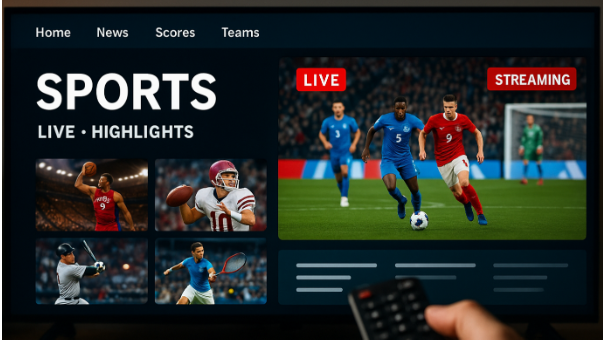
The sports broadcasting landscape is evolving faster than ever. Traditional television, once the gatekeeper of live events, is now competing with dynamic streaming platforms that redefine how fans watch, interact, and engage.
From global tournaments to local leagues, digital streaming has become the heartbeat of sports entertainment — accessible anywhere, on any device, at any time.
From broadcast exclusivity to digital freedom
For decades, sports broadcasting was dominated by cable networks with strict regional rights. Fans often needed expensive subscriptions to watch their favorite teams. Streaming platforms have completely disrupted this model.
Now, fans can follow matches live or on-demand, with personalized viewing options and interactive features that traditional TV never offered.
Between 10% and 29% of this article, one notable trend is the rise of 강남티비 platforms. These services provide immediate, real-time access to live games across multiple sports, allowing users to jump seamlessly between matches and highlights without geographical restrictions.
As fans shift toward online viewing, broadcasters are focusing more on quality streaming infrastructure, adaptive bitrate technology, and latency reduction — ensuring that every play is seen the moment it happens.
Personalization and fan control
Streaming platforms thrive on data. By tracking viewer preferences, they deliver personalized recommendations, highlight reels, and notification alerts.
For example, a football fan can set up alerts for goals, while a baseball enthusiast might receive live pitch analysis. AI-driven systems now curate experiences tailored to every user, transforming passive viewers into active participants.
This personalization also extends to commentary and language options, enabling fans worldwide to connect with content in their preferred formats.
The economics of digital broadcasting
Streaming has transformed the economics of sports broadcasting. Instead of relying solely on advertisers, platforms use hybrid revenue models — subscription tiers, pay-per-view options, and ad-supported free access.
This flexibility allows leagues and content creators to reach broader audiences. Smaller sports, previously invisible on traditional TV, now thrive through niche streaming channels that cater directly to passionate fanbases.
At the same time, data monetization has become a major revenue driver. Viewer analytics help sponsors and broadcasters optimize ad placement and engagement in real time.
Technology that enhances the experience
Advancements in artificial intelligence, 5G, and edge computing are elevating sports streaming quality. Real-time analytics overlays, multiple camera angles, and interactive polls enhance viewer engagement.
AI-powered translation tools break language barriers, allowing commentary to be instantly localized for global audiences. Meanwhile, 5G connectivity eliminates lag, ensuring that live sports truly remain live.
Virtual and augmented reality (VR/AR) integrations are taking interactivity even further — letting fans “enter” stadiums digitally or view plays from a player’s perspective.
Expanding access to underserved audiences
The democratization of streaming technology means more fans can enjoy global sports without expensive cable packages.
Between 30% and 70% of this discussion, platforms like 해외축구중계 exemplify this shift. Their innovation in multi-device synchronization allows fans to watch live sports seamlessly across smartphones, tablets, and smart TVs. This inclusive design ensures accessibility, even in regions with limited infrastructure.
By offering adaptive streaming quality and mobile optimization, these services extend the reach of professional sports to emerging markets and younger digital audiences.
The social dimension of live streaming
Sports have always been communal — and streaming platforms have found ways to recreate that social energy online. Integrated chat systems, fan forums, and synchronized reactions allow viewers to celebrate or debate in real time.
Social media integration amplifies engagement further. Fans can share clips instantly, creating viral moments that extend a game’s lifespan beyond its live broadcast.
Interactive overlays even allow polls or predictions mid-match, adding a participatory element that strengthens fan loyalty.
Challenges: rights, piracy, and fragmentation
Despite its success, the streaming revolution faces challenges. Licensing remains complex, with leagues dividing rights among multiple platforms, forcing fans to juggle subscriptions.
Piracy also continues to undermine revenue, as unauthorized live streams attract millions of viewers. Combatting this requires advanced encryption, watermarking, and AI-based detection systems.
Additionally, as more platforms compete for attention, the risk of content fragmentation grows. Consolidation or cross-platform partnerships may be the next step toward a more unified fan experience.
The future: immersive, global, and data-driven
The next decade of sports streaming will be defined by personalization, interactivity, and innovation. Fans will not just watch — they’ll participate through virtual environments, real-time data visualization, and AI-generated insights.
Leagues and broadcasters are already experimenting with blockchain ticketing, interactive betting integrations, and immersive metaverse broadcasts.
In this new era, streaming platforms will become more than just channels — they will be ecosystems where technology, storytelling, and community converge.
The future of sports is online, and the game has only just begun.