What Are Some Synonyms? Easy List for Beginners 2026
What are some synonyms is one of the most searched grammar questions by students, writers, and English learners worldwide — and for good reason.
Synonyms are the building blocks of rich, varied, and professional communication. Using them correctly helps you avoid boring repetition, match the right tone to any situation, and express your ideas with far more precision.
What Is a Synonym? Simple Definition
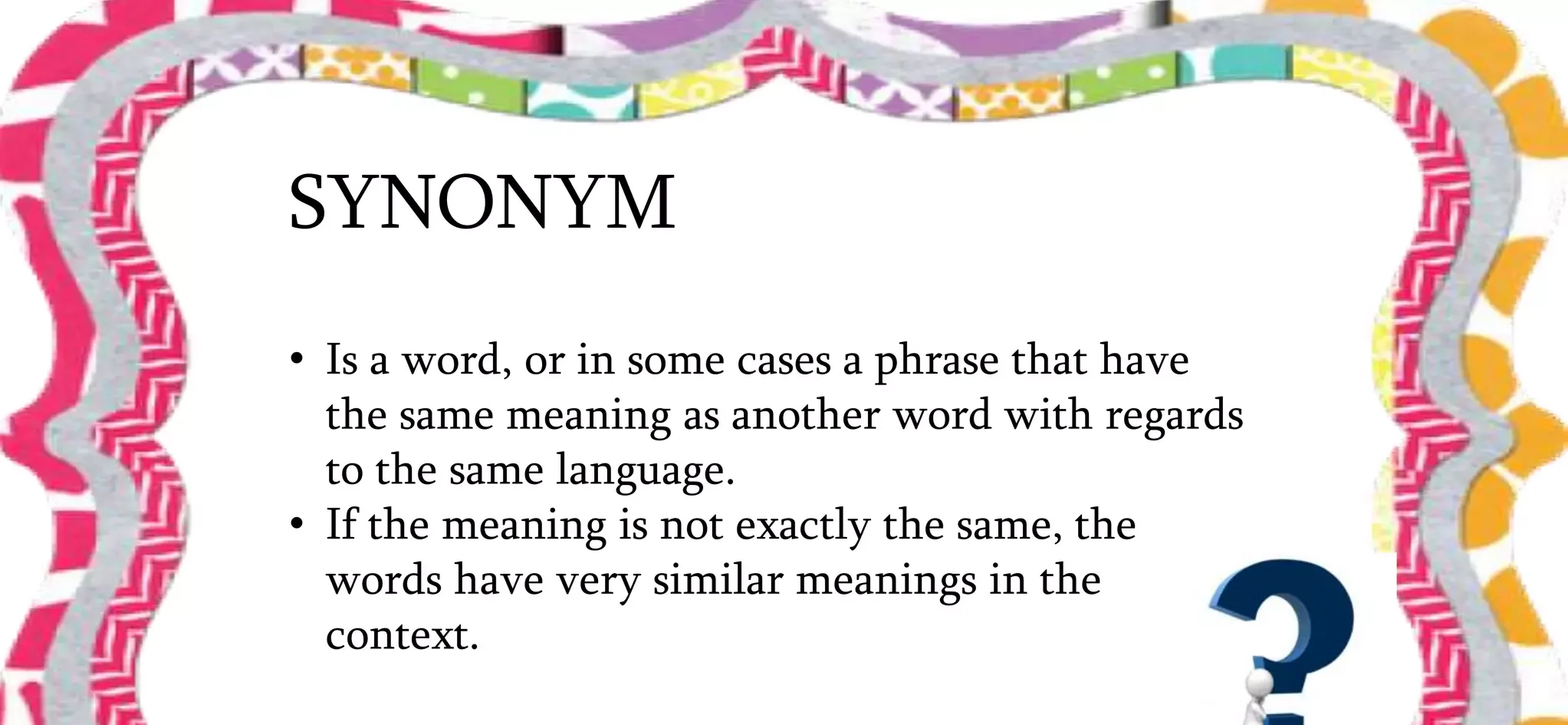
A synonym is a word that has the same or nearly the same meaning as another word in the same language.
For example, happy and joyful are synonyms. Both words describe a feeling of positivity and pleasure. Big and large are synonyms. Fast and quick are synonyms. The key word is “nearly” — most synonyms share a very similar meaning but carry slightly different shades, tones, or contexts.
Synonyms are not always perfectly interchangeable. “Slim” and “thin” both describe body shape, but “slim” carries a positive connotation while “thin” can feel more neutral or even critical depending on context. Understanding these differences is what separates a good writer from a great one.
Why Are Synonyms Important?
Synonyms serve several essential functions in language — for beginners and advanced writers alike.
They prevent repetition. If you write “good” five times in one paragraph, your writing sounds flat and unpolished. Replacing some uses with “excellent,” “outstanding,” or “impressive” makes the paragraph immediately more dynamic.
They match your tone. The word “ask” sounds casual. The word “request” sounds formal. The word “demand” sounds forceful. These are all synonyms — but your choice tells the reader everything about the situation and your attitude toward it.
They build vocabulary. Every synonym you learn adds a new tool to your language kit. Over time, you develop the ability to choose precisely the right word for every sentence you write or speak.
They improve exam scores. In exams like IELTS, GRE, SAT, UPSC, and SSC, synonym questions are a standard feature. A strong synonym vocabulary directly raises your performance.
Types of Synonyms
Before jumping into the lists, it helps to understand that there are different types of synonyms in English.
Absolute synonyms are words that can replace each other in any context without changing the meaning at all. True absolute synonyms are rare in English. “Begin” and “commence” come close, but even these differ slightly in register — “commence” sounds more formal.
Near synonyms share a core meaning but differ in intensity, formality, tone, or specific usage. These are the most common type of synonym. “Angry” and “furious” are near synonyms — both describe anger, but “furious” is far more intense.
Contextual synonyms only work as synonyms in specific sentences. “Bright” and “sunny” can both describe a cheerful day, but “bright” also means intelligent and “sunny” does not.
Understanding which type you are working with helps you choose the right word every time.
What Are Some Synonyms for Common Words? Big Master List
Below you will find synonyms for the most frequently used English words, organized clearly by category. This is one of the most comprehensive beginner synonym lists available for 2026.
Synonyms for GOOD
The word “good” is one of the most overused words in the English language. Here are better alternatives:
| Synonym | Register | Best Use |
|---|---|---|
| Excellent | Formal | Work, academics, reviews |
| Outstanding | Formal | Achievements, performance |
| Wonderful | Neutral | Everyday praise |
| Superb | Formal | High-quality reviews |
| Brilliant | Neutral/British | Ideas, performances |
| Fantastic | Informal | Enthusiastic praise |
| Great | Informal | General use |
| Admirable | Formal | Character, behavior |
| Splendid | Formal/Older | Classic British tone |
| Fine | Neutral | Approval, acceptance |
Use “excellent” in a job recommendation. Use “fantastic” in a text to a friend. The synonym stays the same in meaning — but the context changes.
Synonyms for BAD
Just as “good” gets overused, “bad” is equally worn out. Here are better choices:
| Synonym | Intensity | Example Context |
|---|---|---|
| Poor | Mild | Poor quality, poor performance |
| Terrible | Strong | Terrible weather, terrible news |
| Awful | Strong | Awful experience, awful taste |
| Dreadful | Strong | Dreadful mistake, dreadful idea |
| Inferior | Formal | Inferior product, inferior quality |
| Unacceptable | Formal | Unacceptable behavior, standards |
| Substandard | Technical | Substandard work, products |
| Appalling | Very strong | Appalling conditions |
| Dreadful | Strong | Dreadful performance |
| Wretched | Literary | Wretched state, wretched condition |
Synonyms for HAPPY
Emotions are one of the richest areas for synonyms. “Happy” alone has dozens of alternatives:
| Synonym | Intensity | Nuance |
|---|---|---|
| Joyful | Strong | Deep, heartfelt happiness |
| Content | Mild | Quiet satisfaction |
| Elated | Very strong | Extreme, almost overwhelming joy |
| Pleased | Mild | Satisfied with an outcome |
| Delighted | Moderate | Pleasantly surprised happiness |
| Cheerful | Moderate | Bright, positive mood |
| Ecstatic | Very strong | Euphoric happiness |
| Jubilant | Strong | Celebratory happiness |
| Overjoyed | Very strong | More joy than expected |
| Thrilled | Strong | Excitement mixed with happiness |
The difference between “content” and “ecstatic” is enormous — both are synonyms of happy, but they describe completely different emotional experiences.
Synonyms for SAD
| Synonym | Intensity | Context |
|---|---|---|
| Unhappy | Mild | General dissatisfaction |
| Sorrowful | Moderate | Deep personal grief |
| Melancholy | Moderate | Wistful, reflective sadness |
| Heartbroken | Strong | Loss, disappointment |
| Miserable | Strong | Prolonged unhappiness |
| Dejected | Moderate | Feeling let down |
| Gloomy | Moderate | Dark mood, low spirits |
| Despondent | Strong | Loss of hope |
| Woeful | Moderate/Literary | Pitiful, full of woe |
| Downcast | Mild | Noticeably sad |
Synonyms for BIG
| Synonym | Nuance |
|---|---|
| Large | Standard neutral alternative |
| Enormous | Extremely large |
| Huge | Very large, informal feel |
| Vast | Large in area or scope |
| Immense | Impressively large |
| Massive | Heavy and large |
| Colossal | Extraordinarily large |
| Gigantic | Informally very large |
| Spacious | Large in terms of room/space |
| Grand | Large and impressive |
Synonyms for SMALL
| Synonym | Nuance |
|---|---|
| Little | Common, casual alternative |
| Tiny | Very small |
| Minute | Extremely small, precise |
| Petite | Small in a delicate way |
| Compact | Small but efficient |
| Miniature | Small version of something larger |
| Slight | Barely noticeable smallness |
| Microscopic | Too small to see clearly |
| Modest | Small in amount or scale |
| Diminutive | Small in a noteworthy way |
Synonyms for FAST
| Synonym | Nuance |
|---|---|
| Quick | Casual, everyday use |
| Rapid | Formal, often used for processes |
| Swift | Literary, flowing movement |
| Speedy | Informal, enthusiastic |
| Brisk | Quick and energetic |
| Hasty | Fast but careless |
| Prompt | Fast in response time |
| Nimble | Fast and light on one’s feet |
| Expeditious | Formal, efficient speed |
| Instantaneous | Happening in zero time |
Synonyms for SLOW
| Synonym | Nuance |
|---|---|
| Gradual | Moving in small steps over time |
| Leisurely | Slow in a relaxed, pleasant way |
| Sluggish | Slow due to lack of energy |
| Unhurried | Slow because there is no rush |
| Plodding | Slow and heavy-footed |
| Dawdling | Slow in a distracted way |
| Lagging | Falling behind the expected pace |
| Languid | Slow and lacking energy |
| Deliberate | Slow on purpose, thoughtful |
| Measured | Carefully paced |
Synonyms for WALK
| Synonym | Movement Type |
|---|---|
| Stroll | Slow, relaxed walk |
| March | Purposeful, rhythmic walk |
| Wander | Walk without a clear direction |
| Saunter | Slow, casual, confident walk |
| Stride | Long, confident steps |
| Shuffle | Slow, sliding walk |
| Amble | Gentle, easy-paced walk |
| Trek | Long, difficult walk |
| Hike | Walk in nature, usually long |
| Strut | Walk with pride and confidence |
Synonyms for LOOK
| Synonym | Type of Looking |
|---|---|
| Glance | Quick, brief look |
| Stare | Long, unblinking look |
| Gaze | Soft, sustained look |
| Peek | Quick look, sometimes secretive |
| Observe | Careful, watchful look |
| Examine | Detailed, close look |
| Inspect | Official or thorough look |
| Scan | Quick look across a wide area |
| Survey | Broad, comprehensive look |
| Glimpse | Very brief, partial look |
Synonyms for THINK
| Synonym | Type of Thinking |
|---|---|
| Consider | Thoughtful evaluation |
| Ponder | Deep, reflective thinking |
| Contemplate | Quiet, sustained thought |
| Reflect | Looking back and thinking |
| Deliberate | Careful thinking before deciding |
| Speculate | Thinking without full knowledge |
| Reason | Logical, systematic thinking |
| Weigh | Comparing options in the mind |
| Muse | Thoughtful, dreamy thinking |
| Meditate | Deep, focused mental attention |
Synonyms for SAID (for Writers)
This list is especially useful for fiction writers and students who want to replace the word “said” in dialogue.
| Synonym | Tone It Suggests |
|---|---|
| Whispered | Quiet, secretive |
| Shouted | Loud, urgent |
| Muttered | Unclear, disgruntled |
| Declared | Confident, formal |
| Replied | Responding to someone |
| Announced | Public, official statement |
| Suggested | Gentle offer of an idea |
| Insisted | Firm, forceful statement |
| Questioned | Uncertainty or inquiry |
| Exclaimed | Sudden, emotional outburst |
Synonyms for IMPORTANT
| Synonym | Context |
|---|---|
| Significant | Data, research, impact |
| Crucial | Absolutely necessary |
| Vital | Essential to life or function |
| Essential | Cannot be left out |
| Critical | Serious, often high stakes |
| Key | Central to a purpose |
| Fundamental | At the very base of something |
| Paramount | Higher than all else in importance |
| Pressing | Urgently important |
| Consequential | Having major effects |
Synonyms for HELP
| Synonym | Context |
|---|---|
| Assist | Formal, workplace use |
| Support | Emotional or practical backing |
| Aid | Formal, often in emergencies |
| Facilitate | Making a process easier |
| Guide | Helping through instruction |
| Enable | Making something possible |
| Encourage | Moral, emotional help |
| Collaborate | Working together to help |
| Contribute | Adding to a collective effort |
| Serve | Providing assistance formally |
Synonyms by Register: Formal vs Informal

One of the most practical ways to understand synonyms is by register — how formal or informal a word sounds. Choosing the wrong register is one of the most common mistakes English learners make.
| Informal Word | Neutral Synonym | Formal Synonym |
|---|---|---|
| Get | Receive | Obtain / Acquire |
| Start | Begin | Commence / Initiate |
| End | Finish | Conclude / Terminate |
| Show | Display | Demonstrate / Exhibit |
| Tell | Inform | Notify / Advise |
| Ask | Question | Inquire / Request |
| Use | Apply | Utilize / Employ |
| Need | Require | Necessitate |
| Try | Attempt | Endeavor / Strive |
| Find out | Discover | Ascertain / Determine |
This three-column approach helps you see that there are often multiple synonym levels for any given concept. In a casual text message, “start” is perfect. In a legal contract, “commence” is expected.
Synonyms for Overused Words in Essays
Students and writers are often told not to overuse certain words. Here are the most commonly flagged overused words and their stronger alternatives:
| Overused Word | Better Synonyms |
|---|---|
| Very | Extremely, remarkably, exceptionally, highly, profoundly |
| A lot | Numerous, considerable, substantial, a great deal of |
| Good | Effective, beneficial, strong, notable, impressive |
| Bad | Problematic, harmful, detrimental, flawed, inadequate |
| Big | Significant, substantial, large-scale, major, extensive |
| Show | Demonstrate, reveal, illustrate, indicate, highlight |
| Get | Obtain, acquire, gain, secure, achieve |
| Make | Create, produce, generate, develop, establish |
| Things | Factors, elements, aspects, components, issues |
| Really | Genuinely, significantly, substantially, considerably |
Avoiding these overused words in academic essays makes an immediate, measurable difference in how polished your writing appears to readers and graders.
Synonyms and Antonyms Together: A Reference Table
Learning synonyms alongside their antonyms is one of the fastest ways to lock words into memory. Here is a combined reference table for high-frequency words:
| Word | Synonym | Antonym |
|---|---|---|
| Happy | Joyful | Sad / Miserable |
| Strong | Powerful | Weak / Feeble |
| Brave | Courageous | Cowardly / Timid |
| Smart | Intelligent | Foolish / Ignorant |
| Beautiful | Gorgeous | Ugly / Plain |
| Rich | Wealthy | Poor / Destitute |
| Old | Elderly / Ancient | Young / New |
| Fast | Rapid / Swift | Slow / Sluggish |
| Clean | Spotless / Pure | Dirty / Filthy |
| Calm | Peaceful / Serene | Agitated / Turbulent |
| Kind | Compassionate | Cruel / Harsh |
| Honest | Truthful / Sincere | Dishonest / Deceitful |
| Difficult | Challenging / Complex | Easy / Simple |
| Famous | Renowned / Celebrated | Unknown / Obscure |
Reviewing this table regularly is one of the most efficient vocabulary-building habits available to any English learner at any level.
How to Choose the Right Synonym
Knowing what some synonyms are is only part of the challenge. Choosing the correct one for your sentence requires a few key steps.
Step 1 — Understand the core meaning. Before replacing any word, confirm you understand exactly what the original word means in your sentence. Replacing “slim” with “thin” changes the connotation slightly. Replacing it with “slender” keeps the positive feel intact.
Step 2 — Consider the register. Is the text formal or informal? Academic or conversational? “Commence” and “start” both mean begin — but only one belongs in a legal document and only one belongs in a casual email.
Step 3 — Check the connotation. Every word carries emotional charge beyond its literal meaning. “Cheap” and “affordable” mean a similar thing but feel completely different. “Stubborn” and “determined” describe the same quality but with opposite emotional tones.
Step 4 — Test it in the sentence. Read the sentence aloud with the new synonym in place. Does it sound natural? Does it fit the rhythm of the surrounding words? If it does not feel right spoken aloud, it probably does not read right either.
Step 5 — Use a thesaurus as a guide, not a replacement for judgment. A thesaurus gives you options. Your understanding of context makes the final decision.
Synonym Resources: Where to Find More
Several trusted resources provide comprehensive synonym lists and tools for writers and students.
Merriam-Webster Thesaurus — Free, accurate, and updated regularly. Each entry includes usage notes to help you understand the difference between similar synonyms.
Thesaurus.com — One of the world’s largest online synonym databases with over 25 years of operation. Provides synonyms organized by meaning strength and context.
Cambridge Dictionary — Especially useful for non-native English speakers. Shows register levels (formal, informal) alongside each synonym.
QuillBot Paraphraser — An AI-powered tool that suggests synonyms in context, which helps you see how each alternative actually works inside a real sentence.
Google Search — Typing “synonyms for [word]” directly into Google produces an instant synonym card powered by Oxford Languages — fast, free, and reliable.
Common Mistakes When Using Synonyms
Even learners who understand what synonyms are can fall into traps when actually using them. Here are the most common errors to avoid.
Mistake 1 — Picking a word you do not fully understand. If you are not 100% sure what a word means, do not use it. Incorrect synonym choices stand out to readers immediately. It is better to use a simpler word correctly than a complex word incorrectly.
Mistake 2 — Ignoring connotation. “Childlike” and “childish” are near synonyms but carry opposite connotations. “Childlike” is positive — innocent and pure. “Childish” is negative — immature and petty. Using them interchangeably is a significant writing error.
Mistake 3 — Overusing a thesaurus. Stuffing a paragraph with advanced vocabulary from a thesaurus looks unnatural. It signals to readers — especially teachers and editors — that the writer is reaching beyond their comfort zone. Use 5-10 upgraded synonyms per essay maximum, not every sentence.
Mistake 4 — Ignoring collocation. Some words only work with specific partners. You can “make a decision” or “take a decision” but not “do a decision.” Even if a synonym fits the meaning, it may not fit the standard word partnership. Always check how a word is used in real sentences.
Mistake 5 — Confusing near synonyms for exact ones. “Beside” and “besides” are not synonyms — they mean completely different things. “Economic” and “economical” look identical but carry distinct meanings. Check before you swap.
Synonyms in Different Types of Writing
The right synonym depends entirely on what type of writing you are producing. Here is a quick reference:
| Writing Type | Avoid | Use Instead |
|---|---|---|
| Academic essay | Good / Bad / Very | Significant / Detrimental / Considerably |
| Business email | Get / Tell / Ask | Obtain / Inform / Request |
| Fiction writing | Said / Walked / Looked | Murmured / Sauntered / Observed |
| Social media | Excellent / Assistance | Great / Help |
| News writing | Big / Show | Major / Demonstrate |
| Everyday conversation | Any level | Context determines choice |
Matching the right synonym to the right type of writing is a skill that comes with practice and reading widely. The fastest way to develop it is to read widely — books, newspapers, academic articles, and professional emails all use synonyms differently.
How Synonyms Help in Competitive Exams
Synonym questions appear in virtually every major English language examination. Understanding what synonyms are gives you a direct scoring advantage.
In IELTS Writing, examiners grade “Lexical Resource” — which specifically measures how well you vary your vocabulary and avoid word repetition. Using strong synonyms correctly can push your band score from 6.0 to 7.0 or higher in this category alone.
In GRE Verbal, synonym and antonym-style questions test your ability to identify the most precise match for a given word in context. Knowing not just what a word means but how it differs from its near synonyms is exactly what GRE tests.
In UPSC, SSC, and bank exams, synonym questions appear directly in the English section. A systematic vocabulary study program that focuses on synonym clusters — groups of related words — is the most efficient preparation strategy.
Quick Summary: What Are Some Synonyms Across All Categories
| Category | Key Synonyms |
|---|---|
| Happy | Joyful, elated, content, delighted, thrilled |
| Sad | Sorrowful, melancholy, heartbroken, despondent |
| Good | Excellent, outstanding, superb, admirable |
| Bad | Terrible, awful, inferior, substandard |
| Big | Enormous, vast, immense, colossal, massive |
| Small | Tiny, minute, compact, miniature, petite |
| Fast | Rapid, swift, brisk, prompt, instantaneous |
| Slow | Gradual, leisurely, sluggish, deliberate |
| Help | Assist, support, aid, facilitate, enable |
| Walk | Stroll, stride, wander, march, saunter |
| Look | Glance, gaze, stare, observe, examine |
| Think | Ponder, reflect, consider, deliberate, contemplate |
Frequently Asked Questions (FAQs)
What are some synonyms in English for beginners?
Some of the easiest synonyms for beginners include happy/joyful, big/large, fast/quick, sad/unhappy, good/great, and start/begin — common word pairs that share the same basic meaning and are safe to swap in most sentences.
What is the simple definition of a synonym?
A synonym is a word that has the same or nearly the same meaning as another word — for example, “angry” and “furious” are synonyms, though “furious” is more intense in emotional strength.
Are synonyms always interchangeable?
No — most synonyms are near synonyms that share a core meaning but differ in intensity, formality, or connotation, so context, register, and tone must always be considered before replacing one word with another.
What are some synonyms for the word “good”?
Some strong synonyms for “good” include excellent, outstanding, superb, wonderful, admirable, and brilliant — with the best choice depending on whether your writing is formal, informal, or somewhere in between.
What are some synonyms for “said” in creative writing?
Useful synonyms for “said” in fiction and creative writing include whispered, declared, muttered, announced, exclaimed, suggested, insisted, replied, and questioned — each adding a different emotional tone to dialogue.
What is the difference between a synonym and an antonym?
A synonym is a word with the same or similar meaning as another word (happy/joyful), while an antonym is a word with the opposite meaning (happy/sad) — both are essential vocabulary tools for effective communication.
What are some formal synonyms for common words?
Formal synonyms include: obtain (get), commence (start), conclude (end), inquire (ask), utilize (use), demonstrate (show), and inform (tell) — these are the standard choices for academic writing, business communication, and professional documents.
How do synonyms help improve writing quality?
Synonyms improve writing by reducing repetition, allowing precise emotional tone control, matching the correct register to the context, and demonstrating vocabulary range — all of which make writing more engaging, polished, and professional to readers.
Where is the best place to find synonyms for any word?
The best free resources for finding synonyms are Merriam-Webster Thesaurus, Thesaurus.com, and the Cambridge Dictionary — all provide clear definitions, example sentences, and usage notes to help you choose the right synonym every time.
What are some synonyms for “important”?
Strong synonyms for “important” include significant, crucial, vital, essential, critical, key, fundamental, and paramount — with the choice depending on how urgent or foundational the importance is in your specific context.
Conclusion
The answer to what are some synonyms opens the door to one of the most powerful vocabulary skills in the English language. Synonyms are words that share the same or similar meaning as another word — but differ in intensity, register, connotation, and context.
Learning them helps you avoid repetition, match any tone, improve your exam scores, and communicate with far greater precision than a limited vocabulary allows.
The lists in this guide cover happy, sad, good, bad, big, small, fast, slow, walk, look, think, help, and dozens more — organized by nuance, register, and context so you can make smarter word choices every time.
Start with one category, practice replacing overused words in your own writing, and use a trusted thesaurus to keep expanding your vocabulary. Consistent daily practice with synonyms is one of the fastest paths to fluent, confident, and polished English writing and speech.