What Is a Synonyms? Meaning, Examples & Uses 2026
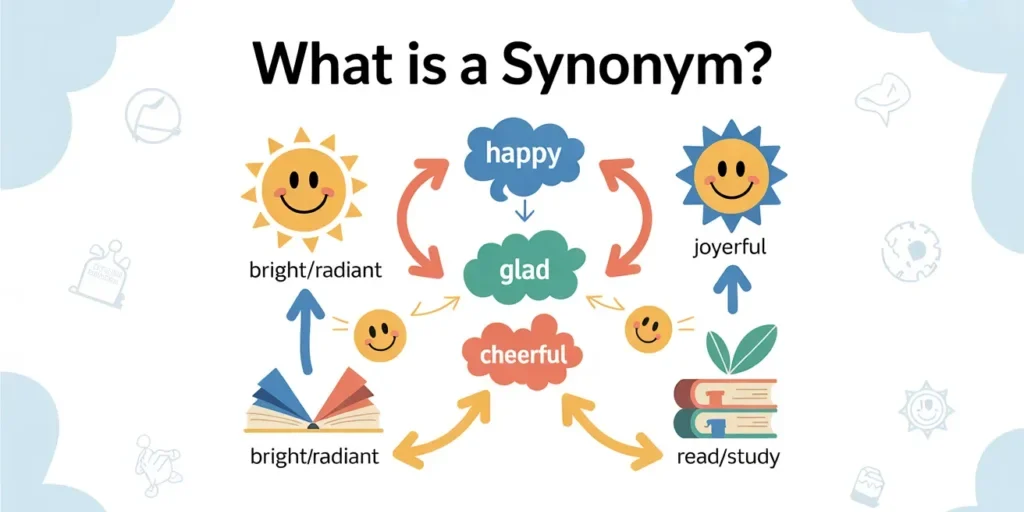
What is a synonyms is one of the most commonly searched grammar questions in English today. A synonym is a word or phrase that has the same or nearly the same meaning as another word in the same language.
For example, happy, joyful, and glad are all synonyms. Understanding what is a synonyms helps you write better, speak more clearly, and expand your vocabulary.
Whether you are a student, writer, or professional, knowing how synonyms work gives your language more variety, depth, and precision. This guide covers everything about synonyms in 2026, including types, examples, uses, and tips for choosing the right synonym every time.
What Is a Synonyms? The Clear Definition
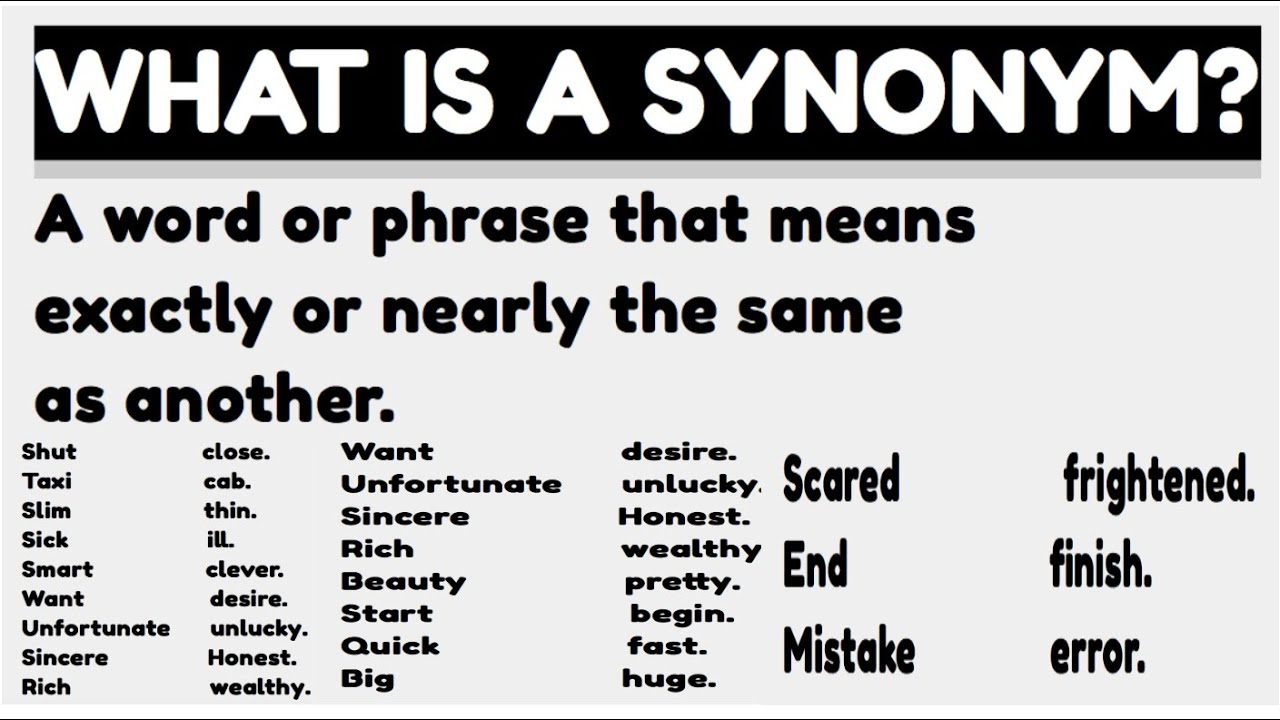
What is a synonyms is best understood through a simple, direct definition. A synonym is a word or phrase that means the same or nearly the same as another word or phrase in the same language.
The word “synonym” comes from the Greek words “syn” meaning “together” and “onyma” meaning “name.” So a synonym is literally a word that shares a name or meaning with another word.
For example, the words “begin,” “start,” “commence,” and “initiate” are all synonyms. They all mean to get something going. You can use any of these words in the right context and the basic meaning stays the same.
Synonyms exist in every part of speech. Nouns, verbs, adjectives, adverbs, and even prepositions all have synonyms. This is what makes English such a rich and expressive language.
Synonym Definition in Simple Terms
Many people search “what is a synonyms” because the concept sounds complicated. In simple terms, a synonym is just another word for the same thing.
Think of it this way. If you keep calling a large amount of money “big,” your writing sounds repetitive. Instead, you can use synonyms like “huge,” “enormous,” “vast,” or “colossal.” All these words describe something large, but each one adds a slightly different flavor.
A synonym does not have to mean exactly the same thing. Most synonyms share a core meaning but carry subtle differences in tone, intensity, or formality. This is what makes choosing the right synonym both an art and a skill.
The History and Origin of the Word Synonym
Understanding where the word “synonym” comes from helps you remember what it means.
The term originates from the Latin word “synōnymum,” which was itself borrowed from the Ancient Greek “synōnymon.” The Greek root “sýn” means “together” or “similar,” and “-ōnym-” comes from “onoma” meaning “name.”
So etymologically, a synonym is a word that “shares a name” with another word. This origin explains why synonyms carry similar meanings even when they are different words.
The first major English thesaurus, the Thesaurus of English Words and Phrases, was published by British lexicographer Peter Mark Roget in 1852. It remains one of the most important reference tools for finding synonyms in English.
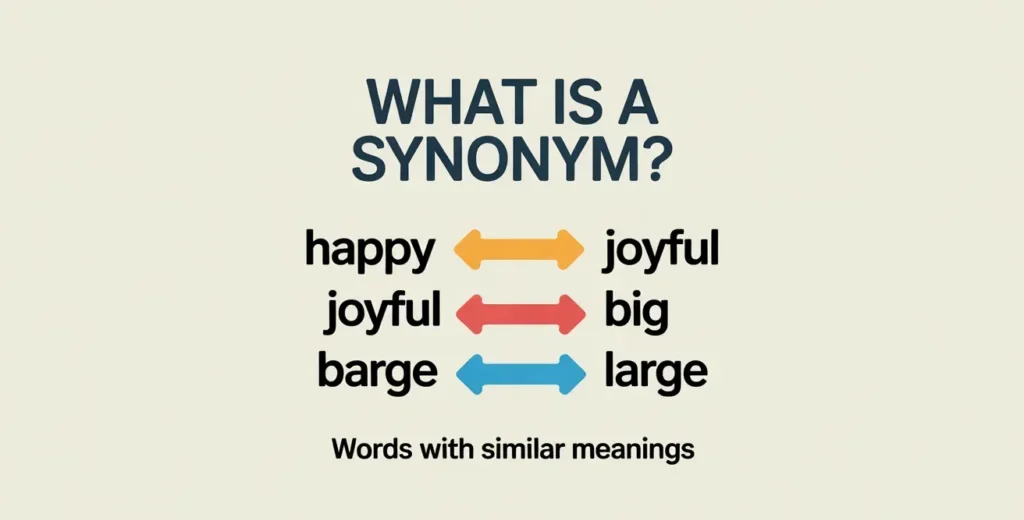
Types of Synonyms: A Complete Breakdown
When people ask what is a synonyms, they often do not realize there are different types. Grammarly, Wikipedia, and study.com all confirm that synonyms fall into three main categories.
Absolute Synonyms
Absolute synonyms are words that have exactly the same meaning in all contexts. You can swap one for the other in any sentence without changing the meaning at all.
True absolute synonyms are extremely rare in English. Linguist Cruse noted that “natural languages abhor absolute synonyms just as nature abhors a vacuum.”
Examples of Absolute Synonyms:
- airman – pilot
- automobile – car
- sofa – settee
- groundhog – woodchuck
- foreword – preface
- feline – cat (in certain scientific contexts)
- autumn – fall
- apartment – flat (in British vs American English)
- cinema – movie theater
- lift – elevator
Absolute synonyms are most common when two regional dialects of English have different words for the same object. For instance, “truck” in American English and “lorry” in British English refer to the same vehicle.
Partial Synonyms
Partial synonyms are words that share a similar but not completely identical meaning. Swapping one for the other changes the message slightly.
This is the most common type of synonym. Most words that people think of as synonyms are actually partial synonyms. The difference between them can be degree, formality, or specificity.
Examples of Partial Synonyms:
- good – excellent (excellent implies a higher quality)
- big – gigantic (gigantic implies a much larger size)
- run – sprint (sprint means running fast for a short distance)
- sad – devastated (devastated is far more intense)
- smart – intelligent (intelligent implies a deeper level of thought)
- car – vehicle (vehicle is broader, including all transport types)
- broke – destitute (destitute is more formal and extreme)
- fine – outstanding (outstanding implies superior quality)
- aroma – odor (aroma is positive; odor can be negative)
- house – mansion (mansion implies great wealth and size)
Partial synonyms are powerful tools for writers. They let you control exactly how strong, formal, or specific your message is. Choosing between “happy” and “elated” can change the emotional intensity of your entire sentence.
Near Synonyms
Near synonyms are words that have related meanings but are not fully interchangeable. They belong to the same general topic or idea but describe different aspects of it.
Examples of Near Synonyms:
- lie – falsehood – misrepresentation – fib (all relate to untruths but differ in severity)
- mist – fog (similar weather phenomena but different density)
- stream – brook (both small bodies of water, different in size)
- yell – shout – scream (all loud expressions but with different intensities)
- walk – stroll – stride – march (all types of moving on foot)
- laugh – chuckle – giggle – cackle (all expressions of amusement)
- angry – irritated – furious – livid (different degrees of anger)
- cold – cool – chilly – freezing (different degrees of low temperature)
- quick – fast – rapid – swift (related speed concepts)
- tired – sleepy – exhausted – weary (different levels of fatigue)
Near synonyms are especially important for writers who want to convey very precise shades of meaning. Knowing the difference between a “fib” and a “lie” can change how your reader feels about a character.
Synonyms Across Parts of Speech
What is a synonyms applies to all parts of speech, not just nouns. Here is a full breakdown of synonyms organized by their word type.
Noun Synonyms:
- student – pupil – learner – scholar
- home – house – residence – dwelling
- job – occupation – profession – career
- book – volume – text – publication
- error – mistake – blunder – fault
- friend – companion – ally – associate
- road – street – avenue – lane
- idea – concept – notion – thought
- child – kid – youth – minor
- leader – chief – head – director
Verb Synonyms:
- cry – weep – sob – wail – bawl
- eat – consume – devour – dine
- walk – stroll – march – stride – pace
- talk – speak – converse – chat
- help – assist – support – aid
- look – see – observe – watch – gaze
- start – begin – commence – initiate
- stop – halt – cease – pause – end
- think – consider – ponder – reflect
- make – create – build – produce – craft
Adjective Synonyms:
- happy – joyful – glad – delighted – content
- sad – unhappy – sorrowful – gloomy – miserable
- smart – clever – intelligent – bright – sharp
- beautiful – attractive – lovely – stunning – gorgeous
- big – large – huge – enormous – vast – gigantic
- small – little – tiny – miniature – petite
- fast – quick – rapid – swift – speedy
- old – ancient – aged – antique – elderly
- new – fresh – modern – recent – contemporary
- important – crucial – vital – essential – significant
Adverb Synonyms:
- quickly – rapidly – swiftly – speedily – fast
- slowly – gradually – leisurely – steadily
- happily – joyfully – cheerfully – gladly
- nervously – anxiously – timidly – apprehensively
- clearly – plainly – obviously – evidently
100 Common Synonym Examples A to Z
One of the most useful ways to understand what is a synonyms is to see them in organized lists. Here are 100 common English words with their synonyms.
A to E:
- Able – capable, competent, skilled
- Angry – furious, irritated, enraged
- Answer – reply, respond, retort
- Ask – inquire, question, request
- Bad – terrible, awful, poor, dreadful
- Begin – start, commence, initiate
- Bold – brave, courageous, fearless
- Bright – smart, clever, intelligent
- Calm – peaceful, serene, tranquil
- Care – concern, attention, regard
- Change – alter, modify, transform
- Choose – select, pick, opt
- Clean – spotless, pure, tidy
- Close – shut, seal, fasten
- Cold – chilly, cool, freezing
- Correct – right, accurate, precise
- Create – make, build, produce
- Danger – risk, hazard, threat
- Dark – dim, gloomy, shadowy
- Different – unlike, distinct, varied
F to J:
- Fair – just, impartial, unbiased
- Famous – well-known, renowned, celebrated
- Fast – quick, rapid, swift
- Fear – dread, terror, fright
- Feel – sense, experience, perceive
- Find – discover, locate, uncover
- Fix – repair, mend, correct
- Free – liberate, release, independent
- Get – obtain, acquire, receive
- Give – offer, provide, donate
- Good – fine, excellent, superb
- Great – wonderful, magnificent, outstanding
- Happy – joyful, glad, delighted
- Hard – difficult, challenging, tough
- Help – assist, aid, support
- Honest – truthful, sincere, candid
- Hope – wish, desire, aspire
- Huge – enormous, massive, gigantic
- Hurt – harm, injure, damage
- Important – crucial, vital, essential
K to P:
- Keep – maintain, retain, preserve
- Kind – gentle, caring, compassionate
- Know – understand, comprehend, realize
- Large – big, sizeable, extensive
- Laugh – chuckle, giggle, grin
- Learn – study, discover, absorb
- Like – enjoy, appreciate, admire
- Long – extended, lengthy, prolonged
- Look – see, observe, gaze
- Love – adore, cherish, treasure
- Make – create, produce, build
- Mean – unkind, cruel, harsh
- Move – shift, transfer, relocate
- Need – require, demand, necessitate
- New – fresh, modern, recent
- Nice – pleasant, agreeable, delightful
- Old – ancient, aged, antique
- Open – unlock, reveal, expose
- Part – section, portion, segment
- Plan – design, organize, arrange
Q to Z:
- Quiet – silent, calm, still
- Real – genuine, authentic, actual
- Right – correct, accurate, proper
- Run – sprint, dash, race
- Safe – secure, protected, sheltered
- Say – tell, state, express
- Show – display, present, reveal
- Simple – easy, basic, straightforward
- Small – tiny, little, miniature
- Smart – clever, bright, intelligent
- Start – begin, launch, initiate
- Stop – halt, cease, end
- Strong – powerful, mighty, robust
- Talk – speak, chat, converse
- Think – consider, reflect, ponder
- True – correct, accurate, factual
- Try – attempt, endeavor, strive
- Ugly – unattractive, unsightly, plain
- Unique – rare, one-of-a-kind, distinctive
- Use – apply, employ, utilize
Synonym vs Antonym: Key Differences
Understanding what is a synonyms becomes clearer when you compare it to its opposite concept, the antonym.
A synonym is a word with the same or similar meaning. An antonym is a word with the opposite meaning. Both are essential vocabulary tools.
Synonym and Antonym Comparison Table:
- Word: Happy | Synonym: Joyful | Antonym: Sad
- Word: Big | Synonym: Large | Antonym: Small
- Word: Fast | Synonym: Quick | Antonym: Slow
- Word: Bright | Synonym: Smart | Antonym: Dim
- Word: Love | Synonym: Adore | Antonym: Hate
- Word: Strong | Synonym: Powerful | Antonym: Weak
- Word: New | Synonym: Fresh | Antonym: Old
- Word: Easy | Synonym: Simple | Antonym: Difficult
- Word: Clean | Synonym: Spotless | Antonym: Dirty
- Word: Brave | Synonym: Courageous | Antonym: Cowardly
Knowing both synonyms and antonyms helps you understand words from two directions. It builds stronger vocabulary and sharper comprehension.
What Is a Synonyms Used For? The 5 Main Uses
Now that you know what is a synonyms and the different types, here are the five most important ways synonyms are used.
Use 1: Avoiding Repetition
The most common reason to use synonyms is to avoid repeating the same word over and over. Repeating a word too many times makes writing sound dull and amateurish.
Instead of writing “The company made a profit. The company was happy. The company grew,” you can write “The company made a profit. The firm was pleased. The organization grew.” The meaning stays the same but the writing flows better.
Use 2: Improving Word Choice
Synonyms help you pick the most precise word for what you want to say. English offers many words for the same idea, each with slightly different shades of meaning.
Choosing “furious” instead of “angry” tells your reader the person is not just upset, they are extremely upset. Choosing “whisper” instead of “say” paints a completely different picture. Synonyms give you control over exactly what your writing communicates.
Use 3: Adjusting Formality
Different synonyms carry different levels of formality. Synonyms let you match your word choice to your audience and situation.
“Broke” and “destitute” both describe a lack of money. “Broke” is casual and informal. “Destitute” is formal and is used in serious contexts. Similarly, “try” and “endeavor” mean the same thing, but “endeavor” suits a formal letter far better than a text message.
Use 4: Building Vocabulary
Learning synonyms is one of the fastest ways to expand your vocabulary. When you learn that “colossal” is a synonym for “big,” you now have a new word connected to something you already understand.
This is why teachers use synonyms to teach new words. Connecting new vocabulary to known words makes it much easier to remember. Students who study synonyms regularly develop stronger and more varied vocabularies.
Use 5: Expressing Connotation
A synonym does not just change a word. It can completely change the feeling of a sentence. This is because of connotation, the emotional tone attached to a word beyond its literal meaning.
“Aroma” and “odor” both refer to a smell. But “aroma” feels pleasant while “odor” often implies something unpleasant. “Slim” and “skinny” both describe a thin person, but “slim” sounds complimentary while “skinny” can sound negative. Choosing the right synonym lets you guide how your reader feels.
Synonyms in Everyday Writing
What is a synonyms in practical writing? It is a daily tool that most good writers use without even thinking about it.
Every time a writer switches from “said” to “replied,” “asked,” “whispered,” or “announced,” they are using synonyms to make their dialogue more expressive. Every time a student replaces “good” with “excellent” or “outstanding,” they are using a synonym to be more specific.
In professional writing, synonyms help maintain formal tone. In creative writing, they paint vivid pictures. In academic writing, they show vocabulary range and precision. In everyday conversation, they make language feel more natural and fluid.
Synonyms for the Most Commonly Used Words
Because “what is a synonyms” is often searched alongside specific word requests, here are synonym lists for the most frequently used English words.
Synonyms for Good:
- excellent
- outstanding
- superb
- fine
- wonderful
- great
- satisfactory
- admirable
- superior
- splendid
Synonyms for Bad:
- terrible
- awful
- dreadful
- poor
- unacceptable
- inferior
- unsatisfactory
- horrible
- atrocious
- appalling
Synonyms for Happy:
- joyful
- glad
- delighted
- pleased
- content
- cheerful
- elated
- overjoyed
- ecstatic
- thrilled
Synonyms for Important:
- crucial
- vital
- essential
- significant
- key
- critical
- major
- fundamental
- necessary
- pivotal
Synonyms for Said (for writing dialogue):
- replied
- stated
- announced
- whispered
- declared
- mentioned
- noted
- expressed
- responded
- remarked
Frequently Asked Questions
Q1. What is a synonyms in simple English?
A synonym is a word that means the same or nearly the same as another word. For example, “happy” and “joyful” are synonyms because they both describe a feeling of pleasure.
Q2. What are the three types of synonyms?
The three types are absolute synonyms (identical meaning), partial synonyms (similar but slightly different meaning), and near synonyms (related but not fully interchangeable meaning).
Q3. Can two words be exact synonyms?
True exact synonyms are extremely rare. Most words that share a meaning still differ in tone, formality, connotation, or the specific contexts where they can be used.
Q4. What is the difference between a synonym and an antonym?
A synonym is a word with the same or similar meaning. An antonym is a word with the opposite meaning. For example, “fast” and “quick” are synonyms, while “fast” and “slow” are antonyms.
Q5. Why are synonyms important in writing?
Synonyms prevent repetition, improve word choice, adjust formality, express connotation, and help build vocabulary. They make writing more varied, precise, and engaging for readers.
Q6. What is an absolute synonym with example?
An absolute synonym is a word with exactly the same meaning as another in all contexts. Examples include “airman” and “pilot,” or “automobile” and “car” in everyday use.
Q7. How do I find synonyms for a word?
Use a thesaurus, dictionary, Microsoft Word’s right-click menu, or an AI writing tool. Always check the meaning and connotation before using any synonym in your writing.
Q8. Are synonyms the same in all languages?
No. Synonymy depends on the specific language and its cultural context. A word in English may not have a perfect synonym in another language, which can cause translation challenges.
Q9. What is a partial synonym with example?
A partial synonym is a word with a similar but not identical meaning. “Good” and “excellent” are partial synonyms. Excellent implies a higher quality than good, so they are not perfectly interchangeable.
Q10. Can synonyms be used in formal writing?
Yes. In fact, formal writing often relies on synonyms to maintain variety and precision. Words like “endeavor,” “facilitate,” and “commence” are formal synonyms for “try,” “help,” and “start.”
Conclusion
What is a synonyms is a question with a simple answer but a deep topic behind it. A synonym is a word or phrase that shares the same or similar meaning as another word, and understanding them is one of the most valuable grammar skills you can develop.
In 2026, synonyms remain essential for writers, students, professionals, and anyone who wants to communicate with clarity and creativity. F
rom absolute synonyms to partial and near synonyms, each type serves a different purpose. Use a thesaurus, read widely, and always check connotation before choosing a synonym. The right word in the right place makes all the difference in your writing.