Why Brands Are Replacing Static PDFs With Digital Catalogs
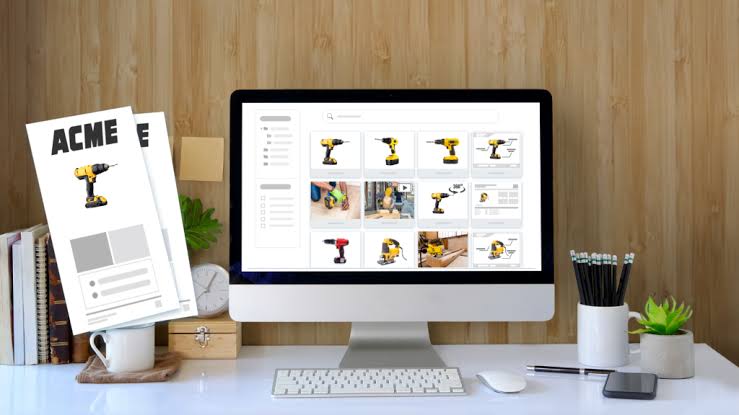
Brands are ditching static PDFs in favor of digital catalogs, as a PDF is a dead end. A PDF will never tell you who actually opened it, it cannot convert a mere browsing customer into a buyer without forcing the customer to visit the website, and it appears to be broken on the phones where most people do their shopping nowadays. Digital catalogs simultaneously solve these three problems which is why the changeover from an experiment to a default has started in both retail and B2B.
The fundamental difference is that a PDF is a file while a digital catalog is a communication medium. One simply lies there waiting to be downloaded and discarded. The other is always on the open web, can be found through search, monitors every interaction, and is directly linked to checkout, which means the very same content that was once a digital paperweight is now a working part of the sales engine.
What Static PDFs Cost You That You Cannot See
One of the most irritating things about PDF catalogs is that their drawbacks are no less hidden until you measure them. You send a copy by email or place a download link for it, the file is opened somewhere, and the trail goes cold. You have no clue which products people really looked at, which pages they missed, or whether anyone even got to the end of the document. A printed brochure at least lets you keep track of the number you handed out, but a PDF gives you the worst of two worlds: you get the ease of digital distribution but suffer the print-era blindness.
And, the mobile problem comes next. A PDF meant for an A4 page is a nightmare for a phone user who has to keep on pinching, zooming, and dragging to navigate the layout that was never meant for a small screen, and industry figures have from time to time associated such friction with a high abandonment rate. Now that most catalog viewings occur on mobile, a format that is at war with the device is silently losing you customers you didn’t even know you had. Factor in the rarity of PDFs being indexed for search engines and shared in the same way as web pages, and you are effectively paying to create content that both search engines and customers find difficult to discover.
How Digital Catalogs Turn Browsing Into Buying
The main reason why a lot of brands change is that digital catalogs really help to convert browsing into buying. For instance, with a PDF, when a customer sees something they fancy, they need to exit the file, open a browser, search for the product, locate it, and then add it to their shopping cart, which is a lot of chances for losing them. However, a digital catalog does away with the roundabout by linking each product directly to its page or shopping basket.
This is where the format earns its keep for retailers. When you take an existing catalog and make it shoppable, the impulse a customer feels while browsing can become an order in a couple of taps instead of evaporating during a clumsy product search. Brands that have made this move often report meaningful lifts in catalog-driven revenue, because they are capturing intent at the moment it peaks rather than hoping the customer remembers to come back later.
The experience is so detailed and fluid that users can hardly tell if they are flipping digital pages, but rather scrolling a very well-crafted website. Product zoom can show a fabric texture or a small component in detail, video is embedded to show how an item is used, and a very clear and intuitive navigation allows a shopper to go directly to the category of their choice. These small things matter a lot even more than one might think at first, because these are the elements of in-store browsing that a flat PDF completely lacks.
The Data Advantage You Get the Day You Switch
Every single action in a digital catalog can be tracked, which makes it a powerful tool in changing the way a marketing department works. For instance, you can find out the most popular products, parts of the catalog where the readers linger, which pages are the main reasons for visitors leaving the site and how much content they consume before leaving. Meanwhile, a PDF report only shows the number of times the file has been downloaded and nothing else. A digital catalog acts more like a heatmap of intent.
Such information serves two purposes. For one thing, it shows you what you need to change. For example, if a product is getting a lot of clicks but none of them turn into purchases, it might indicate that the problem lies in the pricing or description that you can fix. But, it tells you what to highlight since those products that have been engaging people the most without any fuss will definitely need to be given more prominence in your emails and advertisements. After running a few campaigns, such a feedback loop not only helps you improve the catalog and the overall strategy but also enables you to base your decisions on actual behavior instead of mere assumptions.
There is also a benefit of a digital catalog in being up-to-date. When you send a PDF, it only represents the state of your product or service at the time you exported it, so a price cut or an out-of-stock item requires you to make and distribute a completely new file. But, a digital catalog can be modified right there which is really good for seasonal retail, fast-moving inventory or any situation in which last week’s prices are already incorrect.
What the Switch Actually Involves
The practical barrier is far lower than most teams expect, which is partly why the adoption pace has been getting faster. Most platforms allow you to upload the very PDF you have and then transform it into an interactive, online catalog in many cases as fast as the next day. You are not discarding your current design work; rather, you are providing it with a new and much more powerful environment. That is what matters for teams that lack a developer because the amount of work from the technical perspective is almost nothing.
The biggest challenge is in the linking and the structure. It needs careful thought to decide the right page for each product, to arrange categories in the way customers actually search, and to choose places for the addition of video or Zoom, but it is a one-time setup that will benefit all editions in the future. Of course, large catalogs comprising thousands of SKUs take naturally longer to be wired up than a concentrated seasonal lookbook, yet even quite a large catalog usually can be published in just one to two weeks rather than the months that most people imagine.
Based on which side of the market it is, the extent to which the switch benefits varies. A fashion retailer depends on the use of high-quality images and shoppable links as their product is largely sold from its look. However, a B2B distributor is more concerned with search, filtering, and downloadable spec sheets since their buyers know exactly what they want and need to locate it quickly. A furniture or homeware brand is kind of the middle point desiring visual appeal as well as a direct route to purchase. All three segments can be served by the very same platform; only the focus changes to fit the way those particular customers make their decisions.
Where This Leaves Print and PDF
Of course, none of these things implies that the print version is obsolete or that the PDF has no purpose. A PDF is still perfectly fine as something that can be downloaded to a backup, something that you can make reference to without being connected to the internet, or a file that you can accompany the order with when the buyer More exactly asks for one. The error lies in thinking that it is your main catalog when the truth of the matter is that it has only ever been a file, not a store
What you really have to think about is not whether you should convert to digital, because the data and the shoppability argue for it on their own. It is how fast your crew can get down to work on the insights a digital catalog gives you. A catalog that tells you exactly which products are getting hot is only an edge if your merchandising and sales operations are quick enough to hit the market while the demand is still high, and that level of preparedness, more than the technology, is what distinguishes brands that profit from the change from those that merely carry it out.