Why Business Consulting Is Important Roarbiznes Benefits 2026

Why business consulting is important Roarbiznes is a question every serious business owner must answer in 2026. Markets shift fast, competition is intense, and internal teams carry blind spots that silently drain revenue.
Professional consulting brings the outside perspective, structured frameworks, and specialized expertise most organizations cannot build in-house fast enough.
Whether you run a startup or a growing mid-size company, business consulting is no longer a luxury — it is a strategic necessity that drives smarter decisions, faster growth, and measurable results every quarter.
What Is Business Consulting and Why Does It Matter in 2026

Business consulting is a professional service where experienced advisors help organizations assess their current situation, identify problems, and build a clear action plan for improvement.
The goal is never advice for its own sake. The goal is better decisions, reduced risk, faster growth, and measurable operational improvement.
In 2026, the global consulting market is approaching $328 billion and growing at nearly 5% annually. That number alone answers why business consulting is important Roarbiznes.
The Core Problem Business Consulting Solves
When you are inside a business every day, you develop blind spots. Your past decisions create biases. Your team has its own agendas. Daily operations leave almost no room for strategic thinking.
An external consultant cuts through that noise. They spot patterns you cannot see because you are too close to them.
They bring specialized knowledge you do not have time to build yourself. And they hold you accountable in a way internal teams rarely can.
Why Business Consulting Is Important Roarbiznes: The Real Answer
Why business consulting is important Roarbiznes comes down to one fundamental truth — no business grows to its full potential from the inside alone.
Blind spots, skill gaps, operational inefficiencies, and the daily grind of running a company all create ceilings that external expertise is uniquely positioned to break through.
In 2026, digital transformation, AI adoption, shifting markets, and intense competition require more than intuition and hard work. They require structured thinking, specialized knowledge, and the discipline to turn strategy into execution.
Types of Business Consulting Services
Understanding the main types of consulting helps business owners decide what support they actually need.
Strategy Consulting
Strategy consultants help organizations decide where to compete and how to win. Work includes market analysis, competitor reviews, portfolio choices, and growth planning.
This is the most in-demand consulting category in 2026, especially for businesses entering new markets or preparing for a funding round.
Operations Consulting
Operations consultants focus on how work is done inside a company. Typical topics include cost reduction, supply chain improvement, process redesign, and continuous improvement routines.
Operational inefficiency is one of the most common and most expensive hidden problems in business. Small issues compound into major financial drains over time.
Financial Consulting
Financial consultants support businesses with cash flow forecasting, financial modeling, and capital allocation decisions. In 2026, insolvency risks have reached multi-year highs, making financial consulting a front-line concern.
A 3-way financial model that integrates income statement, balance sheet, and cash flow into one dynamic tool is now considered a baseline, not a premium service.
Technology and Digital Consulting
Technology consulting aligns digital tools and systems with business goals. In 2026 this includes AI adoption, cloud migration, automation, and cybersecurity planning.
Generalist technology advice is declining. Clients now want deep expertise in specific areas like cybersecurity, cloud infrastructure, and AI execution.
HR and Organizational Consulting
HR consulting addresses talent strategy, team structure, leadership development, and change management. Effective communication channels and standard operating procedures form the backbone of scalable teams.
This is the category most tied to culture, and it is also the one most commonly ignored until problems become expensive.
Marketing and Sales Consulting
Marketing consultants help businesses review their channel mix, messaging, spend allocation, funnel tracking, and campaign quality. The goal is more revenue from the same or lower spend.
In 2026, revenue growth requires picking the right markets, pricing with care, removing friction, and using data well.
Key Benefits of Business Consulting for Roarbiznes in 2026
Why business consulting is important Roarbiznes becomes clear when you look at the concrete, measurable benefits it delivers.
Smarter Decision-Making With Outside Data
Strategic decisions about markets, investments, pricing, and growth planning shape business performance for years. Getting those decisions wrong is expensive.
Research by Harvard Business Review shows that companies with disciplined decision practices consistently outperform their peers. Consultants bring market benchmarks and analytical tools that make decisions faster and more reliable.
Identifying Operational Inefficiencies You Cannot See
When you run operations daily, you miss the workflow bottlenecks that quietly cost thousands every month. A consultant comes in without history, without bias, and without agenda.
They spot the patterns, document the drain, and build a plan to fix it — often recovering more in savings than the consulting engagement costs.
Building the Foundation for Sustainable Scale
Growing too fast without proper infrastructure is as dangerous as not growing at all. Consultants build the operational foundation that makes sustainable scale possible.
This includes real project management, clear KPIs that people actually track, and accountability structures that do not feel like micromanagement.
Risk Reduction Before It Becomes a Crisis
Consultants identify pitfalls early and design controls and contingencies before problems become emergencies. This is especially valuable during major decisions like market expansion, product launches, or restructuring.
In 2026, geopolitical shifts, AI disruption, and regulatory changes have made proactive risk assessment a non-negotiable part of business strategy.
Faster Execution Through Accountability
The gap between strategy and execution kills more businesses than bad ideas ever will. Planning sessions end, everyone feels motivated, then reality hits and the strategy document sits untouched.
A consultant sets up the systems that make implementation possible. They track progress, flag delays, and keep the team moving in the same direction.
Access to Specialized Skills Without Full-Time Cost
Why business consulting is important Roarbiznes is also an economic argument. Hiring full-time specialists in every function — finance, technology, marketing, operations — is not realistic for most businesses.
Consulting gives you access to those skills on a project or fractional basis. You get the expertise when you need it, without the overhead of a permanent hire.
When Is the Right Time to Hire a Business Consultant
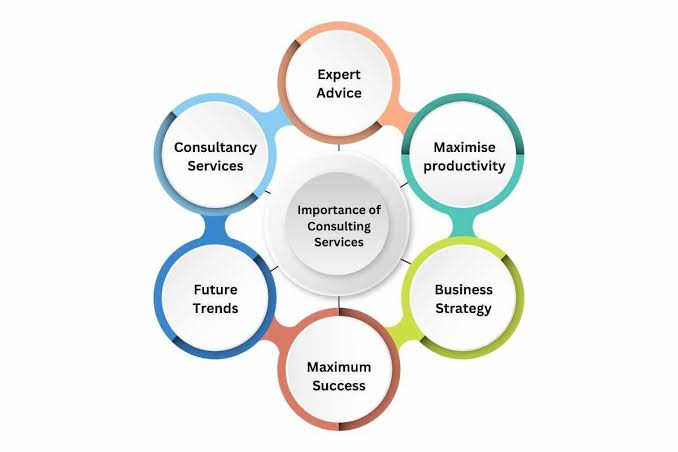
Not every business needs consulting every month. But there are specific moments when outside expertise creates the highest value.
| Situation | What Consulting Delivers |
|---|---|
| Growth has plateaued | Fresh diagnostic identifies what is blocking the next level |
| Scaling too fast | Operational foundation for sustainable growth |
| Entering a new market | External market analysis and risk assessment |
| Declining margins | Objective diagnosis of cost and revenue leaks |
| Making a major acquisition | Independent financial and strategic analysis |
| Team alignment is broken | Facilitation and organizational consulting |
| Digital transformation is stalled | Technology consulting and AI adoption roadmap |
| Regulatory pressure is increasing | Compliance and risk management consulting |
How AI Is Changing Business Consulting in 2026
AI is no longer a niche add-on in consulting — it is fundamental to how modern consulting is delivered.
Organizations now expect consultants to transition from AI experimentation to industrial-strength AI execution across strategic advisory, predictive analytics, automation, and operational transformation.
AI-driven consulting in 2026 includes generative AI for forecasting, real-time analytics, and scenario planning. These tools were inaccessible to most small businesses just three years ago.
Clients now arrive with their own data and internal analysis. Consultants add value by framing choices, challenging assumptions, and designing practical execution plans on top of that data.
The Rise of Fractional Consulting for Small Businesses
One of the biggest trends in 2026 is fractional consulting. Part-time or project-based expert support gives smaller businesses the same quality of thinking that large corporations get from full in-house teams.
Fractional CFOs, CMOs, and operational strategists are now mainstream. This model provides elite expertise at cost-efficient terms without the overhead of a permanent hire.
Traditional long-term retainers are giving way to outcome-based pricing models tied to performance improvements and measurable deliverables, not hours logged.
Business Consulting by Industry: Who Benefits Most
Business consulting delivers value across every industry, but the application looks different depending on the sector.
| Industry | Primary Consulting Need |
|---|---|
| Healthcare | Operations, compliance, cost management |
| Financial Services | Risk management, regulatory compliance, strategy |
| Manufacturing | Lean processes, supply chain, cost reduction |
| Retail | Customer experience, supply chain, marketing |
| Technology | Product strategy, AI adoption, scaling operations |
| Energy | Risk management, regulatory navigation, growth |
| Non-Profit | Fundraising strategy, financial management, efficiency |
| Startups | Go-to-market, funding preparation, team structure |
Common Objections to Business Consulting (And the Real Answers)
“We know our business better than any outsider”
You do know your business. But that is exactly the problem. You are too close to see what is actually happening. Your team has its own agendas. Your past decisions create biases about what will or will not work.
An outside perspective cuts through all of that. It is not about knowledge — it is about objectivity.
“Consulting is too expensive”
The better question is not how much consulting costs. The better question is what not consulting costs — in missed opportunities, wrong decisions, and wasted resources.
The cost of not consulting almost always exceeds the cost of engaging the right advisor, especially for decisions that shape the next three to five years.
“We tried it before and it did not work”
Most consulting failures come from vague goals, poor implementation support, and no accountability after the engagement ends. The right consulting engagement sets clear measurable objectives before the work begins — not vague goals like improve efficiency, but specific targets like reduce order processing time by 30% within six months.
How Business Consulting Improves Team Performance
One of the most overlooked benefits of business consulting is what it does to internal teams. When the “who does what” is unclear, stress rises, productivity drops, and top performers leave.
Consultants help organize the work. They create standard operating procedures, clarify roles, and build communication structures that eliminate the daily friction that wastes hours every week.
A team that operates with clear structure, defined KPIs, and leadership alignment consistently outperforms one that relies on informal coordination. That structural alignment is a core reason why business consulting is important Roarbiznes when it comes to building and scaling teams.
Reducing Employee Burnout Through Process Design
When routine administrative tasks consume skilled employees, the business pays twice — once in salary and once in opportunity cost. Consultants strongly recommend automation tools to handle repetitive work so that employees can concentrate on high-value activities like sales, client relations, and product development.
This shift in focus directly improves productivity and output. It also goes a long way in enhancing employee morale, because annoying daily bottlenecks that once felt permanent get permanently eliminated.
Building Leadership Alignment That Sticks
Leadership misalignment is one of the top reasons strategies fail. When executives disagree on priorities, every team below them absorbs that confusion and acts accordingly.
A skilled consultant facilitates the hard conversations that internal teams avoid. They help leadership define what the business is actually trying to accomplish right now — not in five years, not eventually, but in the next ninety days with clear, measurable targets attached.
Business Consulting and Competitive Advantage in 2026

To maintain market share in 2026, brands must continuously adapt their positioning, messaging, and operations. A seasoned advisor helps businesses predict market changes before they occur rather than react to them after the damage is done.
They conduct competitor analysis to identify your actual unique selling proposition — not the one you think you have, but the one the market will actually pay for.
This strategic clarity is especially critical for tech startups in high-competition markets. But it applies equally to traditional retail businesses, service companies, and manufacturers facing margin pressure from every direction.
Compliance and Regulatory Navigation
Navigating complex local laws and federal regulations is one of the most underrated reasons why business consulting is important Roarbiznes. Regulatory mistakes are expensive. Compliance failures cost more than the consulting fees required to avoid them.
Consultants help businesses understand their obligations, build compliant processes, and stay ahead of regulatory changes before they become violations. This is particularly valuable in heavily regulated sectors like healthcare, financial services, and energy.
Digital Transformation as a Competitive Lever
Businesses that adopt technology strategically outpace competitors that adopt it reactively. In 2026, digital transformation consulting covers AI adoption, cloud migration, data infrastructure, cybersecurity, and automation — all at the same time.
Consultants help identify where these technologies create the biggest business impact, assess current processes, and implement solutions that align with specific business goals rather than chasing trends.
What to Look for When Hiring a Business Consultant
Choosing the wrong consultant wastes time and money. Here is what to evaluate before making a commitment.
Deep industry expertise matters more in 2026 than general business knowledge. Clients want consultants with specific experience in their sector, not generalist advice.
Execution focus separates good consultants from great ones. Ideas that stay in a document do not move a business forward. Ask specifically how the consultant supports implementation, not just planning.
Outcome-based pricing is a green flag. Consultants who tie their fees to measurable results are aligned with your success, not just their billing hours.
Fit and candor matter. The most valuable thing a consultant can do is tell you something specific, uncomfortable, and true about your business. That requires trust and a relationship deep enough to earn honest feedback.
Why Business Consulting Is Important Roarbiznes: The Roarbiznes Approach
The Roarbiznes approach to consulting is built on a simple premise — real problems need real solutions, not generic advice. Every engagement starts with listening, not presenting a pre-built slide deck.
The goal is to understand the specific context of your business before recommending anything. The focus is on execution over theory. Roarbiznes consulting is built around implementation, accountability, and measurable outcomes that you can track from week one.
Why business consulting is important Roarbiznes is not just a question — it is the foundation of how Roarbiznes operates as a business partner, not just an advisor.
Frequently Asked Questions (FAQs)
What does business consulting actually do for a company?
Business consulting analyzes your operations, identifies challenges, and recommends specific strategies for improvement. The goal is better decisions, reduced risk, and faster execution — not advice for its own sake.
Is business consulting only for large corporations?
Not at all. Small businesses and startups benefit most because they often lack in-house specialists and need external expertise during critical growth phases.
How long does a business consulting engagement typically last?
Engagements range from a short two-week diagnostic to a multi-month implementation project. Most high-value projects combine an initial assessment with targeted execution support.
How much does business consulting cost?
Costs vary widely based on the scope, expertise, and engagement model. Fractional and project-based consulting in 2026 makes expert support affordable even for small businesses.
How do I measure the ROI of business consulting?
Set clear measurable objectives before the engagement begins. Track specific targets like cost reduction percentage, revenue growth, or process speed improvement — not vague goals like better efficiency.
What is the difference between strategy consulting and management consulting?
Strategy consulting focuses on where to compete and how to win. Management consulting covers a broader range including operations, HR, technology, and financial performance across the whole organization.
When should I hire a business consultant?
Hire a consultant when growth has stalled, when you are making a major strategic decision, when scaling too fast, or when internal teams have tried and failed to solve a recurring problem.
Can a business consultant help with digital transformation?
Yes. Technology and digital consulting is one of the fastest-growing service categories in 2026, covering AI adoption, cloud migration, automation, and cybersecurity strategy.
What is fractional consulting and is it right for my business?
Fractional consulting gives you access to senior-level expertise on a part-time or project basis. It is ideal for small and mid-size businesses that need elite skills without full-time overhead.
How do I choose the right business consultant for Roarbiznes?
Look for deep industry expertise, a proven execution track record, outcome-based pricing, and a willingness to give honest, sometimes uncomfortable feedback about your business.
Conclusion
Why business consulting is important Roarbiznes comes down to one reality — no business reaches its full potential operating entirely from within. Blind spots, skill gaps, poor strategic alignment, and operational inefficiency silently drain performance year after year. External expertise breaks that cycle and replaces it with clarity, structure, and measurable results.
In 2026, the stakes are higher than ever. Digital transformation, AI adoption, shifting markets, and intensifying competition require more than intuition and hard work. They require structured thinking, specialized knowledge, and the discipline to turn strategy into execution every single day.
Whether you are a startup finding your footing or an established business preparing for the next phase of growth, the right consulting partnership changes the outcome. It is the difference between struggling alone with internal blind spots and building with confidence alongside someone who has seen these challenges before and knows how to solve them.
Roarbiznes is here to make that difference real, practical, and measurable. The businesses that invest in professional consulting today are the ones that outperform, outlast, and outgrow their competitors tomorrow. The cost of not consulting — in missed opportunities, wrong decisions, and wasted resources — almost always exceeds the cost of engaging the right advisor at the right time.