Why Do Brazilians Speak Portuguese? History & Facts 2026

Why do Brazilians speak Portuguese is one of the most common questions people ask when they notice Brazil stands out on the map of South America. Nearly every neighboring country speaks Spanish, yet Brazil speaks something entirely different.
The answer traces back over five hundred years to a single treaty, a lucky discovery, and decades of colonial policy. It is a story of politics, religion, and resources far more than personal choice.
Why Do Brazilians Speak Portuguese? Quick Overview
Brazil speaks Portuguese because Portugal colonized the territory starting in the year 1500. This colonization lasted for over three centuries and shaped every part of Brazilian society.
The table below gives a fast snapshot of the key milestones before we explore each one in detail.
| Event | Year | Impact |
|---|---|---|
| Treaty of Tordesillas | 1494 | Divided South America between Spain and Portugal |
| Portuguese arrival in Brazil | 1500 | Began Portuguese colonization |
| Sugar and gold economy | 1600s-1700s | Strengthened Portuguese control and language |
| Brazilian independence | 1822 | Portuguese remained the official language |
The Treaty of Tordesillas Explained
The story of Brazil’s language begins before Brazil was even discovered. In 1494, Spain and Portugal signed the Treaty of Tordesillas.
This treaty was brokered with the help of Pope Alexander VI, who was Spanish-born himself.
What the Treaty Actually Did
The treaty drew an imaginary line of demarcation across the Atlantic Ocean. Land to the west of the line belonged to Spain, and land to the east belonged to Portugal.
At the time, neither country fully understood how this line would divide South America.
Why the Line Favored Portugal in Brazil
When Brazil was later discovered, most of its territory happened to fall on the Portuguese side of the line. This single decision determined which European language would dominate the region for centuries.
It is often called a stroke of luck combined with careful political maneuvering.
The Portuguese Arrival in Brazil
In the year 1500, Portuguese explorer Pedro Álvares Cabral landed on the coast of what is now Brazil. This marked the official beginning of Portuguese presence in the territory.
Portugal quickly recognized the economic potential of this new land.
Early Contact with Indigenous Peoples
Before European arrival, Brazil was home to many indigenous groups speaking languages like Tupi. These languages were widely used for generations before Portuguese took hold.
Early Portuguese settlers actually learned some Tupi to communicate with local populations.
Brazilwood and Early Trade
One of Brazil’s earliest exports was a tree called brazilwood, used for red dye production. In fact, this resource gave the country its name.
Trade in brazilwood helped establish the first permanent Portuguese settlements.
How Portuguese Became Dominant Over Indigenous Languages
For the first two centuries of colonization, Tupi-based languages were actually common, even among some Portuguese settlers and missionaries. This changed dramatically in the 1700s.
Government policy played a major role in this shift.
The Marquis of Pombal’s Language Policy
In the mid-1700s, Portuguese official the Marquis of Pombal banned the use of Tupi and other indigenous languages in official settings. Portuguese became mandatory in schools, courts, and churches.
This policy accelerated the decline of indigenous languages across the colony.
Why Schools and Churches Mattered
Requiring Portuguese in education and religious institutions forced widespread adoption. If people wanted opportunities in colonial society, learning Portuguese became essential.
Within a few generations, Portuguese had firmly replaced other languages as the dominant tongue.
Economic Factors That Reinforced Portuguese
Language spread often follows money and power. Brazil’s economic history closely shaped how deeply Portuguese took root.
The Sugar Cane Boom
Sugar cane plantations drove massive economic growth starting in the 1500s and 1600s. This brought waves of Portuguese-speaking settlers, administrators, and merchants into Brazil.
Plantation owners and workers alike operated primarily in Portuguese.
The Gold Rush Era
In the late 1600s and into the 1700s, gold discoveries in regions like Minas Gerais triggered a new wave of migration. Thousands of Portuguese settlers arrived seeking fortune.
This further cemented Portuguese as the practical language of business and daily life.
Portugal’s Determination to Protect Its Colony
Brazil became Portugal’s most valuable colonial possession due to its resources. Portugal actively defended its control against Spanish and other European interests.
Protecting this wealth meant reinforcing Portuguese institutions at every level.
Spanish Attempts and Why They Failed
Spain did make some attempts to gain influence in parts of Brazil, particularly in southern border regions. However, these efforts never took lasting hold.
Portugal’s strong administrative presence made Spanish influence short-lived in most areas.
| Factor | Portugal’s Advantage |
|---|---|
| Treaty rights | Held claim to most Brazilian territory |
| Economic investment | Heavy investment in sugar and gold |
| Administrative control | Established schools, courts, and government |
| Military presence | Defended territory against rival claims |
African Influence on Brazilian Portuguese
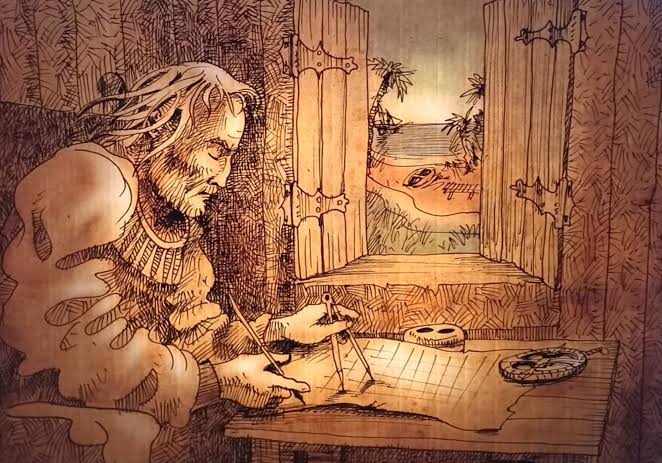
Millions of enslaved Africans were brought to Brazil during the colonial period, primarily to work on plantations. Their languages and cultures left a lasting mark on Brazilian Portuguese.
This influence is one reason Brazilian Portuguese differs from European Portuguese today.
Vocabulary and Pronunciation Changes
Many Brazilian Portuguese words trace back to African language roots, especially from Bantu and Yoruba language groups. These words entered everyday speech over generations.
Rhythm and pronunciation patterns were also shaped by this cultural blending.
A Truly Blended Language
Brazilian Portuguese reflects contributions from indigenous, African, and European sources combined. This makes it culturally distinct from the Portuguese spoken in Portugal.
Many linguists consider it one of the most unique variations of Portuguese worldwide.
Brazilian Independence and Language Continuity
Brazil declared independence from Portugal in 1822. Despite this political separation, the Portuguese language remained firmly in place.
By this point, Portuguese was already deeply embedded in Brazilian identity.
Why Independence Did Not Change the Language
Generations of Brazilians had grown up speaking Portuguese as their native language. Switching to a different language after independence would have been impractical and culturally disruptive.
Portuguese had become part of Brazilian national identity itself, not just a colonial import.
Portuguese as a Symbol of National Identity
Rather than rejecting the language of former colonizers, Brazil embraced Portuguese as uniquely its own. Brazilian Portuguese evolved with its own accent, slang, and cultural expressions.
Today, it represents Brazilian heritage rather than colonial history alone.
Brazilian Portuguese vs European Portuguese
While both are the same core language, Brazilian and European Portuguese have developed noticeable differences. These differences developed over centuries of separate cultural evolution.
| Feature | Brazilian Portuguese | European Portuguese |
|---|---|---|
| Pronunciation | Softer, more open vowels | Sharper, more closed vowels |
| Vocabulary | Includes African and indigenous words | More traditional European vocabulary |
| Formal writing | Very similar to European Portuguese | Very similar to Brazilian Portuguese |
| Mutual understanding | High, generally mutually intelligible | High, generally mutually intelligible |
Why the Differences Developed
Geographic distance, different cultural influences, and centuries of separate development all contributed to these changes. Limited communication technology in earlier centuries also allowed the languages to drift apart.
Despite the differences, speakers from both regions can generally understand each other well.
Global Influence of Brazilian Portuguese
In recent decades, Brazilian music, television, and culture have spread Brazilian Portuguese worldwide. This has given it significant influence within the broader Portuguese-speaking world.
Brazil’s large population also makes it the most widely spoken variety of Portuguese globally.
Portuguese as an Official Global Language
Portuguese is the official language of ten countries around the world today. This includes nations across South America, Africa, and Asia.
Brazil alone accounts for the vast majority of the world’s Portuguese speakers.
| Fact | Detail |
|---|---|
| Countries with Portuguese as official language | Ten countries worldwide |
| Total global Portuguese speakers | Around 250 million people |
| Brazil’s share of Portuguese speakers | The largest of any single country |
| Language family | Romance language, derived from Latin |
How Portuguese Spread Beyond Brazil
Portuguese exploration during the same era brought the language to parts of Africa and Asia as well. Countries like Angola, Mozambique, and East Timor also adopted Portuguese officially.
This global spread traces back to the same era of exploration that brought Portuguese to Brazil.
Interesting Facts About Brazil’s Language in 2026
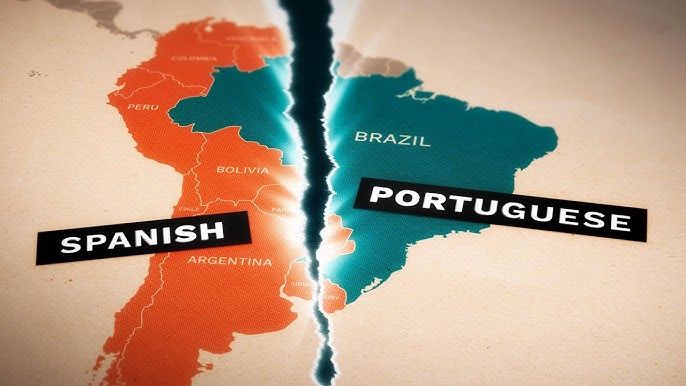
Beyond the historical story, several modern facts highlight just how unique Brazil’s linguistic situation remains. These facts often surprise people learning about it for the first time.
Brazil Is the Only Portuguese-Speaking Country in South America
Every other South American country primarily speaks Spanish, except for small exceptions like Guyana, Suriname, and French Guiana. Brazil stands alone linguistically on the continent.
This makes Brazil instantly recognizable by language alone on any map of the region.
Many Brazilians Grow Up Without Learning This History
Despite living the outcome of this history daily, many Brazilians are never formally taught the detailed reasons behind their language. The Treaty of Tordesillas is often only briefly mentioned in school.
This is part of why the question remains so commonly searched today.
Indigenous Languages Still Exist in Brazil
While Portuguese dominates, over one hundred indigenous languages are still spoken in parts of Brazil today. Efforts continue to preserve these languages among indigenous communities.
These languages represent a living connection to Brazil’s pre-colonial history.
Common Misconceptions About Brazil’s Language
Several myths persist about why Brazil speaks Portuguese instead of Spanish. Clearing these up helps people understand the real historical picture.
Misconception: Brazilians Chose Portuguese Culturally
Language adoption in Brazil was driven by colonial policy and economics, not a cultural preference between Spanish and Portuguese. It resulted from political decisions made centuries earlier.
The outcome was shaped by treaties and colonization, not casual choice.
Misconception: Brazilian and European Portuguese Are Completely Different Languages
Despite noticeable accent and vocabulary differences, both are considered the same language. Formal written Portuguese is very similar between the two regions.
Speakers from Brazil and Portugal can generally communicate without major difficulty.
Misconception: Spanish Was Never Present in Brazil
Spanish explorers did have brief influence in some southern border areas of Brazil. However, this influence never became widespread or lasting.
Portuguese control remained dominant across the vast majority of Brazilian territory.
Why This History Still Matters Today
Understanding this history helps explain much more than just language. It reveals how colonial-era decisions continue to shape modern national identity, culture, and even global influence.
Brazil’s Portuguese heritage remains a defining feature of its place in South America and the wider world.
Key Historical Figures in Brazil’s Language Story
Several individuals played direct roles in shaping the path that led to Portuguese becoming Brazil’s language. Understanding their roles adds important context to the broader story.
Pedro Álvares Cabral
Cabral is credited with the official Portuguese discovery of Brazil in 1500. His voyage marked the beginning of formal Portuguese claims to the territory.
Without this voyage, Portuguese colonization may have started later or differently.
Pope Alexander VI
As the Pope who helped broker the Treaty of Tordesillas, Alexander VI played a pivotal diplomatic role. His Spanish origins have often been noted as a point of historical debate.
His decision directly shaped the linguistic map of an entire continent.
The Marquis of Pombal
This influential Portuguese statesman enforced strict language policy in the 1700s. His reforms banned indigenous languages in official settings and mandated Portuguese instruction.
His policies accelerated the shift toward a fully Portuguese-speaking colony.
Timeline of Brazil’s Linguistic History
Seeing the full timeline in one place helps clarify how gradually this transition actually happened. Each stage built upon the one before it.
| Period | Key Development |
|---|---|
| 1494 | Treaty of Tordesillas divides South America |
| 1500 | Pedro Álvares Cabral lands in Brazil |
| 1500s-1600s | Sugar cane economy brings Portuguese settlers |
| 1700s | Marquis of Pombal enforces Portuguese-only policy |
| Late 1600s-1700s | Gold rush brings further Portuguese migration |
| 1822 | Brazil gains independence, keeps Portuguese |
| Present day | Brazilian Portuguese recognized as distinct variation |
This timeline shows that Brazil’s linguistic identity was not created overnight. It developed gradually across more than three centuries of colonial and post-colonial history.
How Brazil’s Size Reinforced a Single Language
Unlike the many smaller Spanish-speaking nations that emerged from Spanish colonial territory, Brazil remained largely unified as one massive Portuguese-speaking country. This is a striking contrast in South American history.
Comparing Brazil to Spanish Colonial Territories
Spain’s colonial holdings eventually splintered into many separate countries, each developing its own national identity. Portugal’s Brazilian colony, by contrast, stayed unified under one language and government.
This helps explain why Brazil is a single large nation while its neighbors are divided into many smaller Spanish-speaking countries.
Why Unity Strengthened the Language
A single unified colony meant consistent language policy across a vast territory. This consistency made Portuguese even more deeply rooted than it might have been in a fragmented region.
Brazil’s massive size today is a direct reflection of this unified colonial history.
The Role of the Catholic Church in Language Spread
Religious institutions played a significant role in spreading Portuguese throughout the colony. Missionaries were often among the first to interact with indigenous communities.
Jesuit Missionaries and Early Language Contact
Jesuit missionaries initially learned some indigenous languages to communicate with local populations. Over time, however, church policy shifted toward requiring Portuguese in religious instruction.
This shift mirrored the broader colonial push toward Portuguese as the singular official language.
Churches as Centers of Portuguese Education
Churches often served as early educational centers in colonial Brazil. Teaching literacy in Portuguese through religious instruction helped spread the language into everyday community life.
This religious influence worked alongside government policy to reinforce Portuguese use.
Modern Brazil and Its Linguistic Identity
Today, Portuguese is not just a practical language in Brazil but a core part of national pride. Brazilian music, literature, and film all celebrate this uniquely Brazilian version of the language.
Brazilian Portuguese in Global Media
Brazilian television dramas, known as novelas, and Brazilian music genres like bossa nova and samba have carried Brazilian Portuguese to international audiences. This has increased global familiarity with the Brazilian accent and vocabulary.
Streaming platforms have further expanded this global reach in recent years.
Language as a Point of National Pride
Many Brazilians view their version of Portuguese as an important marker of national identity, distinct from Portugal itself. This pride reflects centuries of cultural blending unique to Brazil.
The language today represents Brazilian history far more than colonial origin alone.
Lessons Brazil’s Language History Teaches Us
Brazil’s linguistic story offers a broader lesson about how language spreads and takes root. Politics, economics, and religion together shape outcomes that last for centuries.
Language Follows Power, Not Just Population
Even where indigenous populations were large, colonial power and economic control determined which language became dominant. This pattern appears throughout world history, not just in Brazil.
Understanding this helps explain many other language origin stories worldwide.
A Single Decision Can Shape Centuries
The Treaty of Tordesillas was signed before Brazil was even discovered, yet it shaped the linguistic identity of an entire nation for over five hundred years. Few historical agreements have had such a lasting, specific impact.
This makes Brazil’s story a particularly striking example of how history and language intertwine.
Frequently Asked Questions (FAQs)
Why do Brazilians speak Portuguese instead of Spanish?
Brazil was colonized by Portugal due to the Treaty of Tordesillas in 1494. This treaty placed most of Brazilian territory under Portuguese control.
When did Portuguese become Brazil’s official language?
Portuguese was established as the dominant language during colonization starting in 1500. It became formally enforced through 18th-century colonial policy.
What language did Brazil speak before Portuguese?
Indigenous groups spoke various languages, with Tupi being one of the most widespread. Some of these languages are still spoken today.
Is Brazilian Portuguese the same as European Portuguese?
They are the same core language with different accents and some vocabulary differences. Formal writing remains very similar between both varieties.
Why didn’t Brazil switch languages after independence in 1822?
Portuguese was already deeply embedded in Brazilian society and identity by then. Switching languages would have been impractical and culturally disruptive.
How many countries speak Portuguese officially today?
Portuguese is the official language of ten countries worldwide. Brazil has by far the largest number of Portuguese speakers.
Did African languages influence Brazilian Portuguese?
Yes, enslaved Africans brought language influences that shaped Brazilian vocabulary and pronunciation. This is one reason Brazilian Portuguese sounds distinct today.
Are there still indigenous languages spoken in Brazil?
Yes, over one hundred indigenous languages remain spoken in various communities. Efforts continue to preserve these languages today.
What was the Treaty of Tordesillas?
It was a 1494 agreement between Spain and Portugal dividing new world territories. This treaty determined which language would dominate Brazil.
Why do many Brazilians not know this history?
This history is often only briefly covered in schools. Many Brazilians grow up speaking Portuguese without learning the detailed historical reasons behind it.
Conclusion
Why do Brazilians speak Portuguese ultimately traces back to a single treaty, a fortunate discovery, and centuries of determined colonial policy. The Treaty of Tordesillas in 1494 placed most of Brazilian territory under Portuguese control before the land was even fully explored.
From there, sugar plantations, gold discoveries, and strict language policies in schools and churches cemented Portuguese as the dominant language. Indigenous and African influences blended into this foundation, creating the unique Brazilian Portuguese spoken today.
Even after independence in 1822, Portuguese remained central to Brazilian identity rather than fading away. Understanding this history and these facts for 2026 gives valuable insight into why Brazil stands apart linguistically from nearly all of its South American neighbors.