Why Do Cats Sleep at Your Feet and What It Means 2026
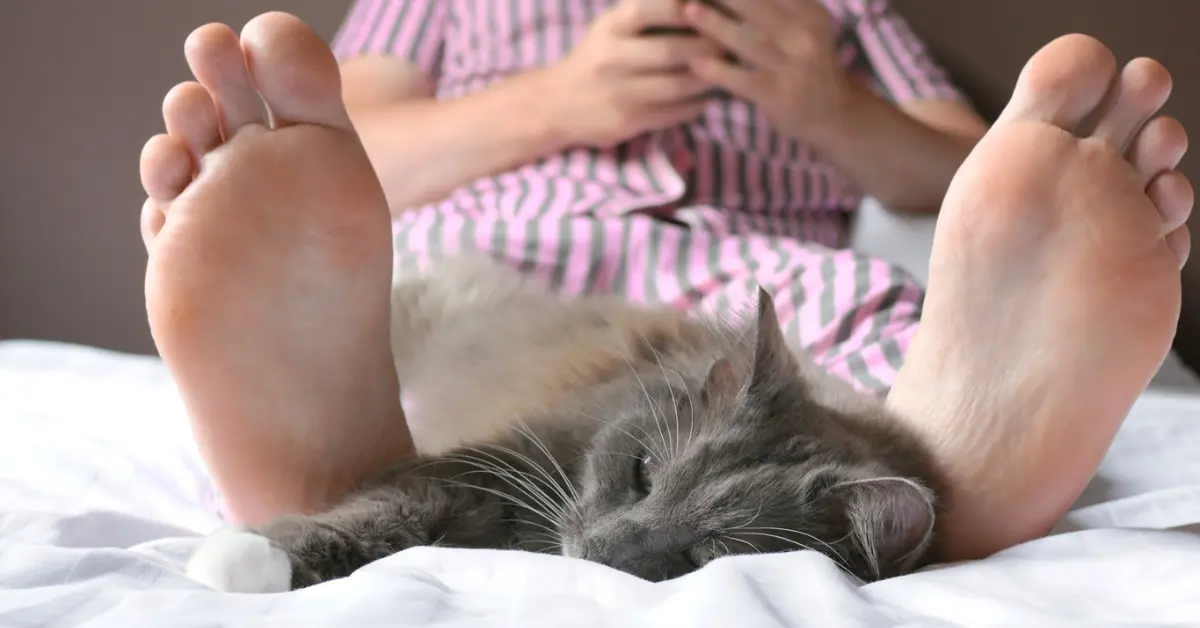
Why do cats sleep at your feet is one of the most searched questions by cat owners, and the answer is more fascinating than most people realize. Your cat is not randomly choosing a spot at the end of the bed.
Every time your feline curls up near your feet, it is making a deliberate, instinct-driven decision rooted in trust, warmth, safety, and emotional bonding.
Understanding this behavior gives you a powerful window into how your cat truly feels about you.
Quick Facts: Why Cats Sleep at Your Feet
| Factor | What It Means |
|---|---|
| Warmth | Your feet radiate steady body heat ideal for cats |
| Trust | Cats only sleep near people they feel safe with |
| Instinct | Survival wiring from wild ancestors |
| Territory | Scent glands in paws mark you as “theirs” |
| Routine | Cats are creatures of habit and repeat comfort spots |
| Independence | Feet allow closeness without full vulnerability |
| Safety | Easy exit route from foot of bed |
The Real Science Behind Cat Sleeping Positions
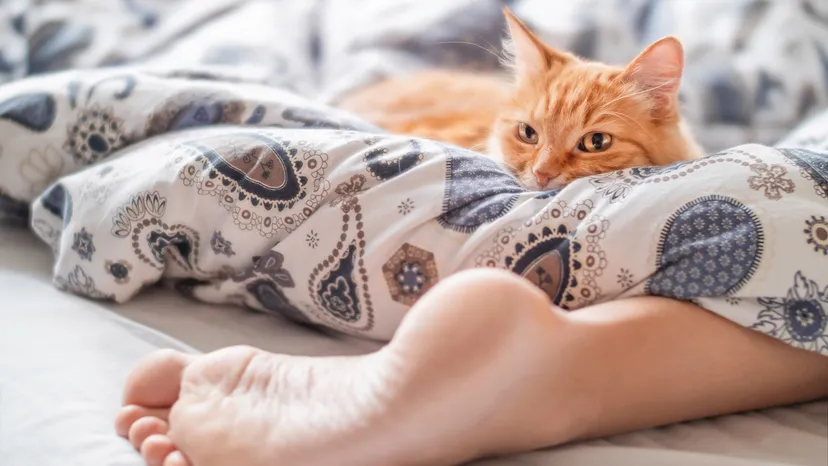
Cats spend between 12 and 16 hours sleeping every day. Sometimes, that number climbs above 20 hours for older cats or kittens. With that much time spent asleep, it makes sense that cats are incredibly particular about where they rest.
Their sleeping spot is never accidental. It is always a calculated decision based on warmth, security, scent, and social trust. When your cat picks your feet night after night, it means something specific and consistent.
Why Do Cats Sleep at Your Feet: 8 Real Reasons
1. Your Feet Provide Consistent Body Heat
Cats are most comfortable in environments between 77°F and 86°F (25°C to 30°C). Human body heat, especially from the feet and legs, closely matches this comfort range.
Your feet generate a steady, low-level warmth that stays relatively stable through the night. Unlike your core body, your feet do not shift position as dramatically while you sleep.
This makes your feet the perfect thermal source for your cat to curl up next to and conserve their own body energy during rest.
2. It Is a Clear Sign of Trust and Affection
Cats do not sleep near people they feel unsafe around. If your cat chooses your feet every night, it is showing deep trust in you as a companion.
Sleeping is the most vulnerable state any animal can be in. Your cat lowering its guard near you, even at the less intimate foot position, is a genuine expression of emotional bond.
Unlike dogs who show love loudly, cats express affection through proximity and quiet companionship. Sleeping at your feet is their version of saying “I feel completely safe with you.”
3. Survival Instincts From Wild Ancestors
Domestic cats still carry strong instincts from their wild ancestors. In the wild, a cat asleep in the wrong position could become prey.
The foot of the bed gives your cat a clear sightline over the room. It also provides an immediate escape route if anything startles them. This strategic position lets them rest while staying alert.
Even in the total safety of your home, this wiring runs deep. Your cat is not just picking a cozy spot; it is picking the safest cozy spot available.
4. Your Feet Move Less While You Sleep
Your upper body, arms, and head shift constantly through the night as you change sleeping positions. Your feet, by comparison, stay relatively still.
Cats are light sleepers and easily disturbed by sudden movement. Settling at the foot of the bed rather than beside your torso gives them a much more stable and undisturbed resting zone.
This is especially true for cats that prefer long, uninterrupted sleep cycles. Less movement equals deeper, safer rest for your feline.
5. Scent Marking and Territory
Cats have scent glands located in their paw pads. When your cat kneads near your feet or settles on your blanket at the foot of the bed, it is depositing its scent.
This is not aggressive territory marking. It is a gentle form of claiming a space that feels familiar and secure. Your cat is essentially saying “this human belongs to my trusted circle.”
Your scent also plays a role in reverse. Your natural body smell is deeply comforting to a cat that has bonded with you. Your feet carry a familiar, grounding scent that helps your cat feel at ease.
6. Respect for Your Personal Space
Many cats understand, through observation and instinct, that sleeping directly on your chest or face is disruptive. Sleeping at your feet lets them stay close without crowding you.
This behavior reflects a sophisticated social awareness. Your cat wants to be near you but also does not want to disturb your rest. It is a thoughtful, bonded compromise.
This is especially common in cats that have been with their owners for several years and have learned the rhythms of the household.
7. Kitten Comfort Patterns Carried Into Adulthood
When cats are born, they sleep in a pile with their littermates for warmth and security. The physical closeness of bodies is one of the first comfort experiences a cat ever has.
This memory of warmth-through-closeness does not disappear in adulthood. Sleeping near your feet recreates that early feeling of being surrounded and protected by familiar, warm presences.
It is essentially your cat reverting to its most primal sense of comfort and applying it to its relationship with you.
8. Cats Are Crepuscular and Align With Your Schedule
Cats are crepuscular by nature, meaning most active at dawn and dusk. However, domesticated cats often shift their schedule to match their owners.
When you go to bed, your cat may instinctively want to be near you during this low-activity period. The foot of the bed becomes their resting station during the hours they are syncing their cycle to yours.
This behavior also builds the routine that cats crave. A cat that sleeps at your feet every night is reinforcing a predictable, comforting pattern.
What It Means When Your Cat Sleeps at Your Feet Every Night
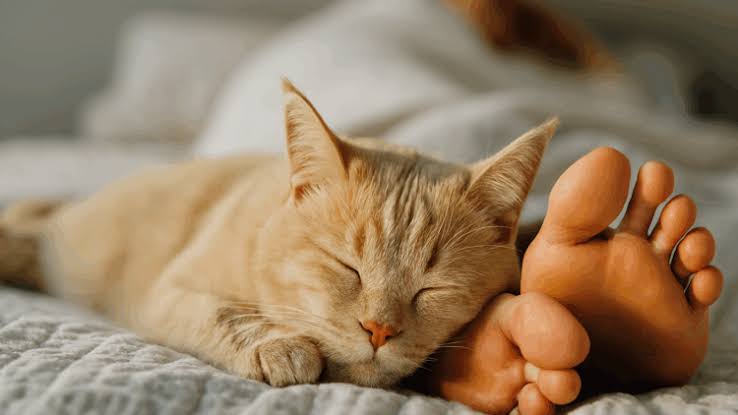
| Behavior Pattern | Likely Meaning |
|---|---|
| Curled tight ball at feet | Seeking warmth, feeling content |
| Sprawled at feet touching your leg | High trust, deep comfort |
| Sleeping between your feet | Seeking enclosed, den-like safety |
| Sitting near feet but not touching | Bonded but independent personality |
| Only sleeps at feet when you are sick | Sensing change in body heat or scent |
| Switches from lap to feet at night | Adjusting comfort level by sleep stage |
The Spiritual Meaning of a Cat Sleeping at Your Feet
Many cultures and spiritual traditions assign meaning to a cat choosing to rest near your feet. While science offers the behavioral explanations, the symbolic layer is worth exploring for those who find it meaningful.
In various spiritual frameworks, a cat sleeping at your feet is interpreted as a protective gesture. The cat is seen as guarding your path, grounding your energy, and standing watch while you are most vulnerable.
Some traditions describe cats as spiritually sensitive animals that can sense shifts in energy around a person. Sleeping at your feet is viewed as the cat anchoring your energy and blocking negative influences while you sleep.
Whether you find this meaningful or simply poetic, it points to how deeply humans across history have noticed and valued this particular behavior in their cats.
Cat Sleeping Position Comparisons: What Each Spot Means
Sleeping at Your Head
A cat sleeping at your head is showing maximum trust. This position puts the cat in a very vulnerable spot but also keeps it closest to your breathing and heartbeat. It typically indicates a deeply bonded, highly affectionate cat.
Sleeping on Your Chest
This position is about emotional warmth more than physical. Your cat is drawn to your heartbeat and the rise and fall of your breathing. It is an intimate, affectionate sleeping position common in cats that crave closeness.
Sleeping at Your Feet
The foot position is the most common and represents the balance between affection and independence. Your cat stays close but does not feel the need to be at the most vulnerable proximity. It shows trust with a degree of self-sufficiency.
Sleeping Next to You Without Touching
Some cats will sleep beside you on the bed or couch without making contact. This still signals trust and bonding. Not all cats are physically demonstrative, and proximity alone is a meaningful sign of attachment.
Does Your Cat Love You More If It Sleeps at Your Feet?
This is a common question, and the honest answer is: it depends on the individual cat. Sleeping at your feet is undeniably a sign of affection, trust, and bonding. However, it does not automatically mean your cat loves you more than one that sleeps on a nearby cushion.
Cats have individual personalities. Some are physically demonstrative, some are not. A cat that sleeps near you but avoids touching you may have had limited socialization as a kitten. That does not mean the bond is weaker.
What matters more than the exact spot is consistency. A cat that reliably returns to you night after night is showing deep, habitual trust regardless of the precise location it chooses.
How to Encourage or Discourage This Behavior
If You Want to Encourage It
Place a soft, familiar blanket at the foot of your bed. Use a consistent bedtime routine so your cat learns when to expect sleep. Avoid startling your cat when it settles near you.
Give your cat positive reinforcement with calm petting when it chooses to rest near you. Over time, your cat will associate your presence during sleep with comfort and safety.
If You Need to Discourage It
If your cat’s presence disrupts your sleep, gently place a cozy cat bed nearby. Use the same texture and warmth as your bedding to make it appealing. Redirect your cat consistently and calmly.
Never punish your cat for sleeping near you. Negative reinforcement will damage trust without solving the root behavior. Instead, create a more appealing alternative sleeping option nearby.
When Sleeping at Your Feet Might Signal Something Else
Most of the time, a cat sleeping at your feet is a healthy and positive behavior. However, there are some situations where a sudden change in sleeping habits is worth noting.
If your cat begins sleeping at your feet more intensely or persistently than usual, it may be picking up on changes in your health. Cats are sensitive to body temperature shifts, hormonal changes, and even subtle scent changes associated with illness.
If your own sleep or health has changed recently and your cat’s behavior has changed alongside it, a check-in with your doctor and a vet visit for your cat is a reasonable step.
Also watch for signs that your cat is sleeping at your feet out of anxiety rather than contentment. A cat that seems tense, ears flat, tail tucked even while resting near you, may be seeking reassurance rather than expressing pure bonding.
Cat Sleeping Habits by Age: What Changes
| Age | Common Sleeping Behavior |
|---|---|
| Kitten (0–6 months) | Sleeps in piles, needs constant warmth, very tactile |
| Young Adult (6 months–2 years) | Starts establishing sleeping routines and preferred spots |
| Adult (2–10 years) | Consistent sleeping locations, may favor owner’s feet nightly |
| Senior (10+ years) | Sleeps more, may seek more warmth and human closeness |
Senior cats especially tend to gravitate toward their owners more as they age. The increased need for warmth, comfort, and the security of a trusted presence makes human proximity more appealing as cats get older.
Does Gender Affect Why Cats Sleep at Your Feet?
There is no strong scientific evidence that a cat’s gender significantly affects where it prefers to sleep. Both male and female cats can be equally affectionate or independent depending on their personality, socialization history, and bond with their owner.
Neutered and spayed cats tend to be calmer and more affectionate overall, which may make them more likely to seek their owner’s presence during sleep. But this is more about temperament than gender.
Multi-Cat Households: Who Gets the Feet?
In a home with multiple cats, sleeping positions can reveal social hierarchy. The cat that claims the spot at your feet most consistently may be the dominant or most bonded cat in the group.
Other cats may observe and eventually take turns. Some households develop a rotation system among cats for who sleeps closest to the owner.
If one cat is consistently prevented from sleeping near you by another, it may indicate tension in the multi-cat dynamic worth observing.
How to Know If Your Cat Sleeping at Your Feet Is a Bonding Behavior or Habit
Some cat owners wonder whether their cat sleeps at their feet out of genuine affection or simply out of routine. In reality, both are true and both are positive.
Cats form habits around comfort. Once a sleeping spot feels safe and warm, they return to it night after night. Over time, that habit deepens into a conditioned association between the spot and the feeling of security.
The key difference between habit and bonding is whether your cat seeks you out specifically. If your cat would sleep at a random pile of laundry just as easily, it may be more about warmth than attachment. If your cat consistently follows you to bed and settles near you specifically, that is bonding.
Most cats that sleep at their owner’s feet consistently are expressing both. The habit reinforces the bond, and the bond reinforces the habit.
Breed Tendencies: Do Some Cats Sleep at Your Feet More Than Others?
Certain cat breeds are known for being more people-oriented and physically affectionate. These breeds are more likely to seek out their owner’s presence during sleep.
Ragdolls and Maine Coons are known for their dog-like attachment to owners and often follow their humans from room to room including to bed. Siamese cats are highly social and vocal, frequently seeking proximity to their bonded human.
Persian cats and Burmese cats also tend toward calm, close companionship and are commonly found sleeping near or on their owners. By contrast, more independent breeds like the Norwegian Forest Cat may prefer nearby sleeping spots rather than direct contact.
However, individual personality nearly always matters more than breed. A rescue cat with a warm, trusting disposition may be more affectionate than a pedigree cat with a more aloof nature.
Does the Time of Night Matter? Understanding Nocturnal Cat Behavior
Cats are not fully nocturnal, but they do have bursts of activity in the early morning hours. This is why many owners wake up to find their cat had been at their feet all night but is now awake and prowling.
Your cat likely settles at your feet during your deepest sleep hours, when the environment is most still and your movement is minimal. As the pre-dawn hours approach, your cat may shift to a more active state and leave the sleeping spot.
If your cat regularly wakes you early in the morning, this is normal crepuscular behavior rather than a problem. The foot of the bed serves as a base camp between rest periods for many cats.
Frequently Asked Questions (FAQs)
Why do cats sleep at your feet instead of beside you?
Cats prefer the foot of the bed because it offers warmth and closeness while also providing a clear escape route. It is the perfect balance between affection and independence for their instinct-driven nature.
Is it a sign of love when a cat sleeps at your feet?
Yes, it is a genuine sign of trust and affection. Cats only sleep near people they feel completely safe with, so choosing your feet is a quiet but meaningful expression of their bond with you.
Should I let my cat sleep at my feet?
If it does not disrupt your sleep, there is no reason to discourage it. It is a healthy bonding behavior. If it becomes disruptive, redirect your cat to a nearby bed using familiar blankets.
Why does my cat sleep at my feet and not my partner’s?
Your cat has likely formed a stronger or more preferred bond with you. It may also prefer your body heat, sleep schedule, movement patterns, or scent over your partner’s.
What does it mean spiritually when a cat sleeps at your feet?
Many spiritual traditions interpret this as the cat acting as a guardian while you sleep, grounding your energy and protecting your path. It is seen as a sign of deep loyalty and spiritual protection.
Why does my cat only sleep at my feet when I am sick?
Cats can detect changes in your body temperature and scent that occur with illness. Sleeping closer during these times is thought to be a comforting, protective instinct directed at their most trusted human.
Do cats sleep at your feet because they are cold?
Warmth is definitely a contributing factor. Your feet radiate body heat, and cats are always seeking comfortable warmth. However, warmth alone is not the only reason. Trust and habit play equally important roles.
Can a cat sleeping at your feet mean anxiety?
Usually no. However, if your cat seems tense, has flat ears, or shifts restlessly while sleeping near you, it may be seeking reassurance due to stress. Watch the overall body language for context.
Why does my cat sleep at the foot of the bed and not on it?
Some cats prefer the blanket or floor at the foot of the bed for temperature regulation. They can move away if they get too warm. It also gives them more physical space and an unobstructed exit.
Is it hygienic to let my cat sleep near my feet?
Generally yes, if your cat is up to date on vaccinations, flea prevention, and regular vet checks. Keep bedding clean and wash regularly to maintain hygiene when sharing sleeping space with your cat.
Conclusion
Why do cats sleep at your feet is a question with a richly layered answer that touches on science, instinct, trust, and the unique bond between cats and their humans.
Every time your cat curls up at the end of your bed, it is making an intentional choice driven by warmth, security, familiarity, and affection. The foot of the bed is your cat’s ideal sweet spot: close enough to feel protected, independent enough to feel safe.
Far from being a random habit, it is one of the clearest and most consistent ways your cat communicates love and trust in you. Understanding this behavior deepens the connection you share and gives you real insight into the quietly devoted nature of your feline companion.